
 United Kingdom (UK)
 United States (US)
 Canada
 South Africa
 India
India Australia
 New Zealand
 China
China Russia
 Germany
 France
 Spain
Spain Netherlands
 Vietnam
 United Arab Emirates
 Italy
Italy Poland
 Thailand
 Türkiye










 Algeria


Complete Guide to TEFL Certification Process 2025
Complete Guide to TEFL Certification Process 2025

More than 20,000 people earn a TEFL certification each year, opening doors to teach English worldwide. For language lovers dreaming of working abroad or online, this credential stands out as the key requirement preferred by employers in dozens of countries. Understanding what TEFL certification means, and why it matters, helps future educators make smart decisions as they plan their global career path.
Table of Contents
- Defining TEFL Certification And Its Purpose
- Types Of TEFL Courses And Delivery Options
- Eligibility Criteria And Core Requirements
- Application, Assessment, And Accreditation Steps
- Costs, Duration, And Common Pitfalls To Avoid
- Selecting A TEFL Provider In 2025
Key Takeaways
| Point | Details |
|---|---|
| TEFL Certification Importance | TEFL certification is a vital credential that equips educators with specialized skills to teach English globally, promoting cross-cultural communication and language education. |
| Course Delivery Options | TEFL courses are available in online, in-person, and blended formats, catering to diverse schedules and learning preferences. |
| Eligibility Criteria | Core requirements for TEFL certification include English proficiency, a high school diploma, and a commitment to teaching; advanced programs may demand additional qualifications. |
| Selecting a TEFL Provider | When choosing a DEFL provider, prioritize international accreditation, curriculum depth, practical training, and job placement support for successful career outcomes. |
Defining TEFL Certification and Its Purpose
A TEFL certification represents a critical professional credential that transforms language enthusiasts into qualified international educators. According to Kent University, a TEFL Certificate is an internationally recognized qualification that prepares individuals to teach English to non-native speakers across diverse global settings.
The primary purpose of TEFL certification extends far beyond a simple piece of paper. It equips educators with specialized pedagogical skills specifically designed for teaching English as a foreign language. These skills include understanding language acquisition theories, developing engaging curriculum strategies, managing multicultural classrooms, and adapting teaching techniques to students with varying linguistic backgrounds.
Key components of a comprehensive TEFL certification typically include:
- Theoretical language teaching methodologies
- Practical classroom management techniques
- Intercultural communication strategies
- Lesson planning and curriculum development
- Assessment and evaluation methods
Professionals pursuing what is TEFL certification can expect to work in multiple environments. These range from private and public schools to corporate language programs, online teaching platforms, international language institutes, and even private tutoring settings. The certification essentially serves as a global passport, opening doors to teaching opportunities across continents and providing a standardized benchmark of teaching competence.
Understanding the nuances of TEFL certification means recognizing it as more than just an academic credential. It represents a professional commitment to cross-cultural communication, linguistic education, and global understanding. By obtaining this certification, educators signal their readiness to bridge language barriers and create meaningful learning experiences for students worldwide.
Types of TEFL Courses and Delivery Options
TEFL courses have evolved to offer multiple learning formats, accommodating diverse student needs and learning preferences. According to Wikipedia, these courses are available in three primary delivery models: online, in-person, and blended options, each designed to provide flexible pathways to professional language education.
Online TEFL courses have gained significant popularity, offering unprecedented flexibility for working professionals and international learners. These digital programs typically allow self-paced learning, enabling students to complete certification requirements from anywhere in the world. Key advantages include:
- Convenience of studying from home
- Flexible scheduling
- Lower overall cost compared to traditional classroom training
- Access to global curriculum resources
In contrast, how to choose the best TEFL course requires understanding the unique strengths of different course formats. In-person courses provide immersive, intensive training with direct interaction with experienced instructors. These programs often include practical teaching components and real-time feedback, which can be crucial for developing classroom management skills.
The blended learning approach represents a sophisticated middle ground, combining online theoretical instruction with face-to-face practical teaching experiences. As noted by Cambridge Assessment English, prominent certifications like CELTA offer both full-time and part-time formats to accommodate various student schedules and learning preferences.
When selecting a TEFL course, professionals should carefully evaluate their personal learning style, professional goals, and time availability. Each delivery format offers unique benefits, and the right choice depends on individual circumstances, career objectives, and personal learning preferences.

Eligibility Criteria and Core Requirements
TEFL certification has inclusive entry requirements designed to welcome aspiring educators from diverse backgrounds. According to Kent University, eligibility typically encompasses both native and non-native English speakers, with fundamental prerequisites that make the certification accessible to many professionals.
Core eligibility criteria generally include:
- Proficiency in spoken and written English
- High school diploma or equivalent educational qualification
- Minimum age requirement (typically 18 years)
- Basic computer literacy for online course participation
- Commitment to language education and cross-cultural communication
While basic requirements are straightforward, different TEFL programs may have varying levels of complexity. Some advanced certifications, particularly those targeting specialized teaching markets, might require additional qualifications such as a bachelor’s degree or prior teaching experience. 5 Things About TEFL Courses highlights the importance of understanding these nuanced requirements before selecting a specific program.
Language proficiency stands as the most critical requirement for TEFL certification. Candidates must demonstrate near-native or native-level English communication skills, which are typically assessed through comprehensive language assessments, interviews, or standardized language tests. This ensures that future language instructors can provide high-quality, accurate instruction across various educational contexts.
Potential TEFL students should carefully review specific program requirements, as international certification standards can vary. Some programs offer preparatory courses or language assessments to help candidates meet eligibility criteria, making the certification process more accessible and supportive for diverse learners seeking to launch their international teaching careers.
Application, Assessment, and Accreditation Steps
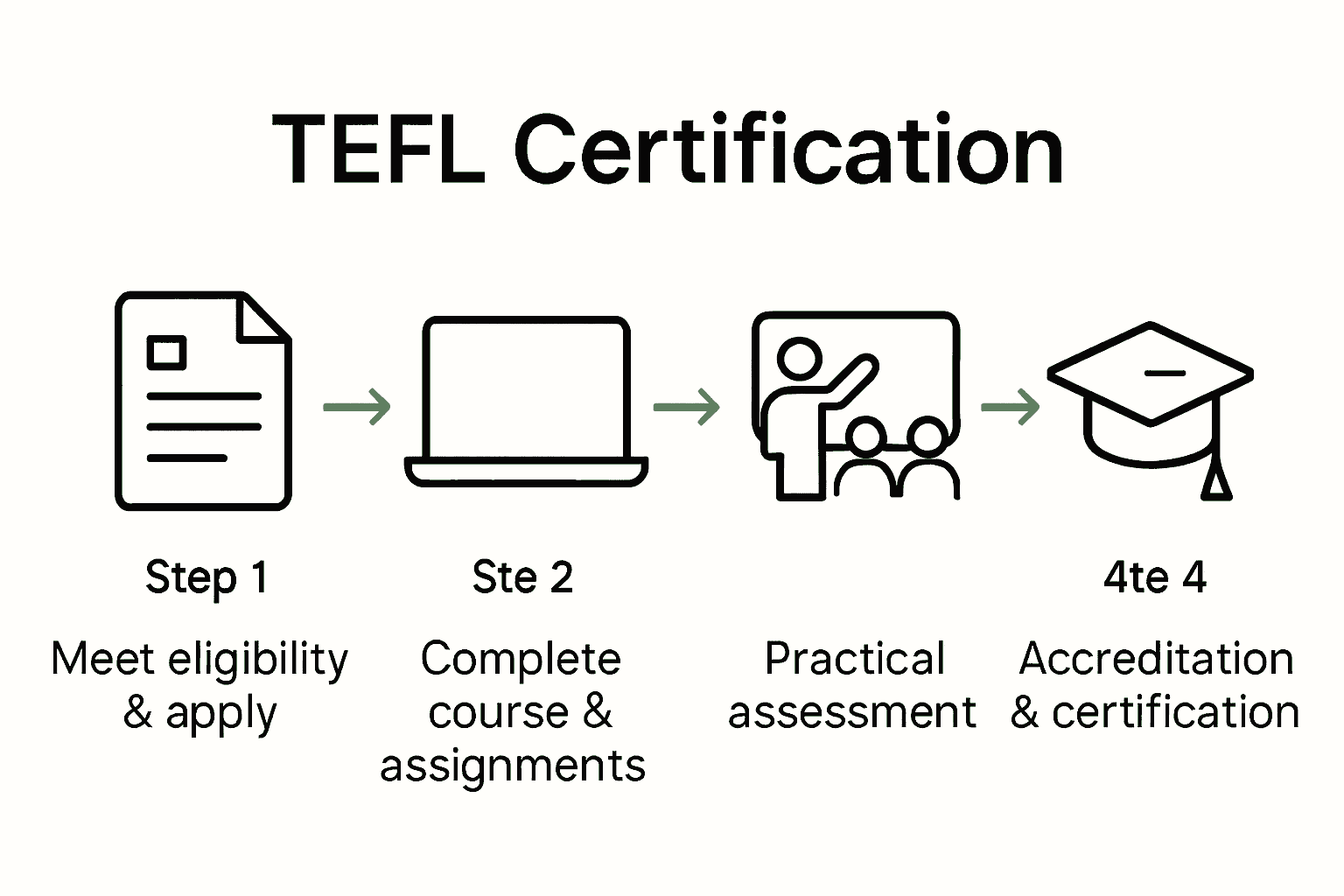
The journey to obtaining a TEFL certification involves a comprehensive process of application, rigorous assessment, and professional accreditation. Commission on English Language Program Accreditation provides a systematic approach that ensures programs meet established educational standards and maintain high-quality training protocols.
Typical application steps include:
- Completing an online application form
- Submitting proof of educational qualifications
- Providing English language proficiency documentation
- Paying the course registration fee
- Selecting preferred course delivery format
Assessment is a multi-dimensional process that evaluates both theoretical knowledge and practical teaching skills. As detailed by Cambridge Assessment English, comprehensive TEFL certification programs like CELTA incorporate a blend of written assignments and observed teaching practice. Choosing the Best TEFL Course emphasizes the importance of understanding these assessment criteria before enrollment.
Accreditation serves as a critical quality assurance mechanism in TEFL certification. Recognized accrediting bodies evaluate programs based on curriculum depth, instructor qualifications, student learning outcomes, and adherence to international teaching standards. Candidates should prioritize certifications from globally recognized institutions to ensure their credentials are respected by potential employers worldwide.
Successful completion of a TEFL certification involves demonstrating competence across multiple dimensions: linguistic knowledge, pedagogical skills, cultural understanding, and practical teaching abilities. Prospective students should carefully research program requirements, assessment methodologies, and accreditation status to select a certification that aligns with their professional teaching aspirations.
Costs, Duration, and Common Pitfalls to Avoid
TEFL certification represents a significant investment in one’s professional development, with costs and duration varying widely across different programs and delivery formats. How to Choose the Best TEFL Course provides critical insights into navigating the financial and time commitments associated with obtaining a quality certification.
Certification costs typically range across multiple categories:
- Online self-paced courses: $200 – $600
- Standard online instructor-led programs: $500 – $1,500
- Intensive in-person courses: $1,000 – $2,500
- Advanced diploma programs: $1,500 – $3,500
Common duration ranges include:
- Short online certification: 4-6 weeks
- Standard online program: 8-12 weeks
- Intensive in-person course: 4-6 weeks
- Advanced diploma: 3-6 months
Potential students must be vigilant about several common pitfalls when pursuing TEFL certification. 5 Things About TEFL Courses highlights critical considerations such as verifying course accreditation, understanding job market requirements, and selecting programs aligned with specific teaching goals.
Avoid these key mistakes during your TEFL certification journey:
- Choosing unaccredited programs
- Overlooking course content quality
- Failing to research job market expectations
- Ignoring practical teaching components
- Selecting courses without understanding international recognition
Ultimately, TEFL certification is an investment in your professional future. Prospective teachers should approach the process strategically, balancing cost considerations with program quality, practical training opportunities, and potential career advancement prospects. Careful research and thoughtful selection will ensure that your certification becomes a valuable asset in your international teaching career.
Selecting a TEFL Provider in 2025
TEFL certification providers have evolved significantly, offering increasingly sophisticated and specialized training options for aspiring language educators. Top 5 Best TEFL Course Providers highlights the critical considerations for choosing a reputable and effective certification program in the competitive 2025 educational landscape.
Key criteria for evaluating TEFL providers include:
- International accreditation status
- Comprehensive curriculum depth
- Practical teaching components
- Job placement support
- Instructor qualifications
- Student reviews and success rates
- Flexibility of course delivery
Prospective students should conduct thorough research to distinguish between high-quality providers and those offering minimal value. Comparison of TEFL Course Providers emphasizes the importance of examining course content, recognition in the international job market, and alignment with individual career goals.
Different certification levels cater to various professional needs. For instance, entry-level courses suit career beginners, while advanced diplomas target experienced educators seeking specialized credentials. The CELTA vs Level 5 TEFL Certification comparison provides insights into choosing the most appropriate certification for specific career trajectories.
Ultimately, selecting a TEFL provider is a personal journey that requires careful consideration of individual learning styles, career objectives, and professional development goals. Prospective teachers should prioritize programs that offer comprehensive training, global recognition, and genuine support in launching an international teaching career.
Take Control of Your TEFL Certification Journey in 2025
Navigating the TEFL certification process can feel overwhelming with so many course options, accreditation concerns, and career goals to consider. This guide highlights the key challenges like choosing between online or in-person formats, understanding eligibility, and avoiding common pitfalls that could delay or complicate your path to becoming a qualified English teacher.
You deserve a clear, trusted path that fits your lifestyle and professional dreams. With tailored programs ranging from beginner to advanced diplomas and flexible delivery options, you can gain the skills and credentials that employers worldwide respect. Our platform at TEFL Institute offers comprehensive training combined with practical teaching components to ensure you feel confident and ready.
Start your certification confidently by exploring our diverse course catalog today. Visit TEFL Institute to find your ideal course, understand the application steps, and secure a globally recognized qualification that unlocks international teaching opportunities. Don’t wait to transform your passion into a rewarding global career.
Explore detailed course options on TEFL Institute and make your TEFL dream a reality now.
Frequently Asked Questions
What is TEFL certification?
TEFL certification is an internationally recognized qualification that prepares individuals to teach English as a foreign language to non-native speakers. It equips educators with the necessary skills and methodologies for effective language instruction.
What types of TEFL courses are available?
There are three primary delivery options for TEFL courses: online, in-person, and blended formats. Online courses offer flexible, self-paced learning, while in-person courses provide immersive, hands-on training. Blended courses combine both online theory and practical classroom instruction.
What are the eligibility criteria for TEFL certification?
Eligibility for TEFL certification typically includes proficiency in spoken and written English, a high school diploma or equivalent, a minimum age requirement of 18 years, and basic computer literacy. Some advanced programs may require a bachelor’s degree or prior teaching experience.
How do I choose the right TEFL provider?
To choose the right TEFL provider, consider factors such as international accreditation status, curriculum depth, practical teaching components, job placement support, and student reviews. It’s important to select a program that aligns with your career goals and offers comprehensive training.