

 United Kingdom (UK)
 United States (US)
 Canada
 South Africa
 India
India Australia
 New Zealand
 China
China Russia
 Germany
 France
 Spain
Spain Netherlands
 Vietnam
 United Arab Emirates
 Italy
Italy Poland
 Thailand
 Türkiye











 Algeria


Engaging ESL class activities to boost language skills
Engaging ESL class activities to boost language skills
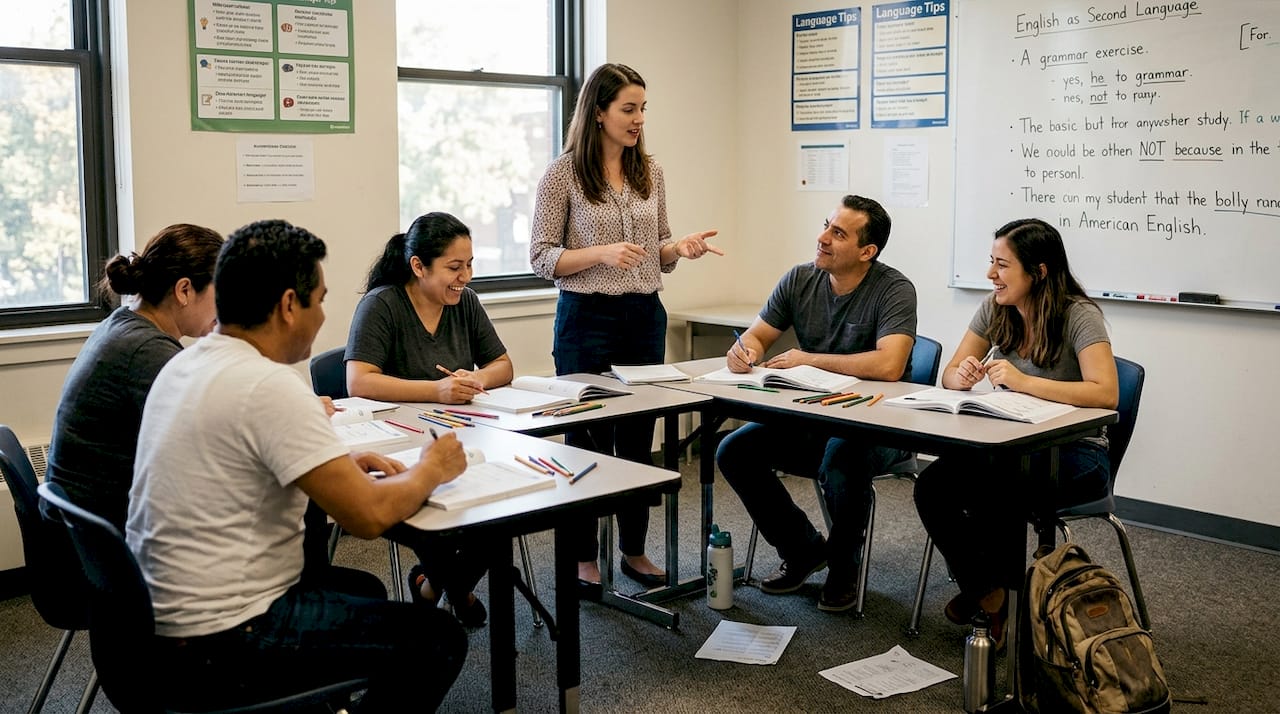
Choosing the right activities for your ESL classroom can feel overwhelming when you’re trying to meet the needs of students at different proficiency levels, from diverse cultural backgrounds, and with varying learning styles. The difference between a lesson that falls flat and one that sparks genuine language growth often comes down to how well your activities align with core teaching principles. This article walks you through a practical framework for evaluating ESL activities, then explores top options proven to boost engagement and language acquisition. You’ll learn specific criteria to guide your choices, compare popular activity types side by side, and discover tailored recommendations for common teaching scenarios you’ll encounter in classrooms worldwide.
Table of Contents
- Key takeaways
- How to choose effective ESL class activities
- Top engaging ESL class activities explained
- Comparing ESL activities for diverse classrooms
- Situational recommendations for ESL class activity selection
- Enhance your ESL teaching with TEFL Institute courses
- FAQ
Key Takeaways
| Point | Details |
|---|---|
| Selection criteria checklist | Use a simple checklist to evaluate proficiency, engagement potential, skill balance, and inclusivity before selecting an ESL activity. |
| Differentiation for diverse learners | Prepare multiple versions or extensions of the same activity to accommodate different proficiency levels and cultural backgrounds. |
| Cultural sensitivity matters | Choose topics and scenarios that are accessible across cultures and invite students to share their own perspectives. |
| Engagement through authentic tasks | Pick tasks that require authentic communication and meaningful collaboration so learners focus on the goal rather than language practice. |
How to choose effective ESL class activities
Before selecting any activity, you need a clear framework to evaluate whether it will actually work for your students. The most effective ESL activities share several characteristics that transcend specific teaching contexts or student ages.
Start by assessing your students’ language proficiency levels. An activity that challenges intermediate learners might completely overwhelm beginners or bore advanced students. For diverse groups, use tiered activities, differentiation, cultural sensitivity, and inclusive materials to address varying proficiency and backgrounds. This means preparing multiple versions of the same activity or building in optional extensions and supports.
Cultural sensitivity matters more than many teachers realize. Activities that assume shared cultural knowledge can alienate students or create uncomfortable situations. Choose topics and scenarios that feel accessible across cultures, or deliberately incorporate opportunities for students to share their own cultural perspectives. This approach transforms potential barriers into learning opportunities.
Engagement potential separates activities that students tolerate from those they genuinely enjoy. Look for tasks that create information gaps, require authentic communication, or incorporate elements of play and competition. The best activities make students forget they’re practicing English because they’re focused on completing a meaningful task.
Skill integration determines how much language practice students actually get. Activities that combine listening with speaking, or reading with writing, provide richer learning experiences than isolated skill practice. Consider how each activity balances receptive skills like listening and reading with productive skills like speaking and writing.
Pro Tip: Create a simple checklist with these criteria and use it every time you plan a lesson. Over time, you’ll develop an instinct for spotting activities that check multiple boxes at once, making your planning faster and more effective.
Your ESL classroom management tips guide should complement your activity choices. Even the most engaging activity will fail without clear instructions, appropriate grouping strategies, and established routines that students understand.
Top engaging ESL class activities explained
Now that you understand the selection criteria, let’s examine specific activities that consistently deliver results in ESL classrooms worldwide. Each activity serves different learning objectives and suits particular classroom dynamics.
The PPP model is core for ESL grammar and lesson activities, involving context introduction, controlled practice, and free communicative production. This three-phase approach works beautifully for teaching new language structures. In the presentation phase, you introduce the target language in context through a story, dialogue, or authentic material. During practice, students complete controlled exercises that focus on accuracy, like fill-in-the-blank activities or sentence transformations. Finally, production activities let students use the new language freely in conversations, role-plays, or creative tasks. This progression builds confidence while ensuring students understand the form before using it communicatively.
Role-plays and information gap activities create authentic communication needs. In a role-play, students take on specific identities and interact to achieve a goal, like negotiating a business deal or resolving a customer service complaint. Information gap tasks work by giving different students different pieces of information, forcing them to communicate to complete a task. For example, one student might have a train schedule while their partner has a list of appointment times, and together they must find a suitable travel time. Interactive activities like role-plays, information gap tasks, discussions, debates enhance engagement and language practice.

Debates and structured discussions push students to use language for critical thinking. Start with accessible topics that don’t require specialized knowledge, like “Should students choose their own homework?” or “Is it better to live in a city or the countryside?” Provide sentence frames and useful phrases to support students during the debate. This scaffolding helps lower-level students participate while still challenging advanced learners to use sophisticated argumentation.
Games transform vocabulary practice from tedious memorization into engaging competition. Fun ESL icebreakers can warm up your class, while engaging ESL games and ESL vocabulary games provide structured practice opportunities. Games like Taboo, where students describe words without using certain related terms, force creative language use. Running dictation combines physical movement with reading, writing, listening, and speaking as students race to reconstruct a text posted around the room.
Digital multimodal tools enhance interaction and motivation in ways traditional materials cannot. Interactive whiteboards, language learning apps, and virtual reality experiences create immersive contexts for language use. Students might explore a virtual museum and describe what they see, collaborate on a shared digital document, or record video presentations that they can review and improve. These tools particularly benefit kinesthetic and visual learners who struggle with purely auditory or text-based instruction.
Pro Tip: Keep a teaching journal where you note which activities worked well with specific classes and why. After a few months, you’ll have a personalized activity bank tailored to your teaching context and student population.
| Activity Type | Primary Skills | Engagement Level | Setup Complexity |
|---|---|---|---|
| PPP Model Tasks | Grammar, All Skills | Medium to High | Medium |
| Role-plays | Speaking, Listening | High | Low to Medium |
| Information Gaps | Speaking, Listening | High | Low |
| Debates | Speaking, Listening, Critical Thinking | Very High | Medium |
| Vocabulary Games | Vocabulary, Speaking | Very High | Low |
| Digital Tools | All Skills | High | Medium to High |
Comparing ESL activities for diverse classrooms
Understanding the trade-offs between different activity types helps you make strategic choices based on your specific teaching situation. No single activity works perfectly for every classroom, so comparing options reveals which best fits your current needs.
Engagement levels vary significantly by activity structure and student personality. Extroverted students thrive in debates and role-plays that put them center stage, while introverted learners might prefer information gap activities with a single partner or digital tasks they can complete more independently. Games generate high engagement across personality types, but the competitive element can stress some students. Consider rotating activity types to ensure all students experience their preferred learning modes regularly.
Skill emphasis differs dramatically between activities. Debates heavily emphasize speaking and listening with some reading during preparation, while digital storytelling projects might balance all four skills more evenly. Grammar-focused PPP activities concentrate on accuracy and form, whereas communication games prioritize fluency over correctness. Your curriculum goals should guide which skill balance you prioritize in any given lesson.
Digital activities boost vocabulary retention and engagement in ESL settings with demonstrated empirical improvements. However, they require reliable technology access, which not all teaching contexts provide. Low-tech alternatives like information gaps and role-plays deliver strong results without any technology, making them more versatile for teachers working in under-resourced settings or dealing with unreliable internet connections.
Inclusivity and adaptability determine whether an activity works for mixed-proficiency groups. Tiered tasks, where students complete different versions based on their level, work well for information gaps and project-based activities. Games can accommodate different levels by adjusting rules or creating mixed-ability teams where stronger students support weaker ones. Debates and discussions require more careful scaffolding to ensure lower-level students can participate meaningfully alongside advanced peers.
| Consideration | Traditional Activities | Digital Activities | Game-Based Activities |
|---|---|---|---|
| Technology Required | None to minimal | Significant | Minimal |
| Preparation Time | Low to medium | Medium to high | Low |
| Differentiation Ease | Medium | High | High |
| Student Autonomy | Medium | High | Medium |
| Immediate Feedback | Teacher-dependent | Often automatic | Peer and teacher |
| Cultural Adaptability | High | Medium | High |
Your ESL lesson planning 2026 strategy should account for these variables when mapping out your curriculum. Balance high-prep digital activities with low-prep games and discussions to maintain sustainability throughout the term.
Resource requirements extend beyond technology to include physical space, materials, and time. Role-plays and debates need minimal materials but benefit from adequate space for students to spread out and talk without disturbing others. Games might require cards, boards, or other manipulatives that you’ll need to create or purchase. Digital activities demand not just devices but also reliable platforms and often paid subscriptions. Factor these practical constraints into your decision-making process.
Situational recommendations for ESL class activity selection
Different teaching contexts demand tailored approaches to activity selection. Understanding these situational factors helps you adapt general principles to your specific classroom reality.
For low-proficiency groups, challenges for ESL low proficiency benefit from pre-teaching vocab and scaffolding. Start every activity with explicit vocabulary introduction and provide visual supports like pictures or realia. Use sentence frames extensively so students have linguistic models to build from. Choose activities with highly predictable structures, like information gaps with clear question-answer patterns or role-plays with scripted dialogues students can modify slightly. Build in plenty of repetition through multiple rounds or variations of the same activity type.
Mixed-level classrooms present unique challenges that tiered tasks address effectively. Create three versions of the same core activity with varying complexity. Beginners might complete a structured dialogue with minimal blanks to fill in, intermediate students work with a dialogue outline requiring more generation, and advanced students create dialogues from scratch with only a situational prompt. This approach keeps everyone working toward the same learning objective while respecting different readiness levels. Pair students strategically, sometimes matching similar levels for appropriate challenge and other times mixing levels so stronger students can model for weaker ones.
Online and tech-enabled classrooms open possibilities unavailable in traditional settings. Digital storytelling projects let students combine images, text, and audio to create narratives they share with classmates. Virtual reality field trips provide immersive contexts for language use, like ordering food in a virtual restaurant or navigating a virtual airport. Breakout rooms facilitate small-group discussions that might feel awkward in a physical classroom where conversations overlap. However, online settings also bring challenges around social connection and convenience that affect engagement differently than in-person instruction.
Culturally diverse classes require activities that honor different backgrounds while building cross-cultural understanding. Choose topics that invite students to share their own experiences rather than assuming shared cultural knowledge. Use images and examples from multiple countries and cultures. When teaching idioms or culturally specific language, explicitly discuss the cultural context and invite students to share equivalent expressions from their languages. This approach validates students’ identities while expanding everyone’s cultural awareness.
Pro Tip: Survey your students early in the term about their activity preferences, learning style, and comfort with different task types. This data helps you balance your activity choices to meet diverse needs while introducing students to new approaches they might initially resist but ultimately benefit from.
Your oral proficiency tips and ESL lesson plan examples provide additional frameworks for implementing these situational strategies in your specific teaching context.
Enhance your ESL teaching with TEFL Institute courses
Mastering the art of selecting and implementing effective ESL activities takes practice, feedback, and ongoing professional development. The strategies outlined in this article provide a strong foundation, but transforming these principles into consistent classroom success requires hands-on experience and expert guidance.
TEFL Institute’s TEFL certification courses Texas and other locations worldwide prepare you to confidently implement diverse ESL activities with students at all proficiency levels. Our curriculum covers activity design principles, differentiation strategies, and classroom management techniques that bring these teaching approaches to life. Through course extensions, you’ll gain specialized skills in areas like teaching young learners, business English, or exam preparation, each requiring distinct activity adaptations. Our TEFL internships sales provide supervised teaching opportunities where you’ll apply these activity selection principles with real students, receiving feedback from experienced mentors. Position yourself for success teaching globally with recognized credentials that demonstrate your ability to create engaging, effective ESL learning experiences.
FAQ
What are the best interactive ESL activities for beginners?
Role-plays with scripted dialogues, simple information gap tasks like spot-the-difference activities, and fun ESL icebreakers work exceptionally well for beginners. These activities provide clear structures and predictable language patterns that build confidence. Games like Bingo or memory matching with vocabulary cards engage beginners without overwhelming them, while total physical response activities connect language to movement for kinesthetic learners.
How can digital tools enhance ESL class activities?
Digital activities boost vocabulary retention and engagement in multilingual ESL settings. Interactive apps provide immediate feedback that helps students self-correct without teacher intervention, building autonomy. Virtual reality creates immersive language contexts impossible to replicate in traditional classrooms, while collaborative digital documents enable authentic communication tasks where students must negotiate meaning to complete shared projects.
What strategies help manage mixed proficiency levels in ESL classes?
Use tiered activities, differentiation, cultural sensitivity, and inclusive materials for varying proficiency groups. Create multiple versions of activities with different complexity levels so all students work toward the same objective at appropriate challenge levels. Strategic pairing sometimes matches similar levels and other times mixes levels for peer support. Your ESL classroom management tips guide offers additional frameworks for orchestrating complex classroom dynamics.
How often should I rotate between different activity types?
Aim to include at least two different activity types per lesson to maintain engagement and address diverse learning preferences. Over a week, students should experience a full range including structured practice, communicative tasks, games, and independent work. This variety prevents monotony while ensuring students develop all language skills systematically rather than over-emphasizing any single approach.
Can traditional activities compete with digital tools for engagement?
Absolutely. Well-designed traditional activities like debates, running dictation, and information gaps generate extremely high engagement without any technology. The key lies in creating authentic communication needs and incorporating elements of play, competition, or personal relevance. Digital tools offer unique affordances, but they complement rather than replace effective traditional activities that have proven successful across decades of ESL teaching.
Recommended
- ESL Teaching Tips 2025: Boost Oral Proficiency by 40% | TEFL Institute
- Teaching Aids in ESL: 35% Boost in Engagement for 2026 | TEFL Institute
- ESL Teaching Terminology: Boost Your Classroom Skills | TEFL Institute
- How to Make ESL Learning fun with Game? TEFL Institute
- Custom AI Voice Agent for Education
TEFL Institute guides

Thailand
Visas and teaching licences
Germany
Freelance work and pay
Italy
Jobs, pay and visa routes
Dubai
Pay, requirements and visas
Estonia
Jobs, pay and work routes