
 United Kingdom (UK)
 United States (US)
 Canada
 South Africa
 India
India Australia
 New Zealand
 China
China Russia
 Germany
 France
 Spain
Spain Netherlands
 Vietnam
 United Arab Emirates
 Italy
Italy Poland
 Thailand
 Türkiye








 Algeria


February 17, 2022
English Teaching: What You Need To Know

TEFL is a fantastic opportunity to travel, see the globe, and earn money teaching English, but it can be confusing..
READ MORETo teach English online you need strong English, a recognised TEFL certificate (120 hours is the usual starting point), a reliable computer, headset and broadband connection, and a quiet place to teach. Many platforms do not ask for a degree. Pay depends on the model: some apps pay a fixed rate per minute, marketplaces let you set your own price and take a commission, and private students pay you directly. From the UK you are usually self-employed, so the income is taxable.
Last updated 12 October 2026. This page is the main guide to teaching English online on teflinstitute.com. Platform pay figures were checked against the platforms’ own pages on 12 October 2026.
This page sets out the whole picture in one place: how to get qualified, which kinds of employer and platform exist, how each one pays, what kit you need and the legal and tax points that catch new teachers out. When you are ready to apply, our guide to getting hired to teach English online, with or without a degree goes through the platforms one by one.
| Question | Short answer |
|---|---|
| Minimum qualification | A 120-hour TEFL certificate is the usual starting point. Cambly and Preply state that no certificate is needed to apply; other employers do ask for one, so check each advert |
| Degree needed? | Not for many marketplaces and conversation apps. Some structured online schools and kids’ platforms do ask for one |
| Experience needed? | Not always. Conversation apps and marketplaces take new teachers; kids’ platforms and online schools often ask for some |
| Typical pay models | Per minute, per class, or your own hourly rate minus commission |
| Hours | You choose on most platforms; peak demand follows your students’ time zones |
| Tax (UK) | Usually self-employed. Register for Self Assessment if gross trading income goes over £1,000 in a tax year (GOV.UK) |
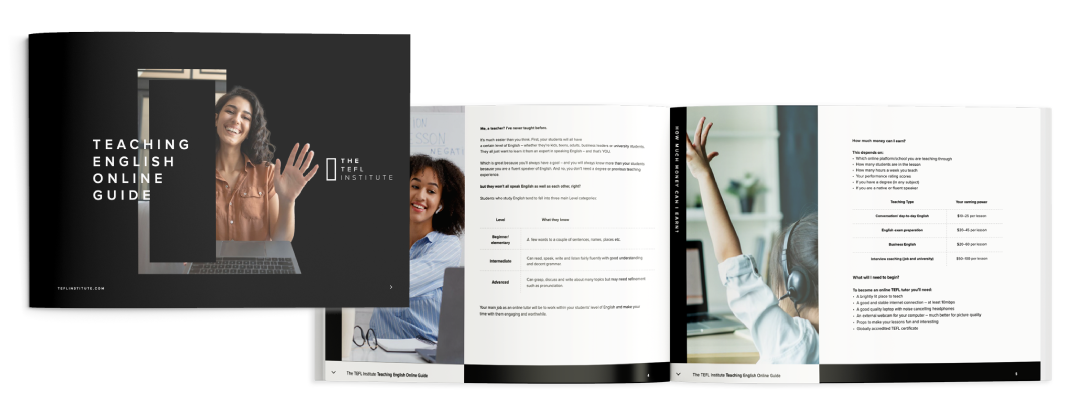
Teaching English online is one of the most flexible ways to start a career in TEFL. With an accredited TEFL certification, a reliable internet connection, and the right teaching setup, you can teach students from home or while travelling.
Many online teaching companies look for fluent English speakers with a recognised TEFL qualification. While some employers prefer a degree, many online English teaching jobs are open to candidates who have strong communication skills and a high-quality TEFL certificate.
We recommend starting with an accredited 120-hour TEFL course, as this is widely considered the minimum standard for teaching English online confidently and professionally. If you want to strengthen your virtual classroom skills, you can also add a specialist course focused on teaching English online.
Online English teachers can work with children, adults, business professionals, or exam students preparing for IELTS and other language tests. This gives you the freedom to choose a teaching path that matches your interests, schedule, and long-term goals.
Teaching English online also offers real lifestyle flexibility. You can work full-time, build a part-time side income, or combine online teaching with travel. Many teachers prefer online TEFL work because it allows them to manage their own schedule while gaining experience with students around the world.
Once you are qualified, you can apply through established employers or use a TEFL jobs board to find remote teaching opportunities. Working with an employer is often the easiest way to begin, because they usually manage bookings, payments, and student matching for you.
With the right TEFL certification and support, teaching English online can become a practical, rewarding career path with global opportunities.
As a leading TEFL course provider, we are here to assist you in starting your journey as an online English teacher. Our globally recognized TEFL courses provide you with the necessary skills to confidently teach English to adults or young learners online.
Check out some of the best online TEFL companies below, or talk to us today to learn more about how to TEFL online.
Learning to teach English online is quite different from just speaking English well, which is why we have developed a tried and tested method. Our TEFL courses equip you with everything you need to know to teach spoken and written English online, with all the weird and wonderful nuances of the English language.
Most platforms look for fluent, confident English rather than a particular passport. Non-native speakers can and do teach English online; what matters is your level of English and your ability to teach it. If you are unsure of your level, you can take a free test on our site.
There are various TEFL courses available, and we have designed ours to be comprehensive, providing the best possible start for our online English teachers. While we always recommend that the 120-hour TEFL is the minimum starting point, we offer other levels as well. Our qualifications are regulated, internationally recognized, and accredited. In the UK, the regulatory body is OFQUAL. It is essential to obtain a TEFL certification with proper accreditation, otherwise, employers may not accept it. Working with us ensures you have the right accreditation. It’s worth noting that while a bachelor’s degree is not a mandatory requirement for a TEFL certification, some employers may prefer English teachers with a degree. However, there are still plenty of opportunities available for online English teachers without one.
To teach English online, you usually need to have a PC or Laptop. There are companies that use mobile phones or tablets, but they are few and far between. You should create your virtual classroom in a quiet space in your home away from anyone else who lives there. The audio equipment needs to be suitable, and many companies will insist on a headset with a microphone combo. It is entirely possible to move your office around the home or even around the world if you have a laptop or can teach from your mobile device. You need to be mindful of interruptions and background noise. For younger learners, you will want to have a few props and visual aides; these will be explained in your course and are usually cheap to buy or even make yourself. As you develop your style of teaching English online, your classroom background and props can help your teaching to be that extra bit fun and interesting.
Working from home can be a unique experience, with some finding it ideal and others feeling isolated. While there may not be the daily water cooler chats with your colleagues, you can still network with other English teachers online and be part of a community. It is advisable to connect with other online teachers to learn from their experiences and stay motivated together.
In the beginning, you may need to put in extra effort to acquire students. However, once you get a feel for online teaching and demonstrate your unique style and skills, you will find that students start seeking you out. Your positive attitude, originality and motivation will be key in setting you apart and ensuring your success in teaching English online. Stay proactive, dedicated, and enthusiastic, and you will attract students and excel in your online teaching career.

The first and most crucial requirement for teaching English online is fluency in the language. Many students prefer to work with fluent English speakers, which includes both native and non-native speakers. If you are fluent in English with strong written, oral, and reading skills, you will find our courses fun and empowering, equipping you with the necessary skills. You do not need a degree in English or any subject for that matter.

Although not mandatory, having a TEFL qualification to teach English online is highly recommended. While there are numerous job opportunities available, many companies insist on a TEFL certification that is regulated and properly accredited, such as the ones we offer. Going through a recognized TEFL certification company not only opens doors but also allows you to learn from our tried and tested methods, providing you with a range of teaching techniques and skills for your student’s success.

To teach English online, an internet connection is essential, as it enables you to teach from anywhere in the world. However, it’s important to ensure that you have a fast and stable connection for smooth video chat. While you can use a laptop or desktop computer, using a phone or tablet may present limitations in this sense due to their lower power. Your device should have a built-in or flagged external webcam of at least 720p for effective communication through facial expressions and body language. Additionally, using a headset with a microphone helps maximize clarity and minimize background noise interference.

Most students and institutions use Zoom or Microsoft Teams for online English lessons, and Google Meet is also common. Some companies may have their own platforms, which they will guide and train you on if you work for them. Video chat plays a crucial role, so it’s important to be comfortable and confident on camera, and not hold back or be self conscious. Remember, students are there to learn, and your facial expressions and gestures are integral to the teaching process.

Working as an online English teacher requires building an online presence, similar to any other career. Create a comprehensive resume and develop your online profile to attract potential employers or students. Highlight your strengths as a teacher, supported by your qualifications and experience, as well as a great introduction video. Consider creating a business page on Facebook and LinkedIn, and possibly even a website, to market yourself as an English teacher online.

To work as an online English teacher, you need a reliable payment channel to accept payments from students or employers. PayPal is an internationally recognized and trusted payment platform, so opening an account with them is recommended. Familiarize yourself with the necessary details to receive payments successfully.

You’re almost there. Now that you’re all set up, it’s time to find teaching opportunities. While there are numerous job boards online, focus on reputable platforms that actually connect you with real students, not just empty promises. Initially, you may want to consider working with an online language provider who can provide you with students, allowing you to gain experience. As you become more experienced, you can explore the option of working independently if you prefer.

Once you secure a job or find your students, you’re ready to begin enjoying teaching and engaging with your students online. Remember, we offer ongoing support to all of our students, so don’t hesitate to ask for tips or advice.
The question on everyone’s minds is – ‘How much could I earn as an online English teacher?’ Calculate your online TEFL salary now by taking our quick quiz to find out.
Calculate My Salary


What’s Included
 120 Hour Advanced International TEFL Training20 Hours of Free Zoom Classes6 Months Study Time30 Hour Teach Young Learners30 Hour IELTS Specialist30 Hour Teaching Business English 30 Hour Advanced GrammarStudy online at your own pace with 24/7 accessEmployer certificate verificationPersonal tutor support, student discord chat & Live zoom classes
 Level 5 Training
Free Resources

Free 20 Hours Live TEFL Zoom Classes

24/7 Access

Personal Tutor Assistance

Digital Certificate

Teacher: No teaching certificate, bachelor’s degree or prior teaching experience needed (Cambly tutors page, checked 12 October 2026)
Tech – PC or Laptop with webcam/Headset and mic/fast and reliable internet
Pay: $0.17 per minute
Hours: Set your own, with no minimum commitment

Teacher: Native English speaker/TEFL certification/2-3 years of teaching experience/Registered self-employed
Tech – PC or Laptop with webcam/Headset and mic/fast and reliable internet/Zoom account
Pay: €7-€11/$7.85-$12.34 an hour
Hours: Set your own, with no minimum commitment

Teacher: Over 18 with six months of teaching experience and a TEFL certificate. Check the platform’s current tutor requirements page for passport and language rules
Tech – PC or Laptop with webcam/Headset and mic/fast and reliable internet
Pay: $5-$11/€4-€10 an hour paid via PayPal
Hours: Set your own, with no minimum commitment

Teacher: Over 18; teaching experience preferred, not mandatory. Check the platform’s current tutor requirements page for passport and language rules
Tech – PC or Laptop with webcam/Headset and mic/fast and reliable internet
Pay: 3 unpaid sessions, $8/€7 per 25 min session, takes 20% in commission
Hours: Set your own, with no minimum commitment

Teacher: No specific certification or teaching experience required; strong communication skills (Preply teach page, checked 12 October 2026)
Tech – PC or Laptop with webcam/Headset and mic/fast and reliable internet
Pay: Choose your own rate-advise between $15-£25 to get work
Hours: Set your own, with no minimum commitment – the more you make, the less commission charged

Teacher: Native English Speaker North America – TEFL certification – 1-year experience teaching or degree – Spanish as a second language is a plus
Tech – PC or Laptop with webcam/Headset and mic/fast and reliable internet
Pay: $15/€14 per hour
Hours: Set your own, minimum of 10 hours a week, maximum of 36 hours
Teacher: TEFL certificate or teaching experience that can be verified. Non-native English teachers can apply; check Verbling’s current requirements page for its language-level rules.
Tech – PC or Laptop with webcam/Headset and mic/fast and reliable internet
Pay: Set your own rate; the site takes 15%
Hours: Set your own, with no minimum commitment

Teacher: US native speakers only, qualifications irrelevant. They have their own testing process
Tech – PC or Laptop with webcam/Headset and mic/fast and reliable internet
Pay: Varies per subject and tutor quality
Hours: Set your own, with no minimum commitment

Teacher: TEFL or Degree or Licensed teacher or proof of employment at language school
Tech – PC or Laptop with webcam/Headset and mic/fast and reliable internet
Pay: Set your own rate from $10 per hour – a 15% commission paid to the site.
Hours: Set your own, with no minimum commitment
Speaking English well is not the same as teaching it. A TEFL course teaches you how to plan a lesson, explain grammar you use without thinking, correct pronunciation, and keep a learner talking on a video call. It is also the credential many employers screen for, and the one students look for on a profile.
| Your plan | Suitable qualification | Why |
|---|---|---|
| A few hours a week on a conversation app or tutoring marketplace | 120-hour TEFL certificate | Meets the usual baseline and covers lesson planning and methodology |
| Online teaching as a main income, adult or exam students | Ofqual-regulated Level 5 TEFL Diploma (qualification number 610/1571/4) | A regulated qualification an employer can look up on the Ofqual register; helps with higher-paying schools and direct clients |
| Online first, then abroad later | Level 5 Diploma plus an online-teaching specialist add-on | Keeps the classroom route open; stricter countries and employers ask for more hours |
| Already TEFL-qualified, new to video teaching | 30 Hour Teaching English Online specialist course | Focuses on the skills and strategies needed in a virtual teaching environment |
Not sure which level fits? Compare our online TEFL courses side by side, or read what accredited and regulated actually mean before you pay any provider.
A degree is a requirement set by individual employers, not by the job of teaching English online itself. In practice it splits like this:
Our full guide explains how to teach English online without a degree, including which routes stay open.
“Online English teacher” covers several quite different jobs. Knowing which one you are applying for tells you what the platform expects and how you will be paid.
| Employer type | How you get students | Who sets your rate | Who it suits |
|---|---|---|---|
| Conversation apps | Students call in, or book you, for informal speaking practice | The platform (often per minute) | New teachers who want flexible, low-preparation hours |
| Tutoring marketplaces | Students find your profile, book a trial, then return | You, minus the platform’s commission | Teachers willing to build a profile, reviews and a niche |
| Structured online schools | The school assigns classes and supplies a curriculum | The school (per class or per hour) | Teachers who want regular, planned work |
| Kids’ platforms | Scheduled classes with young learners, materials supplied | The platform, sometimes with bonuses | Teachers with energy for young learners and some experience |
| Business English providers | Short or long contracts with professionals or companies | Provider or negotiated | Teachers with a professional background or Level 5 |
| Private students | Your own marketing, referrals, a booking page | You | Teachers with some reviews and confidence, usually alongside a platform |
One market has largely closed. Under China’s “Double Reduction” policy, foreigners located abroad cannot be hired to provide online tutoring to school-age children in mainland China (Trade Commissioner Service of Canada summary, checked 12 October 2026). Our guide to teaching English online to Chinese students covers what work remains.
Online pay is usually quoted in US dollars, paid through PayPal, Stripe or a similar service, and it varies widely by platform, student type and your own reviews. Treat any figure as a starting point and check the platform’s current terms.
Your monthly income is your rate multiplied by the hours students actually book, minus commission, payment fees, and currency conversion. New teachers rarely fill every available hour in the first months. Try our online teaching salary calculator or the earnings planner to model your own numbers. We do not publish a single “average salary” for online teaching because the spread between platforms is too wide to be useful.
This section is general information for UK residents, not tax or legal advice. Check your own position with HMRC or an accountant.
Our TEFL courses are studied online at your own pace, and the Level 5 Diploma covers online and face-to-face teaching side by side. Its modules include Learners’ Needs and Teaching Methodologies for Online and Face-to-Face Learning, Online Teaching Using Teaching Aids and Materials, and Lesson Planning and Online Classroom Management Techniques.
What we do not do: we do not promise you a job, a number of students or an income. A recognised qualification widens the platforms you can apply to and helps you teach well once you are hired. Getting accepted still depends on your application, your demo lesson and the platform’s own screening.
Yes, on many conversation apps and tutoring marketplaces. A TEFL certificate and a short, confident introduction video do most of the work that experience would otherwise do. Kids’ platforms and structured schools are more likely to ask for experience.
Not on many platforms. What matters is the level of your English and your ability to teach it. Some platforms state a preference or a requirement for particular passports or accents, so check each one.
On most platforms you set your own availability. Bookings follow your students’ time zones, so early mornings and evenings in the UK can be busier than the middle of the day.
For some teachers it becomes one, usually by combining a platform with private students or contracts. For most new teachers it starts as part-time, flexible income.
Compare online TEFL courses · Try three days free
Even in an online setting, creating a classroom environment is crucial. Before you start working as an online English teacher, it’s important to plan how you will present your lessons and enhance the learning experience for your students. While some aspects will vary based on the age group you’ll be teaching, there are general considerations that apply across the board. Here are four valuable tips to create an awesome online classroom and become a sought-after online English teacher:

Although there may not be a physical classroom, you can still create a classroom atmosphere. While some platforms provide online environments with useful features, in many cases, you’ll use platforms like Zoom or Microsoft Teams to connect with your students. It’s up to you to establish the best learning environment in this case.
It is important to make use of visual props effectively. For example, if you’re teaching fruit names, display a variety of fruits in front of you.
Some teachers create a backdrop for the camera or set up a dedicated corner resembling a classroom, complete with a whiteboard and other relevant items.
Also ensure proper lighting in your space. Students can gauge a lot from your facial expressions, so avoid sitting in a dimly lit area. If necessary, consider adding a ring LED light, but any well-lit room will suffice.

Learning is a complex process, and some students may require more time to retain information. It’s essential to maintain a positive attitude, even when you are having a ‘bad day’. Learn how to be fun, energetic, engaging, deliver constructive criticism and always praise achievements, regardless of their magnitude.
Being a positive and happy teacher will attract students more than a neutral or unfriendly demeanor. If you aim to build your client list, start building a positive persona. Find ways to encourage struggling students and adapt your teaching approach to accommodate their needs.

Join TEFL teacher groups on social media platforms to connect and network with fellow educators. Building a support system and offering assistance is crucial, especially when you’re new to online English teaching. These communities provide valuable resources and allow for sharing ideas for things such as lesson plans. You can also seek advice on specific challenges you may encounter. Remember to maintain student confidentiality when discussing any issues.

Take advantage of the abundance of resources available online for TEFL teachers. These resources not only provide valuable teaching materials but also share information about job vacancies if you’re seeking additional work opportunities. By staying updated on the latest trends, you can identify specific areas where you can further your skills through additional courses. For instance, Business English is in high demand and presents a lucrative avenue for online English teachers.
TEFL is a fantastic opportunity to travel, see the globe, and earn money teaching English, but it can be confusing..
READ MORE
The COVID-19 pandemic has plucked many teachers out of the classroom and into the comfort of their own homes. But.
READ MORE
The shift from in-class learning to online classrooms has accelerated as English students move their studies online due to COVID-19..
READ MORE TEFL is a fantastic opportunity to travel, see the globe, and earn money teaching English, but it can be confusing. With this short TEFL beginners.
READ MORE
With schools opening back up globally and online teaching booming, now is a great time to get your TEFL CV up to scratch. It’s no.
READ MORE