

 United Kingdom (UK)
 United States (US)
 Canada
 South Africa
 India
India Australia
 New Zealand
 China
China Russia
 Germany
 France
 Spain
Spain Netherlands
 Vietnam
 United Arab Emirates
 Italy
Italy Poland
 Thailand
 Türkiye








 Algeria


TEFL Career Paths Explained: Global Opportunities
TEFL Career Paths Explained: Global Opportunities

Stepping into the world of TEFL often means sorting through a maze of information and misleading assumptions. Many imagine teaching English abroad is limited to one kind of classroom job, but the reality is much broader and more rewarding. Understanding TEFL certification reveals how this qualification opens doors to online teaching, corporate training, international schools, and more. Explore how your TEFL journey can lead to a flexible, global career with countless pathways, tailored to your interests and ambitions.
Table of Contents
- Defining TEFL Careers And Common Misconceptions
- Exploring TEFL Job Types Worldwide
- Qualifications, Certifications, And Required Experience
- Progression To Senior, Academic, And Specialized Roles
- Legal, Contractual, And Financial Considerations
- Risks, Challenges, And Common Mistakes To Avoid
Key Takeaways
| Point | Details |
|---|---|
| Diverse Opportunities | TEFL careers extend beyond traditional classrooms to include online platforms, corporate training, and international schools. |
| Certification Requirements | Most TEFL positions require a TEFL certification, strong communication skills, and a passion for education rather than extensive teaching experience. |
| Global Demand | The need for English instruction is growing, driven by business and technology, creating opportunities across various regions with different salary ranges. |
| Continuous Professional Development | Advancing in a TEFL career involves pursuing additional certifications and specialized training to enhance job prospects and adaptability in a global market. |
Defining TEFL Careers and Common Misconceptions
Teaching English as a Foreign Language (TEFL) represents a dynamic and versatile career pathway that offers professionals extraordinary global opportunities. While many aspiring educators view TEFL as simply teaching English abroad, the reality encompasses a far more nuanced and expansive professional landscape. Understanding fundamental TEFL facts helps demystify this complex career field.
Contrary to popular misconceptions, TEFL careers are not limited to traditional classroom settings. Modern TEFL professionals can work in diverse environments including:
- Online language platforms
- Corporate training programs
- International schools
- University language departments
- Private tutoring services
- Government education initiatives
- Multinational educational organizations
Many individuals mistakenly believe TEFL requires extensive language teaching experience or advanced linguistic credentials. However, most positions primarily demand a TEFL certification, strong communication skills, and a genuine passion for cross-cultural education. The barrier to entry is significantly lower than most people assume, making it an accessible career transition for many professionals.
The global demand for English language instruction continues expanding, driven by international business, academic exchange, and technological connectivity. Professionals with TEFL qualifications can expect opportunities across continents, with varying salary ranges and working conditions. Salary potential depends on factors like destination, qualifications, experience level, and specific institutional requirements.
Pro tip: Research specific regional requirements and potential salary ranges before committing to a TEFL career path to set realistic expectations and optimize your international teaching strategy.
Exploring TEFL Job Types Worldwide
Tefl job opportunities are incredibly diverse, spanning multiple sectors and geographical regions. Essential steps for teaching overseas reveal the expansive nature of these professional pathways. The global English language education market offers professionals numerous exciting career configurations that extend far beyond traditional classroom teaching.
The primary TEFL job types can be categorized into several distinct professional domains:
- Online Teaching Platforms: Virtual instruction for students worldwide
- Corporate Language Training: Business English programs for professional environments
- International School Positions: Full-time teaching roles in private/international schools
- University Language Departments: Academic positions teaching English at tertiary institutions
- Government Education Programs: National initiatives like Japan’s JET Program or South Korea’s EPIK
- Private Language Centers: Dedicated English language academies in multiple countries
- Freelance Tutoring: Independent teaching through digital and local platforms
Each job type presents unique advantages and challenges. Online platforms offer maximum flexibility, while international school positions provide stable salaries and comprehensive benefits. Corporate training roles demand specialized business communication skills, whereas university positions typically require advanced academic credentials.
Successful TEFL professionals understand that adaptability and cultural sensitivity are just as important as linguistic expertise in navigating global teaching opportunities.
Geographical considerations play a significant role in job selection. Different regions offer distinct teaching experiences, salary ranges, and professional development opportunities. Asian markets like China, South Korea, and Japan remain particularly robust for English language educators, offering competitive compensation and structured work environments.
Pro tip: Research specific regional employment regulations and visa requirements before committing to an international teaching position to ensure a smooth professional transition.
Qualifications, Certifications, and Required Experience
Navigating the complex landscape of TEFL qualifications requires understanding the essential credentials that employers value most. Teaching English certification pathways reveal the multifaceted nature of professional requirements in international English language education.
The core qualifications for TEFL professionals typically include:
- TEFL/TESOL Certification: Minimum 120-hour internationally recognized training
- Bachelor’s Degree: Preferred in any discipline, often a mandatory requirement
- Native or Near-Native English Proficiency: Demonstrated through language assessments
- Teaching Practicum: Practical classroom or online teaching experience
- Additional Language Skills: Bonus for multilingual candidates
- Specialized Endorsements: Business English, Young Learners, Online Teaching
Employers have increasingly sophisticated expectations for English language instructors. While a basic TEFL certification serves as an entry point, advanced credentials significantly enhance professional opportunities. Some prestigious positions require specialized diplomas, such as the Cambridge DELTA or Trinity College Diploma, which represent advanced pedagogical expertise.
Professional TEFL credentials are not just documents, but passports to global teaching opportunities that transcend traditional educational boundaries.
Geographical variations play a crucial role in qualification requirements. Asian markets like China and South Korea often mandate specific credential combinations, while Middle Eastern institutions might prioritize advanced degrees and extensive professional experience. Understanding these regional nuances can help professionals strategically develop their educational portfolios.

Here’s a comparison of TEFL credential requirements across global regions:
| Region | Common Qualifications | Salary Range | Distinctive Requirements |
|---|---|---|---|
| East Asia | TEFL, BA Degree | High | Police check, medical exam |
| Middle East | MA, advanced certification | Very High | Master’s preferred, tax-free salary |
| Europe | BA, TEFL/TESOL | Medium | EU work eligibility often required |
| Latin America | TEFL certification | Low-Medium | Often flexible credential rules |
Pro tip: Continuously update your professional credentials and seek specialized certifications that align with emerging global educational trends and technology-driven teaching methodologies.
Progression to Senior, Academic, and Specialized Roles
Professional advancement in the TEFL world requires strategic planning and continuous skill development. Building a global teaching career demands more than just initial certification, requiring a thoughtful approach to career trajectory and specialized expertise.
The career progression pathway for TEFL professionals typically involves several key stages:
- Entry-Level Instructor: Initial teaching positions in language schools or online platforms
- Experienced Teacher: Developing specialized skills and subject matter expertise
- Senior Instructor: Leadership roles with increased administrative responsibilities
- Academic Coordinator: Managing language programs and curriculum development
- Teacher Trainer: Mentoring and developing new TEFL professionals
- Educational Administrator: Leading international language education departments
- Curriculum Specialist: Designing advanced language learning programs
Advanced roles often require additional qualifications beyond standard TEFL certifications. Many senior positions demand graduate degrees, such as a Master’s in TESOL, Applied Linguistics, or Educational Leadership. Specialized endorsements in areas like business English, academic writing, or online instruction can significantly enhance career prospects.
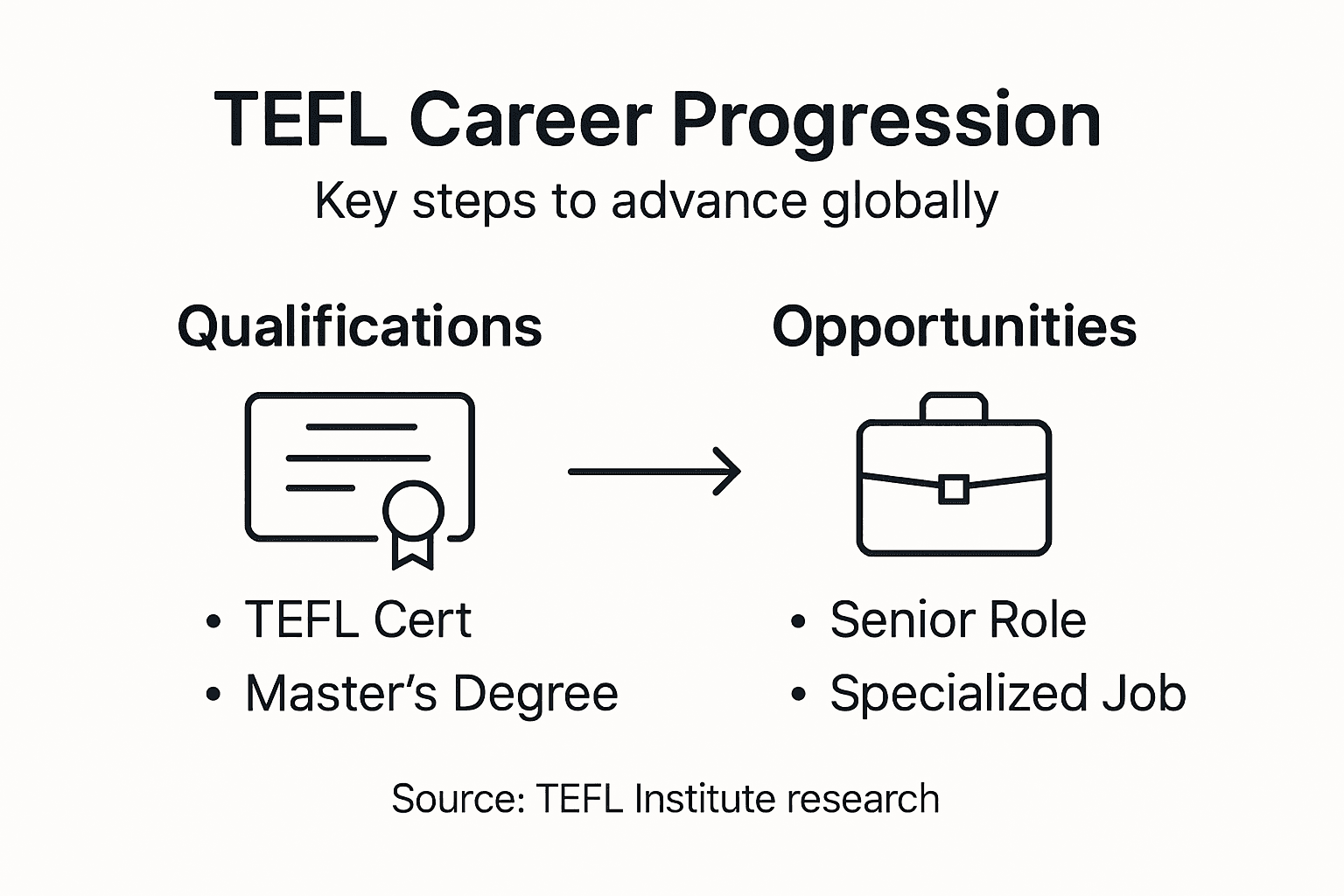
Below is a summary of typical TEFL career progression stages and advancement factors:
| Career Stage | Advancement Trigger | Common Next Step |
|---|---|---|
| Entry-Level Teacher | Completing first year abroad | Skill specialization |
| Experienced Educator | Gaining advanced certificate | Senior instructor role |
| Senior Instructor | Experience plus MA/TESOL | Academic coordination |
| Coordinator/Admin | Leadership experience | Regional management |
Career progression in TEFL is not linear but a dynamic journey of continuous learning and professional transformation.
Geographical mobility and cultural adaptability play crucial roles in advancing to senior positions. Professionals who demonstrate flexibility, develop cross-cultural communication skills, and remain committed to ongoing professional development are most likely to secure advanced roles in international education settings.
Pro tip: Invest in continuous professional development through advanced certifications, academic research, and international teaching experiences to create a compelling career progression strategy.
Legal, Contractual, and Financial Considerations
Navigating the complex landscape of international TEFL employment requires a comprehensive understanding of legal and financial frameworks. Steps for teaching overseas jobs highlight the critical importance of understanding contractual nuances before accepting international teaching positions.
Key legal and financial considerations for TEFL professionals include:
- Work Visa Requirements: Obtaining appropriate legal documentation
- Tax Obligations: Understanding international and local tax implications
- Contract Negotiation: Analyzing compensation, benefits, and termination clauses
- Health Insurance: Securing comprehensive international medical coverage
- Retirement and Savings: Planning for long-term financial stability
- Currency Exchange Risks: Managing potential financial fluctuations
- Professional Liability Protection: Securing appropriate insurance coverage
Employment contracts in the TEFL sector vary dramatically across different regions. Asian markets often provide housing allowances and round-trip airfare, while Middle Eastern positions might offer tax-free salaries and comprehensive benefit packages. Understanding these regional variations is crucial for making informed career decisions.
International TEFL employment is not just about teaching, but navigating a complex ecosystem of legal, financial, and professional expectations.
Financial planning requires careful consideration of total compensation beyond base salary. Factors like cost of living, potential savings rate, professional development opportunities, and long-term career trajectory must be evaluated holistically. Experienced TEFL professionals recommend maintaining financial flexibility and building a robust emergency fund.
Pro tip: Consult with tax professionals and legal experts specializing in international employment to fully understand your financial and legal obligations before accepting an overseas teaching position.
Risks, Challenges, and Common Mistakes to Avoid
The TEFL career landscape presents numerous potential pitfalls that can derail professional aspirations. Essential steps for teaching overseas jobs reveal critical insights into navigating potential challenges in international education environments.
Common risks and mistakes for TEFL professionals include:
- Cultural Misunderstandings: Inadequate preparation for cross-cultural communication
- Visa Compliance Issues: Failing to understand complex international work regulations
- Contract Misinterpretation: Overlooking critical contractual details
- Financial Unpreparedness: Insufficient emergency funds or budget planning
- Professional Credential Verification: Neglecting to validate institutional requirements
- Language School Reputation: Joining organizations with poor professional standards
- Personal Safety Considerations: Insufficient research about destination country conditions
Understanding institutional and regional variations is crucial for mitigating potential risks. Different countries have unique educational ecosystems with distinct expectations, legal frameworks, and professional norms. Successful TEFL professionals develop adaptability and comprehensive research skills to navigate these complex environments.
Professional resilience in TEFL is not about avoiding challenges, but developing strategic approaches to transform potential obstacles into opportunities for growth.
Psychological and emotional preparedness are often overlooked aspects of international teaching. Many professionals underestimate the personal challenges of living and working in unfamiliar cultural contexts. Developing robust mental health strategies, maintaining professional networks, and maintaining realistic expectations are critical for long-term success.
Pro tip: Conduct thorough background research on potential employers, engage with professional TEFL communities, and maintain a flexible, patient approach when encountering unexpected professional challenges.
Unlock Your Global TEFL Career with Confidence
Navigating the complex world of TEFL careers requires more than passion and dedication. The challenges of securing the right qualifications, understanding regional requirements, and progressing toward senior roles call for expert guidance and flexible training options. If you want to transform your TEFL ambitions into reality, gaining recognized certifications and accessing reliable career resources is essential. Whether your goal is to teach online, join international schools, or specialize in business English, the right preparation empowers you to meet global demand confidently.
Discover how TEFL Institute can help you overcome common career obstacles with comprehensive online TEFL courses, advanced diplomas, and specialized micro-credentials aligned with industry standards. Explore Teaching English Certification Pathways for insight on crucial credentials. Plus, get practical advice on Essential Steps for Teaching Overseas to secure positions worldwide. Take charge of your professional future now by visiting TEFL Institute’s homepage and enroll in a course tailored to your unique career path and ambitions.
Frequently Asked Questions
What qualifications do I need to start a TEFL career?
To start a TEFL career, you typically need a TEFL/TESOL certification (at least 120 hours), a bachelor’s degree in any discipline, native or near-native English proficiency, and a teaching practicum. Additional language skills and specialized endorsements can enhance your opportunities.
Are there different types of TEFL job opportunities available?
Yes, TEFL job opportunities are diverse and include online teaching platforms, corporate language training, international school positions, university language departments, government education programs, private language centers, and freelance tutoring.
How can I advance my TEFL career?
To advance your TEFL career, consider pursuing further qualifications such as a Master’s degree in TESOL or Applied Linguistics, gaining specialized certifications, and seeking leadership roles. Continuous professional development is key to progression.
What should I consider before accepting a TEFL job offer?
Before accepting a TEFL job offer, review the employment contract for compensation, benefits, and visa requirements. Understand the local financial implications, such as taxes and cost of living, and ensure you have adequate health insurance and professional liability protection.
Recommended
TEFL Institute guides

China
Z visa, pay and cities
Germany
Freelance work and pay
Japan
JET, ALT and eikaiwa pay
South Korea
EPIK, hagwons and pay
Italy
Jobs, pay and visa routes