

 United Kingdom (UK)
 United States (US)
 Canada
 South Africa
 India
India Australia
 New Zealand
 China
China Russia
 Germany
 France
 Spain
Spain Netherlands
 Vietnam
 United Arab Emirates
 Italy
Italy Poland
 Thailand
 Türkiye





 Algeria


Teaching English as a Second Language: Career Impact
Teaching English as a Second Language: Career Impact

Stepping into the world of ESL teaching brings both excitement and uncertainty, especially for those looking to expand their careers across European borders. The demand for comprehensive English language skills continues to grow as more learners aim for academic and professional opportunities worldwide. Whether you plan to teach online, abroad, or specialize in IELTS instruction, gaining updated certifications and training can help you reach diverse students and make a real difference in their success.
Table of Contents
- Teaching English as a Second Language Defined
- Types of ESL Teaching: Online, Abroad, IELTS
- Core Skills and Approaches for ESL Educators
- Certification Requirements and Legal Standards
- Roles, Responsibilities, and Common Challenges
Key Takeaways
| Point | Details |
|---|---|
| ESL Teaching Focus | ESL education aims to enhance communication skills for non-native speakers, enabling integration into English-speaking environments. |
| Teaching Pathways | Online, abroad, and IELTS preparation represent diverse ESL teaching options, each offering unique professional opportunities. |
| Core Competencies | ESL educators must develop adaptive teaching strategies, cultural sensitivity, and technological proficiency to effectively engage students. |
| Certification Importance | Obtaining internationally recognized certifications like TEFL or CELTA is crucial for pursuing ESL teaching roles globally. |
Teaching English as a Second Language Defined
Teaching English as a Second Language (ESL) represents a specialized educational practice focused on helping non-native speakers develop comprehensive English language skills. This discipline involves structured instruction designed to support learners in acquiring linguistic proficiency across listening, speaking, reading, and writing domains. ESL instructional methods vary widely, ranging from immersive approaches to systematic grammatical instruction.
The core objective of ESL education extends beyond basic language acquisition. Professionals in this field aim to enable students to effectively communicate, integrate into English-speaking environments, and access academic and professional opportunities. ESL teachers work with diverse populations, including immigrants, international students, refugees, and professionals seeking enhanced language capabilities. Their instructional strategies are tailored to meet individual learning needs, cultural backgrounds, and specific language goals.
In academic and professional contexts, ESL instruction focuses on developing nuanced communication skills. Language learners receive targeted training that prepares them for complex linguistic interactions, including academic writing, professional presentations, and cross-cultural communication. Successful ESL programs incorporate comprehensive skill development, cultural understanding, and adaptive teaching methodologies.
Pro Tip: Begin building your ESL teaching skills by immersing yourself in multicultural environments and practicing active listening techniques that transcend language barriers.
Types of ESL Teaching: Online, Abroad, IELTS
ESL teaching encompasses three primary professional pathways: online instruction, international abroad programs, and specialized test preparation like IELTS. Each modality offers unique opportunities for language educators to develop their careers and make meaningful educational impacts. IELTS teacher training programs provide comprehensive resources that illustrate the diverse approaches available to language professionals.
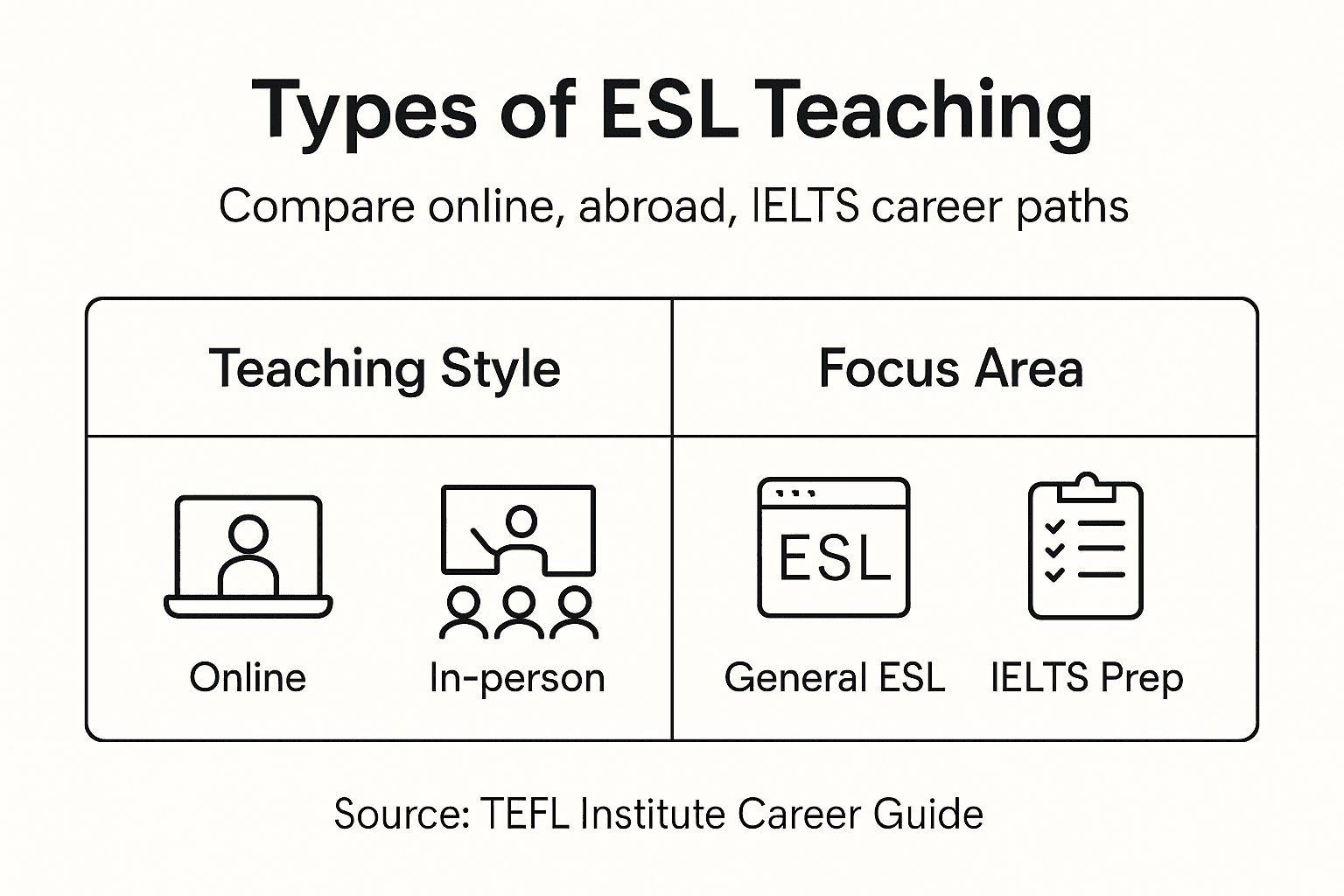
Online ESL teaching has emerged as a flexible and dynamic career option, allowing instructors to connect with students globally through digital platforms. Teachers can work with learners from various countries, offering one-on-one or group lessons across different time zones. Abroad teaching programs, conversely, provide immersive experiences where educators live and teach in foreign countries, deeply engaging with local cultures and language learning environments.
IELTS instruction represents a specialized niche within ESL teaching, focusing on preparing students for this critical international English proficiency examination. Instructors in this domain develop targeted strategies to help students improve their listening, reading, writing, and speaking skills specifically for academic and professional certification requirements. Online teaching platforms have significantly expanded opportunities for IELTS preparation, allowing teachers to reach global student populations regardless of geographic limitations.
Pro Tip: Develop cross-cultural communication skills and technological proficiency to maximize your effectiveness across different ESL teaching environments.
Here’s a concise comparison of the three main ESL teaching pathways and their unique characteristics:
| Teaching Pathway | Distinctive Features | Typical Student Group | Major Benefits |
|---|---|---|---|
| Online Instruction | Remote, flexible scheduling | International mixed ages | Global reach, digital resources |
| Abroad Programs | Cultural immersion, in-person | Local children/adults | Travel, cultural exchange |
| IELTS Preparation | Test-focused, strategic tips | Exam candidates, professionals | Exam success, certification |
Core Skills and Approaches for ESL Educators
Successful ESL educators must develop a comprehensive toolkit of pedagogical skills and adaptive teaching strategies. Effective ESL teaching strategies emphasize interactive methodologies that engage students and create dynamic learning environments. These approaches require a nuanced understanding of language acquisition, cultural sensitivity, and innovative instructional techniques.

The core language skills fundamental to ESL instruction encompass listening, speaking, reading, and writing. Educators must design integrated lessons that develop these skills holistically, recognizing that language learning is a complex, interconnected process. Core language skill development involves creating authentic contexts where students can practice communication in meaningful ways, bridging theoretical knowledge with practical application.
Technology and cultural responsiveness have become critical components of modern ESL teaching approaches. Instructors must leverage digital tools to support diverse learning styles while maintaining a culturally sensitive classroom environment. This means adapting teaching methods to individual student needs, understanding cultural contexts, and creating inclusive learning spaces that validate students’ linguistic backgrounds and experiences.
Pro Tip: Continuously update your teaching toolkit by attending professional development workshops and engaging with diverse student populations to expand your cultural and pedagogical understanding.
Certification Requirements and Legal Standards
Navigating the complex landscape of ESL teaching certification requires a comprehensive understanding of international standards and legal requirements. Globally recognized certifications like CELTA provide critical foundational credentials that demonstrate professional competence and enable international teaching opportunities. These certifications not only validate an educator’s skills but also serve as essential passports for employment in diverse educational contexts.
Certification requirements vary significantly across different countries and institutional settings. Most reputable ESL positions demand at least a TEFL or TESOL certification, with many requiring a bachelor’s degree as a minimum qualification. Advanced positions often seek candidates with specialized credentials, such as a master’s degree in language education or additional endorsements in areas like online instruction, business English, or test preparation methodologies.
Legal standards for ESL educators encompass multiple dimensions beyond academic credentials. Work visas, background checks, language proficiency examinations, and country-specific teaching licenses represent critical legal considerations. International schools, language institutes, and online platforms typically maintain stringent screening processes to ensure educators meet both professional qualifications and legal employment standards. This multifaceted approach protects educational institutions, students, and teachers themselves.
Pro Tip: Research specific certification and legal requirements for your target teaching market well in advance, as regulations can change and vary dramatically between different countries and institutions.
The following table highlights key certifications and legal requirements for ESL educators worldwide:
| Certification Type | Requirement Level | Legal Considerations | Teaching Context |
|---|---|---|---|
| TEFL/TESOL | Entry-level, often required | Background checks, work visas | Online and abroad |
| CELTA | Advanced, internationally recognized | Country-specific licensing | Language institutes, schools |
| Master’s Degree | Preferred for higher positions | Language proficiency exams | Academic institutions |
Roles, Responsibilities, and Common Challenges
ESL educators play multifaceted roles that extend far beyond traditional language instruction. Top skills for TEFL teachers highlight the complex responsibilities of modern language professionals. Their responsibilities encompass not just linguistic instruction, but also cultural mediation, psychological support, and creating inclusive learning environments that facilitate holistic student development.
The primary responsibilities of ESL teachers include curriculum development, lesson planning, student assessment, and individualized learning support. Educators must design engaging instructional materials, adapt teaching strategies to diverse learning styles, and continuously assess student progress. This requires exceptional communication skills, cultural sensitivity, technological proficiency, and the ability to create dynamic, interactive learning experiences that motivate and challenge students.
Common challenges in ESL teaching include managing diverse classroom dynamics, addressing individual learning differences, overcoming language and cultural barriers, and maintaining student motivation. Online and international teaching environments introduce additional complexities such as technological limitations, time zone differences, and navigating cross-cultural communication nuances. Successful ESL educators develop resilience, adaptability, and innovative problem-solving skills to effectively address these multifaceted challenges.
Pro Tip: Develop a flexible teaching approach and cultivate emotional intelligence to successfully navigate the complex interpersonal and educational challenges inherent in ESL instruction.
Elevate Your ESL Teaching Career With Expert Training
The journey to becoming an effective ESL educator often comes with complex challenges like mastering diverse teaching methodologies, obtaining the right certifications, and adapting to cultural differences. This article highlights key hurdles such as certification demands, skill development, and navigating the variety of ESL teaching paths including online instruction and IELTS preparation. If your goal is to transform these challenges into career opportunities, gaining the right training tailored to these specific needs is essential.
Discover how TEFL Institute can support your ambitions with online TEFL courses crafted to address the core skills and legal requirements discussed in the article. Whether you desire a flexible career teaching online or want specialized knowledge for IELTS preparation, our comprehensive offerings provide you with certifications recognized worldwide. Start your journey with confidence and obtain the credentials that open doors globally. Visit TEFL Institute now and explore a range of programs that fit your teaching goals and personal growth.
Ready to overcome challenges and become a highly skilled ESL instructor The solution starts here TEFL Institute offers the expert guidance and flexible options you need to succeed.
Frequently Asked Questions
What is Teaching English as a Second Language (ESL)?
Teaching English as a Second Language (ESL) is an educational practice aimed at helping non-native speakers develop their English language skills across listening, speaking, reading, and writing domains.
What are the main types of ESL teaching available?
The primary types of ESL teaching include online instruction, teaching abroad in immersive programs, and specialized preparation for tests like IELTS.
What skills are essential for ESL educators?
Essential skills for ESL educators include effective communication, cultural sensitivity, technological proficiency, and the ability to create engaging, interactive learning experiences that cater to diverse student needs.
What certifications are required to teach ESL?
Common certifications for ESL teaching include TEFL, TESOL, and CELTA. These credentials validate teaching competencies and may be required for employment in various educational contexts.
Recommended
- Best Platforms To Teach English Online in 2026: Complete TEFL Guide | TEFL Institute
- The Expert Guide to Teaching English Online in 2026 | Complete TEFL Roadmap | TEFL Institute
- Best TEFL Certifications for Teaching English in Asia 2026: Japan, Korea, China, Thailand, Vietnam & Cambodia | TEFL Institute
- Teach English as a Second Language: Career Pathways and Impact | TEFL Institute
