

 United Kingdom (UK)
 United States (US)
 Canada
 South Africa
 India
India Australia
 New Zealand
 China
China Russia
 Germany
 France
 Spain
Spain Netherlands
 Vietnam
 United Arab Emirates
 Italy
Italy Poland
 Thailand
 Türkiye





 Algeria


Teaching English As a Foreign Language: Career Pathways and Impact
Teaching English As a Foreign Language: Career Pathways and Impact

Over half of aspiring American and international teachers struggle to find affordable, recognized TEFL certifications for teaching abroad or online. If you are a recent graduate hoping to launch your global classroom career, understanding what teaching English as a Foreign Language truly involves can make all the difference. This guide breaks down the key skills, course options, and practical advice needed to move past common barriers and start teaching with confidence.
Table of Contents
- Defining Teaching English As a Foreign Language
- Types Of TEFL Courses And Certifications
- Essential TEFL Skills And Teaching Approaches
- Certification Requirements And Accreditation Standards
- Salary Expectations And Teaching Destinations
- Common Challenges And How To Overcome Them
Key Takeaways
| Point | Details |
|---|---|
| Understanding TEFL | Teaching English as a Foreign Language (TEFL) involves comprehensive approaches beyond basic language instruction, requiring cultural and pedagogical knowledge. |
| Certification Options | Various TEFL certification formats are available, tailored to different needs, which can significantly influence career prospects. |
| Essential Skills | Successful TEFL educators must develop diverse skills, including intercultural communication, technological proficiency, and adaptive teaching strategies. |
| Navigating Challenges | TEFL teachers face several challenges, such as varying language proficiency and cultural barriers, requiring flexible and adaptive strategies to ensure effective learning environments. |
Defining Teaching English As a Foreign Language
Teaching English as a Foreign Language (TEFL) represents a specialized professional discipline dedicated to instructing non-native speakers in the English language. TEFL involves systematic approaches to language education that go far beyond simple translation or basic communication skills. This comprehensive field encompasses complex pedagogical strategies, linguistic theory, and cultural understanding designed to facilitate effective language acquisition.
At its core, TEFL is an interdisciplinary practice that combines multiple academic domains. Language instructors must develop deep knowledge of linguistic structures, second language acquisition theories, and educational methodologies. The field requires practitioners to understand not just grammatical rules, but also cultural contexts, communication nuances, and individual learning differences that impact language comprehension. Effective TEFL instruction integrates transcultural knowledge, literary familiarity, and classroom research techniques to create comprehensive learning experiences.
Professional TEFL practitioners work in diverse educational environments ranging from traditional classrooms to online platforms, serving students with varied backgrounds and learning objectives. These environments might include international schools, language institutes, corporate training programs, private tutoring, and digital learning platforms. The field demands adaptable instructional techniques that can be tailored to different age groups, professional contexts, and learning goals. Successful TEFL teachers must possess not just linguistic expertise, but also strong intercultural communication skills, technological proficiency, and the ability to create engaging, interactive learning experiences.
Pro tip: Develop a robust understanding of both linguistic theory and practical classroom management techniques to maximize your effectiveness as a TEFL instructor.
Types of TEFL Courses and Certifications
TEFL certification programs come in various formats designed to accommodate different professional needs and learning preferences. Aspiring teachers can choose from multiple certification levels that range from introductory online courses to comprehensive advanced diplomas. The most common types of TEFL certifications include entry-level programs, specialized courses, and professional-level qualifications that provide deeper theoretical and practical training.
Standard TEFL certification types typically include:
- Online TEFL Courses: Self-paced digital programs allowing flexibility for working professionals
- In-Person Intensive Courses: Classroom-based training with immediate practical experience
- Hybrid TEFL Programs: Combining online learning with in-person teaching practicums
- Advanced Diploma Courses: Comprehensive programs offering deeper pedagogical and linguistic training
- Specialized Certification: Focus on specific areas like business English, young learners, or exam preparation
The credibility and recognition of TEFL certifications depend on several key factors, including course duration, accreditation, practical teaching components, and international recognition. Advanced certifications like Level 5 TEFL offer more comprehensive training compared to basic entry-level programs. Professionals should carefully evaluate course content, instructor qualifications, and potential career advancement opportunities when selecting a TEFL certification program.
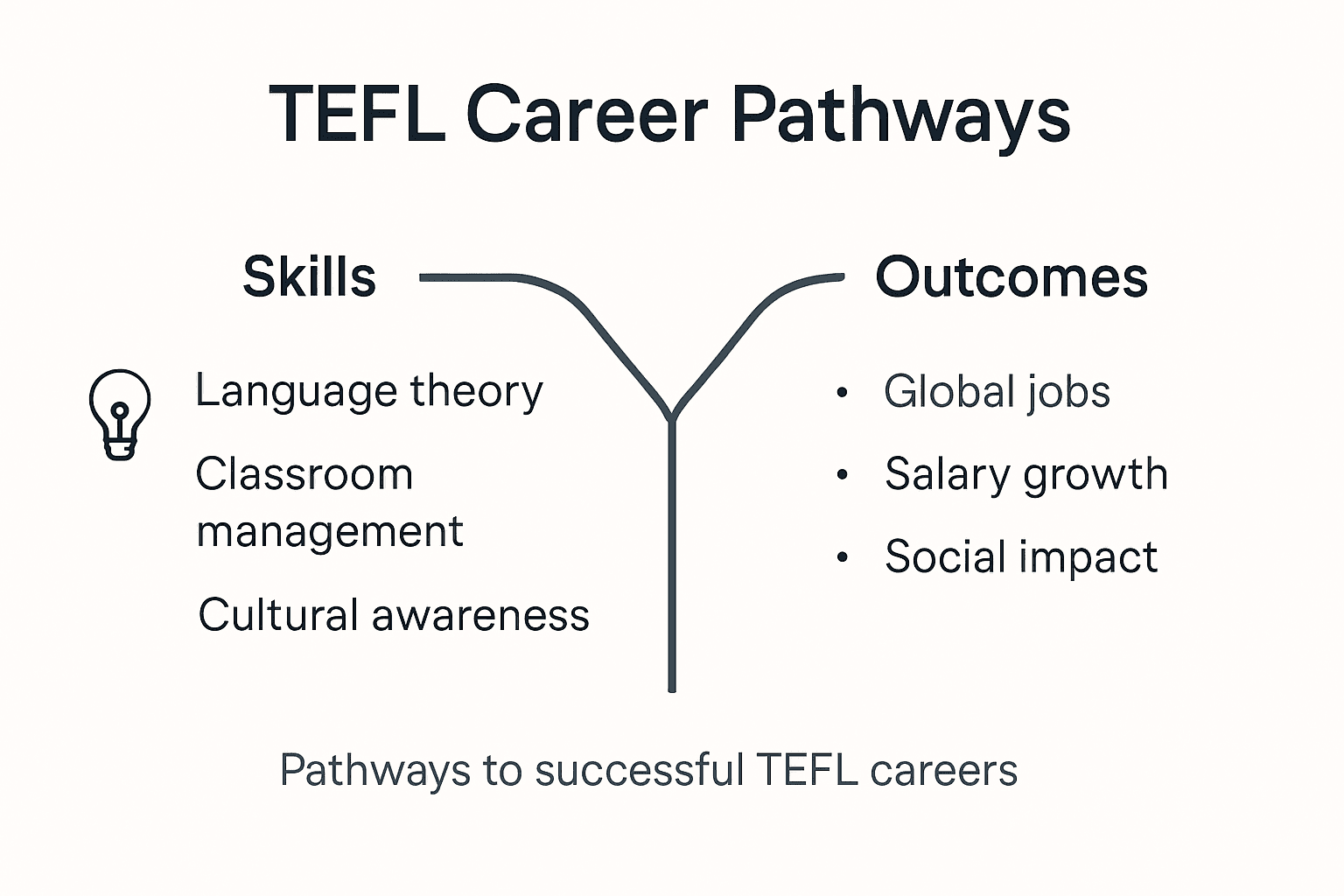
Here is a summary of major TEFL certification options and their career impact:
| Certification Type | Training Depth | Career Prospects | Typical Format |
|---|---|---|---|
| Entry-Level Online | Basic theory, limited practice | Suitable for entry jobs | Fully online, self-paced |
| In-Person Intensive | Substantial practice, direct feedback | Greater hiring potential | Classroom, practical |
| Advanced Diploma | In-depth theory and pedagogy | Opens advanced positions | Extended, in-person and online |
| Specialized Certification | Focused expertise area | Access to niche markets | Varies by specialization |
Pro tip: Research the specific employment requirements in your target teaching markets before selecting a TEFL certification to ensure maximum career compatibility.
Essential TEFL Skills and Teaching Approaches
Effective TEFL instruction requires a diverse set of pedagogical skills that go beyond traditional language teaching methods. Modern English language educators must develop a comprehensive toolkit of instructional approaches, communication techniques, and technological competencies to engage students effectively across different learning environments.
Key essential skills for successful TEFL teachers include:
- Intercultural Communication: Understanding and navigating cultural differences
- Technological Proficiency: Integrating digital tools and online learning platforms
- Adaptive Teaching Strategies: Modifying instruction to meet diverse student needs
- Active Listening: Comprehending student challenges and language barriers
- Classroom Management: Creating structured and engaging learning environments
- Linguistic Flexibility: Explaining complex language concepts in accessible ways
Teachers must also master multiple teaching approaches tailored to different learning contexts. Successful TEFL professionals develop skills that can be applied across various educational settings, including communicative language teaching, task-based instruction, and content-based methodologies. These approaches emphasize practical language use, interactive learning, and contextualized communication skills that prepare students for real-world language interactions.

Pro tip: Continuously update your teaching skills and remain adaptable to emerging educational technologies and multicultural learning environments.
Certification Requirements and Accreditation Standards
Understanding TEFL course accreditation is critical for aspiring English language teachers seeking internationally recognized qualifications. TEFL certification requirements vary significantly across different countries and educational institutions, making it essential for professionals to carefully evaluate the credibility and recognition of their chosen certification program.
Key accreditation standards typically encompass several critical elements:
- Curriculum Depth: Comprehensive coverage of language teaching methodologies
- Instructor Qualifications: Expertise of teaching staff and academic leadership
- Practical Teaching Components: Minimum hours of supervised teaching practice
- Assessment Rigor: Standardized evaluation methods and performance benchmarks
- International Recognition: Acceptance by global educational and employment institutions
- Continuous Professional Development: Ongoing training and skill enhancement opportunities
Professional TEFL certifications are evaluated based on multiple criteria, including course duration, theoretical foundation, practical training, and alignment with international language teaching standards. Aspiring teachers should prioritize programs that offer comprehensive training, demonstrate proven track records of student success, and provide clear pathways for career advancement in the global English language education market.
Pro tip: Verify the accreditation status and international recognition of your chosen TEFL certification before making a financial investment in your professional training.
Salary Expectations and Teaching Destinations
Tefl professionals encounter diverse salary opportunities across global markets, with compensation varying dramatically based on location, qualifications, and teaching context. Teaching English salary comparisons reveal significant regional differences that can dramatically impact career planning and financial expectations for aspiring international educators.
Top teaching destinations with attractive compensation packages include:
- Middle East: Highest average salaries ranging from $2,000 to $4,500 monthly
- East Asia: Competitive wages with additional benefits in countries like South Korea and China
- United Arab Emirates: Premium salaries with tax free income and comprehensive benefits
- Japan: Stable employment with salaries between $2,000 and $2,500 per month
- Saudi Arabia: Lucrative contracts offering housing allowances and travel stipends
- Online Teaching: Flexible opportunities with hourly rates between $15 and $25
Global TEFL teacher earnings depend on multiple factors, including certification level, teaching experience, institution type, and specific regional economic conditions. Professionals with advanced certifications, specialized skills, and prior teaching experience can negotiate higher compensation packages and more desirable employment opportunities in competitive international markets.
The following table compares average TEFL salaries and benefits across popular destinations:
| Destination | Monthly Salary Range | Common Benefits | Teaching Environment |
|---|---|---|---|
| Middle East | $2,000–$4,500 | Tax-free, housing | Institutes, universities |
| East Asia | $1,800–$3,000 | Flights, health insurance | Schools, businesses |
| Japan | $2,000–$2,500 | Steady contracts | Schools, eikaiwa centers |
| UAE | $3,000–$4,500 | Accommodation, bonuses | Schools, language centers |
| Online | $15–$25/hr | Flexible schedule | Remote, digital platforms |
Pro tip: Research specific salary ranges and cost of living for your target teaching destination to develop realistic financial expectations and strategic career planning.
Common Challenges and How to Overcome Them
Teaching academic English presents complex instructional challenges that require strategic approaches and adaptive teaching methodologies. TEFL professionals must navigate diverse student backgrounds, varying language proficiency levels, and cultural communication barriers while maintaining engaging and effective learning environments.
Key challenges confronting TEFL educators include:
- Language Proficiency Variation: Managing classrooms with mixed skill levels
- Cultural Communication Barriers: Navigating intercultural misunderstandings
- Technological Integration: Effectively utilizing digital learning platforms
- Student Motivation: Maintaining engagement across different learning styles
- Limited Resources: Working with restricted teaching materials and infrastructure
- Assessment Complexity: Designing fair evaluation methods for diverse learners
Successful TEFL professionals develop multifaceted strategies to address these challenges. This involves continuous professional development, flexible teaching approaches, advanced technological skills, and deep cultural sensitivity. Educators must remain adaptable, creating personalized learning experiences that accommodate individual student needs while maintaining rigorous educational standards.
Pro tip: Develop a growth mindset and continuously seek professional development opportunities to enhance your adaptability and teaching effectiveness in diverse educational contexts.
Transform Your TEFL Career with Practical Certification and Expert Support
Navigating the challenges of teaching English as a foreign language demands strong practical skills and recognized certification. Whether you are facing diverse student language levels or seeking to enhance your intercultural communication and technological proficiency, TEFL Institute offers tailored online TEFL courses designed to equip you for success. With options ranging from advanced diplomas to niche specializations, our programs address key pain points like classroom management and adaptive teaching strategies referenced in this article.
Take the next step toward a rewarding teaching career today. Explore flexible course formats and gain internationally accredited certification that opens doors in top global markets. Visit TEFL Institute’s course catalog to find the perfect training for your goals. Start your journey now at https://teflinstitute.com and transform your passion for teaching into a lasting global impact.
Frequently Asked Questions
What is Teaching English as a Foreign Language (TEFL)?
TEFL is a specialized field focused on instructing non-native speakers in the English language, utilizing systematic approaches that encompass linguistic theory, cultural understanding, and effective language acquisition strategies.
What are the types of TEFL certifications available?
TEFL certifications range from online courses to in-person intensive programs, hybrid models, advanced diplomas, and specialized certifications focusing on areas like business English or teaching young learners.
What essential skills do TEFL teachers need to succeed?
Successful TEFL teachers need skills in intercultural communication, technological proficiency, adaptive teaching strategies, classroom management, active listening, and linguistic flexibility to effectively engage diverse learners.
How does accreditation affect TEFL certification?
Accreditation ensures that TEFL certification programs meet specific educational standards. Programs that are internationally recognized provide comprehensive training and increase employment opportunities for teachers in the global market.
