

 United Kingdom (UK)
 United States (US)
 Canada
 South Africa
 India
India Australia
 New Zealand
 China
China Russia
 Germany
 France
 Spain
Spain Netherlands
 Vietnam
 United Arab Emirates
 Italy
Italy Poland
 Thailand
 Türkiye





 Algeria


Step by Step Classroom Management for ESL Success
Step by Step Classroom Management for ESL Success

Managing a diverse classroom in Southeast Asia can feel overwhelming when language barriers and cultural backgrounds shape every student interaction. For TEFL teachers, learning to set clear expectations is the first step in building a productive learning space. With strategies like simple rules, visual aids, and structured routines, you can transform uncertainty into a supportive ESL environment where every learner feels secure and engaged.
Table of Contents
- Step 1: Establish Clear Classroom Expectations
- Step 2: Create an Organized Physical Environment
- Step 3: Develop Effective Routines and Procedures
- Step 4: Implement Positive Behavior Support
- Step 5: Monitor and Adjust Management Techniques
Quick Summary
| Key Point | Explanation |
|---|---|
| 1. Establish Clear Expectations | Set straightforward, visually represented rules to guide behavior and academic standards for effective learning. |
| 2. Create an Organized Environment | Design flexible classroom layouts to facilitate interaction and minimize distractions, promoting comfort and engagement. |
| 3. Develop Consistent Routines | Implement predictable procedures that reduce anxiety, providing structure for students to navigate the classroom smoothly. |
| 4. Use Positive Behavior Support | Foster a supportive culture through immediate recognition of good behavior, encouraging motivation and respect among students. |
| 5. Monitor and Adjust Techniques | Regularly reflect on classroom management strategies, utilizing student feedback to adapt approaches for continuous improvement. |
Step 1: Establish Clear Classroom Expectations
Successful ESL teaching begins with establishing crystal-clear classroom expectations that help students understand behavioral guidelines and academic standards. By creating a structured yet supportive environment, you’ll set the foundation for effective language learning and positive classroom dynamics.
To develop robust classroom expectations, start by creating comprehensive communication strategies that transcend language barriers. This means developing rules that are:
- Simple and straightforward
- Visually represented (using graphics or images)
- Explained using clear, basic language
- Consistently reinforced throughout the semester
Effective expectations transform potential classroom chaos into a structured learning environment.
Involve your students in the rule-making process to increase their investment and understanding. Consider implementing a collaborative approach where students contribute ideas about classroom behavior and participation. This might involve:
- Asking students to suggest appropriate classroom behaviors
- Discussing cultural differences in classroom norms
- Agreeing on mutual respect guidelines
Remember that expectations should address both linguistic and behavioral aspects of classroom interaction. This includes guidelines about speaking English, participating in discussions, respecting classmates, and maintaining a positive learning atmosphere.
Pro tip: Create a visual expectations poster in simple English that remains displayed throughout the semester, serving as a constant reference point for your students.
Step 2: Create an Organized Physical Environment
Designing an effective ESL classroom environment goes beyond mere decoration—it’s about strategically creating a space that supports language learning and minimizes potential distractions. Your goal is to craft a purposeful learning landscape that encourages student interaction, engagement, and comfort.
Start by designing flexible classroom configurations that accommodate different learning activities and teaching styles. The physical setup should be adaptable and intentional, supporting both group work and individual learning opportunities:
- Ensure clear pathways between desks
- Position yourself where you can easily monitor all students
- Create designated zones for various learning activities
- Allow sufficient personal space for each student
A well-organized classroom transforms physical space into a dynamic learning environment.
Carefully consider seating arrangements that promote language interaction. This might involve:
- Mixing students with different language proficiency levels
- Separating potentially disruptive student pairs
- Creating configurations that encourage conversation
Be mindful of cultural differences in personal space and classroom interactions. Some students might feel uncomfortable with close proximity or direct eye contact, so create a layout that respects diverse comfort levels while still promoting engagement.
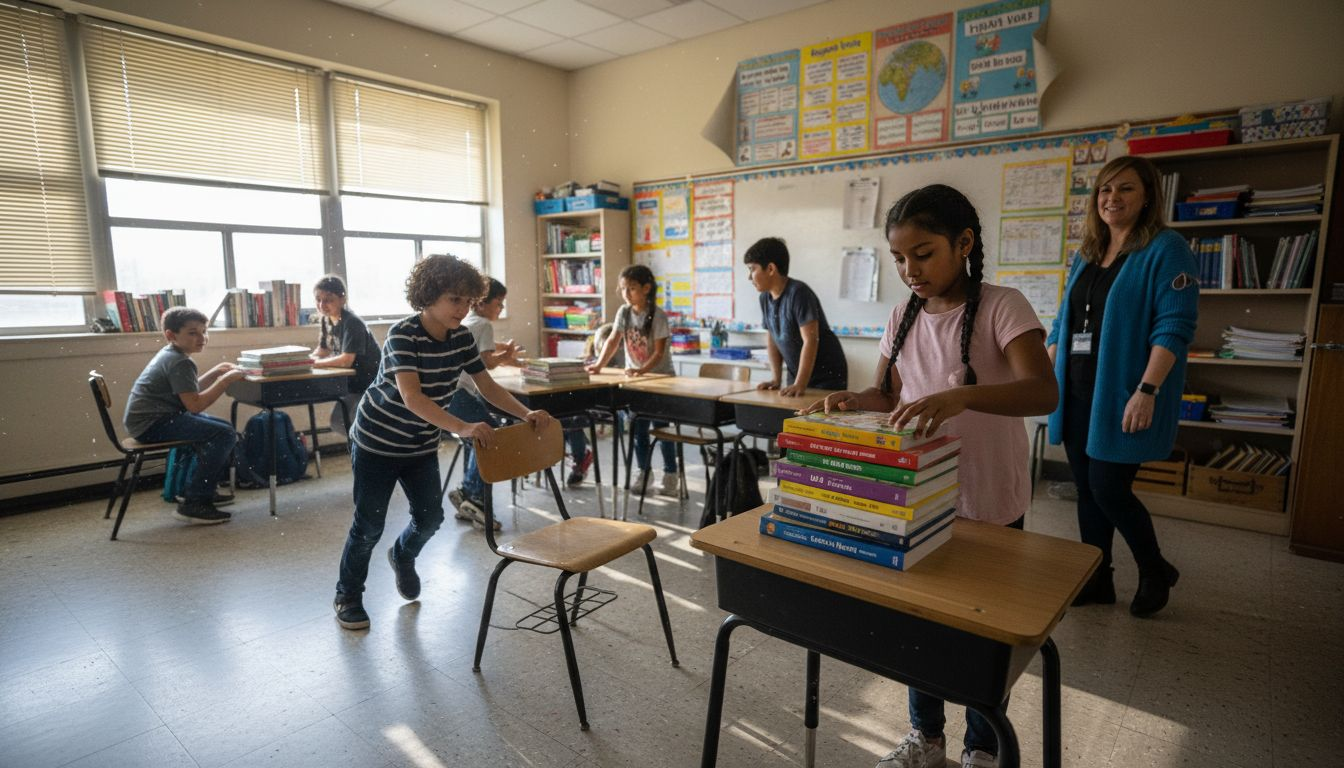
Pro tip: Periodically rotate classroom seating arrangements to prevent student stagnation and keep the learning environment dynamic and interesting.
Step 3: Develop Effective Routines and Procedures
Successful ESL classroom management hinges on creating predictable and structured learning experiences that help students feel secure and focused. Developing consistent routines transforms potential classroom chaos into a smooth, productive learning environment where students can confidently engage with language learning.
Establishing clear classroom procedures reduces student anxiety and creates a sense of stability. Your routines should cover multiple aspects of classroom interaction:
- Starting class consistently
- Signaling transition times
- Managing classroom materials
- Handling group work and individual activities
- Responding to student questions
Predictable routines provide a psychological safety net for language learners navigating communication challenges.
Implement your routines through deliberate practice and explicit instruction. This means:
- Clearly explaining each routine
- Demonstrating the expected behavior
- Allowing students to practice
- Providing gentle corrections
- Consistently reinforcing the procedures
Remember that routines are especially crucial for ESL students who might be dealing with language barriers and cultural differences. Visual aids like flowcharts or illustrated instruction sheets can help communicate complex procedures more effectively.
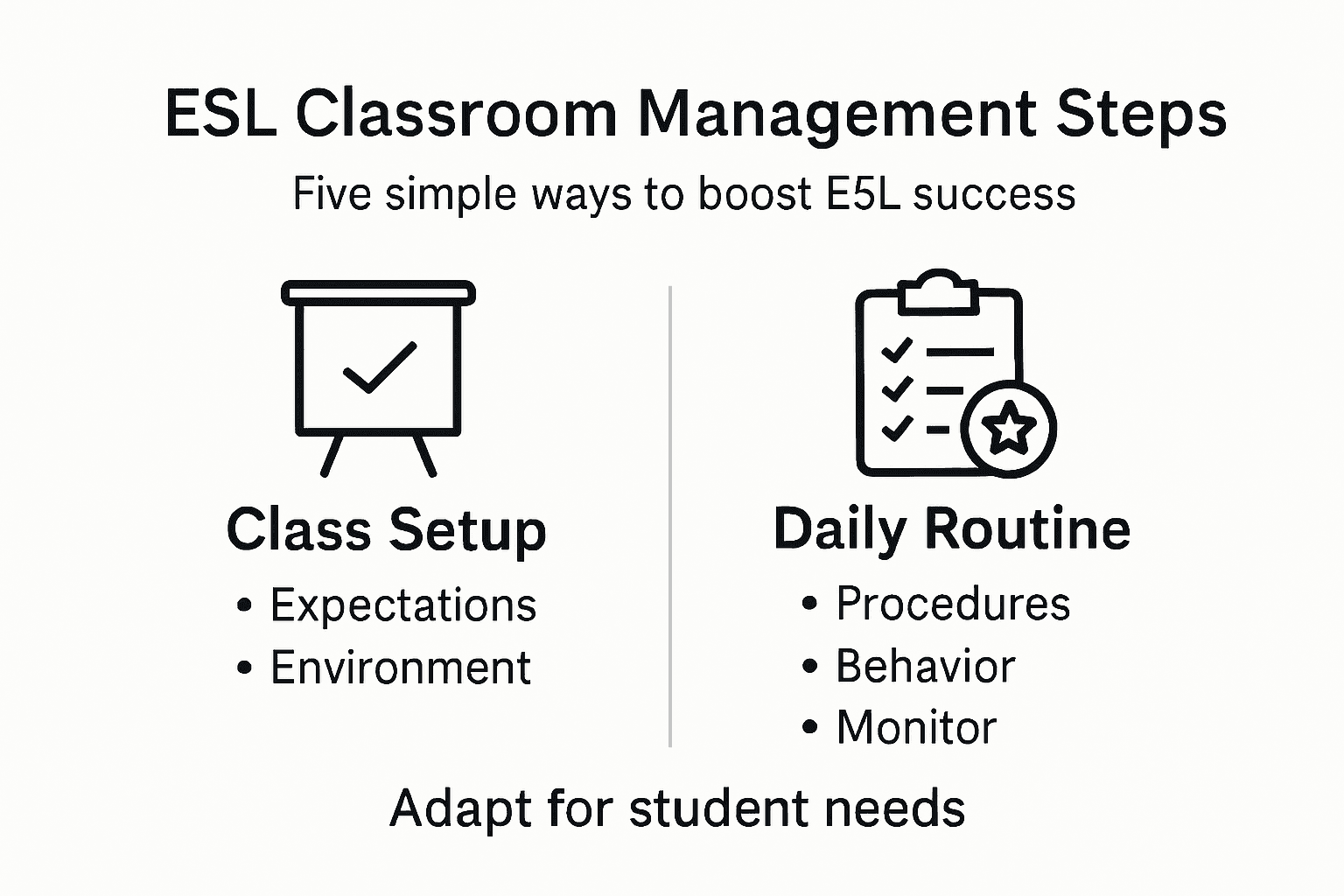
Pro tip: Create a visual routine chart in simple English that students can reference throughout the semester, helping them internalize classroom procedures.
Step 4: Implement Positive Behavior Support
Creating a supportive classroom environment requires more than just setting rules—it demands a compassionate approach to student behavior that encourages growth, respect, and active participation. Positive behavior support transforms classroom dynamics from punitive to constructive, helping ESL students feel valued and motivated.
Implementing effective behavior strategies involves a multi-layered approach that goes beyond simple discipline. Your goal is to build a classroom culture that celebrates positive actions and provides constructive guidance:
- Recognize and praise good behavior immediately
- Use specific, meaningful compliments
- Create opportunities for student success
- Model the behavior you want to see
- Establish clear expectations collaboratively
Positive reinforcement is the language of encouragement that transcends linguistic barriers.
Develop a systematic approach to behavior support by:
- Setting clear, achievable behavioral expectations
- Creating a visible reward system
- Providing consistent, constructive feedback
- Addressing challenges privately and respectfully
- Celebrating individual and group achievements
Remember that cultural differences can significantly impact behavior interpretation. What might seem like a positive interaction in one culture could be perceived differently in another. Take time to understand your students’ cultural backgrounds and adjust your approach accordingly.
Pro tip: Design a visual behavior tracking system that allows students to see their progress and feel motivated by their own growth.
Step 5: Monitor and Adjust Management Techniques
Successful ESL classroom management is not a static process—it’s a dynamic and responsive approach that requires constant reflection and adaptation. Your ability to observe, analyze, and adjust your teaching strategies will directly impact student learning and engagement.
Developing responsive classroom strategies involves systematic observation and thoughtful adjustment. This means creating a flexible framework that allows you to pivot when current techniques aren’t producing the desired outcomes:
- Track student engagement levels
- Note participation patterns
- Identify recurring behavioral challenges
- Assess the effectiveness of current strategies
- Document student feedback
Effective classroom management is an ongoing conversation, not a fixed prescription.
Implement a structured approach to monitoring and adjusting your techniques:
- Schedule regular self-reflection periods
- Collect anonymous student feedback
- Review classroom interaction data
- Experiment with alternative approaches
- Document the impact of changes
Remember that cultural differences can significantly influence how students perceive and respond to management techniques. What works brilliantly in one context might fall flat in another. Stay curious, remain humble, and be willing to learn from your students.
Pro tip: Keep a detailed teaching journal to track your management strategies, noting what works, what doesn’t, and the subtle nuances of student responses.
Compare how cultural sensitivity impacts each management area:
| Management Area | Cultural Consideration | Classroom Benefit |
|---|---|---|
| Expectations | Varying norms of respect | More inclusive rules |
| Physical Space | Differences in personal space | Greater comfort for all |
| Procedures | Understanding routine unfamiliarity | Better participation rates |
| Behavior Support | Interpreting praise and discipline | Fair, effective feedback |
| Monitoring | Adapting based on student input | Higher student satisfaction |
Here’s a summary of effective classroom management strategies for ESL teachers at a glance:
| Step | Main Focus | Why It Matters | Key Outcome |
|---|---|---|---|
| Set Expectations | Clear rules and communication | Reduces confusion, boosts confidence | Positive classroom culture |
| Organize Space | Purposeful layout, flexible seating | Supports interaction and attention | Increased student engagement |
| Build Routines | Predictable procedures | Lowers anxiety, sets stability | Smooth transitions, better focus |
| Support Behavior | Positive reinforcement approach | Improves motivation, respect | More constructive participation |
| Monitor & Adjust | Ongoing evaluation | Ensures continuous improvement | Responsive teaching strategies |
Master ESL Classroom Management with Confidence
Are you ready to transform challenges like establishing clear classroom expectations and implementing positive behavior support into your teaching strengths? The article highlights how developing structured routines, culturally sensitive strategies, and organized learning environments can reduce confusion, lower student anxiety, and encourage active participation. These are essential skills for any ESL teacher striving to create a supportive and effective classroom.

Elevate your teaching career by enrolling in comprehensive online TEFL courses at TEFL Institute. Our programs include advanced diplomas and practical training designed to help you apply proven classroom management techniques that align perfectly with the steps discussed. Explore flexible learning that fits your goals, gain certification to teach English internationally, and join a community committed to ESL success. Take the next step now and start shaping positive classroom experiences with TEFL Institute.
Learn more about our online TEFL training courses and begin your journey today.
Frequently Asked Questions
How can I establish clear classroom expectations for ESL students?
To establish clear classroom expectations, begin by developing simple and straightforward rules. Involve your students in creating these guidelines to ensure buy-in and understanding. Consider posting a visual expectations chart in your classroom for easy reference throughout the semester.
What are some effective ways to organize the physical environment for an ESL classroom?
Organize your ESL classroom by creating flexible seating arrangements that promote interaction and minimize distractions. Ensure clear pathways and designated zones for different activities, allowing for movement and collaboration. Regularly review and adjust the layout to keep the learning space engaging for students.
How do I create consistent routines and procedures in my ESL classroom?
To create consistent routines, outline clear procedures for everyday activities such as starting class and managing transitions. Explain and demonstrate each routine, allowing students to practice. By doing this, you can create a sense of stability that enhances focus and participation among your students.
What methods can I use to implement positive behavior support in my classroom?
Implement positive behavior support by immediately recognizing and praising good behavior. Create a visible reward system and provide constructive feedback regularly. This fosters a supportive environment where students feel valued and motivated to participate actively.
How can I monitor and adjust my classroom management techniques effectively?
Monitor your classroom management techniques by observing student engagement and participation patterns while collecting feedback. Schedule regular reflection periods to assess the effectiveness of your strategies and be willing to make adjustments as needed. Keeping a detailed teaching journal can help track your progress and student responses.
Why is cultural sensitivity important in ESL classroom management?
Cultural sensitivity is crucial because it helps you understand and respect the diverse backgrounds of your students. By acknowledging cultural differences, you can tailor your management strategies to cultivate a more inclusive and supportive classroom environment, ultimately improving student success and engagement.
