

 United Kingdom (UK)
 United States (US)
 Canada
 South Africa
 India
India Australia
 New Zealand
 China
China Russia
 Germany
 France
 Spain
Spain Netherlands
 Vietnam
 United Arab Emirates
 Italy
Italy Poland
 Thailand
 Türkiye











 Algeria


Complete Guide to Classroom Management for TEFL
Complete Guide to Classroom Management for TEFL

Did you know that effective classroom management can improve student achievement by up to 20 percent in language classrooms? Managing a TEFL classroom can feel overwhelming, especially when students bring different languages, backgrounds, and personalities together. Understanding how to organize, motivate, and support your learners sets the stage for real progress in English. By using the right strategies, TEFL teachers can create a classroom where everyone feels motivated to learn and participate.
Table of Contents
- What Is Classroom Management in TEFL?
- Core Strategies and Techniques Explained
- Common Misconceptions and Challenges
- Types of Classroom Management Styles
- Teacher and Student Roles in the Classroom
- Key Mistakes and How to Avoid Them
Key Takeaways
| Point | Details |
|---|---|
| Comprehensive Approach | Classroom management in TEFL involves organizing resources and student interactions to enhance language acquisition and student achievement. |
| Adaptive Strategies | Successful management requires clear rules, structured lesson plans, and responsiveness to student needs and dynamics. |
| Classroom Dynamics | Teachers should balance authority and engagement by employing various management styles to create a supportive learning environment. |
| Common Mistakes | Avoid pitfalls like inconsistent communication and engagement techniques, and focus on understanding the underlying reasons for student behavior. |
What Is Classroom Management in TEFL?
Classroom management in TEFL represents a comprehensive approach to creating an effective and structured learning environment that optimizes language acquisition. According to TEFLCorp, it involves strategically organizing resources, students, and instructional helpers to facilitate efficient and safe teaching experiences that directly contribute to higher student achievement.
At its core, classroom management encompasses more than just maintaining discipline. As American English highlights, this practice includes critical elements like classroom administration, establishing clear logistics, developing consistent routines, and creating an environment conducive to language learning. Successful classroom management transforms a potential chaotic learning space into a productive, engaging atmosphere where students can confidently develop their English communication skills.
Effective classroom management in TEFL requires several key strategies:
- Establishing clear behavioral expectations
- Creating structured lesson plans
- Developing consistent classroom routines
- Managing student interactions and group dynamics
- Implementing age and proficiency level appropriate engagement techniques
Mastering these techniques allows TEFL teachers to create a supportive learning environment that minimizes disruptions and maximizes language learning opportunities. By understanding and implementing robust classroom management principles, educators can significantly enhance student motivation, participation, and overall language acquisition success.
For additional insights into effective teaching strategies, check out our TEFL Teaching Tips and Hacks for the Classroom guide that offers practical techniques to elevate your teaching approach.
Core Strategies and Techniques Explained
Classroom management in TEFL requires a strategic blend of techniques that create an engaging and controlled learning environment. According to TEFL Barcelona, successful instructors employ several key techniques to maintain student attention and minimize disruptions, including using quiet signals to gain attention, practicing proximity control to reduce disruptive behavior, and designing interactive activities that keep students fully engaged.
TEFL Corp emphasizes the critical role of nonverbal communication in classroom management. Body language becomes a powerful tool for teachers, with specific techniques like:
- Maintaining direct eye contact to establish authority
- Using purposeful hand gestures to enhance lesson explanations
- Positioning yourself strategically in the classroom to monitor student interactions
- Employing facial expressions that communicate expectations and reactions
Establishing clear rules and procedures forms the foundation of effective classroom management. This involves creating a transparent framework that students understand from the first day. Successful TEFL teachers develop a consistent approach that balances structure with flexibility, allowing students to feel secure while still enjoying an dynamic learning experience.
The most effective classroom management strategies are adaptive and responsive to student needs. This means continuously observing student engagement, adjusting techniques based on classroom dynamics, and creating an environment that encourages active participation. By mastering these techniques, TEFL teachers can transform potential challenges into opportunities for meaningful language learning.

For more detailed teaching strategies, explore our Top 7 TEFL Methods of Teaching guide that provides additional insights into creating an effective classroom environment.
Common Misconceptions and Challenges
Classroom management in TEFL is often misunderstood as a simple exercise in maintaining discipline, but the reality is far more nuanced. Wikipedia highlights a critical misconception: educators frequently define problematic behavior solely by its surface appearance, without understanding the underlying motivations or functional reasons behind student actions. This superficial approach can lead to ineffective interventions that fail to address the root causes of classroom challenges.
TEFL Corp emphasizes the complexity of managing diverse student personalities in a language learning environment. The primary challenges TEFL teachers encounter include:
- Balancing individual student needs with group learning dynamics
- Maintaining engagement across different proficiency levels
- Creating an inclusive environment that encourages participation
- Addressing language barriers that can lead to behavioral misunderstandings
- Adapting teaching strategies to accommodate varied learning styles
One of the most significant misconceptions is believing that a single classroom management approach works universally. In reality, effective TEFL teachers must be adaptable, recognizing that each classroom is a unique ecosystem with its own social dynamics, cultural nuances, and learning challenges. This requires continuous observation, flexibility, and a willingness to modify strategies based on real-time student responses and engagement levels.
Successful classroom management goes beyond controlling behavior. It’s about creating a supportive, dynamic learning environment that motivates students, reduces anxiety around language learning, and provides a safe space for linguistic experimentation. By understanding these deeper principles, TEFL teachers can transform potential challenges into opportunities for meaningful language acquisition and personal growth.
To further enhance your understanding of diverse teaching approaches, explore our TEFL Teaching Tips and Hacks for the Classroom guide that offers practical insights into navigating classroom complexities.
Types of Classroom Management Styles
Classroom management styles represent a critical aspect of effective teaching, particularly in TEFL environments where communication and interpersonal dynamics are paramount. Wikipedia identifies three primary approaches that teachers can adopt: authoritative, permissive, and authoritarian styles, each with distinct characteristics and potential impacts on student learning.
TEFL Corp emphasizes that effective classroom management fundamentally involves creating a respectful and caring environment. Let’s explore these management styles in more depth:
Here’s a comparison of the three main classroom management styles in TEFL:
| Style | Key Characteristics | Potential Impact on Students |
|---|---|---|
| Authoritative | Balanced structure and warmth Clear expectations Encourages student input |
High motivation Positive engagement Respectful environment |
| Authoritarian | Strict discipline Minimal student input Non-negotiable rules |
Compliance Low creativity Possible anxiety |
| Permissive | Minimal rules Flexible environment Student-led learning |
Independence Potential for chaos Reduced learning outcomes |
- Authoritative Style
- Balances warmth and structure
- Sets clear expectations and boundaries
- Encourages student input and participation
- Provides consistent and fair guidance
- Focuses on positive reinforcement
- Authoritarian Style
- Emphasizes strict control and discipline
- Minimal student input or negotiation
- Clear, non-negotiable rules
- High emphasis on teacher-directed learning
- Limited emotional connection with students
- Permissive Style
- Minimal structure and rules
- Highly flexible classroom environment
- Encourages student-led learning
- Low levels of direct intervention
- Potential risk of reduced learning outcomes
The most successful TEFL teachers often blend elements from these styles, adapting their approach to specific classroom dynamics, cultural contexts, and individual student needs. This nuanced approach allows for flexibility while maintaining a structured learning environment that supports language acquisition and personal growth.
Understanding these management styles enables teachers to develop a more intentional and responsive approach to classroom interactions.
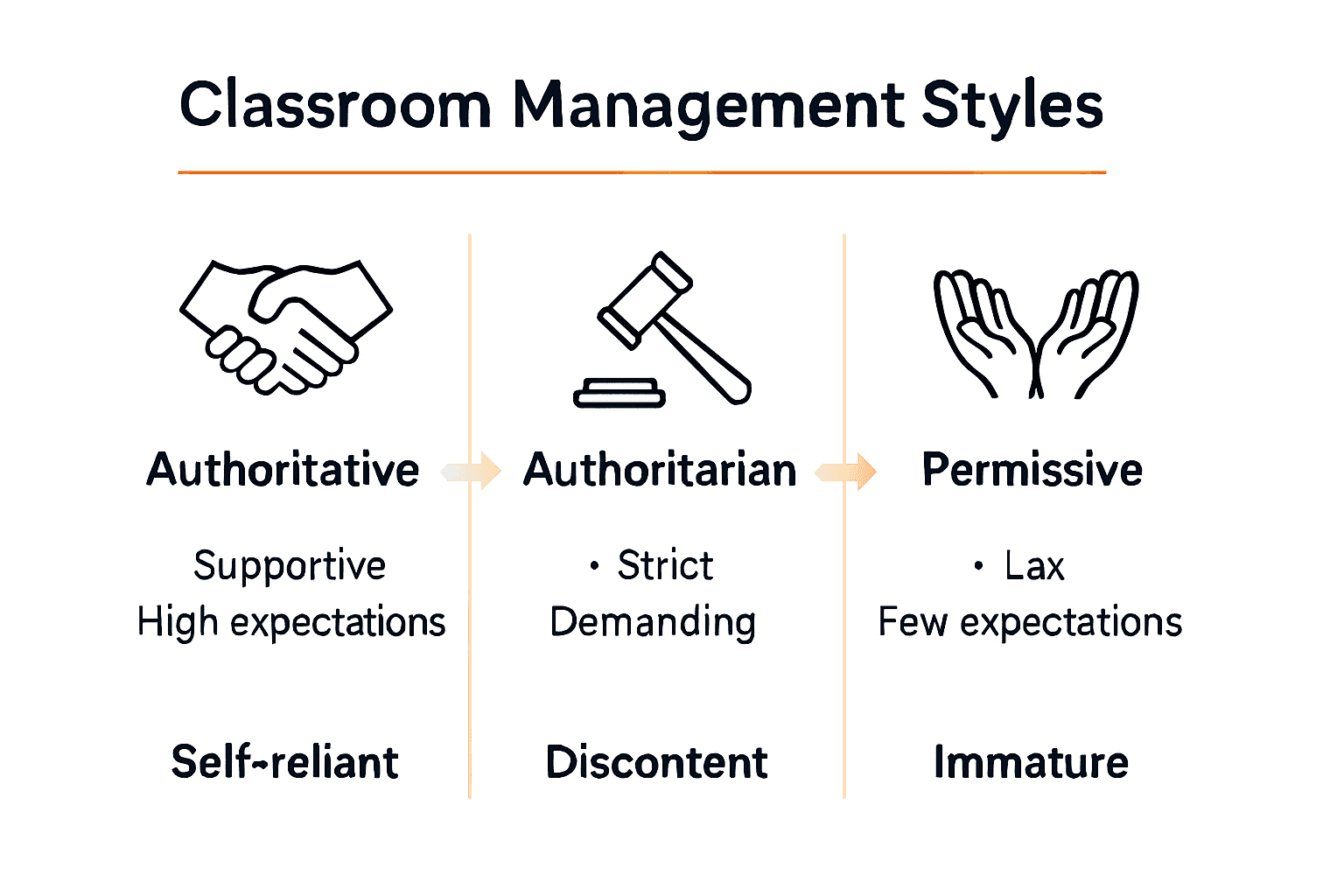 By recognizing the strengths and limitations of each style, educators can create more engaging, supportive, and effective learning experiences that help students thrive in their English language journey.
For additional insights into creating an effective teaching environment, explore our Top 7 TEFL Methods of Teaching guide that provides comprehensive strategies for successful language instruction.
Teacher and Student Roles in the Classroom
In the dynamic landscape of TEFL classrooms, the roles of teachers and students are interconnected and constantly evolving. Language Link highlights that successful language learning environments require teachers to manage interactions while simultaneously encouraging students to take an active role in their own learning process. This collaborative approach transforms traditional power dynamics into a more interactive and engaging educational experience.
TEFL Corp emphasizes the importance of establishing clear expectations and consequences. The teacher’s primary responsibilities include:
- Designing structured learning experiences
- Providing clear instructions and guidance
- Creating a supportive and inclusive classroom environment
- Monitoring student progress and engagement
- Offering constructive feedback and support
Corresponding student responsibilities involve:
- Active participation in learning activities
- Demonstrating respect for classroom guidelines
- Taking ownership of their language learning journey
- Engaging in collaborative and interactive exercises
- Maintaining a positive and supportive attitude
The most effective TEFL classrooms operate as collaborative learning communities. Teachers are no longer just information dispensers but facilitators who guide students through language acquisition. This approach requires flexibility, empathy, and a deep understanding of individual student needs, learning styles, and cultural backgrounds.
Ultimately, successful classroom management in TEFL is about creating a balanced ecosystem where teachers provide structure and support, and students are empowered to explore, make mistakes, and grow in their language skills. By understanding and embracing these complementary roles, both teachers and students can create a rich, dynamic learning environment that goes beyond traditional teaching methodologies.
To discover more strategies for effective teaching, explore our TEFL Teaching Tips and Hacks for the Classroom guide that offers practical insights into navigating classroom dynamics.
Key Mistakes and How to Avoid Them
Wikipedia highlights a critical insight for TEFL educators: problem behavior should never be defined solely by its surface appearance. Understanding the underlying functional reasons behind student actions is crucial for implementing effective interventions and maintaining a productive classroom environment. This nuanced approach prevents teachers from making reactive, ineffective management decisions.
TEFL Corp emphasizes creating an enjoyable learning space where students feel genuinely valued. Here are the most common classroom management mistakes TEFL teachers should avoid:
- Communication Pitfalls
- Inconsistent rule enforcement
- Speaking too quickly or using complex language
- Failing to provide clear instructions
- Ignoring cultural communication differences
- Overlooking non-verbal communication signals
- Engagement Mistakes
- Using a one-size-fits-all teaching approach
- Neglecting student individual learning styles
- Insufficient variety in teaching methods
- Limited student interaction opportunities
- Monotonous lesson structures
- Behavioral Management Errors
- Responding emotionally to disruptions
- Publicly shaming or criticizing students
- Lacking consistent consequence systems
- Failing to establish clear classroom expectations
- Inadequate positive reinforcement strategies
Successful TEFL classroom management requires continuous adaptation and self-reflection. Teachers must remain flexible, understanding that each classroom represents a unique ecosystem with its own dynamics, challenges, and opportunities for growth. Developing emotional intelligence, cultural sensitivity, and responsive teaching techniques are key to navigating potential classroom management challenges.
Ultimately, avoiding these common mistakes transforms the learning experience from a potentially stressful environment to an engaging, supportive space where language acquisition can flourish. By approaching classroom management with empathy, strategy, and genuine student-centered care, TEFL teachers can create meaningful, transformative educational experiences.
For more practical strategies, explore our TEFL Teaching Tips and Hacks for the Classroom guide that offers additional insights into effective teaching techniques.
Master Classroom Management and Transform Your TEFL Teaching Experience
Struggling with managing diverse classrooms and keeping students engaged while teaching English as a foreign language This article highlights the crucial strategies you need to address challenges like behavioral issues varying proficiency levels and cultural differences in your classroom Your goal is to create a warm yet structured environment where students feel supported and motivated to learn With key concepts like authoritative classroom management styles clear expectations and emotional intelligence becoming essential your success as a TEFL teacher depends on mastering these skills

Take control of your teaching journey by gaining comprehensive skills through the online TEFL courses offered at the TEFL Institute. We provide specialized training that covers classroom management techniques and much more so you can confidently handle real-world teaching challenges Join thousands of educators who improved their teaching outcomes by enrolling today Explore detailed course offerings and resources at TEFL Institute and unlock your full potential in creating positive learning environments. Start now and see the difference in your classroom tomorrow.
Frequently Asked Questions
What are the key strategies for effective classroom management in TEFL?
Effective classroom management in TEFL includes strategies such as establishing clear behavioral expectations, creating structured lesson plans, developing consistent routines, managing student interactions, and implementing engagement techniques that are appropriate for the age and proficiency level of the students.
How does classroom management impact language acquisition?
Good classroom management creates a productive and engaging atmosphere that reduces disruptions and enhances student motivation and participation, leading to better language acquisition outcomes for learners.
What are the common misconceptions about classroom management in TEFL?
One common misconception is that classroom management is only about maintaining discipline. In reality, it involves understanding student dynamics, adapting teaching strategies, and creating a supportive environment that encourages learning and participation.
What are the different classroom management styles and their impacts?
The primary classroom management styles are authoritative, authoritarian, and permissive. Authoritative styles provide structure and encourage participation, authoritarian styles emphasize strict control, and permissive styles offer flexibility but can lead to chaos. Blending these styles effectively can enhance student learning experiences.
Recommended
TEFL Institute guides

Czech Republic
Pay, visas and cities
Spain
Jobs, pay and visa routes
Thailand
Visas and teaching licences
Germany
Freelance work and pay
Mexico
Jobs, pay and cities