

 United Kingdom (UK)
 United States (US)
 Canada
 South Africa
 India
India Australia
 New Zealand
 China
China Russia
 Germany
 France
 Spain
Spain Netherlands
 Vietnam
 United Arab Emirates
 Italy
Italy Poland
 Thailand
 Türkiye










 Algeria



Master Teaching in Thailand: A Step-by-Step Guide
Master Teaching in Thailand: A Step-by-Step Guide

Teaching English in Thailand is one of the fastest growing career moves for adventure seekers and educators alike. Over 10,000 foreign teachers start new roles in Thailand each year, drawn by unique schools and tropical scenery. Most assume the challenge is just about finding a job or getting certified. The real surprise is that your success depends far more on understanding local customs, legal steps, and community life than on what happens in the classroom.
Table of Contents
- Step 1: Research Teaching Opportunities In Thailand
- Step 2: Obtain Necessary Certifications And Qualifications
- Step 3: Apply For Teaching Positions And Interviews
- Step 4: Prepare For Relocation And Adaptation
- Step 5: Begin Teaching And Engage With The Community
Quick Summary
| Key Point | Explanation |
|---|---|
| 1. Research diverse teaching contexts | Explore public schools, international schools, private centers, and universities to identify suitable teaching environments in Thailand. |
| 2. Obtain TEFL/TESOL certification | Acquire recognized certifications through accredited courses to enhance your employability and meet job requirements. |
| 3. Tailor applications for cultural fit | Customize resumes and cover letters to reflect understanding of Thai educational culture and job expectations. |
| 4. Prepare thorough relocation logistics | Ensure all visa, financial, and health preparations are complete before arriving in Thailand for a smooth transition. |
| 5. Engage with the local community | Actively participate in school activities and cultural events to build relationships and improve your teaching experience. |
Step 1: Research Teaching Opportunities in Thailand
Researching teaching opportunities in Thailand is your critical first step toward building a successful international education career. This initial phase sets the foundation for your entire teaching journey, determining where and how you will establish yourself in the vibrant Thai education landscape. Understanding the diverse teaching environments will help you make informed decisions about your professional path.
Begin by exploring the primary teaching contexts available in Thailand. Public schools, international schools, private language centers, and universities represent the main employment sectors for English language instructors. Each environment offers unique advantages and challenges. Public schools typically provide stable government contracts with predictable schedules, while international schools often demand higher qualifications but offer more competitive salaries. Private language centers provide flexibility and can be an excellent entry point for new teachers, and universities generally require advanced degrees and significant teaching experience.
To conduct comprehensive research, leverage online resources and professional networks. Explore our comprehensive guide on teaching opportunities in Thailand to gain deeper insights into the job market. Professional websites like AJARN.com and Dave’s ESL Cafe specialize in Thailand-based teaching positions and can provide current job listings and regional insights. Connect with experienced teachers through social media groups and forums dedicated to teaching in Thailand, where you can gather first-hand information about specific regions, schools, and potential challenges.
Your research should also encompass understanding regional differences. Bangkok offers the most opportunities but also the highest competition, while smaller cities and rural provinces might have fewer positions but potentially more welcoming work environments. Northern cities like Chiang Mai and Chiang Rai are popular among teachers seeking a more relaxed lifestyle, whereas southern regions like Phuket attract those interested in combining teaching with a beach lifestyle.
Below is a comparison table summarizing the four main teaching environments in Thailand to help you evaluate which best matches your goals and qualifications.
| Teaching Environment | Typical Requirements | Advantages | Challenges |
|---|---|---|---|
| Public Schools | Bachelor’s degree, TEFL/TESOL | Stable contracts, predictable schedule | Lower salary, larger class sizes |
| International Schools | Bachelor’s + teaching license | Higher salary, diverse students, modern resources | More competitive, advanced credentials needed |
| Private Language Centers | TEFL/TESOL, sometimes degree | Flexible schedule, entry-level access | Irregular hours, job stability can vary |
| Universities | Master’s preferred, TEFL/TESOL | Advanced roles, academic environment | Higher expectations, extensive qualifications needed |
Successful research involves collecting critical information about salary ranges, required qualifications, visa regulations, and cultural expectations. Document your findings systematically, creating a spreadsheet that tracks potential employers, their requirements, contact information, and application processes. This methodical approach will transform your initial research into a strategic roadmap for securing a teaching position in Thailand.
Step 2: Obtain Necessary Certifications and Qualifications
Obtaining the right certifications and qualifications is a pivotal step in your journey to teaching in Thailand. This stage transforms your aspiration into a professional credential, opening doors to numerous teaching opportunities across the country. The certification process requires strategic planning and a clear understanding of the Thai educational job market requirements.
Most teaching positions in Thailand mandate a TEFL (Teaching English as a Foreign Language) or TESOL (Teaching English to Speakers of Other Languages) certification, which demonstrates your professional competence in English language instruction. According to international education standards, these certifications validate your ability to teach English effectively in non-native speaking environments. Select a comprehensive course that offers at least 120 hours of training, including practical teaching components that provide real-world classroom preparation.
When choosing a certification program, prioritize accredited courses recognized internationally. Online programs offer flexibility, but schools in Thailand often prefer certifications that include practical teaching components or supervised classroom experience. Look for courses that provide additional modules on cultural adaptation, which can be particularly valuable in the Thai educational context. Some programs offer specialized modules focusing on teaching strategies specific to Southeast Asian students, which can significantly enhance your employability.
Beyond TEFL certification, academic qualifications play a crucial role in securing teaching positions. A bachelor’s degree is typically mandatory, regardless of the field of study. Some international schools and universities may require additional credentials such as a teaching license from your home country or a master’s degree in education or English linguistics. Advanced qualifications can distinguish you in a competitive job market and potentially lead to higher salary brackets.
Verify your certification’s authenticity and international recognition before applying to schools. Maintain digital and physical copies of all your academic documents, including transcripts, degree certificates, and professional certifications. Many Thai schools will require original or notarized copies of these documents during the application process. Create a professional portfolio that showcases your certifications, highlighting any specialized training or unique educational experiences that set you apart from other candidates.
Successful completion of this step means having a comprehensive set of professionally recognized credentials that meet Thai educational employment standards. Your certification portfolio should include a valid TEFL/TESOL certificate, academic degree documentation, and any supplementary professional qualifications that demonstrate your commitment to quality language education.
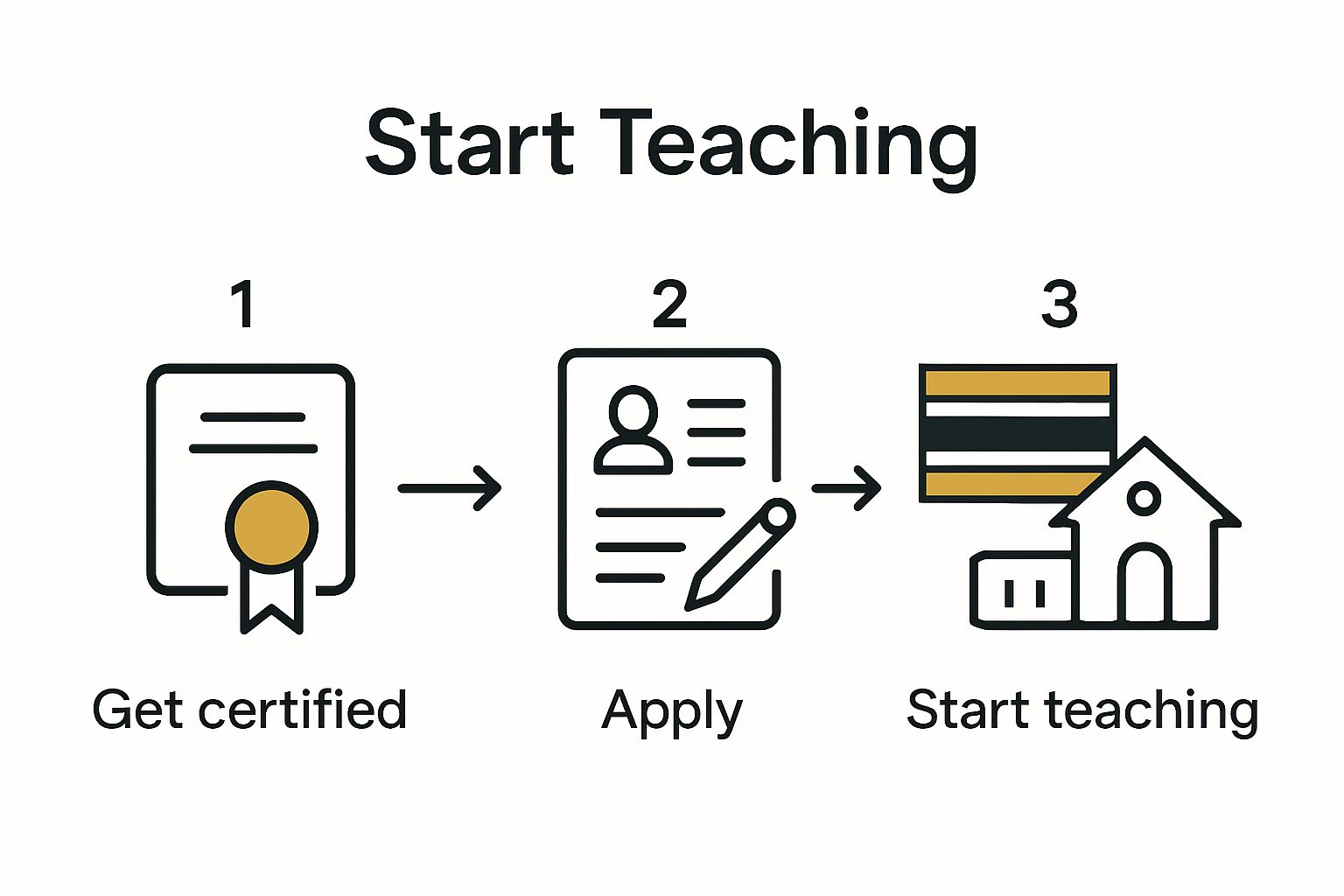
Step 3: Apply for Teaching Positions and Interviews
Applying for teaching positions in Thailand requires a strategic and comprehensive approach that goes beyond simply submitting applications. This critical step transforms your professional preparations into tangible job opportunities, demanding careful planning, cultural awareness, and professional presentation.
Job search platforms become your primary tools during this phase. Websites like AJARN.com, Dave’s ESL Cafe, and dedicated Thai recruitment portals offer extensive job listings specifically for English language instructors. Create comprehensive profiles on these platforms, ensuring your digital presence reflects your professional capabilities. Learn more about crafting the perfect TEFL job application to maximize your chances of securing interviews. Tailor your resume and cover letter to highlight experiences relevant to teaching in Thailand, emphasizing cultural adaptability and English language instruction skills.
Preparing for interviews requires understanding the unique dynamics of the Thai educational job market. Thai schools value personal interactions and cultural respect, so approach interviews with patience and professionalism. Research each institution thoroughly, understanding their educational philosophy and student demographics. Schools in urban centers like Bangkok might have different expectations compared to rural institutions. Dress conservatively and professionally, with formal attire that demonstrates respect for Thai professional norms.
Your application materials should include several key documents. Prepare digital and physical copies of your passport, academic degrees, TEFL certification, background check, and professional references. Many Thai schools require original or certified copies of these documents, so invest time in obtaining proper certifications and translations. Professional translation services can help ensure your documents meet local administrative requirements.
Here is a checklist summarizing essential documents and preparation steps needed to apply for teaching positions in Thailand, ensuring you are well-organized throughout the application process.
| Item | Purpose/Requirement | Notes |
|---|---|---|
| Passport | Identity verification | Original and digital copy |
| Bachelor’s Degree | Minimum education requirement | Notarized/certified copy often required |
| TEFL/TESOL Certificate | Demonstrates teaching capability | Practical component preferred |
| Resume & Cover Letter | Professional application documents | Tailor for cultural fit |
| Background Check | School and visa application requirement | Must be recent (within 6 months) |
| Professional References | Verifies experience and character | At least two recommended |
| Academic Transcripts | Verify educational history | Sometimes required by employers |
| Document Translations | Meet local administrative needs | Use professional translation services |
Networking plays a crucial role in securing teaching positions. Connect with current and former teachers in Thailand through social media groups, professional forums, and educational conferences. These connections can provide insider information about job opportunities, school cultures, and potential challenges. Some teaching positions are filled through personal recommendations, making professional networking an invaluable job search strategy.
Successful completion of this step means having a comprehensive application strategy, a polished professional portfolio, and a proactive approach to job hunting. Track your applications methodically, follow up professionally, and remain open to various teaching environments. Maintain a positive, adaptable attitude throughout the application process, recognizing that each interaction is an opportunity to demonstrate your commitment to teaching in Thailand.
Step 4: Prepare for Relocation and Adaptation
Preparing for relocation to Thailand involves more than just packing a suitcase. This critical step transforms your professional aspiration into a tangible international living experience, demanding comprehensive planning and cultural preparation. Your success depends on meticulous logistical arrangements and a flexible, open-minded approach to your new environment.
Visa and legal documentation represent the most crucial aspect of your relocation process. According to official immigration guidelines, you will need to secure a non-immigrant B work visa before arrival. This requires gathering extensive documentation, including original academic transcripts, TEFL certification copies, a clean background check, and a signed employment contract from your school. Work with your future employer to understand the precise visa requirements, as processing can be complex and time-sensitive.
Financial preparation is equally important. Budget for initial expenses including apartment deposits, first month’s rent, transportation costs, and a financial buffer for unexpected expenditures. Thailand’s cost of living is relatively affordable, but initial setup costs can be significant. Open a Thai bank account shortly after arrival, and consider maintaining an international bank account for transfers. Research international banking options that offer low-fee international transactions to minimize currency exchange expenses.
Cultural adaptation requires proactive learning and emotional intelligence. Invest time in understanding Thai social norms, which emphasize respect, indirect communication, and community harmony. Learn basic Thai language phrases, focusing on greetings and polite expressions. Understanding cultural nuances like the wai (traditional greeting) and proper dress codes will help you navigate social and professional interactions more smoothly. Respect for the royal family and Buddhist traditions is paramount in Thai society, so educate yourself about these fundamental cultural elements.
Practical preparations should include comprehensive health preparations. Obtain international health insurance that covers medical treatment in Thailand, and complete any recommended vaccinations. Research local healthcare facilities near your potential residence and workplace. Pack a well-stocked medical kit with essential medications, as specific prescription drugs might be challenging to obtain immediately upon arrival.
Successful relocation means having a holistic preparation strategy that addresses legal, financial, cultural, and personal readiness. Create a detailed relocation checklist tracking your progress across these critical areas. Maintain open communication with your future employer, ask questions about local living conditions, and approach this transition with curiosity and flexibility. Your ability to adapt and embrace new experiences will be your greatest asset in building a rewarding teaching career in Thailand.

Step 5: Begin Teaching and Engage with the Community
Beginning your teaching journey in Thailand marks the culmination of your extensive preparation, transforming years of planning into a dynamic professional experience. This step represents more than classroom instruction. It is about building meaningful connections, understanding cultural nuances, and establishing yourself as an effective educator within the local community.
Your first weeks will be critical for setting professional expectations and building relationships. Explore strategies for networking and professional growth to maximize your international teaching experience. Approach your new role with humility and curiosity, recognizing that cultural adaptation is as important as academic performance. Thai educational environments value respect, indirect communication, and harmonious workplace relationships. Observe how senior teachers interact, learn local protocols, and demonstrate genuine interest in your students’ cultural backgrounds.
Classroom management requires a delicate balance of authority and cultural sensitivity. Thai students typically respond best to educators who demonstrate patience, maintain a calm demeanor, and use positive reinforcement. Develop interactive teaching strategies that engage students while respecting traditional learning structures. Incorporate elements of Thai culture into your lessons, showing respect for local traditions and creating more relatable learning experiences. According to educational guidelines, new teachers are encouraged to participate actively in school activities and seek mentorship from experienced colleagues.
Professional networking extends beyond your immediate workplace. Connect with other international teachers through social media groups, local expat communities, and professional meetups. These connections provide emotional support, practical advice, and potential career opportunities. Learn basic Thai language skills to demonstrate commitment to your new community. Even simple phrases can significantly improve your personal and professional relationships, showing respect for local culture.
Successful community engagement means becoming an active participant rather than a passive observer. Attend school events, participate in cultural celebrations, and show genuine interest in your students’ lives. Document your experiences, reflect on your professional growth, and remain flexible in your approach. Your ability to adapt, learn, and connect will determine not just your teaching success, but your overall experience living and working in Thailand. Embrace challenges as opportunities for personal and professional development, maintaining an open mind and positive attitude throughout your teaching journey.
Ready to Begin Your Thailand Teaching Journey with Confidence?
You have just explored the essential steps in our article to launch your teaching career in Thailand. We understand how overwhelming it can feel to navigate TEFL certification requirements, prepare your documents, and stand out in a competitive job market. Finding the right program, gaining practical experience, and meeting local expectations are real challenges—especially when your dream is at stake. Do not let uncertainty hold you back from teaching abroad.
Take control of your teaching future today. The TEFL Institute is your trusted partner, offering internationally recognized TEFL training, practical course options, and expert guidance designed for Thailand-bound teachers. Whether you need a comprehensive TEFL certification program, advice on navigating teaching job applications, or proven networking strategies, we help you achieve real classroom confidence. Begin your journey to a rewarding teaching experience in Thailand right now—visit our site to choose your path and make your next step count.
Frequently Asked Questions
What qualifications do I need to teach in Thailand?
To teach in Thailand, you typically need a TEFL or TESOL certification, along with a bachelor’s degree in any field. Some international schools may require additional credentials such as a teaching license or a master’s degree.
How can I find teaching opportunities in Thailand?
You can find teaching opportunities by exploring job search platforms like AJARN.com and Dave’s ESL Cafe, as well as connecting with experienced teachers through social media groups dedicated to teaching in Thailand.
What are the visa requirements for teaching in Thailand?
To work as a teacher in Thailand, you must obtain a non-immigrant B work visa. This requires documentation such as academic transcripts, TEFL certification, a clean background check, and a signed employment contract from your school.
How should I prepare for cultural adaptation when teaching in Thailand?
Preparing for cultural adaptation involves understanding Thai social norms, learning basic Thai phrases, and showing respect for local traditions and customs. Engaging with your students and community can also enhance your adaptation experience.