

 United Kingdom (UK)
 United States (US)
 Canada
 South Africa
 India
India Australia
 New Zealand
 China
China Russia
 Germany
 France
 Spain
Spain Netherlands
 Vietnam
 United Arab Emirates
 Italy
Italy Poland
 Thailand
 Türkiye










 Algeria



How to Teach Young Learners TEFL for Effective Results
How to Teach Young Learners TEFL for Effective Results

Every american classroom brings its own mix of excitement and challenge when teaching English to young learners. Studies show that children learn languages more naturally when lessons match their developmental stage and interests. Finding the right balance between fun activities, practical skills, and clear progress can make all the difference. This guide helps teachers deliver personalized, engaging lessons that support each child’s unique journey as they grow in confidence and ability.
Table of Contents
- Step 1: Assess Young Learners’ Needs and Levels
- Step 2: Select Age-Appropriate Materials and Tools
- Step 3: Design Engaging and Interactive Lesson Plans
- Step 4: Deliver Fun and Structured Classroom Activities
- Step 5: Evaluate Progress and Adapt Teaching Strategies
Quick Summary
| Key Point | Explanation |
|---|---|
| 1. Assess individual skills and needs | Use multi-dimensional assessment strategies to gauge students’ comfort and language proficiency without relying on traditional tests. |
| 2. Choose engaging, age-appropriate materials | Select resources that are educational and exciting; mix traditional and digital tools to maintain students’ interest. |
| 3. Create dynamic and interactive lessons | Design lesson plans that encourage active participation through various activities, maintaining flexibility based on student engagement. |
| 4. Implement fun and structured activities | Develop activities that blend fun with learning, incorporating different modalities to cater to all students and keep them motivated. |
| 5. Use authentic assessments for growth | Focus on continuous evaluation methods like performance tasks and self-reflection to track progress and adapt teaching strategies accordingly. |
Step 1: Assess Young Learners’ Needs and Levels
Assessing young learners’ language skills requires a strategic and nuanced approach. Your primary goal in this stage is to determine each student’s current English proficiency level and individual learning needs, creating a foundation for effective personalized instruction.
Start by implementing a multi-dimensional assessment strategy that goes beyond traditional testing. Observe students during initial interactions to gauge their comfort level with English. Watch how they communicate nonverbally, respond to instructions, and engage with peers. Conduct informal conversations that reveal their existing vocabulary and comprehension skills. Use age appropriate activities like picture description games, simple role playing scenarios, and interactive group exercises that make assessment feel like a natural part of learning.
Prepare a structured evaluation template that covers key language domains listening, speaking, reading, and writing. Create tasks that are engaging and developmentally appropriate for different age groups. For younger children under 10, use visual cues and playful interactions. With pre teens, incorporate more complex communication challenges that reveal their linguistic capabilities. Always maintain a supportive environment where students feel comfortable demonstrating their skills without feeling pressured or judged.
A critical warning for new TEFL instructors: avoid standardized adult language tests with young learners. These can be intimidating and inaccurate. Instead, design dynamic assessment methods that feel like fun learning experiences. Your goal is to understand their language skills while keeping them motivated and excited about learning English.
Step 2: Select Age-Appropriate Materials and Tools
Selecting the right learning materials is crucial for maintaining young learners’ engagement and maximizing their English language acquisition. Your goal is to curate resources that are not just educational but also exciting and tailored to specific age groups and skill levels.
Technology can be a powerful ally in creating dynamic learning experiences. ArXiv Research highlights innovative approaches like holographic mobile applications that can transform language learning into an interactive adventure. When choosing materials, consider digital and physical resources that spark curiosity. For younger children, focus on colorful picture books, simple animated videos, and interactive games that introduce vocabulary through play. Older learners might appreciate more sophisticated digital tools like language learning apps, podcasts, and multimedia content that challenge their growing linguistic skills.
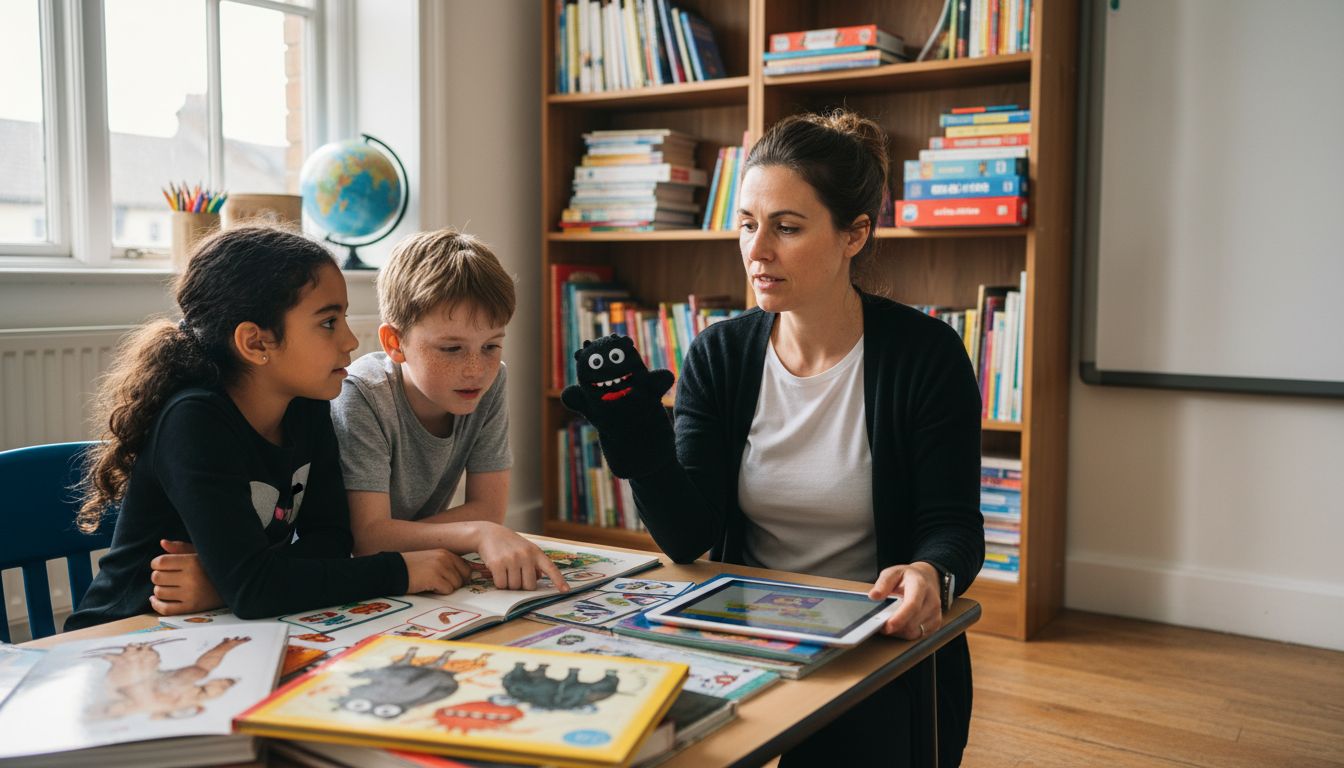
Consider the learning styles and interests of different age groups. Preschool and early elementary students respond well to sensory materials like picture cards, puppets, and music based activities. Middle grade students often enjoy more competitive and collaborative tools like board games, role playing scenarios, and group challenges. Always preview materials to ensure they are culturally sensitive, age appropriate, and aligned with your specific teaching objectives. Mix traditional resources like textbooks and workbooks with modern digital platforms to create a comprehensive and engaging learning environment.
A word of caution for new instructors: avoid overwhelming students with too many tools or complex resources. Quality trumps quantity. Select materials that are not just educational but also fun and developmentally suitable. Your next step will be creating lesson plans that seamlessly integrate these carefully chosen materials.
Step 3: Design Engaging and Interactive Lesson Plans
Creating captivating lesson plans is an art that transforms language learning from a mundane task into an exciting adventure for young learners. Your objective is to craft experiences that not only teach English but also inspire curiosity and enthusiasm in your students.
Technology and innovative approaches can significantly enhance lesson interactivity. ArXiv Research showcases promising developments like the ‘SingaKids’ multilingual dialogic tutor, which demonstrates how interactive picture description tasks can make language learning immersive and enjoyable. Align your lesson plans with Natural Approach principles, which emphasize communication and creating a stress free environment where language emerges spontaneously. Design activities that encourage active participation through games, role playing, storytelling, and collaborative projects. Break down lessons into dynamic segments that alternate between listening, speaking, reading, and writing exercises to maintain student engagement.
Structure your lesson plans with clear learning objectives while leaving room for flexibility and student led exploration. For younger children, incorporate sensory experiences like movement based activities, music, and visual aids. Older students might appreciate more complex interactive challenges like group debates, creative problem solving tasks, and digital collaborative projects. Always include elements of surprise and fun to keep students motivated. Integrate multimedia resources such as short video clips, interactive online games, and audio materials that make learning feel less like a formal class and more like an exciting discovery process.
Warning for new instructors: avoid rigid lesson structures that leave no space for student creativity or spontaneous learning moments. While planning is crucial, be prepared to adapt your approach based on student responses and energy levels. Your next step will involve implementing these carefully designed lesson plans and observing student interactions to continuously refine your teaching strategy.
Step 4: Deliver Fun and Structured Classroom Activities
Crafting engaging classroom activities requires a delicate balance between educational objectives and entertainment. Your mission is to transform language learning into an exciting journey that keeps young learners motivated and actively participating.
Teachability Hypothesis underscores the critical importance of aligning activities with students’ developmental stages. Drawing from the Cambridge English Teaching Framework, structure your classroom activities to progressively challenge students while maintaining an element of fun. Design activities that incorporate multiple learning modalities such as kinesthetic movement, visual storytelling, musical interactions, and collaborative group challenges. For younger learners, use short energetic activities that last 5 to 10 minutes. Older students can handle more complex tasks that require sustained attention and deeper linguistic engagement.
Create a dynamic activity flow that moves seamlessly between different learning styles and energy levels. Start with high energy warm up activities that get students moving and speaking, then transition to more focused learning tasks. Use props, visual aids, and interactive technology to maintain engagement. Incorporate reward systems that recognize effort and progress, not just final outcomes. Implement activities that allow students to practice English in meaningful contexts like role playing real life scenarios, creating group stories, or solving collaborative challenges.
Warning for new instructors: avoid monotonous or overly structured activities that drain student enthusiasm. Always be prepared to pivot and adjust your approach based on student engagement and energy levels. Read the room and be willing to modify your lesson plan in real time. Your next step involves monitoring student responses and continuously refining your activity design to keep learning both educational and enjoyable.
Step 5: Evaluate Progress and Adapt Teaching Strategies
Evaluating student progress is more than just tracking grades it is about understanding each learner’s unique language development journey. Your goal is to create a comprehensive assessment approach that provides meaningful insights into student growth and informs your teaching strategies.
Research by Samuel J. Meisels emphasizes the importance of authentic performance based assessments for young learners. Drawing from Cambridge University’s guidance, develop a multifaceted evaluation system that goes beyond traditional testing. Implement ongoing formative assessments that capture students’ language progression through diverse methods like interactive conversations, portfolio collections, group presentations, and student self reflection tasks. For younger learners, use visual progress trackers and playful assessment games. With older students, introduce more structured self assessment tools that help them recognize their own learning trajectories.
Create a dynamic feedback loop that involves students in their own learning assessment. Use observational notes, performance samples, and student interviews to gather comprehensive insights. Track not just language skills but also confidence levels, communication strategies, and overall engagement. Design personalized learning paths that respond to individual student needs adaptive strategies that celebrate progress and address challenges. Integrate technology tools like digital portfolios or language progression apps to make tracking more interactive and transparent.
Warning for new instructors: avoid turning assessments into high pressure experiences that might discourage young learners. Keep evaluations playful, constructive, and focused on growth rather than perfection. Your next step involves using these assessment insights to continuously refine your teaching approach and create increasingly personalized learning experiences.
Empower Your Journey to Teach Young Learners with Confidence
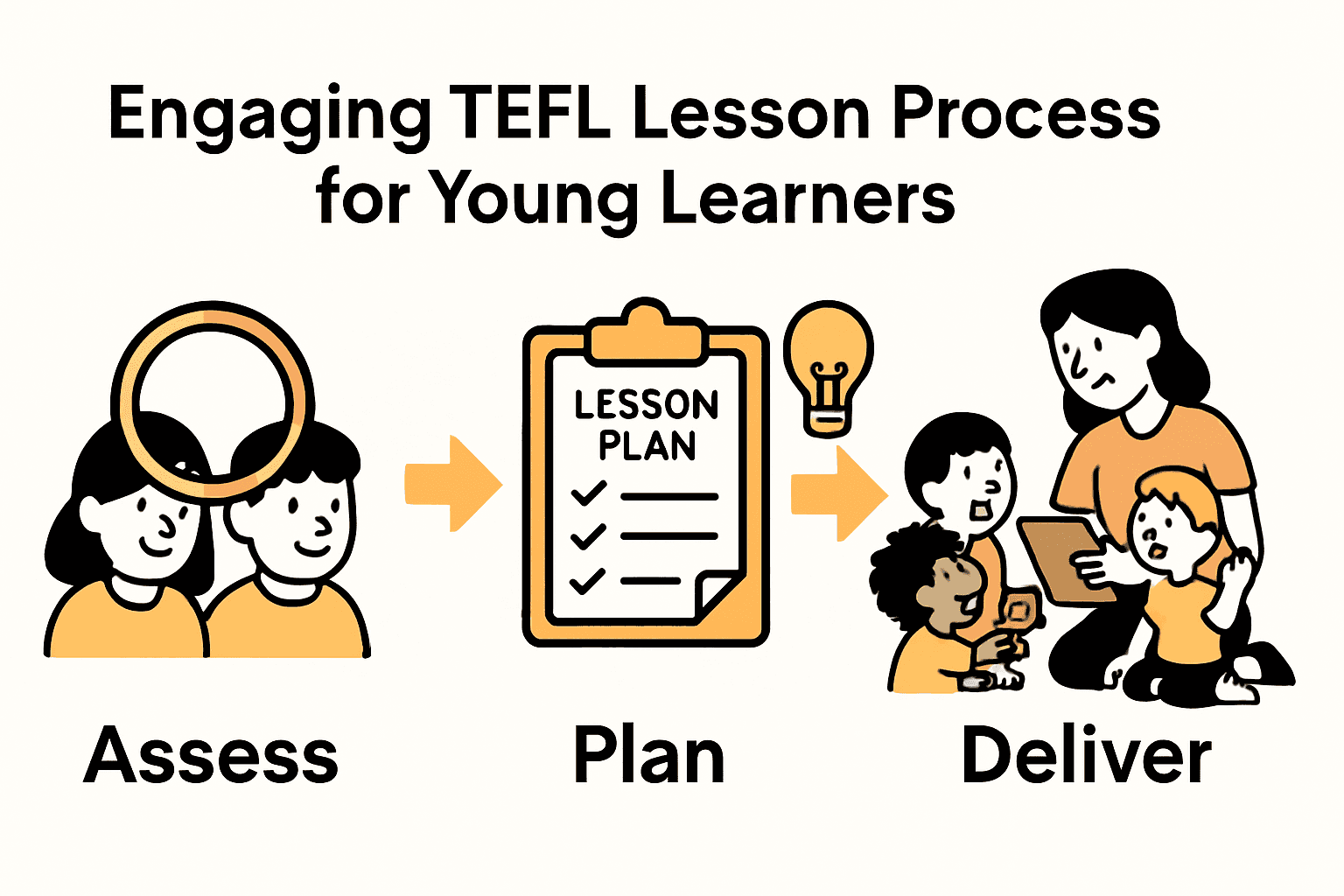
Teaching young learners requires more than just basic TEFL knowledge. The challenge lies in assessing individual needs, selecting age-appropriate materials, and delivering engaging lessons that truly connect. This article highlights crucial strategies like dynamic assessment, interactive lesson planning, and playful evaluation methods to keep children motivated and excited about learning English. These are essential skills that every effective TEFL instructor must master.
Take your ability to inspire young learners to the next level by exploring the specialized training and practical resources at TEFL Institute. With comprehensive online courses tailored for teaching English abroad or online, you will gain the tools to design vibrant lesson plans and adapt assessments for real progress. Start now to build confidence, creativity, and success in your teaching career with TEFL Institute’s online TEFL courses and begin making a lasting impact on young learners today.
Frequently Asked Questions
How can I assess young learners’ language skills effectively?
To assess young learners’ language skills, implement a multi-dimensional assessment strategy that includes observation, informal conversations, and engaging activities. Start by using playful games and role-playing scenarios to gauge their comfort and comprehension levels, which will help you tailor your instruction.
What types of materials should I select for teaching young learners?
Select age-appropriate and engaging materials that cater to the interests and developmental stages of your students. Incorporate both digital resources like interactive games and colorful physical materials like picture books to maximize their learning experience.
How do I create engaging lesson plans for young learners?
To create engaging lesson plans, design activities that encourage active participation through games, storytelling, and collaborative tasks. Break lessons into dynamic segments that allow students to alternate between different language skills, all while maintaining an element of surprise to keep them excited about learning.
What classroom activities can I implement to keep young learners motivated?
Implement fun and structured classroom activities that incorporate multiple learning modalities, such as movement, music, and visual storytelling. Ensure activities are short and varied, allowing for transitions between high-energy tasks and focused learning to maintain student enthusiasm.
How can I evaluate progress without discouraging young learners?
Use ongoing, authentic assessments that focus on growth rather than perfection, such as interactive conversations and playful assessment games. Establish a feedback loop that includes student reflections, helping them understand their learning journey and keeping evaluations positive and motivating.
What should I do if my lesson plans are not engaging students?
If your lesson plans are not engaging students, observe their reactions and be flexible in adjusting your approach. Incorporate more interactive elements or change activities based on their energy levels to maintain their interest and enthusiasm for learning.