

 United Kingdom (UK)
 United States (US)
 Canada
 South Africa
 India
India Australia
 New Zealand
 China
China Russia
 Germany
 France
 Spain
Spain Netherlands
 Vietnam
 United Arab Emirates
 Italy
Italy Poland
 Thailand
 Türkiye











 Algeria


Why Teach English Online
Teaching English online has grown into a realistic and accessible career path for people who want flexibility, independence, and the chance to work from almost anywhere. For many beginners, it is an attractive option because it does not require a traditional classroom, a commute, or relocation to another country before getting started.
One of the biggest advantages is control over your schedule. You can teach early in the morning, in the evenings, or at weekends depending on your availability and the time zones of your students. This makes online English teaching especially appealing for parents, university students, career changers, and digital nomads.
Another major benefit is the global demand for English. Students may be learning for work, travel, university admission, exams, relocation, or personal development. Because English remains a key international language, there is ongoing demand for tutors who can help learners improve their speaking, listening, reading, and writing skills.
Online teaching can also be more scalable than many entry-level remote jobs. You might begin by teaching through a platform, then move into private classes, small group sessions, exam preparation, business English, or specialist coaching. Over time, this can increase both your confidence and your income.
If you are looking for a way to combine remote work with meaningful teaching, online English lessons offer a practical route in. You do not need to build everything at once. Most teachers start small, gain experience, improve their teaching style, and gradually create a setup that suits their lifestyle and goals.
Next: Do you need a degree or TEFL qualification?

Do You Need a Degree or TEFL Qualification?
This is one of the first questions most beginners ask, and the answer depends on where and how you want to teach. Some online teaching companies ask for a university degree, while others are more flexible and focus on your communication skills, availability, and teaching qualification.
A degree can help, especially on platforms that serve schools, younger learners, or more formal education programmes. However, a degree is not always essential. Many teachers begin teaching English online without one, particularly when working with adult learners, conversational English students, or private clients.
What matters most in most cases is having a recognised TEFL qualification. A TEFL course gives you the practical knowledge and confidence to teach English properly rather than simply speaking English well. Students and employers want to know that you understand lesson structure, grammar presentation, error correction, classroom management, and how to support learners at different levels.
If you want to stand out in a competitive market, our 180-hour Level 5 TEFL Diploma is widely regarded as the gold standard. It shows a higher level of training than a short introductory certificate and gives you stronger preparation for both online and overseas teaching roles.
A high-quality Level 5 course helps you learn:
- How to plan effective English lessons.
- How to teach grammar, vocabulary, pronunciation, and speaking skills.
- How to adapt lessons for online learners.
- How to manage different student levels and needs.
- How to present yourself more professionally to employers and private students.
For beginners who want a serious long-term route into teaching, a Level 5 qualification is the strongest starting point. It improves employability, builds teaching confidence, and supports higher earning potential over time.
Essential Equipment and Setup
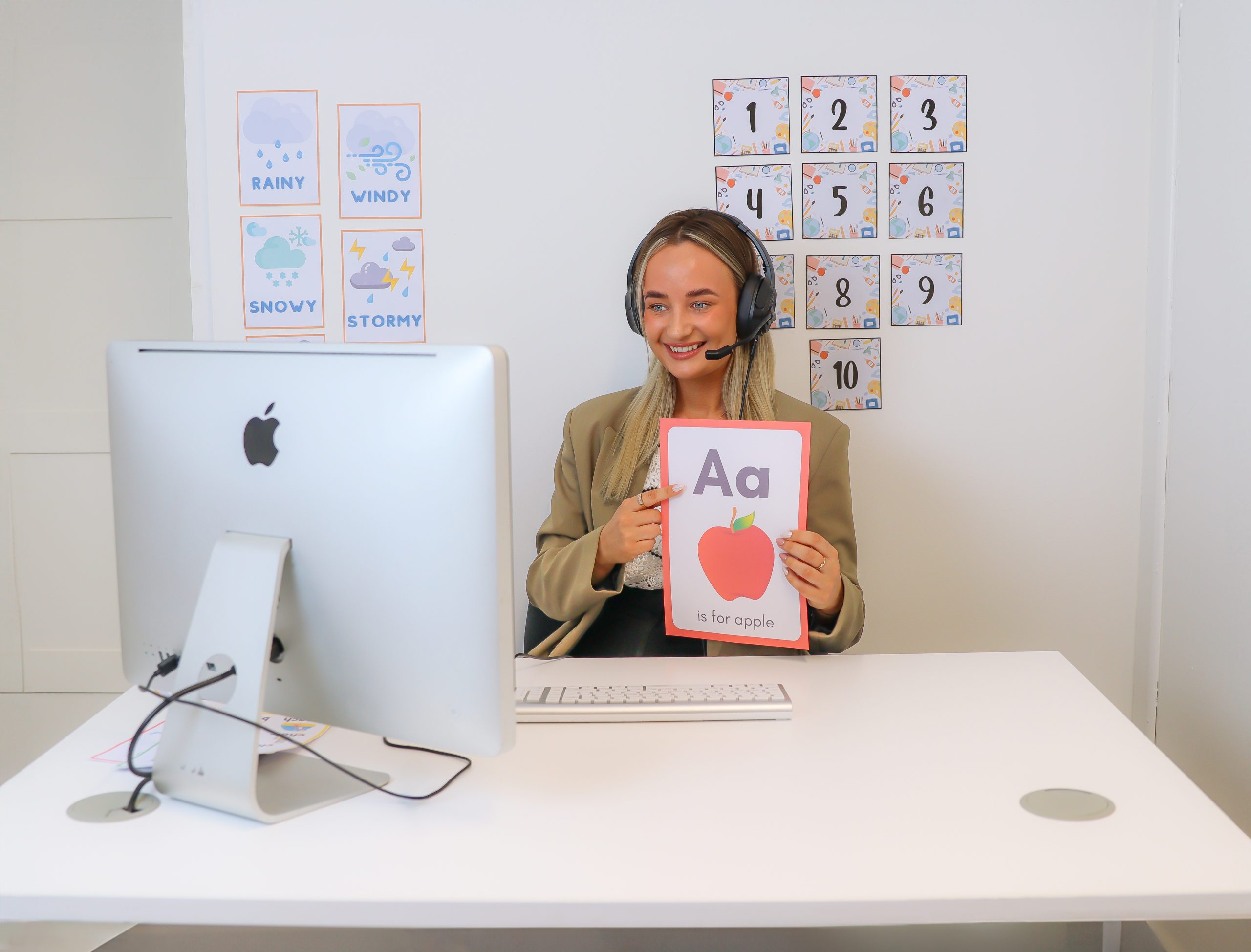
You do not need a complicated home studio to teach English online, but you do need a professional, reliable setup. Students expect clear sound, stable video, and a calm learning environment. Even if your lessons are excellent, weak audio or a distracting background can affect reviews and repeat bookings.
At the most basic level, you need a computer or laptop that can handle video calls smoothly. A tablet or phone is not ideal for regular teaching because you need to manage lesson materials, notes, chat tools, and screen sharing at the same time.
You will also need a stable internet connection. A weak or inconsistent connection can interrupt lessons and reduce your credibility. If possible, use strong broadband and test your speed before you begin teaching regularly.
Here is a simple beginner checklist:
- A laptop or desktop computer.
- Reliable high-speed internet.
- An HD webcam.
- A headset with a clear microphone.
- A quiet and tidy teaching space.
- Good lighting, ideally natural light or a ring light.
You can improve your setup further with a neutral background, visual props for younger learners, and a second screen if you plan to teach independently. Small upgrades can make your lessons look more polished and help students feel they are learning with a professional teacher.
It is also worth thinking about your on-screen presence. Sit at eye level, keep your face well lit, and reduce background noise as much as possible. In online teaching, your environment becomes part of the student experience.
Best Platforms to Teach English Online
Once you have your qualification and basic setup in place, the next step is deciding where to teach. In general, you have two options: join an established platform or find students independently.
Platforms are often the easiest way to start because they already have students, booking systems, and payment structures in place. This makes them useful for beginners who want experience quickly. Independent teaching offers more freedom and higher earning potential, but it also requires marketing, administration, and student acquisition.
The table below compares common routes for new online English teachers.
| Platform | Typical Requirements | Student Type | Pay Structure | Best For | Main Advantage | Main Drawback |
|---|---|---|---|---|---|---|
| Cambly | No degree required, TEFL preferred | Adults and conversational learners | Fixed platform rate | Beginners wanting easy entry | Flexible and simple to start | Lower earning potential |
| Preply | No strict degree rule, TEFL recommended | Mixed global learners | You set your own rates | Teachers who want flexibility | Control over pricing | Commission fees and competition |
| italki | Requirements vary by teacher type, TEFL recommended | Adults, professionals, language learners | You set your own rates | Building a professional tutor profile | High long-term earning potential | Requires profile optimisation |
| Engoo | TEFL preferred, degree may not always be required | Adults and business learners | Fixed rates | Teachers who want structured lessons | Teaching materials are often provided | Less pricing control |
| Independent teaching | TEFL strongly recommended | Your chosen niche or audience | You set all pricing | Teachers building a long-term business | Highest control and income potential | You handle marketing and admin |
For many beginners, the smartest route is to start on a platform, gain teaching hours, collect reviews, and then gradually move towards private students. This reduces pressure at the start while still giving you room to grow into a more profitable model later.
How Much Can You Earn Teaching English Online?
Your earnings will depend on several factors, including your qualification level, teaching experience, niche, platform, and whether you work for a company or teach private students directly.
Beginners often start at a lower hourly rate while they build confidence and gain reviews. Teachers with a recognised TEFL qualification usually have a stronger starting point than those with no training, and teachers with a Level 5 qualification are generally in a better position to attract more serious employers and students.
Typical earning ranges may look like this:.
- Teachers with a TEFL qualification: around €12 to €25 per hour.
- Teachers with a 180-hour Level 5 TEFL Diploma and experience: around €20 to €40 or more per hour.
- Private niche tutors and business English teachers: often €25 to €60 or more per hour.
Your actual monthly income depends on more than your hourly rate. You also need to consider how many hours you teach each week, how often students rebook, whether you teach one-to-one or groups, and whether you fill your diary consistently.
For example, a teacher charging €20 per hour and teaching 20 paid hours a week could bring in around €400 per week before taxes and expenses. A teacher charging €35 per hour with a loyal base of private students could earn significantly more while teaching fewer hours.
The strongest income growth usually comes from specialisation. Business English, IELTS preparation, Cambridge exam support, and English for specific industries can all justify higher rates than general conversation classes alone.
How to Set Your Rates
Pricing can feel difficult at the beginning because you want to attract students without undervaluing yourself. A good starting strategy is to set fair but competitive rates, especially while you are building experience, testimonials, and visibility.
If you are teaching on a platform where you control your own pricing, look at teachers with similar experience and qualifications. This gives you a realistic benchmark. Do not compare yourself only with the cheapest tutors, because low pricing can make it harder to increase rates later.
When setting your rate, think about:
- Your TEFL qualification level.
- Your teaching experience.
- Your target student type.
- Your chosen niche, such as business English or exam preparation.
- The amount of preparation and follow-up involved.
A sensible beginner approach is to start slightly below your long-term target, then raise prices gradually as your profile improves. You can also offer trial lessons, lesson bundles, or monthly packages to encourage commitment and improve retention.
It is important not to stay at beginner prices for too long. Once you have consistent bookings, positive feedback, and a clearer teaching offer, your rates should reflect the value you provide. Professional students and serious learners are often willing to pay more for a teacher who is prepared, reliable, and well qualified.

How to Find Your Own Students
Finding your own students gives you more independence and usually better margins than relying entirely on teaching platforms. It takes more effort at first, but it can turn online teaching from a gig-based model into a more stable business.
One of the best starting points is to create a simple professional online presence. This could be a landing page, a short website, or even a well-optimised social media profile that clearly explains who you help, what you teach, and how students can book with you.
You can also attract students through content. Blog posts, short videos, LinkedIn posts, Instagram tips, and email newsletters can all help build credibility. If your content answers real questions learners already have, it can bring in students who are actively looking for help.
Here are effective ways to find private students:
- Create a clear teacher profile with your niche and offer.
- Use LinkedIn to connect with professionals and companies.
- Publish useful English-learning content online.
- Ask existing students for referrals.
- Offer specialist services such as business English or interview preparation.
- Use email outreach for schools, agencies, and companies with international teams.
Corporate English training can be especially valuable if you want steady work. Companies with international staff often need support with meetings, presentations, email writing, and confidence in spoken English. A strong TEFL background helps you present these services more professionally.
Over time, your best marketing asset is student results. When learners improve, recommend you, and leave strong feedback, it becomes much easier to fill your schedule with the right kind of clients.
Professional Disclaimer
This article is intended for general informational purposes only. Teaching requirements, earning potential, platform rules, student demand, and qualification preferences can vary depending on the company, country, and your personal circumstances.
Nothing in this guide should be treated as legal, tax, financial, or employment advice. Anyone planning to teach English online should carry out their own due diligence before enrolling on a course, joining a platform, setting prices, or offering services internationally.