

 United Kingdom (UK)
 United States (US)
 Canada
 South Africa
 India
India Australia
 New Zealand
 China
China Russia
 Germany
 France
 Spain
Spain Netherlands
 Vietnam
 United Arab Emirates
 Italy
Italy Poland
 Thailand
 Türkiye









 Algeria


English Teacher Vacancies: Your 2026 Career Guide
English Teacher Vacancies: Your 2026 Career Guide

TL;DR:
- English teacher vacancies worldwide demand qualified educators with specific credentials and relevant experience.
- Early preparation and targeted applications help candidates stand out in the competitive international and online teaching markets.
English teacher vacancies are open positions worldwide that require qualified educators with specific credentials and experience to teach English in diverse environments, from traditional secondary schools to online platforms. The global demand for English language instruction continues to grow, creating opportunities across Asia, the Middle East, Europe, and the remote teaching sector. Whether you are pursuing secondary school English jobs in an international school or ESL job openings through an online platform, understanding what employers require and how hiring works is the difference between a strong application and a missed opportunity. This guide covers qualifications, search strategies, hiring timelines, and how to position yourself as the strongest candidate in 2026.
What qualifications are required for English teacher vacancies?
The baseline credential for most English teaching positions is a Bachelor’s degree in English, Education, or a related field such as Literature or Linguistics. Beyond the degree, employers require a recognized teaching certification. International school vacancies for 2026–27 specify a PGCE or QTS alongside at least 2 years of recent secondary teaching experience. That combination reflects what most reputable schools treat as the minimum bar, not a preference.
For teachers targeting ESL job openings abroad or online, a TEFL or TESOL certification is the standard industry credential. TEFL stands for Teaching English as a Foreign Language, and TESOL stands for Teaching English to Speakers of Other Languages. Both certifications signal that a candidate has received formal training in language acquisition methodology, lesson planning for non-native speakers, and classroom management in multilingual settings. Employers treat TEFL and TESOL as distinct from a general teaching license, so holding both a national teaching credential and a TEFL qualification gives candidates a clear advantage.
Specialized training matters beyond the core credentials. Schools serving students with diverse learning needs expect candidates to demonstrate experience with English Language Support (ELS) instruction, SEND (Special Educational Needs and Disabilities) accommodations, and differentiated teaching approaches. Candidates who can document this experience in their application materials stand out from those who list only standard classroom roles.
Additional requirements common across English language instructor roles include:
- Degree verification: Certified copies of transcripts and degree certificates, not just digital scans
- Teaching credential: PGCE, QTS, state teaching license, or an accredited TEFL/TESOL certificate
- Experience: A minimum of 2 years at the secondary level for international school roles; online platforms often accept less experience for entry-level positions
- Professional references: At least 3 current referees who can speak to classroom performance
- Background check: A DBS check (UK), FBI clearance (US), or equivalent national clearance depending on the destination country
Pro Tip: Check the qualifications needed to teach abroad before applying. Some countries require credential recognition through a national authority, which can add weeks to your timeline.
Where and how can you find English teacher vacancies globally and online?
The market for English teaching positions divides into three main segments: international brick-and-mortar schools, government-sponsored teaching programs, and remote online platforms. Each segment has distinct hiring channels and pay structures.
- International school job boards: Schools in Singapore, the UAE, Lebanon, and across Southeast Asia post directly on their websites and through specialist recruitment agencies. Checking school websites directly in addition to aggregator boards increases your visibility to roles that never appear on general job sites.
- Government teaching programs: Countries including South Korea (EPIK), Japan (JET), and Spain (Auxiliares de Conversación) run government-sponsored programs that recruit English teachers annually. These programs provide structured support, housing assistance, and defined contracts.
- Specialist recruitment agencies: Agencies that focus exclusively on education placements maintain active relationships with international schools and can match candidates to roles before public postings go live.
- Remote ESL platforms: Online platforms connect teachers with students in China, South Korea, and Latin America. Remote ESL teaching roles targeting students aged 3–15 in China start at $30 per hour as of july 2026. That rate reflects the competitive pay available to certified teachers willing to work flexible schedules across time zones.
- Direct school applications: Many international schools accept speculative applications outside their formal hiring cycle. Submitting a strong CV and cover letter directly to a school’s HR department in october or november positions you ahead of the spring posting rush.
The table below outlines the primary channels for finding English language instructor roles and their key characteristics.
| Channel | Best for | Typical posting period |
|---|---|---|
| International school websites | Secondary school English jobs | october through march |
| Government teaching programs | Structured placements with support | october through january |
| Specialist recruitment agencies | Matched placements, pre-market roles | Year-round |
| Remote ESL platforms | Flexible online teaching | Year-round |
| Direct school applications | Speculative, early positioning | october through november |

Setting up job alerts on education-specific boards keeps you informed without requiring daily manual searches. Combine alerts with a tracking spreadsheet that logs each application’s status, deadline, and required documents. That habit prevents missed deadlines and duplicate submissions.
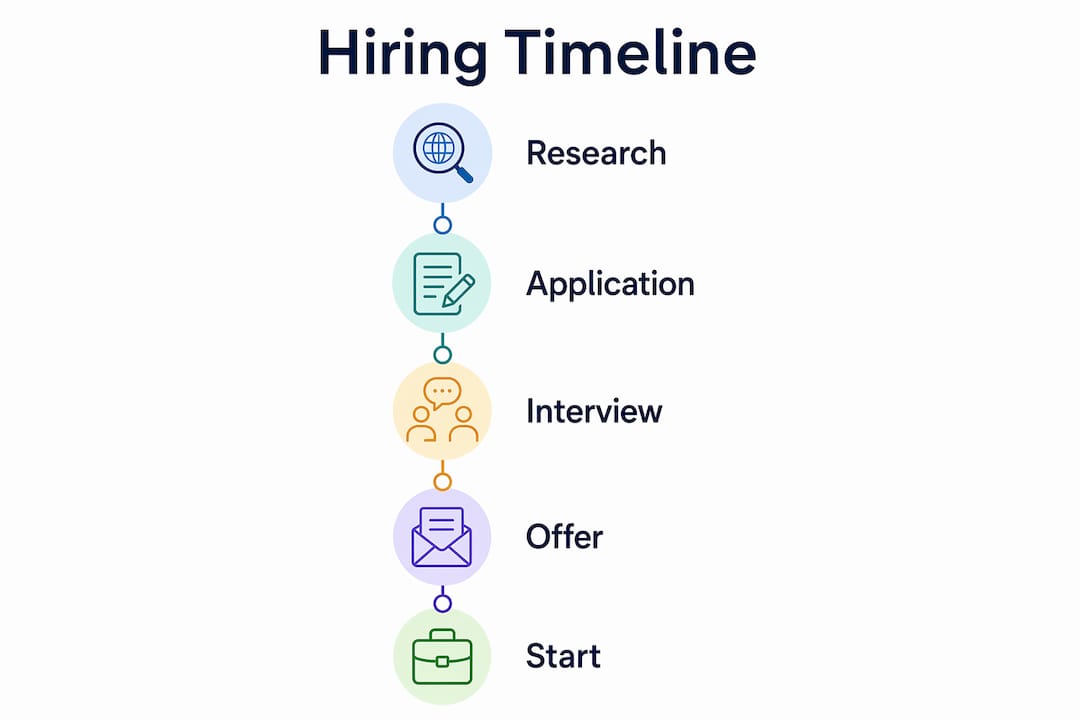
What is the typical hiring timeline for English teaching positions?
Hiring for international English teacher vacancies follows a predictable academic calendar. Postings for international roles appear in late spring, with interviews typically concluding by early july for roles starting in the following academic year. That window is shorter than most candidates expect. Schools in the Middle East and Asia often move faster, with some completing full hiring cycles between january and march for august start dates.
The application process for international roles requires a complete document package from the first submission. Applications require a current CV, certified copies of degrees and teaching certificates, and at least 3 professional references ready upfront. Missing any element results in immediate rejection. Schools receive high volumes of applications and do not follow up with incomplete submissions.
Key preparation steps and their recommended timing:
- 6 months before target start date: Identify target schools and regions; begin credential recognition processes if required by the destination country
- 4–5 months out: Update your CV, gather certified copies of all certificates, and contact referees to confirm their availability and current contact details
- 3 months out: Prepare application materials and submit applications to schools with early hiring cycles
- After receiving an offer: Initiate your background check immediately. DBS checks and equivalent clearances are mandatory before starting work, and the process can take several weeks. Delays in starting the check translate directly into delays in your start date.
- Interview preparation: Research the school’s curriculum framework, student demographics, and any published academic results. Prepare specific examples of lessons that demonstrate differentiated instruction and measurable student progress.
Pro Tip: Teachers should prepare application materials at least 2–3 months before the expected start date. Administrative timelines, including reference checks and credential verification, consistently take longer than candidates anticipate.
How do you stand out as a candidate for English teaching jobs?
The strongest candidates for English teaching positions in 2026 go beyond meeting the minimum credential requirements. International schools actively seek candidates who demonstrate an international outlook, meaning the ability to adapt teaching methods across cultural contexts and support students from diverse linguistic backgrounds. That quality is increasingly weighted alongside formal qualifications in hiring decisions.
Recruiters favor candidates who use data-driven teaching methods to differentiate lessons based on student performance. Documenting specific examples of how you analyzed assessment data and adjusted instruction accordingly gives your application concrete evidence of teaching quality. Generic statements about being “student-centered” carry little weight without supporting data.
Curriculum framework experience is a direct differentiator. Experience with IGCSE, GCSE, or A-level frameworks, or with teaching English Language Support classes, is highly valued by international schools. If you lack direct experience with a specific framework, document transferable skills from multilingual or inclusive classroom settings. Skills in supporting multilingual and diverse classrooms transfer well when candidates lack specific curricular experience like IGCSE.
Practical steps to strengthen your application:
- Quantify student progress: Include specific data points, such as percentage improvements in reading scores or pass rates, rather than general descriptions of teaching success
- Document ELS experience: List any formal training or classroom hours spent supporting English Language Learners, SEND students, or EAL (English as an Additional Language) learners
- Tailor each application: Reference the school’s specific curriculum, values, or student population in your cover letter. Generic applications are easy to identify and easy to discard
- Build a teaching portfolio: Include sample lesson plans, assessment rubrics, and anonymized student work samples that demonstrate your approach to differentiated instruction
- Pursue additional certification: A specialized TEFL qualification, such as a course focused on teaching English to young learners, adds a credential that directly addresses the needs of schools serving younger student populations
Key Takeaways
Securing English teacher vacancies in 2026 requires a combination of recognized credentials, early preparation, and targeted applications that demonstrate measurable teaching quality and adaptability.
| Point | Details |
|---|---|
| Core credentials required | A Bachelor’s degree plus a PGCE, QTS, or accredited TEFL/TESOL certificate is the standard minimum. |
| Experience threshold | Most international school roles require at least 2 years of recent secondary teaching experience. |
| Application timing | Begin preparing documents 3–6 months before your target start date to meet administrative timelines. |
| Background checks | Initiate DBS or equivalent clearance immediately after receiving a job offer to avoid onboarding delays. |
| Differentiation factors | Data-driven teaching evidence and curriculum framework experience (IGCSE, GCSE, A-levels) set strong candidates apart. |
What I have learned from watching candidates succeed and fail
The most consistent pattern I observe in English teacher hiring is that candidates underestimate the administrative side of the process. They spend weeks perfecting their cover letter and then submit an application with an outdated reference contact or a missing certificate copy. That single gap ends the application immediately. Schools are not obligated to chase missing documents, and in competitive markets, they simply move to the next candidate.
The second pattern is timing. Candidates who treat the spring posting window as their starting point are already behind. The teachers who secure the best international roles begin their search in the fall, make direct contact with schools in november and december, and have their full document package ready before the first formal posting appears. That proactive approach is not common, which means it works.
The 2026 hiring cycle has also made one thing clear: remote teaching is no longer a fallback option. Platforms offering flexible remote ESL roles have raised pay rates and credential standards simultaneously. That shift means the same TEFL certification that qualifies you for an international school role also opens access to competitive remote income. Treating both markets as parallel options, rather than sequential ones, gives you more leverage in negotiations and more resilience if one market slows.
The candidates I see succeed are the ones who treat their credential portfolio as a living document. They add certifications, document new classroom experiences, and update references annually, not just when they are actively job hunting. That habit means they are always ready to apply, and readiness is the actual competitive advantage in this market.
— Muller
How Teflinstitute helps you qualify for teaching positions
Teflinstitute provides internationally recognized TEFL certification programs that meet the credential requirements for English teaching positions worldwide, from international secondary schools to remote ESL platforms.
The course catalog includes specialized programs for teachers targeting specific student populations, including a 30-hour young learners course and a 240-hour Master TEFL Course for candidates seeking a credential that signals advanced preparation to employers. Teflinstitute also offers a 300-hour Level 5 Advanced TEFL Diploma that is government-regulated and Ofqual-accredited, making it one of the most recognized qualifications available to English language instructor candidates in 2026. Each program is designed to be completed online, allowing candidates to build credentials while managing existing work commitments.
FAQ
What qualifications do I need for English teacher vacancies?
Most international English teaching positions require a Bachelor’s degree, a recognized teaching credential such as a PGCE, QTS, or TEFL/TESOL certificate, and at least 2 years of secondary teaching experience. Online ESL platforms often have lower experience requirements for entry-level roles.
When are English teacher vacancies typically posted?
International school vacancies are most commonly posted between october and march, with interviews often concluding by early july for the following academic year. Remote ESL platforms post year-round with rolling intake.
How long does the application process take for international teaching jobs?
The full process, from application submission to confirmed start date, typically takes 3–6 months when background checks and credential verification are included. Starting your document preparation early is the most effective way to avoid delays.
Do I need a TEFL certificate for secondary school English jobs?
A TEFL or TESOL certificate is not always mandatory for secondary school roles that require a national teaching license, but it significantly strengthens applications for international and ESL positions. Many international schools treat it as a preferred additional credential.
Can I teach English online without a formal teaching degree?
Many remote ESL platforms accept candidates who hold an accredited TEFL certificate without requiring a full teaching degree. Requirements vary by platform and student age group, so reviewing each platform’s specific criteria before applying is necessary.
Recommended
TEFL Institute guides

Italy
Jobs, pay and visa routes
Germany
Freelance work and pay
Cambodia
Pay, requirements and visas
Dubai
Pay, requirements and visas
Portugal
Jobs, pay and visa routes