

 United Kingdom (UK)
 United States (US)
 Canada
 South Africa
 India
India Australia
 New Zealand
 China
China Russia
 Germany
 France
 Spain
Spain Netherlands
 Vietnam
 United Arab Emirates
 Italy
Italy Poland
 Thailand
 Türkiye








 Algeria


1. Why Build Your Own TEFL Brand
Launching your own online TEFL brand gives you direct control over your income, clients, and schedule, instead of relying solely on third‑party platforms and low‑paid gigs. A structured, business‑focused approach from the outset helps you avoid common mistakes such as undercharging, unclear positioning, and overdependence on a single platform.
The global demand for online English education continues to grow, driven by remote work, international study, and exam requirements such as IELTS. To stand out in this competitive landscape, you need more than native‑level English; you must position yourself as a specialist with a credible qualification and a clear, outcome‑driven offer.
The foundation for that positioning is a robust TEFL qualification, ideally an Ofqual‑regulated Level 5 Diploma of 180 hours, which signals quality, rigour, and readiness to both employers and private clients.
This guide walks you through a step‑by‑step framework to create your own TEFL brand, from gaining a gold‑standard qualification to choosing your business model, defining your niche, and scaling a sustainable online English teaching business.
2. Step 1 – Get Professionally TEFL Qualified
If you are serious about building a sustainable online teaching business, becoming professionally qualified is your first non‑negotiable step. Short, basic TEFL courses may open limited doors, but they are rarely enough to support a long‑term, higher‑income brand.
The 180‑hour Level 5 TEFL Diploma is widely viewed as a gold‑standard online TEFL qualification. It is government‑regulated, sits at Level 5 on the UK framework, and is broadly equivalent in academic level to a CELTA. This sends a strong signal to both employers and potential clients that you take teaching and professional standards seriously.
What the 180‑Hour Level 5 Diploma Covers
The 180‑hour Level 5 Diploma offers a structured, in‑depth curriculum that prepares you for real‑world teaching. Typical modules include:
- Core TEFL methodology and teaching approaches for both adults and young learners.
- How to teach grammar, pronunciation, and the four skills: reading, writing, listening, and speaking.
- Lesson planning for different levels, contexts, and group sizes, including one‑to‑one and online lessons.
- Classroom management, error correction, feedback strategies, and assessment techniques.
- Practical tools and ideas for designing engaging, learner‑centred lessons.
This level of depth matters once you begin charging premium rates. Clients expect a clear rationale behind your lessons, evidence of progress, and a professional experience that matches your positioning.
Why the 180‑Hour Level 5 Is the Gold Standard
From a business perspective, the 180‑hour Level 5 Diploma operates as a premium signaling tool as well as a teaching qualification. It:
- Shows that you have invested in a government‑regulated, internationally recognised certification.
- Aligns you with higher‑level qualifications in the industry, supporting applications to better‑paid roles.
- Gives you confidence to design your own programmes and defend higher pricing to clients.
- Helps you meet the minimum requirements for many reputable online schools and corporate contracts.
If your goal is to build your own TEFL brand rather than only accept low‑paid platform work, a 180‑hour Level 5 Diploma is a strategic baseline rather than an optional extra.

3. 120‑Hour vs 180‑Hour Level 5 Diploma
Many new teachers initially compare a standard 120‑hour TEFL course with a 180‑hour Level 5 Diploma. While both can qualify you to teach English, they serve different purposes and send different signals to employers and clients.
The key distinction is not just the number of hours but the academic level, depth, and recognition attached to each option.
How TEFL Hours and Levels Work
- A 120‑hour TEFL course is usually an entry‑level qualification designed to introduce you to basic TEFL concepts.
- A 180‑hour Level 5 TEFL Diploma is a more advanced, regulated qualification aligned with higher‑level teaching standards.
- Level 5 status places it in a similar academic bracket to more demanding teacher training programmes.
Course Comparison Table
| Feature | 120‑Hour TEFL Course | 180‑Hour Level 5 TEFL Diploma |
|---|---|---|
| Approx. duration | About 120 study hours, often completed over 3–6 weeks part‑time. | 180 guided hours with extended access, typically completed over 4–8 weeks part‑time. |
| Qualification level | Entry‑level, usually non‑regulated or at a lower level. | Level 5, government‑regulated, recognised as a higher‑level TEFL diploma. |
| Depth of content | Focus on basic methodology, general English, and introductory classroom skills. | Deeper coverage of methodology, grammar, assessment, and more advanced teaching practice. |
| Employer perception | Accepted by some language schools and lower‑paid online platforms. | Preferred or required for competitive roles and better‑paid opportunities. |
| Value for independent brand | Adequate for entry‑level, budget‑oriented markets and informal tutoring. | Provides a strong credibility boost when setting premium rates and targeting serious learners. |
| Long‑term flexibility | More limited if you later target corporate training or exam preparation niches. | Better aligned with specialist areas such as business English, young learners, and IELTS preparation. |
If your ambition is to build a professional, higher‑income online brand, the 180‑hour Level 5 Diploma gives you a stronger platform. It supports higher pricing, better client outcomes, and more advanced niches than a basic 120‑hour course.
4. Step 2 – Choose Your Business Model
With your qualification in progress or completed, your next decision is your business model. In practice, most online teachers operate in one or more of three ways: as freelance tutors, via teaching platforms, or under their own TEFL brand.
Each option has different implications for income, autonomy, and long‑term growth. Understanding these trade‑offs early helps you allocate your time and energy strategically.
Business Model Comparison
| Model | How It Works | Advantages | Drawbacks | Best For |
|---|---|---|---|---|
| Freelance tutor | You find students via marketplaces, referrals, and social media, usually offering one‑to‑one lessons. | Fast to start, flexible schedule, minimal technology required. | Price competition, limited branding, variable income, and dependence on word‑of‑mouth. | New teachers testing the market or those seeking side income with low setup costs. |
| Online teaching platforms | You work with established platforms that provide students, booking systems, and sometimes materials. | Steady student flow, reduced marketing effort, clear structure and systems. | Lower pay due to commissions, limited curriculum control, and no independent brand building. | Teachers building experience and baseline income while they study or develop their own brand. |
| Your own TEFL brand | You define your niche, build a brand identity, market your services, and handle client relationships yourself. | Control over pricing, positioning, curriculum, and client experience; potential to scale and build long‑term equity. | Requires business, marketing, and tech skills; slower initial traction; more responsibility at every stage. | Ambitious teachers aiming for higher income, long‑term independence, and potential to grow an agency or academy. |
Many successful TEFL professionals blend these approaches: using platforms for cash flow and experience while steadily building their own branded offers and client base in parallel.
5. Step 3 – Define Your Niche and Offers
In an increasingly crowded online TEFL market, “general English for anyone” is rarely enough. Specialisation helps you command higher prices and attract clients who are actively looking for what you do.
Your niche should combine who you help, what they want to achieve, and how you help them achieve it. The more specific the outcome, the easier it is to market and sell.
Examples of Profitable Niches
- Business professionals who need English for meetings, presentations, and negotiations.
- Students preparing for IELTS or other academic English exams to reach specific scores.
- Young learners (for example, ages 8–12) focusing on reading, speaking confidence, and vocabulary.
- Remote workers preparing for international job interviews and onboarding in English.
Structuring Your Offers
Rather than selling isolated lessons, build structured, outcome‑based programmes. For example:
Every TEFL opening, salary and deadline that matters.
In your inbox every two weeks. Free, no spam, unsubscribe any time.
Teacher pay by country
New TEFL openings
Programme and visa dates
- A 12‑week “IELTS Band 7 Roadmap” that includes weekly live lessons, homework, and mock tests.
- A 10‑week “Business English for Tech Professionals” programme with role‑plays, email writing, and presentation practice.
- A “Young Learner Confidence Club” membership offering regular sessions, projects, and parental updates.
Clear packages make it easier for clients to understand what they are buying and for you to plan and deliver a consistent learning experience.
6. Step 4 – Build a Professional Online Presence
Your online presence is often the first impression potential clients have of your brand. A professional, consistent image builds trust and supports premium pricing, even if your business is still small.
Core Digital Assets
- A simple, mobile‑friendly website or landing page with a clear headline explaining who you help and how.
- A concise, credible biography that highlights your 180‑hour Level 5 TEFL Diploma and any specialist micro‑credentials.
- Professional photography or clean visuals that reflect your target audience.
- Clear calls to action, such as “Book a consultation” or “Apply for this programme”.
- Basic booking and payment systems so clients can schedule and pay easily.
Positioning Your Qualification
Integrated correctly, your qualification reassures clients without overwhelming them with jargon. For example:
“I am a qualified online English coach holding an Ofqual Level 5, 180‑hour TEFL Diploma and specialist credentials in Business English and IELTS preparation.”
Create or update your website and profiles to reflect your qualification, niche, and flagship offer, and ensure your calls to action are visible on every page.

7. Step 5 – Design High‑Value Learning Experiences
Your teaching quality is the heart of your brand. High‑value learning experiences create satisfied clients, reviews, and referrals, which are essential for long‑term growth.
Designing Your Programmes
- Start each programme with clear learning objectives and a simple roadmap your students can understand.
- Combine skills work (speaking, listening, reading, writing) with relevant grammar and vocabulary in each lesson.
- Include regular assessment, feedback, and progress reviews so learners can see and feel their improvement.
- Use authentic materials aligned with your niche, such as business emails, presentations, exam tasks, or age‑appropriate stories.
The frameworks and methodologies you gain during your Level 5 Diploma make it easier to build cohesive, professional programmes rather than disconnected lessons.
Map your flagship programme lesson by lesson, including objectives, materials, and assessment points, before onboarding your first clients.
8. Step 6 – Attract, Convert, and Retain Students
A successful TEFL brand requires basic systems for marketing, sales, and retention. You do not need complex funnels, but you do need consistency.
Attract: Visibility and Lead Generation
- Publish helpful content around your niche (articles, FAQs, short videos, or resources) to show your expertise.
- Build a presence on platforms your ideal clients already use, such as LinkedIn for professionals or region‑specific social media for young learners and parents.
- Offer a simple lead magnet, such as a checklist or mini‑lesson, to grow an email list of interested prospects.
Convert: From Enquiry to Enrolment
- Use a short application or questionnaire to understand each prospect’s goals.
- Offer a structured consultation call focused on needs analysis and programme recommendations.
- Present your pricing confidently as an investment in clear outcomes, not just hourly teaching time.
- Leverage your 180‑hour Level 5 Diploma and micro‑credentials as proof of your professionalism and expertise.
Retain: Long‑Term Relationships
- Plan clear progression paths, such as moving from general English to exam preparation or advanced business communication.
- Provide regular progress summaries and feedback documents so clients see tangible results.
- Offer renewal options and next‑step programmes well before the current package ends.
Develop a simple, repeatable process from first contact to enrolment and renewal, and document each step so you can refine and improve it over time.
9. Step 7 – Scale Your Online TEFL Brand Strategically
Once you have a consistent client base and validated offers, you can begin to scale beyond one‑to‑one teaching. Scaling does not always mean building a large company; it can simply mean earning more in fewer hours.
Options for Scaling
- Raise your rates in line with demand, results, and experience, especially for specialist niches.
- Introduce group programmes or cohorts to increase revenue per hour while maintaining high value.
- Productise your expertise via recorded lessons, workshops, or self‑paced courses.
- Collaborate with or hire other teachers who meet your standards and hold similar qualifications.
- Partner with organisations such as companies or schools to deliver tailored programmes under your brand.
Your early investment in a gold‑standard qualification and specialist micro‑credentials supports every scaling decision, as it strengthens your reputation and gives clients confidence in the quality of your services.
Call to action: Decide whether your next step is higher pricing, group offers, or partnerships, and create a simple 6‑ to 12‑month plan for scaling accordingly.
10. Specialist Micro‑Credentials to Strengthen Your Brand
Beyond your core 180‑hour Level 5 Diploma, specialist micro‑credentials allow you to deepen your expertise and stand out in profitable niches. These short, focused courses typically range from 30 to 60 hours and can be completed alongside your teaching.
text
Key Specialist Areas
- Young Learners – Focuses on age‑appropriate pedagogy, classroom management, and materials for children and teenagers. This equips you to serve the large and growing young learner market with confidence and creativity.
- Business English – Covers corporate communication, professional vocabulary, email and report writing, meetings, and presentations. This is ideal if you want to work with professionals and corporate clients seeking clear workplace outcomes.
- IELTS Preparation – Explores exam structure, task types, and strategies for each paper, along with targeted lesson planning and feedback. This niche is highly results‑driven and supports premium pricing.
- Online Teaching – Concentrates on digital tools, virtual classroom management, and engagement techniques for one‑to‑one and group lessons delivered entirely online.
Combining the 180‑hour Level 5 Diploma with two or more micro‑credentials immediately differentiates your profile. For example, a teacher with Business English and IELTS specialisms can directly support international professionals who must reach specific band scores for migration or postgraduate study.
11. Professional Disclaimer
The content of this blog is provided for general educational and informational purposes only and does not constitute legal, financial, tax, or regulated business advice. You are solely responsible for complying with all applicable laws, regulations, and tax obligations in your country of residence and in any jurisdictions where you provide services.
Market conditions, employer requirements, visa rules, and platform policies may change over time, and no guarantee is made regarding specific job outcomes, income levels, or business results. Any references to potential earnings, opportunities, or employer preferences are illustrative only and should not be interpreted as promises or guarantees.
Before making significant financial or professional decisions, you should consider seeking independent advice from appropriately qualified professionals where necessary.
12. About The TEFL Institute
The TEFL Institute is a specialist provider of internationally recognised TEFL training, including the 180‑hour Level 5 TEFL Diploma for teaching English online or abroad. In addition, our programmes focus on practical classroom methodology, current language teaching theory, and the professional skills needed to build a sustainable teaching career.
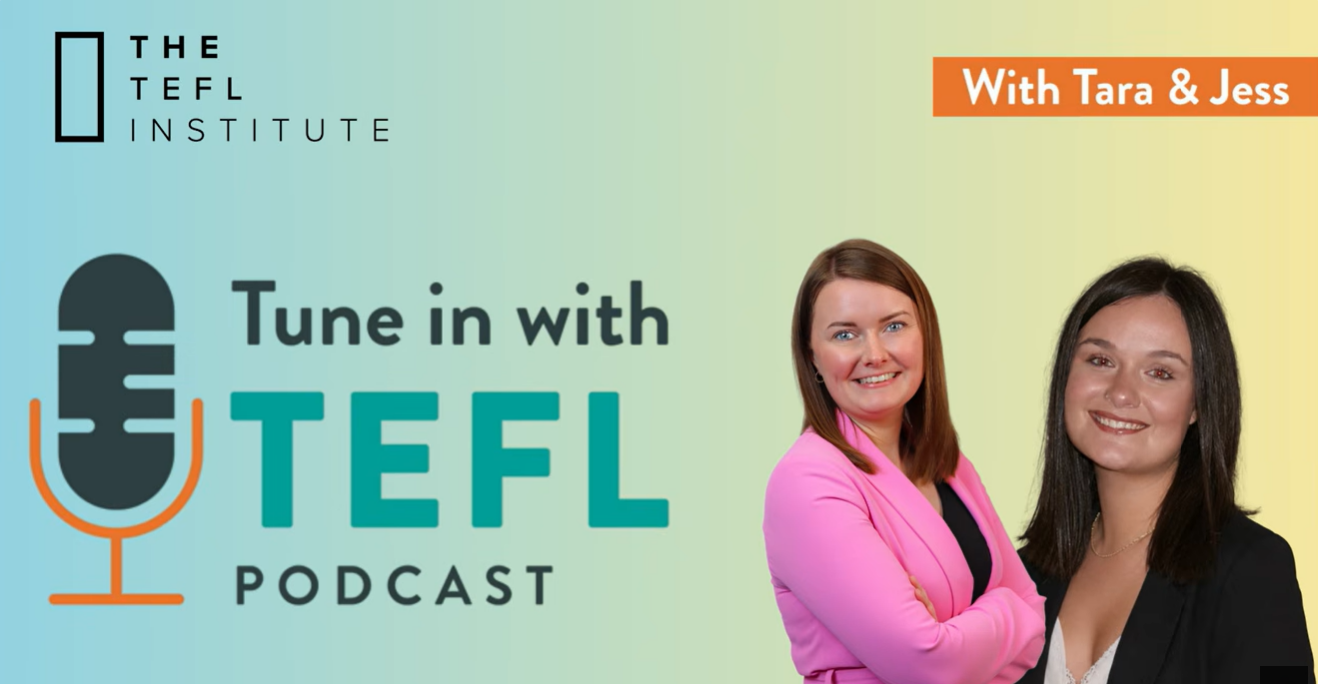
Tara and Jess talk through different TEFL and EFL topics, from finding work abroad to life in the classroom.
FAQs
Questions students ask us
Yes. While some informal tutoring happens without certificates, a recognised TEFL qualification is essential if you want to charge professional rates, work with reputable clients, and build a long‑term brand. A 180‑hour Level 5 TEFL Diploma gives you a stronger, more credible foundation than a basic 120‑hour course.
A 120‑hour course is entry‑level and introduces basic teaching concepts, whereas a 180‑hour Level 5 Diploma is more advanced, regulated, and academically demanding. The Level 5 Diploma is better recognised by quality employers and supports higher‑value, specialist work such as business English or exam preparation.
Yes, many teachers begin with low‑stakes practice, volunteer work, or a small number of trial students while studying. However, you should be transparent about your stage of training and avoid overpromising results until you have completed the full programme and are confident in your methods.
Both have a role. Platforms can provide initial experience, income, and student flow with minimal marketing. Building your own brand offers more control over pricing, niche, and curriculum, and creates long‑term business value. Many teachers use platforms at first and gradually transition towards their own branded offers.
Earnings vary widely depending on your niche, qualifications, pricing strategy, and marketing. Some teachers treat it as a side income, while others build full‑time businesses with premium programmes and group offers. There is no guaranteed income, but a clear niche, a Level 5 qualification, and strong systems make higher earnings more achievable.
Choose a niche where your skills, interests, and market demand intersect. Popular options include young learners, business English, and IELTS or exam preparation. Start with one primary niche and design a flagship programme around it, then refine as you learn more about your ideal clients.
At minimum, you need a reliable computer, a stable internet connection, a headset with microphone, and a platform for video calls (such as Zoom or similar). Over time, you may add an online whiteboard, scheduling software, and a simple website or landing page to streamline your business.
Start by leveraging your existing network, professional or social platforms, and any online teaching marketplaces where your profile fits. Publish helpful content in your niche, offer a clear introductory package, and make it easy for people to book a call or trial lesson with you.