

 United Kingdom (UK)
 United States (US)
 Canada
 South Africa
 India
India Australia
 New Zealand
 China
China Russia
 Germany
 France
 Spain
Spain Netherlands
 Vietnam
 United Arab Emirates
 Italy
Italy Poland
 Thailand
 Türkiye








 Algeria


What is a practicum? TEFL experience explained for educators
TL;DR:
- A TEFL practicum is a structured, supervised teaching experience that develops practical skills and professional identity beyond classroom observation. It significantly enhances employability, confidence, and reflective teaching habits, whether conducted online or in person, when properly supported. Choosing a program with strong mentorship and structured reflection maximizes long-term career growth and teaching effectiveness.
A practicum is frequently misunderstood as simple classroom observation, but it represents a structured, supervised teaching experience that sits at the core of credible TEFL certification. For aspiring and practicing educators, understanding what a practicum involves, how different formats compare, and how to maximize its value is essential for both certification and career readiness. Practicum experiences are seen as critical for developing practical teaching skills and professional identity. This guide covers the definition, purposes, formats, and concrete steps you can take to make the most of your practicum.
Table of Contents
- What is a practicum? A clear definition for educators
- Core benefits of a TEFL practicum
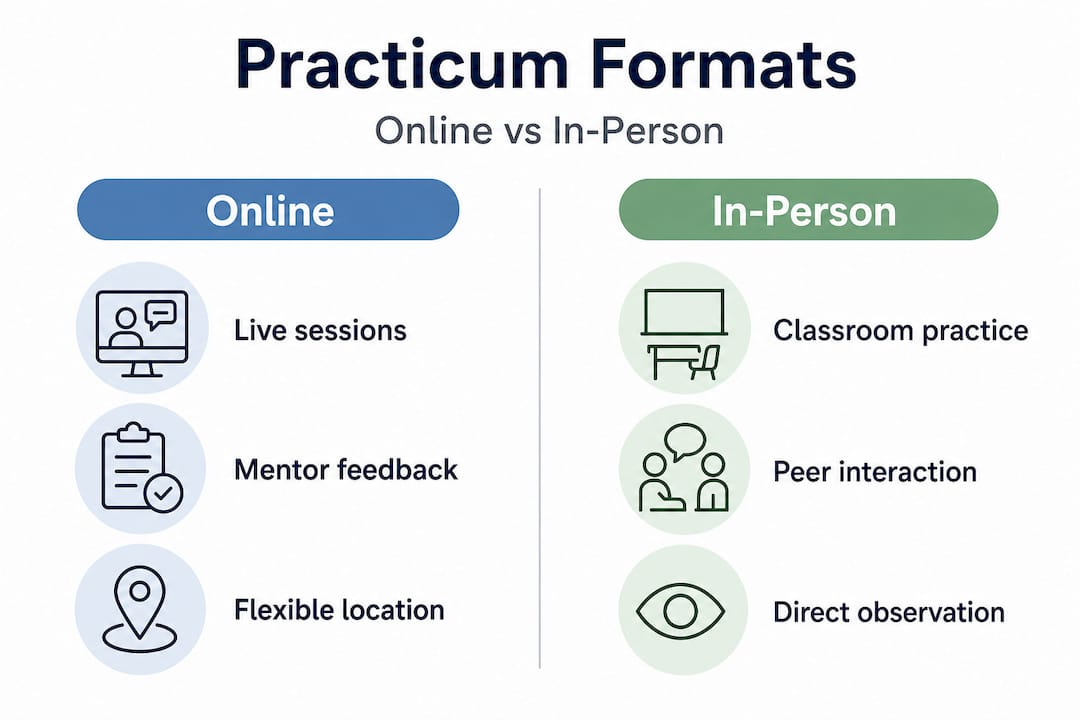
- Online vs in-person practicum: What works best?
- What makes a TEFL practicum effective?
- How to find and succeed in your TEFL practicum
- The overlooked power of practicum: Why it’s more than just box-ticking
- Advance your TEFL career with the right practicum support
- Frequently asked questions
Key Takeaways
| Point | Details |
|---|---|
| Practicum’s vital role | A practicum is essential for developing real teaching skills and a reflective educator identity. |
| Format flexibility | Both online and in-person practica are valid if structured with engagement and feedback. |
| Long-term benefits | Completing a practicum increases your job readiness and effectiveness in real classrooms. |
| Success steps | Seeking feedback, reflection, and proactive mentoring makes a practicum impactful. |
What is a practicum? A clear definition for educators
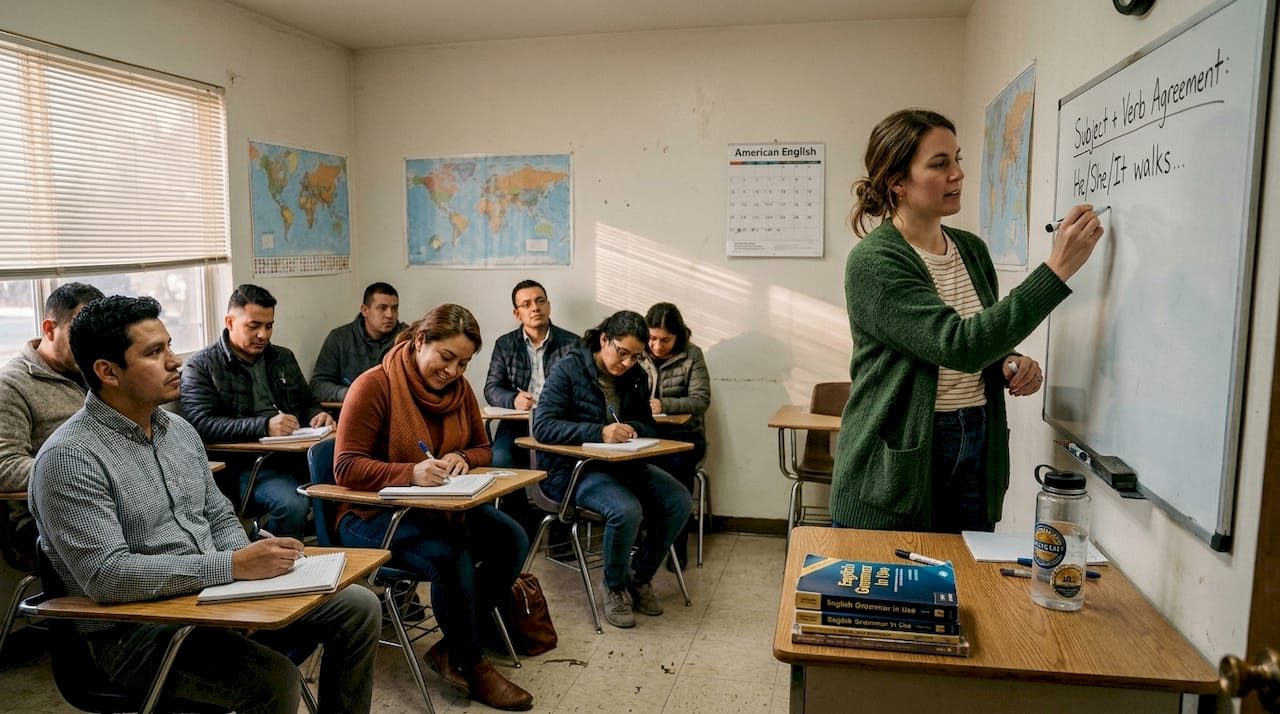
In the TEFL context, a practicum refers to a supervised practical teaching experience that bridges academic coursework and real classroom instruction. Unlike a standard university lecture or an online module, a practicum places you in a teaching environment where you apply methods, receive feedback, and reflect on your performance. It is a foundational component of most accredited TEFL programs.
The significance of a practicum goes well beyond logging classroom hours. According to current ELT/TESOL literature conceptual lenses, practicum experiences are commonly framed through three major theoretical perspectives:
- Sociocultural theory: Your teaching develops through interaction with students, mentors, and the broader classroom environment.
- Language teacher identity: The practicum shapes how you see yourself as an educator, influencing your long-term professional behavior and decision-making.
- Reflective practice: Systematic reflection on your teaching, supported by structured feedback, drives continuous improvement.
These three lenses explain why a practicum is categorically different from standard coursework. You are not just absorbing information; you are forming professional habits and a teaching identity that will influence your work for years.
“The practicum is where theory becomes practice, and where practice begins to shape professional identity. It is not simply a placement—it is a formative process.”
For those seeking a thorough orientation, a complete guide to TEFL practicum offers detailed coverage of structure, accreditation standards, and what to expect at each stage. Understanding these elements from the outset helps you approach your practicum with clarity and purpose rather than uncertainty.
Core benefits of a TEFL practicum
Now that you know what a practicum is, it is worth examining the specific benefits it delivers for your teaching career. These benefits are both immediate and long-term, affecting your employability, classroom confidence, and capacity for professional growth.
Practicum strengthens job readiness and practical skill development in ways that self-study and theory-based learning simply cannot replicate. Employers recruiting TEFL teachers consistently favor candidates who have completed a supervised practicum, because it demonstrates that you have functioned in a real or simulated teaching environment.
Key benefits include:
- Increased employability: Candidates with practicum experience signal readiness to employers. Research on TEFL practicum job readiness indicates that this preparation measurably increases the likelihood of securing teaching positions.
- Confidence in real classrooms: Facing actual students, managing lesson pacing, and responding to unexpected challenges builds adaptability that no textbook exercise can replicate.
- Reflective teaching habits: Practicum programs that incorporate reflective logs and mentor feedback train you to evaluate your own performance critically, an essential skill for any educator.
- Lesson planning proficiency: Repeated lesson design and delivery under supervision sharpens your ability to plan lessons that are both structured and responsive to learner needs.
- Portfolio development: Documented practicum work, including lesson plans, reflective journals, and mentor evaluations, provides tangible evidence of your competence for prospective employers.
Pro Tip: Keep a detailed teaching journal throughout your practicum. Documenting specific moments, both successful and challenging, gives you concrete material for job interviews and personal development plans.
Gaining real classroom experience in TEFL is not a secondary benefit; it is the primary mechanism through which TEFL educators develop the adaptability and situational awareness that distinguish effective teachers from those who struggle in the field.

Online vs in-person practicum: What works best?
Understanding the core benefits sets up the next practical decision: which practicum format suits your circumstances and goals? The three main formats are online, in-person, and hybrid, each with distinct features, strengths, and trade-offs.
| Format | Key features | Best for | Main challenges | Support needed |
|---|---|---|---|---|
| Online | Live virtual teaching sessions, digital feedback tools | Candidates in remote locations or with scheduling constraints | Engagement, limited non-verbal cues | Strong technical setup, responsive mentor |
| In-person | Direct classroom instruction, physical student interaction | Candidates seeking hands-on skills in traditional settings | Requires local placement and scheduling | On-site supervisor, structured observation schedule |
| Hybrid | Combination of virtual and physical instruction | Candidates wanting flexibility with some in-person exposure | Coordinating two environments | Both digital and on-site mentor support |
Research published through Springer Nature’s study on online vs. in-person practicum indicates that online practicums can match in-person outcomes when engagement and support are high, but for certain hands-on teaching skills, in-person formats remain more effective.
This finding matters because it shifts the conversation away from format and toward quality. An online practicum with live teaching sessions, active mentor involvement, and structured reflection can be as valuable as an in-person placement. Conversely, a poorly supported in-person practicum with minimal feedback delivers less value regardless of physical presence.
When preparing for a virtual experience, thorough virtual TEFL practicum preparation is essential. Consider these practical steps for maximizing any format:
- Request live teaching sessions rather than observation-only arrangements.
- Establish a regular feedback schedule with your mentor from day one.
- Use virtual learning environments strategically to engage students and simulate authentic classroom dynamics.
- Apply proven online teaching success tips to maintain student attention and manage class participation effectively.
The format you choose should align with your geographic location, program requirements, and career goals. What matters most is not where the teaching happens but how rigorously the experience is structured and supported.
What makes a TEFL practicum effective?
Every TEFL opening, salary and deadline that matters.
In your inbox every two weeks. Free, no spam, unsubscribe any time.
Teacher pay by country
New TEFL openings
Programme and visa dates
Once you have chosen a format, the next priority is ensuring that your practicum experience is genuinely effective. Not all practica are created equal. Strong practica include structured reflection and feedback, not just classroom time, and this distinction has a measurable impact on teaching quality and professional development.
The following pillars define an effective TEFL practicum:
- Supervised teaching sessions: You teach actual lessons under the observation of a qualified mentor or supervisor, not simply observe.
- Structured feedback cycles: After each session, you receive specific, actionable feedback on your lesson delivery, classroom management, and student interaction.
- Reflective logs: You maintain a written record of each session, noting what worked, what did not, and what adjustments you will make.
- Lesson planning practice: You design lessons before each session and revise them based on feedback and outcomes.
- Mentor accessibility: Your supervisor is available for pre-session planning discussions, not only post-session evaluations.
| Practicum activity | Expected outcome | Time investment |
|---|---|---|
| Supervised lesson delivery | Improved instructional confidence | 1 to 2 hours per session |
| Post-session feedback meeting | Targeted skill refinement | 30 to 45 minutes per session |
| Reflective journal entry | Habit of critical self-evaluation | 20 to 30 minutes per session |
| Lesson plan development | Structured curriculum thinking | 1 to 3 hours per lesson |
| Peer observation | Expanded perspective on teaching styles | 1 hour per observation |
Pro Tip: Request written feedback from your mentor after each session rather than verbal-only debriefs. Written notes are easier to review, track your progress over time, and use as evidence during job applications.
For additional guidance, reviewing practical TEFL practicum tips before you begin will help you set expectations and communicate clearly with your supervisor. Understanding the full practicum workflow for ESL from planning through evaluation ensures no critical step is missed.
How to find and succeed in your TEFL practicum
With an understanding of what makes a practicum effective, the practical question becomes: how do you find one and perform well in it? Success in your practicum is not just about hours logged but also about proactive learning and reflection throughout the entire experience.
Follow these steps to find, start, and thrive in your TEFL practicum:
- Confirm your program’s requirements. Review your TEFL course documentation to understand the required hours, format, and assessment criteria. The TEFL practicum requirements guide provides a practical breakdown of what accredited programs typically expect.
- Identify available placements. Contact your TEFL provider first, as many programs offer arranged or partnered placements. If sourcing independently, reach out to local language schools, community centers, or online teaching platforms. Guidance on finding a TEFL practicum includes a range of verified options.
- Prepare documentation. Gather identification, any required background checks, proof of enrollment in your TEFL program, and a basic teaching portfolio if you have one.
- Communicate expectations with your mentor. At the start, clarify how feedback will be delivered, how often sessions will occur, and what documentation you are expected to maintain.
- Teach actively and reflect consistently. Treat every session as both a performance and a learning event. After each lesson, complete your reflective log before the next session begins.
- Seek feedback proactively. Do not wait for your mentor to initiate all feedback conversations. Bring specific questions to each debrief, such as how a particular activity landed or whether your pacing was appropriate.
Common pitfalls to avoid include treating the practicum as a formality rather than a developmental experience, failing to maintain reflective logs consistently, and neglecting to ask for feedback on specific areas where you feel uncertain. These oversights result in a practicum that meets minimum requirements on paper but delivers far less professional value than it could.
The overlooked power of practicum: Why it’s more than just box-ticking
Many TEFL candidates approach the practicum as a requirement to complete, an item on a checklist that unlocks their certificate. That perspective is understandable, but it significantly underestimates what the practicum can do for your long-term career.
The real differentiator between teachers who plateau early and those who continue improving year after year is the habit of reflective practice. The practicum is the environment where that habit either forms or fails to form. If you approach each session asking only “Did I get through the lesson?” rather than “What did this lesson reveal about my teaching?” you leave the most valuable part of the experience untouched.
Teacher identity, one of the three conceptual lenses noted in the research, develops during this period in ways that are not easily reconstructed later. The beliefs you form about your role as a teacher, your relationship to feedback, and your capacity for self-assessment during the practicum tend to persist. This is why the approach matters as much as the hours.
On the question of format, it is worth challenging the assumption that online practicums are inherently inferior. When conducted with live teaching, consistent mentor interaction, and structured reflection, virtual practicums develop the same foundational skills. The real TEFL classroom insights that matter most, reading student engagement, adjusting delivery in real time, managing group dynamics, are accessible in both formats when the design is intentional.
The practicum is not a hurdle. It is the period in your TEFL training where your professional identity takes shape. Treating it with that level of seriousness produces a different kind of educator.
Advance your TEFL career with the right practicum support
Choosing a TEFL program with a strong practicum component is one of the most consequential decisions you will make in your certification journey. The structure, mentorship, and feedback quality of your practicum directly influence your teaching competence and job readiness.

TEFL Institute offers programs that integrate supervised practicum experiences with expert mentor support and ongoing skill development. Whether you are pursuing an in-person experience through TEFL Newcastle or looking to extend and deepen your existing qualifications through TEFL course extensions, the platform provides structured pathways that go well beyond minimum certification requirements. Choosing a program with built-in practicum support ensures that your hours translate into measurable professional growth, not just a certificate.
Frequently asked questions
How many hours do I need for a TEFL practicum?
Most accredited TEFL programs require between 6 and 20 hours of supervised practicum, but requirements vary by program and accrediting body, so always verify with your specific provider.
Is an online TEFL practicum as valid as an in-person one?
Yes, provided it includes live teaching and strong mentor engagement. Research shows online outcomes can match in-person when structured well, though some hands-on skills may develop more effectively face-to-face.
Does a practicum guarantee a TEFL job?
A practicum is not a guarantee, but it significantly boosts job readiness and provides the documented classroom experience that many employers specifically seek when hiring TEFL educators.
What is the difference between a TEFL practicum and student teaching?
A TEFL practicum is generally shorter, more focused on English language instruction, and aligned with TEFL certification standards, while student teaching differs in scope and is typically tied to local education licensure requirements.
Recommended

Tara and Jess talk through different TEFL and EFL topics, from finding work abroad to life in the classroom.