

 United Kingdom (UK)
 United States (US)
 Canada
 South Africa
 India
India Australia
 New Zealand
 China
China Russia
 Germany
 France
 Spain
Spain Netherlands
 Vietnam
 United Arab Emirates
 Italy
Italy Poland
 Thailand
 Türkiye





 Algeria


TEFL Salary Negotiation: Maximizing Your Earnings Abroad
TEFL Salary Negotiation: Maximizing Your Earnings Abroad

Most American TEFL teachers are surprised to learn that salaries abroad vary by as much as 200 percent between countries. Negotiating your pay can feel intimidating, yet the process is crucial for maximizing your professional value and long-term career growth. Understanding the real facts around salary negotiation empowers teachers to ask for more and avoid common myths about compensation in international teaching positions.
Table of Contents
- TEFL Salary Negotiation Explained And Misconceptions
- Factors Shaping TEFL Salaries Worldwide
- Contract Types And Salary Components Explained
- Key Negotiation Strategies For Teachers
- Common Mistakes And How To Avoid Them
Key Takeaways
| Point | Details |
|---|---|
| Understanding Compensation | TEFL teachers should evaluate the entire compensation package, including benefits like housing allowances and health insurance, rather than focusing solely on base salary. |
| Research is Essential | Thorough market research on salary norms for specific regions and qualifications enables teachers to negotiate effectively. |
| Preparation is Key | Careful preparation and strategic communication are crucial for successful salary negotiations, emphasizing confidence and a collaborative approach. |
| Avoid Common Mistakes | Teachers should avoid premature salary discussions and emotional negotiation styles that can undermine their professional value. |
TEFL Salary Negotiation Explained and Misconceptions
Salary negotiation for TEFL teachers demands strategic preparation and confidence. Many educators enter international teaching opportunities without understanding the nuanced art of compensation discussions. Common salary negotiation fears often prevent teachers from advocating effectively for their professional worth.
Successful TEFL salary negotiations require understanding several key misconceptions. First, many teachers believe salaries are entirely fixed and non-negotiable. In reality, most international schools and language programs have flexibility in compensation packages. Factors like specialized certifications, prior teaching experience, and additional skills can significantly influence your potential earnings. Teaching English salary comparisons reveal wide variations across different regions and institutions.
The fundamental approach to effective salary negotiation involves thorough research and confident communication. Prepare by gathering comprehensive data about standard pay rates in your target region, understanding your unique professional value, and developing a clear, professional presentation of your qualifications. Negotiation skills are not about aggressive demands but strategic dialogue that demonstrates mutual benefit. Know your baseline acceptable compensation, practice your pitch, and approach discussions with professionalism and respect. Remember that negotiation is a normal part of professional engagement, not a confrontational process.
Lastly, teachers should recognize that compensation extends beyond base salary. Consider the entire compensation package, which might include housing allowances, travel reimbursements, health insurance, professional development opportunities, and contract completion bonuses. These additional benefits can sometimes be more valuable than a slightly higher base salary. By understanding the full spectrum of potential compensation and approaching negotiations strategically, TEFL teachers can maximize their earning potential and professional opportunities.
Factors Shaping TEFL Salaries Worldwide
TEFL teacher salaries are influenced by a complex interplay of global, regional, and individual factors that significantly impact earning potential. Unlike traditional job markets, international teaching opportunities present unique variables that determine compensation. Top paying countries for TEFL teaching highlight the substantial variations in salary structures across different global regions.
Several key determinants shape TEFL salary potential. Qualification levels play a critical role, with advanced certifications and specialized training directly correlating to higher compensation. Teachers holding advanced TEFL diplomas, master’s degrees in education, or additional language certifications often command premium salaries. Geographic location remains another crucial factor – metropolitan areas and economically developed regions typically offer more competitive compensation packages compared to rural or economically constrained locations.
Experience emerges as a fundamental driver of TEFL salary potential. Entry-level teachers can expect baseline compensation, while professionals with multiple years of international teaching experience can negotiate substantially higher wages. Additional factors like native English language proficiency, specialized subject expertise, and professional credentials significantly enhance earning potential. Universities, international schools, and corporate language training programs tend to offer more lucrative compensation compared to standard language institutes.

Beyond base salary, comprehensive compensation packages include critical supplementary benefits that substantially enhance overall earnings. Housing allowances, travel reimbursements, health insurance, contract completion bonuses, and professional development opportunities can dramatically increase the total value of a TEFL teaching position. Teachers who strategically evaluate the entire compensation landscape, rather than focusing solely on base salary, can maximize their financial and professional opportunities in the global education market.
Contract Types and Salary Components Explained
TEFL teaching contracts represent a diverse landscape of employment arrangements, each with unique salary structures and compensation models. What to expect from TEFL teacher salaries provides critical insights into the nuanced world of international teaching compensation. Contract types range from short-term academic year positions to comprehensive annual agreements, each offering distinct financial and professional opportunities.
Typically, TEFL contracts fall into three primary categories: public school contracts, private language institute positions, and university teaching roles. Public school contracts often provide stable monthly salaries with additional benefits like housing allowances and airfare reimbursements. Private language institutes tend to offer hourly rates with potential performance bonuses, while university positions frequently provide the most comprehensive compensation packages, including research opportunities, professional development funds, and extended holiday periods.
Salary components extend far beyond base monthly earnings. Comprehensive compensation packages typically include multiple financial elements such as housing stipends, transportation allowances, health insurance, end-of-contract bonuses, and sometimes tax advantages. Some employers offer additional perks like free language classes, professional development credits, or relocation support. Experienced teachers can strategically negotiate these supplementary benefits, which can significantly enhance the overall financial value of their teaching position.
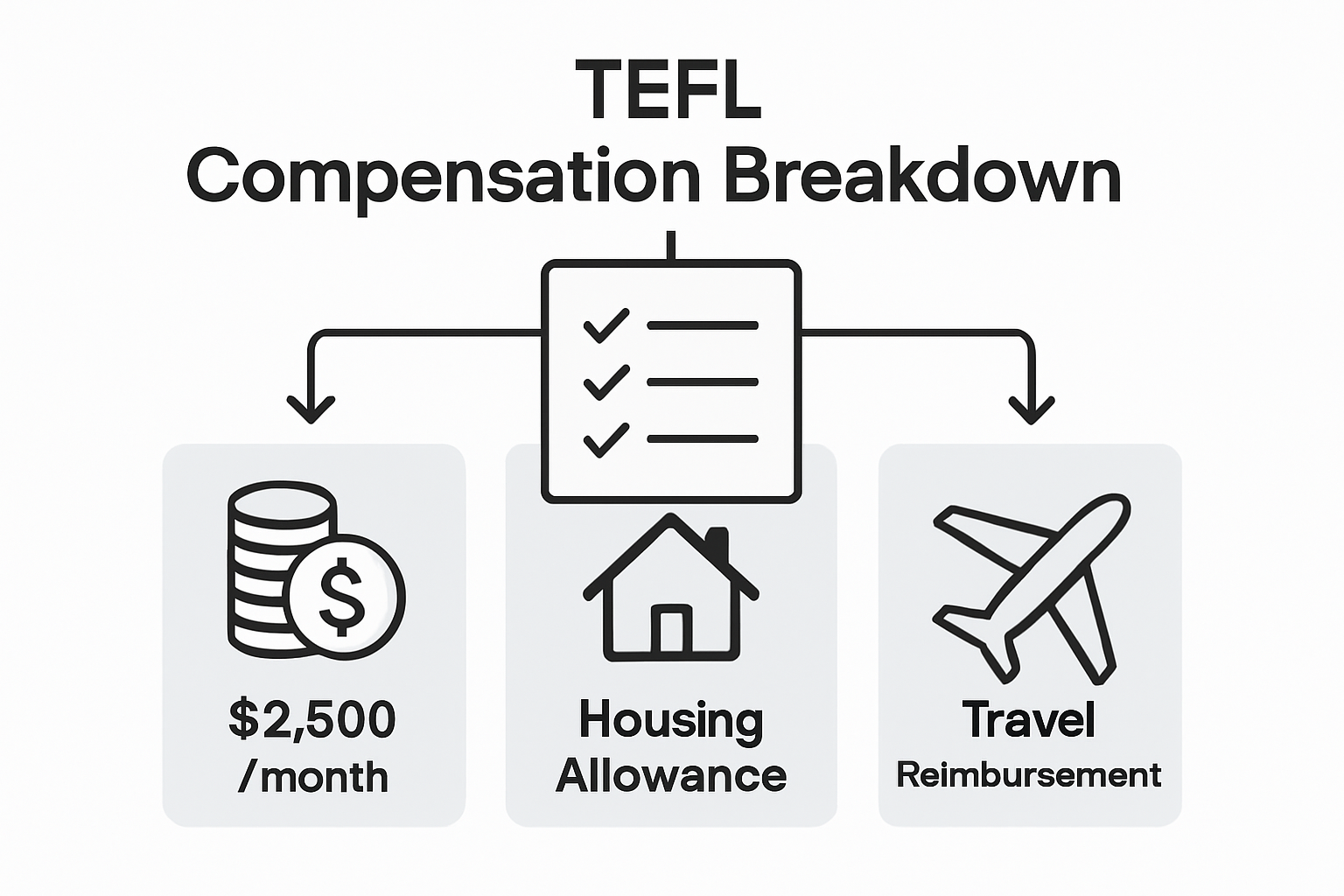
Understanding the intricate details of contract structures is crucial for maximizing earning potential. Factors like teaching hours, required additional responsibilities, professional development opportunities, and contract duration directly impact total compensation. Teachers should carefully review contract terms, considering not just the base salary but the entire economic package. Flexibility in contract negotiations, a clear understanding of local employment regulations, and a strategic approach to evaluating total compensation can help TEFL professionals secure the most advantageous employment arrangements in the global education marketplace.
Key Negotiation Strategies for Teachers
Effective salary negotiation is an art form that requires careful preparation and strategic communication. How to negotiate a higher salary emphasizes the importance of thorough research and confident presentation of one’s professional value. Preparation stands as the cornerstone of successful negotiation, requiring teachers to gather comprehensive market data and understand their unique professional strengths.
The negotiation process begins with meticulous research and self-assessment. Teachers should compile detailed information about standard salary ranges for their specific qualifications, geographic region, and teaching specialization. This involves analyzing job market trends, comparing compensation packages across similar positions, and understanding the specific value they bring to potential employers. Key strategies include documenting specific achievements, highlighting specialized certifications, and preparing a compelling narrative that demonstrates professional expertise beyond basic teaching credentials.
Negotiation extends far beyond monetary compensation. Strategic communication involves presenting a holistic value proposition that considers professional development opportunities, additional responsibilities, and long-term career growth. Successful negotiators approach discussions with a collaborative mindset, focusing on mutual benefits rather than adversarial positioning. This means preparing multiple negotiation scenarios, understanding acceptable compromise points, and being ready to discuss alternative compensation elements like professional development funds, reduced teaching hours, or additional research opportunities.
Mastering the art of negotiation requires emotional intelligence and professional composure. Teachers should practice their negotiation approach, anticipate potential objections, and develop a confident yet respectful communication style. This includes maintaining a professional demeanor, listening actively to potential employers, and being prepared to articulate their value proposition clearly and concisely. The most successful negotiations are those that create a win-win scenario, demonstrating the teacher’s value while addressing the employer’s institutional needs and constraints.
Common Mistakes and How to Avoid Them
Salary negotiation in the TEFL world is fraught with potential pitfalls that can significantly undermine a teacher’s earning potential. Complete Guide to TEFL Salary Explained highlights the critical importance of avoiding common negotiation mistakes that can derail professional opportunities. Premature salary discussions represent one of the most significant errors teachers make, often revealing their financial expectations before establishing their professional value.
One of the most critical mistakes is failing to thoroughly research market rates and local compensation standards. Teachers frequently undervalue their skills by accepting initial offer terms without understanding the full range of potential compensation. This includes overlooking supplementary benefits like housing allowances, travel reimbursements, and professional development opportunities. Inexperienced negotiators often focus exclusively on base salary, neglecting the comprehensive economic package that can substantially enhance overall earnings. Additionally, many teachers approach negotiations passively, presenting themselves as eager candidates rather than valuable professional assets.
Emotional negotiation can be another significant pitfall. Teachers who become defensive, aggressive, or overly emotional during salary discussions typically sabotage their own interests. Successful negotiation requires a strategic, professional approach that balances confidence with flexibility. This means preparing a clear, data-driven presentation of one’s professional value, anticipating potential objections, and maintaining a collaborative tone. Avoiding comparisons with other teachers or making ultimatum-style demands is crucial, as these tactics can quickly undermine credibility and goodwill.
Preparing for potential negotiation challenges involves developing a comprehensive strategy that goes beyond simple monetary discussions. Teachers should create a negotiation framework that includes multiple scenarios, alternative compensation options, and a clear understanding of their minimum acceptable terms. This requires emotional intelligence, thorough market research, and the ability to articulate professional value effectively. The most successful TEFL professionals approach negotiations as collaborative discussions, focusing on mutual benefits and long-term professional growth rather than short-term financial gains.
Unlock Your True Earning Potential with Expert TEFL Training
Navigating the complexities of salary negotiation as a TEFL teacher can feel overwhelming. Common misconceptions and uncertain negotiation strategies often hold you back from securing the compensation you truly deserve. This article highlights the importance of preparation, understanding contract components, and confidently presenting your professional value to maximize earnings abroad. If you want to overcome these challenges and strengthen your negotiation power, gaining advanced qualifications and deep market insights is essential.

Take control of your international teaching career today by exploring the comprehensive range of TEFL courses offered by TEFL Institute. Our programs, including advanced diplomas and niche certifications, are designed to boost your credentials and open doors to better salary packages worldwide. Visit https://teflinstitute.com now to enroll and build the skills you need to confidently negotiate your next TEFL contract. Don’t wait to maximize your earning potential and professional opportunities abroad.
Frequently Asked Questions
What factors influence TEFL teacher salaries?
Salaries for TEFL teachers are influenced by various factors, including qualification levels, teaching experience, geographic location, and the type of institution. Advanced certifications and years of experience can lead to higher compensation.
How can I effectively negotiate my TEFL salary?
To effectively negotiate your TEFL salary, prepare by researching standard pay rates, understanding your unique qualifications, and practicing confident communication. Present a clear value proposition that goes beyond base salary, including benefits and professional growth opportunities.
What components should be included in a TEFL compensation package?
A comprehensive TEFL compensation package typically includes base salary, housing allowances, travel reimbursements, health insurance, and other benefits like professional development funding and end-of-contract bonuses.
What are common mistakes teachers make during salary negotiation?
Common mistakes include failing to research market rates, prematurely discussing salary without demonstrating value, approaching negotiations passively, and allowing emotions to interfere with professional discussions.
