
 United Kingdom (UK)
 United States (US)
 Canada
 South Africa
 India
India Australia
 New Zealand
 China
China Russia
 Germany
 France
 Spain
Spain Netherlands
 Vietnam
 United Arab Emirates
 Italy
Italy Poland
 Thailand
 Türkiye





 Algeria


What Is Classroom Observation for Educators: 2026 Guide
What Is Classroom Observation for Educators: 2026 Guide
TL;DR:
- Classroom observation is a structured process that captures teaching practices, student behavior, and classroom interactions to guide instructional improvement. It serves multiple purposes, including formative growth and evaluative decisions, through cycles involving pre-observation, classroom visit, and debriefing. In 2026, hybrid models incorporating video recordings and peer observation are becoming standard components of educational quality frameworks.
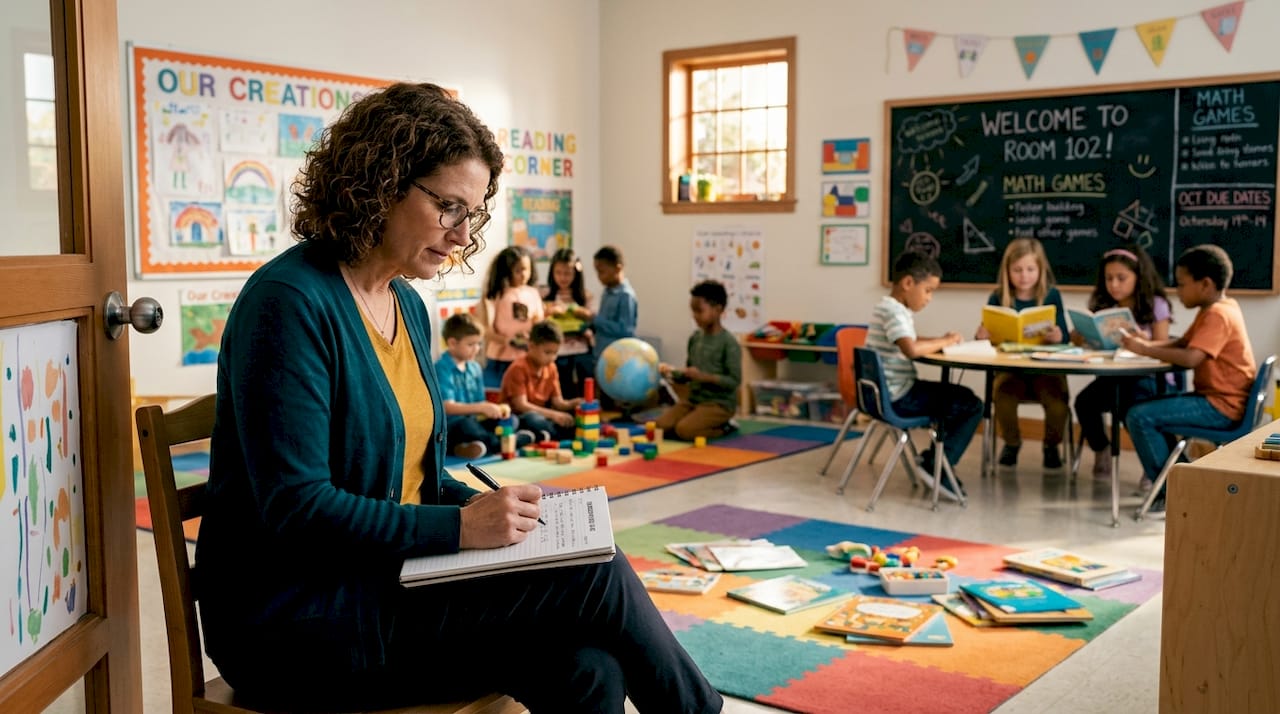
Classroom observation is one of the most widely used practices in education, yet it is also one of the most misunderstood. Many teachers associate it exclusively with formal evaluations and administrative scrutiny. What classroom observation actually represents is a structured, purposeful process designed to document and analyze what happens in a classroom so that teaching and learning can both improve. This guide explains the definition, types, methods, and practical value of classroom observation for educators at every stage of their careers.
Table of Contents
- Key takeaways
- What is classroom observation and why it matters
- Types of classroom observation
- The classroom observation cycle
- Benefits, challenges, and getting the most from observation
- Observation trends and applications in 2026
- My perspective on classroom observation
- Develop your classroom observation skills with Teflinstitute
- FAQ
Key takeaways
| Point | Details |
|---|---|
| Observation is not just evaluation | Classroom observation includes both formative and evaluative forms, serving very different purposes. |
| A clear cycle improves outcomes | Effective observation follows a pre-observation meeting, classroom visit, and post-observation debrief. |
| Bias undermines useful data | Descriptive, non-judgmental note-taking during observation produces more reliable and useful feedback. |
| Peer observation scales well | Peers can observe more frequently than coaches, making peer-led observation a practical development tool. |
| Modern observation includes video | In 2026, hybrid observation models using self-recorded video are now part of formal quality frameworks. |
What is classroom observation and why it matters
Classroom observation is a systematic, structured process that collects information on teaching practices, student behavior, and classroom interactions to inform instructional decisions. It is not a single snapshot. It is an organized effort to capture what is actually happening in a learning environment so that those findings can be used meaningfully.
The process can focus on several different dimensions depending on its goals:
- Teacher practices: How the instructor explains content, manages transitions, asks questions, and responds to students
- Student engagement: The degree to which learners are participating, on task, and understanding the material
- Classroom environment: The physical setup, the emotional climate, and how interactions between students and teacher unfold
The primary purposes of classroom observation are to understand teaching effectiveness and to generate information that informs instructional decisions. In school psychology contexts, observation data supports academic and social-emotional development by identifying patterns in student behavior that might otherwise go unnoticed. For aspiring teachers, understanding these purposes from the start prevents the common mistake of treating observation as a pass/fail judgment rather than a diagnostic process.
The role of classroom observation extends well beyond performance reviews. It connects daily classroom decisions to broader goals around student outcomes, professional development, and program quality. When conducted with clear intent, it becomes one of the most reliable ways to see what is working and what needs to change.
Types of classroom observation
Not all classroom observation serves the same function, and treating it as a homogeneous practice is a common mistake that leads to confusion about its purpose and value. The main types differ substantially in their goals, structure, and consequences.
| Type | Purpose | Stakes |
|---|---|---|
| Evaluative observation | Formal personnel review tied to promotion, tenure, or contract decisions | High |
| Formative observation | Reflection and ongoing instructional growth; results remain private | Low to moderate |
| Peer observation | Collaborative professional development between colleagues | Low |
Evaluative observation connects directly to administrative or HR processes. It assesses whether a teacher meets defined performance standards and typically produces documented outcomes that affect employment decisions.
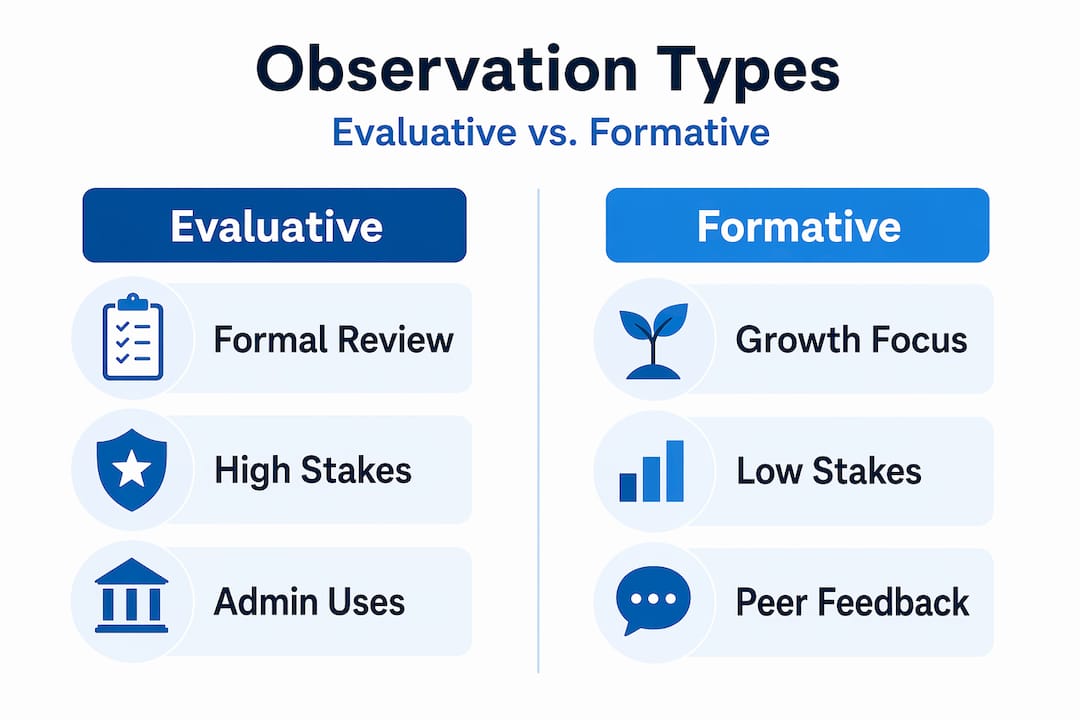
Formative observation, by contrast, emphasizes reflection and growth without the weight of formal review. Formative observations focus on learning outcomes and creating student-centered environments rather than rendering a judgment. Results are kept confidential, which lowers anxiety and opens the door to honest, productive feedback.
Peer observation occupies a distinct category. Because peers outnumber coaches, peer observation is more scalable than expert-led models and can occur far more frequently. When structured with clear guidance, it increases receptiveness to feedback because the relationship is collaborative rather than hierarchical.
Beyond these three categories, classroom observation techniques also vary by the observer’s role. In participant observation, the observer takes an active part in classroom activities while collecting data. In non-participant observation, the observer remains separate from the class and records what they see without engaging. Direct observation captures behaviors as they occur in real time. Indirect observation uses tools like surveys, video playback, or student work samples to gather evidence after the fact.
Pro Tip: If you are new to classroom observation, start with peer observation in a low-stakes setting. It builds your observational skills without the pressure of formal evaluation and gives you a frame of reference before you encounter higher-stakes processes.
The classroom observation cycle
Professional, effective observation follows a defined cycle rather than a single classroom visit. A standard observation cycle includes three core phases: a pre-observation meeting, the classroom visit itself, and a post-observation debrief focused on feedback and reflection.
- Pre-observation meeting: The observer and teacher meet in advance to clarify the observation’s goals, discuss the lesson plan, and establish context. This step prevents the observer from misinterpreting instructional choices that were made deliberately for specific reasons.
- Classroom visit: The observer enters the room and collects data using a structured tool, checklist, or written notes. The focus should remain on describing what is seen and heard rather than forming judgments in real time. Low-inference observational instruments capture the situational variability of teaching that subjective impressions miss.
- Post-observation debrief: Observer and teacher meet again to review the collected evidence. This conversation should be exploratory and reflective, not directive. The feedback form serves as a starting point for dialogue rather than a definitive verdict.
- Reflection and follow-up: The teacher uses the discussion to identify specific instructional adjustments, and both parties may agree on a follow-up observation or goal-setting period.
One practical tool widely used in this cycle is CLASS® (Classroom Assessment Scoring System). CLASS® assesses teacher-child interactions in preschool settings using a 7-point scale across three domains: Emotional Support, Classroom Organization, and Instructional Support. Observers must be trained and certified to use it, which reflects a broader principle.
Reliable observation ratings require defined observation segments long enough to code and regular reliability checks on observers. Single-moment assessments produce unreliable data. Validity depends on sustained, structured attention within the observation window.
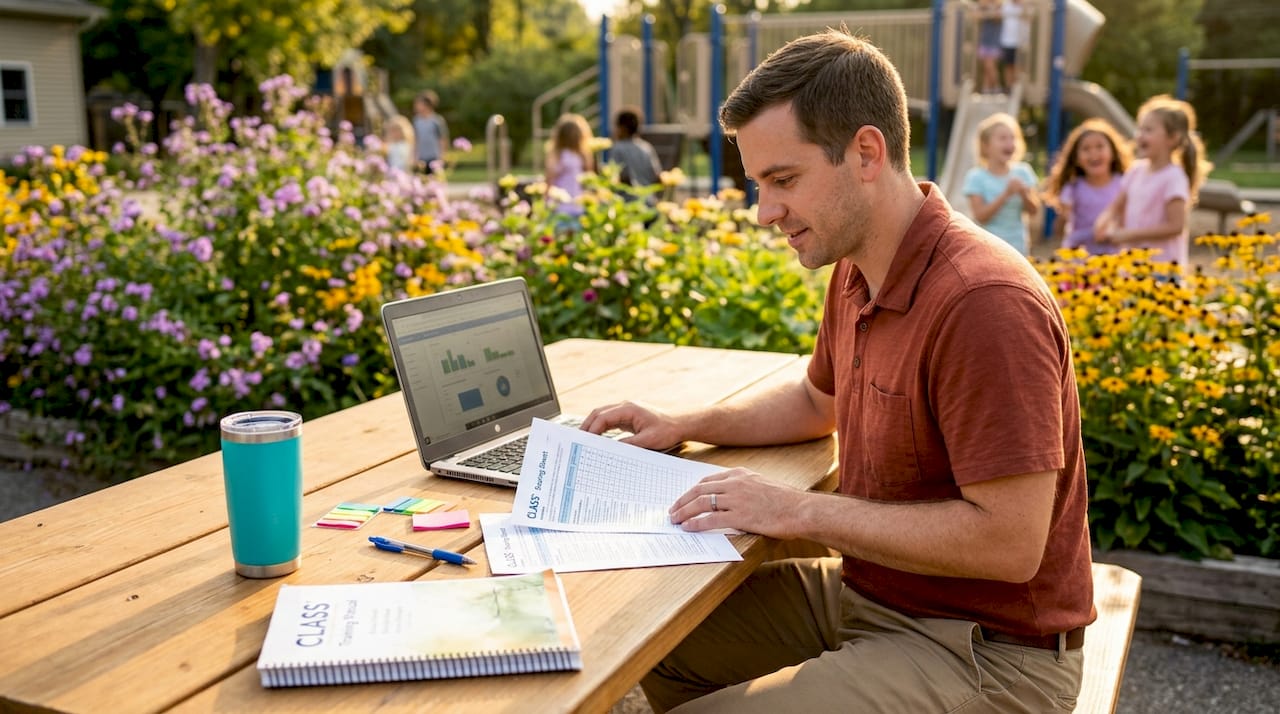
Pro Tip: When taking notes during an observation, write down exactly what you see and hear using specific, concrete language. Phrases like “the teacher waited 10 seconds after asking the question before calling on a student” are far more useful in a debrief than general observations like “good wait time.” Specificity is what turns observation data into growth.
Benefits, challenges, and getting the most from observation
When implemented well, classroom observation produces concrete benefits for both teachers and students. For teachers, it creates an opportunity to see their own practice through an external lens and to receive structured classroom observation feedback grounded in actual evidence rather than memory or self-assessment.
The core classroom observation benefits include:
- Identification of specific instructional strengths and gaps that self-reflection alone rarely surfaces
- Improved student learning outcomes through more targeted, informed teaching adjustments
- A shared professional vocabulary between teachers and observers that makes instructional conversations more precise
- A record of professional development over time when observations are repeated and documented
However, observation also presents real challenges that educators should understand upfront.
Hiring windows close while you scroll.
Deadlines, salaries and visa notes for teaching jobs worldwide, checked against official sources and sent free every two weeks.
Get on the WireObserver bias is among the most significant. Observers bring assumptions about what good teaching looks like, and those assumptions can shape what they notice and how they interpret it. Minimizing bias requires a focus on descriptive, non-judgmental data collection during the visit, with interpretation deferred to the post-observation discussion.
Teacher anxiety is another common barrier. When observation feels like surveillance, teachers perform rather than teach. This is why the formative, supportive approach centered on evidence-based behaviors tends to produce more genuine and useful observations than high-stakes formats.
Logistical hurdles such as scheduling, observer availability, and coverage for classroom visits also create friction in many schools. Peer observation helps address this because it distributes responsibility and requires fewer external resources.
To get the most out of observation, schools and individual educators benefit from building a culture of trust around the process. That means separating formative and evaluative observation clearly, training observers in structured tools, and treating feedback as the beginning of a conversation rather than its conclusion. Linking observation insights to resources like ESL classroom management strategies gives teachers a clear path from what they observed to what they can change.
Observation trends and applications in 2026
Classroom observation practices have shifted notably in recent years, and 2026 brings specific changes worth understanding.
| Trend | Description | Context |
|---|---|---|
| Video-based observation | Teachers submit self-recorded classroom videos for review | Head Start FY 2026 monitoring |
| Virtual certified observer visits | On-site visits available by request; not default | Head Start monitoring guidelines |
| Peer observation growth | Schools expand peer programs to supplement coaching | Professional development frameworks |
| ESL and TEFL contexts | Observation integrated into teacher training practicums | Language teacher certification programs |
The shift toward video is particularly significant. FY 2026 Head Start monitoring requires programs to submit self-recorded classroom videos aligned to CLASS® guidelines. On-site observer visits are still available but only by request. This hybrid model reflects a broader move toward flexible, scalable observation formats that reduce logistical barriers without sacrificing rigor.
In teacher training contexts, including TEFL and ESL preparation programs, observation is used both as a learning tool and as an assessment method. Trainee teachers observe experienced classrooms to build awareness of instructional techniques, and they are in turn observed during practice teaching to receive structured feedback. Understanding TEFL course evaluation methods is directly relevant to anyone preparing for this aspect of certification.
The growing use of structured observation in language teaching reflects a broader recognition that watching and analyzing real classroom interactions is one of the most direct ways to connect theory to practice.
My perspective on classroom observation
I have seen observation used well and used poorly across a range of educational settings. The difference usually comes down to one thing: whether the people involved understand what the observation is actually for.
When observation is positioned as evaluation from the start, teachers prepare performances rather than lessons. What gets documented bears little resemblance to what happens on an ordinary Tuesday. The data is compromised before the observer even walks in the room.
What I have found consistently more useful is the formative approach, where the observer enters with specific, teacher-defined questions in mind and the debrief is structured as a problem-solving conversation. In my experience, teachers who participate in that kind of observation regularly develop faster and with less resistance than those who only experience observation as an annual formal review.
The hardest part for institutions is resisting the urge to conflate the two. Formative and evaluative observation serve genuinely different functions and should be kept structurally separate. When they bleed together, teachers stop trusting the process and the developmental value disappears.
My advice to aspiring teachers is to seek out observation early, in both directions. Observe experienced teachers. Ask to be observed by peers. Treat the feedback as data, not as a verdict. The educators who make the most progress are almost always the ones who are least defensive about what observation reveals.
— Muller
Develop your classroom observation skills with Teflinstitute
For educators and aspiring teachers looking to build practical observation skills alongside a recognized qualification, Teflinstitute offers structured training programs that integrate classroom observation directly into the learning process.
The 120 Hour Advanced TEFL Course covers classroom observation techniques alongside broader instructional strategies, giving you the tools to both conduct and respond to observation effectively. For deeper professional development, the 240 Hour Master TEFL Course offers externally accredited training with advanced coverage of teaching methods, classroom management, and evaluation frameworks. Both programs are designed for educators who want training that reflects how real classrooms actually work.
FAQ
What is classroom observation in simple terms?
Classroom observation is a structured process where an observer documents what happens in a classroom, including teacher practices, student engagement, and the learning environment, to inform instructional improvement or formal evaluation.
What are the main types of classroom observation?
The three main types are evaluative observation, which ties to formal personnel decisions; formative observation, which focuses on teacher growth and reflection; and peer observation, which is a collaborative and low-stakes form of professional development.
What should you look for in a classroom observation?
Observers typically focus on teacher instructional strategies, how students respond and engage, the clarity of explanations, classroom management approaches, and the overall learning environment. The specific focus depends on the observation’s stated goals.
How does classroom observation benefit teachers?
Classroom observation gives teachers specific, evidence-based feedback on their practice that self-reflection alone cannot provide. It identifies instructional strengths and areas for improvement and supports targeted professional development over time.
How is classroom observation conducted in 2026?
In 2026, observation increasingly includes hybrid formats such as teacher-submitted video recordings reviewed against structured protocols like CLASS®. On-site observations remain standard in many settings, but video-based models are now formally integrated into quality assurance frameworks including Head Start monitoring.
Recommended
TEFL Institute guides

Japan
JET, ALT and eikaiwa pay
Italy
Jobs, pay and visa routes
Mexico
Jobs, pay and cities
South Korea
EPIK, hagwons and pay
Czech Republic
Pay, visas and cities