
 United Kingdom (UK)
 United States (US)
 Canada
 South Africa
 India
India Australia
 New Zealand
 China
China Russia
 Germany
 France
 Spain
Spain Netherlands
 Vietnam
 United Arab Emirates
 Italy
Italy Poland
 Thailand
 Türkiye








 Algeria


What Does TEFL Stand For? A 2026 Guide
What Does TEFL Stand For? A 2026 Guide

TL;DR:
- TEFL is teaching English as a foreign language in countries where English is not the primary language. A 120-hour accredited course is the industry standard for securing reputable teaching positions worldwide. Employers prioritize recognized accreditation and practicum experience over the specific TEFL, TESL, or TESOL terminology.
TEFL is defined as Teaching English as a Foreign Language, the practice of instructing English to non-native speakers in countries where English is not the dominant language. The acronym covers a wide field: language schools in South Korea, private tutoring centers in Brazil, and corporate English programs in Japan all fall under the TEFL umbrella. Understanding what TEFL means, how it differs from related credentials like TESL and TESOL, and what certification actually requires gives you a clear foundation before you commit to a course or a teaching career abroad.
For a fuller picture of how these routes fit together, see our overview of ESL certification and the qualifications employers accept.
What does TEFL stand for, and why does it matter?
TEFL stands for Teaching English as a Foreign Language. The word “foreign” is the key distinction. It signals that English is taught in a country where the population does not use English as a primary or official language. A teacher working in Vietnam, Poland, or Saudi Arabia is practicing TEFL. That context shapes everything from lesson design to classroom expectations.

The credential matters because most international schools and language centers require formal TEFL certification before hiring. TEFL course quality varies significantly due to the absence of a single global standard. That gap makes accreditation the most important factor when choosing a program. A certificate from an unaccredited provider may not be recognized by employers in competitive markets like China, South Korea, or the Gulf states.
Recognized accreditation bodies include Ofqual in the United Kingdom and DEAC in the United States. Courses approved by these regulators carry weight with international hiring managers. Teflinstitute holds recognized accreditation, which means its certificates are accepted by employers across major TEFL markets.
Pro Tip: Before enrolling in any TEFL program, confirm the accrediting body on the provider’s website and verify that body is recognized by a national education regulator.
What the 120-hour standard means
The 120-hour course is the industry standard for securing competitive teaching positions abroad. Shorter courses of 40 or 60 hours may satisfy minimal entry requirements at some language schools, but they rarely qualify candidates for higher-paying roles or positions at reputable institutions. The 120-hour benchmark reflects the minimum content needed to cover lesson planning, grammar instruction, classroom management, and assessment methods at a professional level.
How does TEFL differ from TESL and TESOL?
These three acronyms describe overlapping but distinct fields. TEFL targets non-native English speakers in countries where English is foreign. TESL, or Teaching English as a Second Language, refers to teaching English to immigrants or non-native speakers living in an English-speaking country, such as the United States, Canada, or Australia. TESOL, Teaching English to Speakers of Other Languages, is the broadest term. It covers both TEFL and TESL contexts and is often used as an umbrella credential.
The confusion between these terms is common and understandable. Job listings frequently use TEFL, TESL, and TESOL interchangeably, particularly in markets where employers care more about accreditation and classroom hours than precise terminology. Employers typically prioritize practicum components and recognized accreditation over the specific acronym printed on a certificate. That means a well-accredited TEFL qualification often satisfies a job posting that lists TESOL as a requirement.
For a deeper comparison of these credentials, Teflinstitute’s guide on the TEFL and TESOL difference breaks down which credential fits which career path.
| Term | Full name | Teaching context | Typical student |
|---|---|---|---|
| TEFL | Teaching English as a Foreign Language | Non-English-dominant countries | Non-native speakers abroad |
| TESL | Teaching English as a Second Language | English-dominant countries | Immigrants and residents |
| TESOL | Teaching English to Speakers of Other Languages | Both contexts | Any non-native English speaker |
| EFL | English as a Foreign Language | Non-English-dominant countries | Students learning English locally |
| ESL | English as a Second Language | English-dominant countries | Residents needing English skills |
Pro Tip: When applying for teaching jobs, read the full job description rather than stopping at the acronym. Most employers specify accreditation requirements and classroom hours, not just TEFL vs. TESOL.
What are the different types of TEFL courses?
TEFL qualifications range from entry-level certificates to advanced diplomas, and the difference between them is significant for career outcomes. Choosing the right level depends on your teaching goals, available time, and target job market.
-
TEFL certificate (120 hours). This is the standard entry point. A 120-hour certificate covers core teaching methodology, grammar instruction, lesson planning, and basic classroom management. It qualifies candidates for most language school positions in Asia, Latin America, and Eastern Europe. Teflinstitute’s 120-hour elective course meets this standard and is available fully online with flexible scheduling.
-
TEFL diploma (240 hours or more). A TEFL diploma includes specialist modules beyond the certificate baseline. Common additions include Business English instruction, young learner methodology, online teaching techniques, and advanced assessment skills. Diploma programs require a greater time investment but open access to higher-paying roles, university positions, and management tracks at language schools.
-
Specialist micro-credentials. These short courses focus on a single skill or context, such as IELTS exam preparation instruction or teaching English online. They do not replace a full certificate but add value for teachers who want to specialize after earning their core qualification.
-
Hybrid and practicum programs. Some providers combine online coursework with observed in-person teaching practice. Practicum components are particularly valued by employers in competitive markets because they demonstrate real classroom experience, not just theoretical knowledge.
The time commitment varies. A 120-hour certificate typically takes four to twelve weeks depending on study pace. A 240-hour diploma may take three to six months. Cost varies by provider and delivery format, but accredited programs generally represent a higher investment than unaccredited alternatives.
How does TEFL work in practice?
TEFL certification opens access to a global job market that spans dozens of countries and multiple teaching sectors. Understanding where and how TEFL teachers work helps you plan a realistic career path.
TEFL teaching roles typically exist in the following environments:
- Private language schools. These are the most common employers of TEFL teachers worldwide. Schools in South Korea, Japan, China, Spain, and Thailand hire large numbers of certified teachers each year, often providing visa sponsorship and accommodation support.
- State schools and universities. Government programs in countries like South Korea (EPIK), Japan (JET), and China actively recruit foreign English teachers. These positions often require a degree in addition to TEFL certification.
- Corporate English programs. Companies in non-English-dominant countries hire TEFL teachers to train employees. Business English is one of the fastest-growing segments of the EFL market.
- Online teaching platforms. Online TEFL courses are recognized by employers when they carry accreditation and include practicum components. Online teaching roles have expanded significantly and now represent a viable full-time career path for certified teachers.
- Private tutoring. Many TEFL teachers supplement school-based income with private students, particularly in urban centers across Europe, the Middle East, and Southeast Asia.
The qualifications needed for teaching abroad vary by country and employer. Most positions require a 120-hour certificate at minimum, a bachelor’s degree for visa eligibility in some markets, and a clean background check. For a full breakdown of what employers expect, Teflinstitute’s guide on qualifications to teach abroad covers country-specific requirements in detail.
TEFL also supports what the industry calls “TEFL tourism,” the practice of combining paid teaching work with extended travel. Teachers in this model often move between countries every one to two years, building experience across multiple cultural contexts while funding their travel through classroom work.
Key Takeaways
TEFL is defined as Teaching English as a Foreign Language, and the 120-hour accredited certificate is the recognized minimum standard for competitive teaching positions worldwide.
| Point | Details |
|---|---|
| TEFL definition | TEFL stands for Teaching English as a Foreign Language in non-English-dominant countries. |
| 120-hour standard | A 120-hour course is the industry minimum for most reputable international teaching positions. |
| Accreditation over acronym | Employers prioritize recognized accreditation and practicum experience over the specific TEFL, TESL, or TESOL label. |
| Certificate vs. diploma | Diplomas include specialist modules and improve access to higher-paying and specialized roles. |
| Career scope | TEFL roles exist in language schools, state programs, corporate training, and online platforms worldwide. |
What I’ve learned about choosing a TEFL program
The single most common mistake I see aspiring teachers make is choosing a TEFL program based on price alone. A $50 online certificate from an unaccredited provider looks identical to a fully accredited qualification on paper. The difference only becomes visible when an employer in South Korea or the UAE rejects the application because the issuing body is not recognized.
The 120-hour threshold matters, but it is not the whole story. I have seen teachers with 120-hour certificates from accredited providers land strong positions at reputable schools, while others with 200-hour certificates from unrecognized providers struggled to find work. The accrediting body is the deciding factor, not the hour count alone.
The TEFL vs. TESOL confusion is largely a non-issue in practice. Employers in most markets do not distinguish between the two acronyms. What they do check is whether your certificate comes from a provider with verifiable accreditation and whether you have any observed teaching experience. A practicum component, even a short one, signals that you have stood in front of a class and managed real students.
My advice is straightforward. If you are new to teaching, start with an accredited 120-hour certificate and add specialist modules once you know which direction your career is heading. If you already have classroom experience and want to move into university or corporate roles, a diploma is worth the additional investment. Do not let the terminology confuse you. Focus on accreditation, hours, and practicum. Everything else is secondary.
— Muller
If you are still weighing up where to study, our honest TEFL provider comparison puts prices, accreditation, tutor support and review scores side by side on one page.
Teflinstitute’s accredited TEFL courses
Teflinstitute offers a range of accredited TEFL qualifications designed for aspiring teachers at every stage.
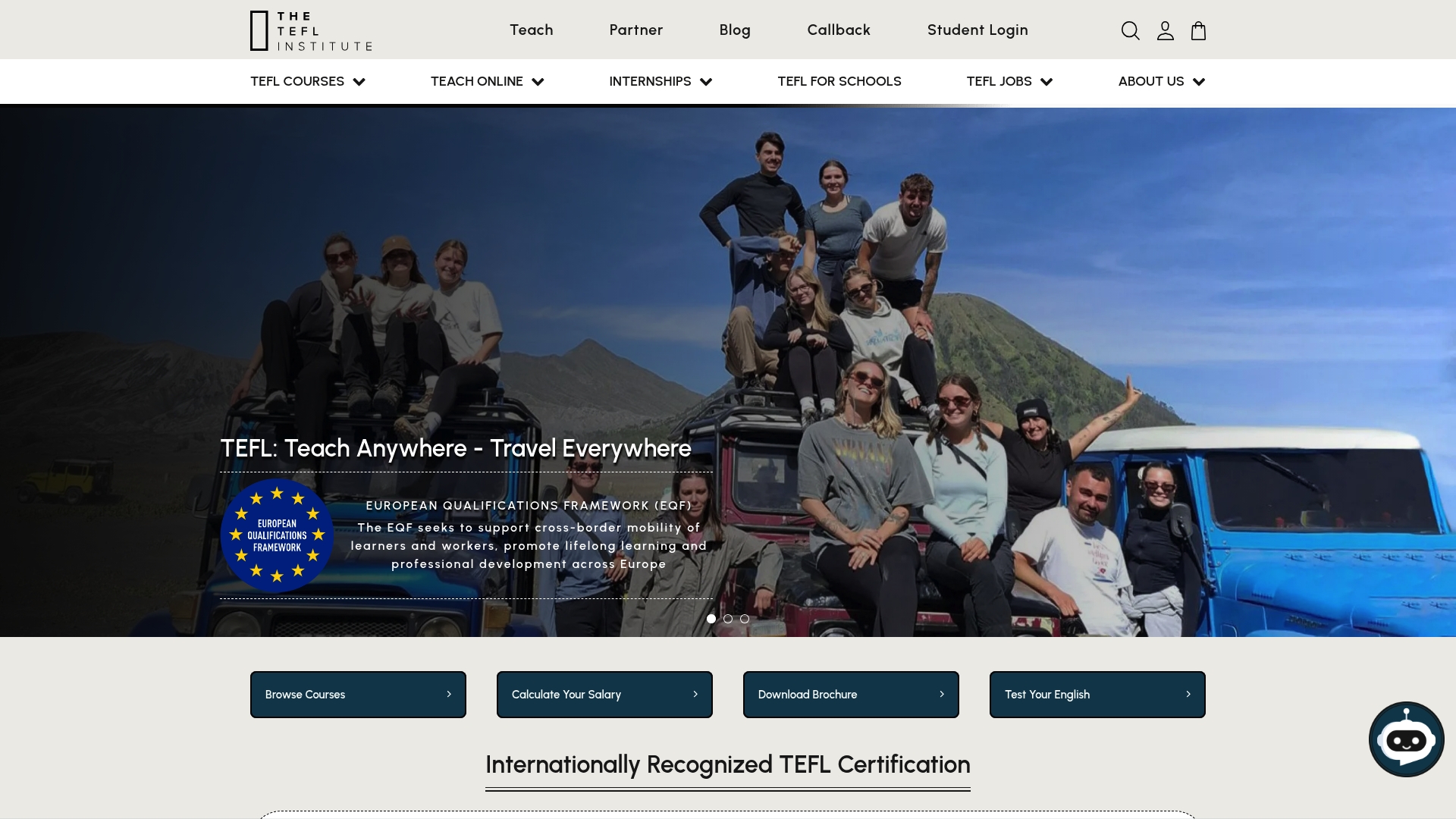
The 120-hour elective TEFL course meets the recognized industry standard and is available fully online with flexible study scheduling. For teachers seeking advanced credentials, the 240-hour Master TEFL course provides extended specialist training across Business English, young learner methodology, and online instruction. Both programs carry external accreditation and are recognized by employers in major TEFL markets. Specialist add-ons, including IELTS instructor training and online teaching modules, allow you to build a qualification that fits your specific career goals.
FAQ
What does TEFL stand for?
TEFL stands for Teaching English as a Foreign Language. It refers to teaching English to non-native speakers in countries where English is not the primary language.
Is a 120-hour TEFL course enough to get a job?
A 120-hour course is the recognized minimum for most competitive teaching positions abroad. Some employers and countries require additional qualifications such as a bachelor’s degree or practicum experience.
What is the difference between a TEFL certificate and a TEFL diploma?
A certificate covers foundational teaching skills, while a TEFL diploma includes specialist modules and a greater time investment, opening access to higher-paying and more specialized roles.
Do I need to speak another language to teach TEFL?
No. TEFL methodology is based on English-only instruction in most contexts. Teflinstitute’s guide on language requirements for TEFL confirms that fluency in the students’ native language is not a standard requirement.
Are online TEFL certifications accepted by employers?
Online TEFL certifications are recognized by employers when the issuing provider holds recognized accreditation and the course includes practicum or observed teaching components.
Recommended
- The Complete Guide to TEFL Certification in 2026: Everything You Need to Know Before You Start | TEFL Institute
- What is TEFL? Understanding Teaching English as a Foreign Language | TEFL Institute
- Step-by-step TEFL application guide for success in 2026 | TEFL Institute
- Complete Guide to TEFL Certification Process 2025 | TEFL Institute
TEFL Institute guides

Portugal
Jobs, pay and visa routes
Taiwan
Buxibans, pay and visas
South Korea
EPIK, hagwons and pay
Cambodia
Pay, requirements and visas
Czech Republic
Pay, visas and cities