
 United Kingdom (UK)
 United States (US)
 Canada
 South Africa
 India
India Australia
 New Zealand
 China
China Russia
 Germany
 France
 Spain
Spain Netherlands
 Vietnam
 United Arab Emirates
 Italy
Italy Poland
 Thailand
 Türkiye









 Algeria


What Do I Need to Teach English Online: Full Guide
What Do I Need to Teach English Online: Full Guide

TL;DR:
- Teaching English online requires at least a 120-hour TEFL or TESOL certification, reliable technology, and strong communication skills. Non-native speakers with C1 proficiency can qualify, and basic equipment includes a computer, stable internet, webcam, and headset. Success depends on consistency during the first 90 days, building experience, and upgrading credentials over time.
Teaching English online requires three core elements: a recognized TEFL or TESOL certification, reliable technology, and strong communication skills. Knowing what you need to teach English online before you apply saves time and prevents costly mistakes. The industry standard is a 120-hour TEFL/TESOL certificate, a stable internet connection, and a basic home office setup. Teflinstitute offers accredited courses that meet these requirements for aspiring teachers worldwide. Whether you want to tutor privately, join an established platform, or build your own teaching business, the path starts with the same foundational checklist.
What certifications and qualifications do you need to teach English online?
A TEFL (Teaching English as a Foreign Language) or TESOL (Teaching English to Speakers of Other Languages) certificate is the recognized industry credential for online English teaching. These two terms describe the same professional qualification and are used interchangeably by most hiring platforms.
Most online ESL companies require a minimum of 120 hours of TEFL or TESOL training. That threshold exists because 120 hours covers core methodology, lesson planning, grammar instruction, and classroom management at a level employers trust.
A college degree is also commonly required by platforms, but the field of study rarely matters. A degree in business, history, or the arts qualifies just as well as one in education. This surprises many applicants who assume they need a teaching background.
Higher qualifications do matter in specific contexts. CELTA (Certificate in English Language Teaching to Adults) and DELTA (Diploma in English Language Teaching to Adults) are Cambridge University Press credentials that carry significant weight for adult learners and academic institutions. They are not required for most entry-level online roles, but they open doors to higher pay and more selective employers.
Key certification facts to know:
- 120-hour TEFL/TESOL is the industry minimum for most platforms
- A bachelor’s degree in any field satisfies most degree requirements
- CELTA and DELTA are advanced credentials for competitive or academic roles
- Some platforms let applicants complete certification after applying, giving beginners flexibility
- Non-native English speakers with C1 proficiency or higher are accepted by many platforms when they demonstrate clear pronunciation and strong teaching skills
Pro Tip: If you are a non-native speaker, review the non-native speaker TEFL guide from Teflinstitute before applying. Many platforms assess teaching ability over passport nationality, and a strong demo lesson often outweighs accent concerns.
The best TEFL certification for online teaching in 2026 depends on your goals. Entry-level platforms accept a standard 120-hour certificate. Roles targeting business English, exam preparation, or adult academic learners reward higher-level credentials. Start with the minimum required, then upgrade as your career grows.
What technical equipment do you need for online English teaching?
A reliable technology setup is not optional. Tech failures cause class interruptions and reduce student engagement, which directly affects your ratings and rehire rate on most platforms.
The minimum hardware every online teacher needs:
- Laptop or desktop computer with a modern operating system (Windows 10 or later, macOS 11 or later)
- Stable internet connection with sufficient upload and download speed for video calls
- Webcam (built-in is acceptable to start, but an external webcam improves image quality)
- Headset with microphone to eliminate background noise and deliver clear audio
Beyond the basics, a few additions make a measurable difference. A ring light removes shadows and creates a professional appearance on camera. A second monitor lets you view lesson materials while maintaining eye contact with your student. A wired ethernet connection is more stable than Wi-Fi and prevents mid-lesson dropouts.
Your teaching environment matters as much as your hardware. Choose a quiet room with a neutral or tidy background. Avoid windows directly behind you, as backlighting makes your face dark on camera. A plain wall or a simple bookshelf works well for most platforms.

Pro Tip: Test your full setup, including audio, video, and internet speed, at least 30 minutes before your first lesson or demo. Use a free tool like Speedtest by Ookla to confirm your connection meets the platform’s minimum requirements.
Basic equipment requirements are consistent across platforms, but professional-grade setups signal reliability to students and employers. Investing in a quality headset and stable connection pays back quickly in positive reviews and repeat bookings.
What personal and teaching skills improve success as an online English teacher?
Technical qualifications get you hired. Personal and teaching skills determine whether you keep students coming back. Strong communication, patience, and professionalism are the soft skills employers and students value most.
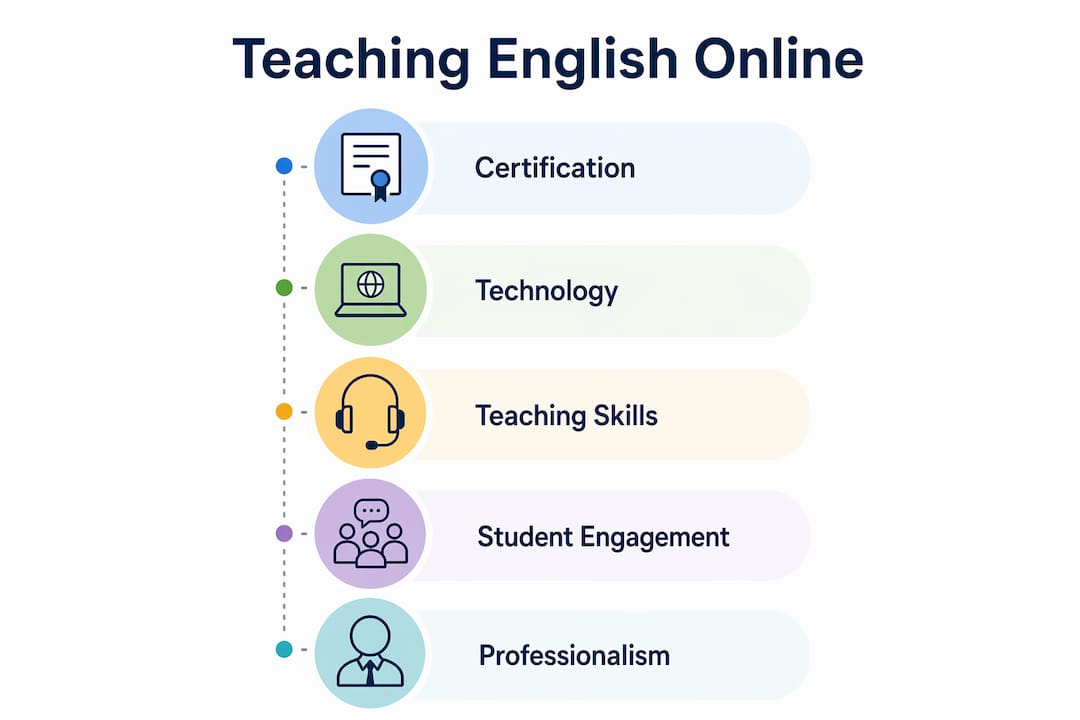
Clear communication means more than speaking English well. It means adjusting your pace, vocabulary, and tone to match your student’s level. A beginner needs simple sentences and frequent checks for understanding. An advanced learner benefits from nuanced feedback and discussion-based practice.
The skills that separate good online teachers from great ones:
- Patience with learners who need repeated explanations or make frequent errors
- Encouragement that keeps motivation high, especially for young or anxious students
- Punctuality and preparedness, because students notice when a teacher arrives late or unprepared
- Adaptability to shift lesson plans when a student struggles or advances faster than expected
- Active listening to identify gaps in understanding before they become habits
Demo lessons and interviews are where these skills get evaluated. Most platforms assess teaching ability directly, not just on paper credentials. A well-prepared demo lesson that shows clear instruction, student engagement, and confident pacing will outperform a strong resume with a weak demonstration.
Professionalism extends beyond the lesson itself. Responding to messages promptly, submitting lesson reports on time, and maintaining a consistent schedule builds the reputation that leads to full booking calendars.
How to choose the right online teaching opportunity and get started
Matching your qualifications and schedule to the right platform or teaching model is the most practical step you can take before applying anywhere. Aligning credentials and availability with the right type of employer prevents wasted applications and early burnout.
- Assess your current qualifications. If you hold a 120-hour TEFL certificate and a bachelor’s degree, you qualify for most established platforms. If you have neither, start with certification before applying.
- Decide on your teaching model. Three main options exist: joining an established online platform, private tutoring through freelance sites, or building your own independent teaching business. Each has different income potential, flexibility, and requirements.
- Research platform requirements carefully. Some platforms accept teachers without a degree if they hold a TEFL certificate. Others require both. Entry-level positions often do not require prior classroom experience, which makes them ideal starting points.
- Prepare your demo lesson. Most platforms require a 5–15 minute teaching demonstration. Choose a clear, simple topic and practice delivering it at a natural pace. Record yourself once before the real submission.
- Apply to multiple platforms simultaneously. Approval timelines vary. Applying to three to five platforms at once increases your chances of starting quickly.
- Plan your schedule before accepting students. Decide how many hours per week you can teach consistently. Consistency builds your profile rating faster than sporadic availability.
Private tutoring offers the highest hourly rate but requires you to find and retain your own students. Established platforms provide a student base but take a commission. Starting your own teaching business is a longer-term path that rewards teachers who build a strong personal brand and curriculum.
The remote work benefits of online teaching, including schedule flexibility and location independence, attract teachers from every background. The key is starting with a realistic plan rather than waiting for perfect conditions.
Key Takeaways
Teaching English online requires a 120-hour TEFL or TESOL certificate, basic technology, and strong communication skills as the three non-negotiable foundations for success.
| Point | Details |
|---|---|
| Certification standard | A 120-hour TEFL or TESOL certificate is the minimum credential most platforms require. |
| Degree flexibility | A bachelor’s degree in any field satisfies most platform degree requirements. |
| Technology basics | A computer, stable internet, webcam, and headset are the minimum setup for professional lessons. |
| Soft skills matter | Patience, clear communication, and punctuality directly affect student retention and ratings. |
| Start with the right fit | Match your qualifications and schedule to the platform type before applying. |
The part most new teachers overlook
Most aspiring online English teachers focus entirely on certification and miss the single factor that determines long-term success: consistency in the first 90 days. I have seen teachers with strong credentials quit within a month because they underestimated how different online teaching feels compared to in-person instruction. The camera creates distance. Students disengage faster. Feedback is immediate and visible in ratings.
The teachers who build sustainable careers treat their first platform role as a training ground, not a final destination. They accept lower rates initially, collect reviews aggressively, and upgrade their credentials once they understand what students actually want. A 120-hour TEFL certificate gets you in the door. A 240-hour or advanced qualification gets you the students who pay more and stay longer.
One more thing worth saying directly: non-native speakers should not self-select out of this field. C1 proficiency combined with a strong demo lesson and clear pronunciation is enough to compete on most platforms. The market for English instruction is large enough to reward skill over passport.
The biggest mistake I see is waiting. Waiting for the perfect setup, the perfect schedule, or the perfect moment to apply. Start with what you have. Upgrade as you earn.
— Muller
Teflinstitute courses for aspiring online English teachers
Teflinstitute provides accredited TEFL and TESOL courses designed specifically for teachers who want to work online. The 120-hour elective TEFL course meets the industry standard minimum and is recognized by platforms worldwide. For teachers who want stronger credentials and higher earning potential, the 240-hour Master TEFL course provides advanced methodology and specialized training. All courses are completed online, at your own pace, with full tutor support throughout.
Teflinstitute’s certifications are internationally recognized and accepted by online platforms across Asia, Europe, Latin America, and beyond. Whether you are starting from zero or upgrading an existing qualification, Teflinstitute has a course that fits your timeline and career goals. Review the full course catalog at teflinstitute.com and take the first concrete step toward a paid online teaching career.
FAQ
What is the minimum TEFL certification required to teach English online?
Most platforms require a minimum of 120 hours of TEFL or TESOL training. This threshold is the recognized industry standard across the majority of online ESL employers.
Do I need a degree to teach English online?
Many platforms require a bachelor’s degree, but the subject field rarely matters. Degrees in business, arts, science, or any other discipline typically qualify alongside a TEFL certificate.
Can non-native English speakers teach English online?
Yes. Many platforms accept non-native speakers who demonstrate C1-level English proficiency, clear pronunciation, and strong teaching skills during their demo lesson.
What equipment do I need to start teaching English online?
The minimum setup includes a laptop or desktop computer, a stable internet connection, a webcam, and a headset with a microphone. A ring light and wired ethernet connection improve lesson quality significantly.
Can I get TEFL certified after I apply to a teaching platform?
Some platforms allow applicants to complete their TEFL certification after applying or even after receiving a job offer. This flexibility makes it possible to begin the application process while still finishing your training.
Recommended
TEFL Institute guides

Spain
Jobs, pay and visa routes
Thailand
Visas and teaching licences
Estonia
Jobs, pay and work routes
Dubai
Pay, requirements and visas
Czech Republic
Pay, visas and cities