

 United Kingdom (UK)
 United States (US)
 Canada
 South Africa
 India
India Australia
 New Zealand
 China
China Russia
 Germany
 France
 Spain
Spain Netherlands
 Vietnam
 United Arab Emirates
 Italy
Italy Poland
 Thailand
 Türkiye





 Algeria


Understanding Why Teach English Online is Beneficial
Understanding Why Teach English Online is Beneficial

Teaching English online has opened new doors for teachers and students across the globe and now more people than ever are learning from their laptops. Every month, over 1.5 billion people worldwide are studying English and this number keeps climbing. That sounds huge on its own but it gets even more interesting when you realize the biggest draw is not just learning the language for school or work—it’s the freedom and global career flexibility that comes with teaching online.
Table of Contents
- The Importance Of Teaching English Online
- Understanding The Demand For Online English Teachers
- Key Benefits Of Teaching English Online
- How Online Platforms Enhance Language Learning
- Future Trends In Online English Teaching
Quick Summary
| Takeaway | Explanation |
|---|---|
| Online teaching enhances global accessibility. | English instruction is now available to students in remote areas, breaking geographical barriers and utilizing digital platforms. |
| Flexibility creates diverse income opportunities. | Educators can set their own rates and schedules, offering multiple teaching formats, including private and corporate lessons. |
| Digital skills are increasingly valuable. | Online teaching improves educators’ technological competency, which is essential in today’s job market beyond language instruction. |
| Demand for English instruction is growing worldwide. | Over 1.5 billion individuals are learning English, driven by globalization and technological advances, leading to high demand for teachers. |
| Emerging technologies are transforming language learning. | AI and immersive tools like virtual reality are enhancing learning environments, providing personalized and engaging experiences for students. |
The Importance of Teaching English Online
Teaching English online has transformed global education by providing unprecedented opportunities for language learning and professional development. This digital approach to language instruction transcends traditional classroom boundaries, offering unique advantages for both educators and students worldwide.
Global Communication and Accessibility
Online English teaching enables remarkable connectivity across international borders. UNESCO reports that digital platforms can bridge significant educational gaps, especially during global disruptions like the COVID-19 pandemic. Educators can now reach students in remote locations, offering high-quality language instruction without geographical constraints.
Professional Flexibility and Economic Opportunities
Teaching English online provides exceptional career flexibility. Professionals can design their work schedules, choose their student demographics, and earn income from virtually anywhere with a stable internet connection. The digital teaching landscape offers multiple revenue streams, including:
- Personal tutoring sessions
- Group online classes
- Corporate language training programs
- Curriculum development for international platforms
Moreover, the demand for English language skills continues to grow globally, making online teaching an increasingly attractive career option. Our guide on becoming an online English teacher provides comprehensive insights into this dynamic profession.
Technological Empowerment and Skill Development
Beyond language instruction, online teaching cultivates advanced digital literacy. Educators develop critical technological skills, learning to navigate sophisticated virtual classroom platforms, utilize interactive teaching tools, and create engaging digital content. These technological competencies are increasingly valuable in today’s interconnected professional environments, extending far beyond traditional language teaching roles.
Understanding the Demand for Online English Teachers
The global landscape for English language instruction has dramatically transformed, with online teaching emerging as a critical component of international education and professional development. Understanding the intricate dynamics of this growing demand reveals compelling opportunities for language educators worldwide.
Global Economic and Professional Drivers
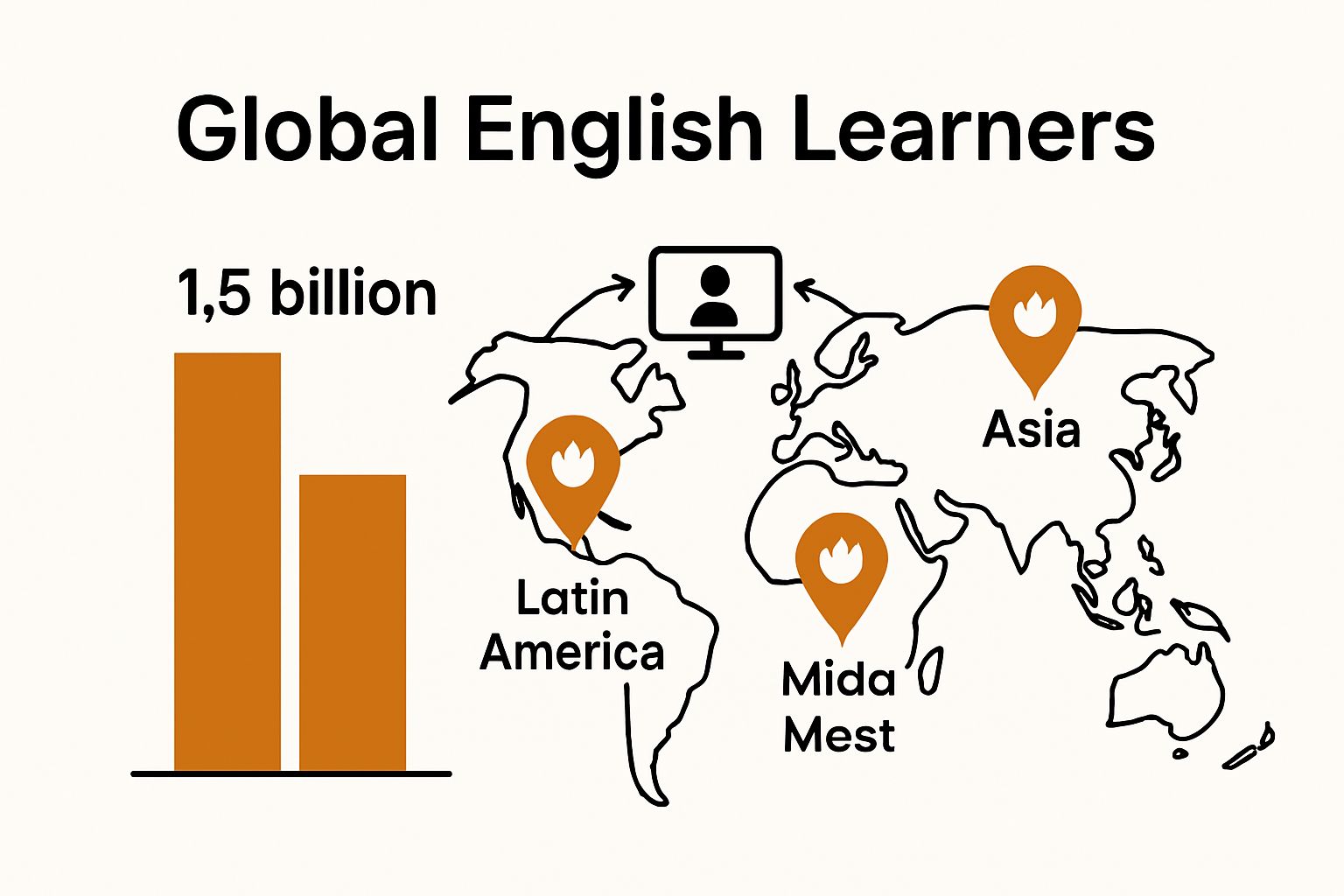
English remains the primary language of international business, technology, and academic communication. Ethnologue research indicates that over 1.5 billion people globally are currently learning English, creating an unprecedented market for qualified online instructors. The surge in demand stems from several key factors:
- Globalization of corporate communication
- Increased international academic collaboration
- Growing digital connectivity across continents
- Expansion of multinational technology sectors
Regional Market Variations
Different geographical regions demonstrate unique patterns of English language demand. Asian markets, particularly China, South Korea, and Japan, represent significant opportunities for online English teachers. Countries in the Middle East and Latin America also show substantial growth in digital language learning platforms. Our guide on teaching opportunities explores the financial potential across these diverse markets.
Technological Transformation and Learning Preferences
The rise of sophisticated digital learning platforms has revolutionized how students approach language acquisition. Modern learners prefer flexible, personalized instruction that accommodates their unique schedules and learning styles. Online English teaching meets these preferences by offering:
- Customized learning experiences
- Immediate feedback mechanisms
- Interactive multimedia resources
- Convenient scheduling options
The convergence of technological innovation and global communication needs has positioned online English teaching as a dynamic and essential profession with significant growth potential.
This table compares major regional markets and unique factors influencing demand for online English teachers, based on the article’s discussion of global trends and variations.
| Region | Notable Demand Drivers | Example Countries |
|---|---|---|
| East Asia | Strong focus on international business and education | China, South Korea, Japan |
| Middle East | Growth in digital learning and professional development | Saudi Arabia, UAE |
| Latin America | Expanding digital access and workforce globalization | Brazil, Mexico |
| Global (General) | Globalization, tech expansion, academic collaboration | Worldwide |
| Multinational Tech | Expansion of global tech and corporate communication | Multi-region |
Key Benefits of Teaching English Online
Online English teaching has emerged as a transformative career path with numerous advantages that extend far beyond traditional language instruction. Understanding these benefits provides insight into why professionals are increasingly drawn to this dynamic field of education.
Financial and Professional Flexibility
Teaching English online offers unprecedented financial opportunities and professional autonomy. Remote work research indicates that digital professionals experience greater job satisfaction and work life balance. Online English teachers can:
- Set their own hourly rates
- Choose their working hours
- Work from any location with reliable internet
- Build a diverse international client base
The ability to generate income while maintaining personal scheduling control represents a significant professional advantage.
 Learn more about remote work benefits and how they apply specifically to online language instruction.
Personal and Professional Development
Online English teaching is not merely a job but a pathway for continuous learning and skill enhancement. Educators develop critical digital competencies, intercultural communication skills, and technological proficiency. By engaging with students from diverse backgrounds, teachers expand their:
- Cross-cultural understanding
- Digital communication techniques
- Technological adaptability
- Problem solving capabilities
Career Growth and Global Opportunities
The digital teaching landscape offers remarkable career progression potential. Online platforms connect educators with global opportunities that traditional classroom settings cannot match. Experienced online teachers can advance into roles such as curriculum development, teacher training, and educational consulting. The interconnected nature of online education enables professionals to build international networks and create multiple income streams beyond direct teaching hours.
Below is a table summarizing the core benefits of teaching English online, categorizing the main advantages discussed in the article for quick reference and comparison.
| Benefit Category | Description |
|---|---|
| Global Accessibility | Enables educators to reach students worldwide, overcoming geographical and logistical barriers |
| Professional Flexibility | Teachers can set their own schedules, rates, and work from any location with internet access |
| Diverse Income Streams | Offers opportunities like personal tutoring, group classes, corporate training, and curriculum development |
| Technological Skill Development | Improves educators’ digital literacy and ability to use interactive platforms and tools |
| Career Growth Opportunities | Opens paths to roles in curriculum design, teacher training, and education consulting on a global scale |
| Cross-cultural Communication | Facilitates the development of intercultural competence and understanding by engaging with diverse students |
| Adaptability to Student Needs | Leverages multimedia and AI-driven tools to provide customized, adaptive learning experiences |
How Online Platforms Enhance Language Learning
Online language learning platforms have revolutionized educational experiences, providing sophisticated technological solutions that transform traditional language acquisition methodologies. These digital environments offer unprecedented opportunities for personalized, interactive, and engaging language instruction.
Adaptive Learning Technologies
Stanford Educational Research demonstrates that digital platforms can significantly improve language learning outcomes through intelligent, responsive technologies. Modern online learning systems utilize advanced algorithms to:
- Create personalized learning pathways
- Identify individual student strengths and weaknesses
- Adjust difficulty levels in real time
- Provide immediate, targeted feedback
Interactive Multimedia Learning Experiences
Online platforms transcend traditional textbook limitations by integrating diverse multimedia resources. Students can now engage with language through immersive experiences such as:
- Virtual conversation simulations
- Interactive pronunciation tools
- Real-time cultural context modules
- Gamified learning challenges
Our comprehensive guide on innovative teaching tools explores the cutting-edge technologies transforming language education.
Global Connectivity and Cultural Exchange
Digital language learning platforms are not merely technological tools but gateways to global communication. By connecting students and instructors across geographical boundaries, these platforms facilitate authentic language experiences. Learners gain exposure to diverse accents, cultural nuances, and real-world communication contexts, creating a rich, dynamic learning environment that traditional classroom settings cannot replicate.
Future Trends in Online English Teaching
The landscape of online English teaching is rapidly evolving, driven by technological innovations and global educational transformations. Understanding these emerging trends provides critical insights for educators seeking to remain competitive and effective in the digital learning environment.
Artificial Intelligence and Personalized Learning
OECD educational research highlights the increasing integration of artificial intelligence in language education. Advanced AI technologies are reshaping online teaching through capabilities such as:
- Real-time language translation
- Adaptive learning algorithms
- Automated pronunciation assessment
- Personalized curriculum development
These technological advancements enable more precise, individualized learning experiences that can dynamically adjust to each student’s unique linguistic progress and learning style.
Immersive Learning Technologies
Emergent technologies like virtual and augmented reality are transforming online language instruction by creating unprecedented interactive learning environments. Students can now engage in:
- Virtual global conversation spaces
- Simulated real-world communication scenarios
- Interactive cultural immersion experiences
- Gamified language learning platforms
Discover more about transitioning to online teaching methods and prepare for these technological shifts.
Specialized and Niche Market Expansion
The future of online English teaching extends beyond generalized language instruction. Emerging trends indicate growing demand for specialized language training in specific professional and academic contexts. Educators who develop expertise in targeted areas such as business communication, academic writing, technical English, and industry specific language skills will find increasing opportunities in the global digital education marketplace.
Ready to Make Your Impact as an Online English Teacher?
If you are inspired by the unique flexibility and global reach that teaching English online offers, you probably recognize the common challenges of entering this profession. Maybe you feel unsure about getting certified. Perhaps building digital teaching skills or standing out in a worldwide market seems overwhelming. The article highlights real concerns—from mastering new technologies and adapting to students’ learning preferences, to pursuing financial independence and career security. At TEFL Institute, we understand these goals and we have designed every step of our training to address your needs directly.
Why wait to start your journey? Our comprehensive TEFL courses are built for those who want to launch a global teaching career online. You can find everything from internationally recognized certification and advanced micro-credentials to niche programs like IELTS prep. Visit TEFL Institute now to explore flexible options, practical learning resources, and personalized support that will help you open the door to international opportunities. Take charge of your future in online English teaching—enroll today to secure your place in this growing industry.
Frequently Asked Questions
What are the key benefits of teaching English online?
Teaching English online offers flexibility, allowing educators to set their own schedules and work from anywhere with an internet connection. Additionally, it opens various income streams such as personal tutoring, group classes, and corporate training, making it a versatile career option.
How can I enhance my digital skills while teaching English online?
Online teaching platforms naturally help you develop advanced digital competencies, such as navigating virtual classrooms and utilizing interactive teaching tools. Actively seek to integrate new technologies into your lessons for continual skill enhancement.
What should I consider when designing my online English teaching schedule?
When creating your teaching schedule, consider your target student demographic’s availability to maximize engagement. Flexibility is key; aim to accommodate peak hours based on feedback from your initial sessions to optimize your profitability and student satisfaction.
How can I attract and retain students in my online English classes?
To attract and retain students, provide personalized learning experiences that cater to their individual needs and preferences. Use interactive multimedia resources and immediate feedback mechanisms to enhance their learning journey, making lessons more engaging and effective.
What types of courses can I offer as an online English teacher?
As an online English teacher, you can offer various types of courses, including personal tutoring, focused language skills (like business English), and test preparation. Identify your niche based on your strengths and market demands to create specialized offerings for your students.
How do I stay updated with the latest trends in online English teaching?
Stay updated by actively participating in professional development opportunities, such as workshops or webinars, and following relevant online education communities. Allocate time each month to research emerging technologies and teaching methodologies to remain competitive in the online teaching landscape.
Recommended
- 10 Benefits of Working Remotely | TEFL Institute
- Student Stories: Teaching English Online – Ruth’s story | TEFL Institute
- Can Non-Native English Teachers Teach English Online?
- How to Switch to Teaching English Online | TEFL Institute
- Understanding Why Summarize Educational Videos Matters
- Understanding Virtual School Programs: A Comprehensive Guide – Scheer Genius Assembly Shows
