

 United Kingdom (UK)
 United States (US)
 Canada
 South Africa
 India
India Australia
 New Zealand
 China
China Russia
 Germany
 France
 Spain
Spain Netherlands
 Vietnam
 United Arab Emirates
 Italy
Italy Poland
 Thailand
 Türkiye





 Algeria


Understanding Why Choose Accredited TEFL for Teaching
Understanding Why Choose Accredited TEFL for Teaching

Accredited TEFL certifications are considered the gold standard for teaching English abroad and online. Most people are surprised when they learn that accredited TEFL programs must pass a rigorous evaluation by independent organizations, not just offer a quick certificate. But even with this high bar for quality, many new teachers overlook what real accreditation means and how it can completely change your career options worldwide.
Table of Contents
- What Is An Accredited TEFL Certification?
- The Importance Of Accreditation In TEFL Courses
- How Accredited TEFL Programs Enhance Your Teaching Skills
- Real-World Opportunities With An Accredited TEFL
- Evaluating Accredited TEFL Programs: Key Factors
Quick Summary
| Takeaway | Explanation |
|---|---|
| Accredited TEFL certification ensures quality education | Certification guarantees training programs meet rigorous educational standards verified by independent organizations. |
| Employers prefer candidates with accredited qualifications | Accredited certifications signal to potential employers a standardized level of training and professional commitment. |
| Accredited programs include extensive practical training | These programs often involve real-life teaching practice to develop essential classroom skills effectively. |
| A globally recognized TEFL certification enhances job prospects | Holds value across various international markets, increasing employability and career flexibility. |
| Thoroughly evaluate TEFL programs before enrollment | Look for comprehensive accreditation, quality curriculum, and practical experience to ensure a valuable educational experience. |
What is an Accredited TEFL Certification?
An accredited TEFL certification represents a professional credential that validates an individual’s comprehensive training and qualifications to teach English as a foreign language. Unlike standard teaching certificates, accredited TEFL certifications undergo rigorous external evaluation and meet specific quality standards established by recognized educational authorities.
Understanding Accreditation Standards
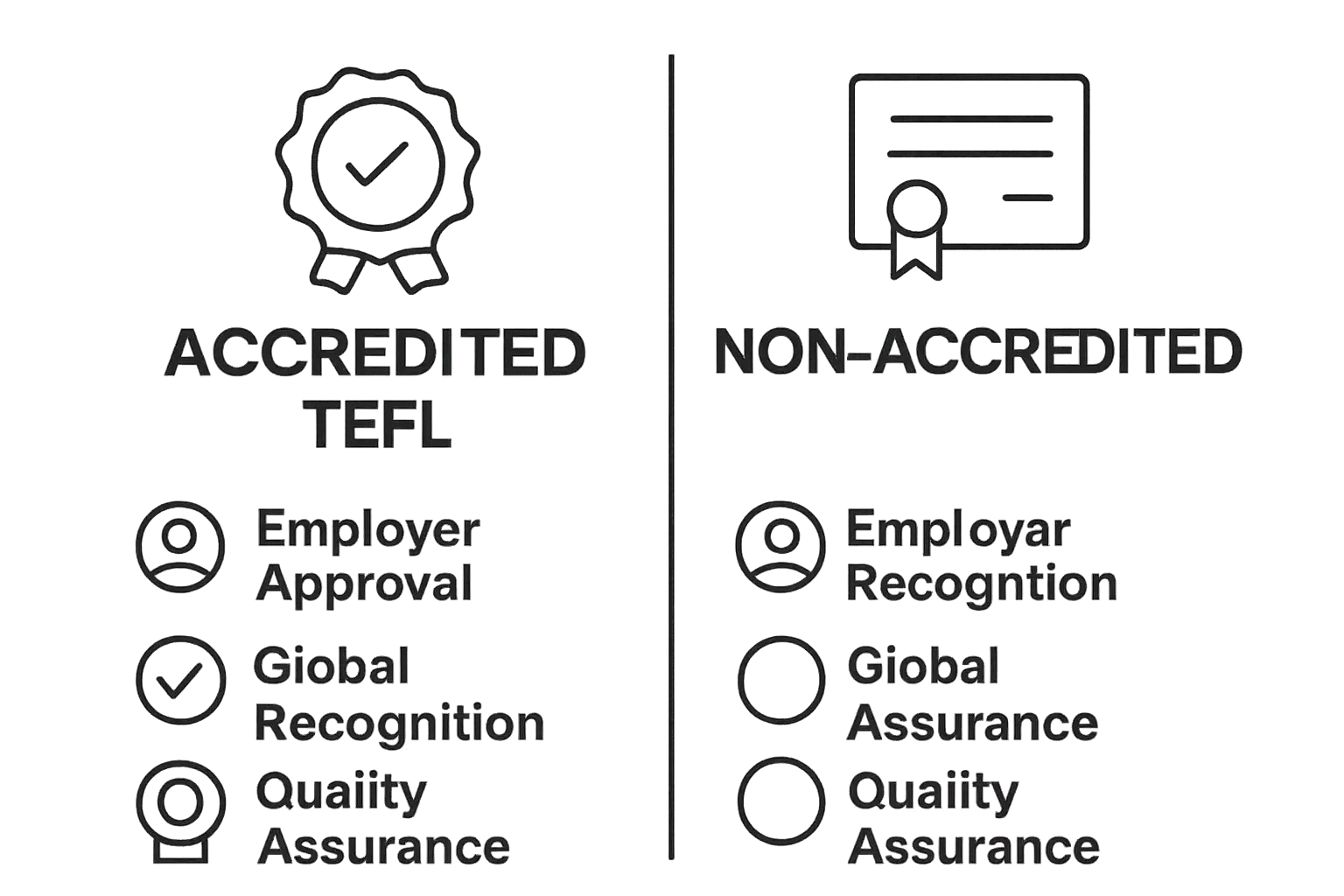
Accreditation functions as a critical quality assurance mechanism in the TEFL industry. When a TEFL program receives accreditation, it means an independent, authoritative organization has thoroughly reviewed and validated the curriculum, instructor qualifications, and overall educational standards. Research from the International TEFL Academy indicates that accreditation serves multiple crucial purposes:
- Ensures curriculum meets international teaching standards
- Provides quality assurance for potential employers
- Validates the educational rigor of the training program
Distinguishing Features of Accredited TEFL Programs
Accredited TEFL certifications differentiate themselves through several key characteristics. They typically require substantial coursework, including theoretical language teaching methodologies, practical classroom management strategies, and comprehensive understanding of second language acquisition principles. Programs often include practical teaching components such as observed teaching practice or virtual classroom simulations.
Moreover, these certifications are recognized globally, which means educators can leverage their credentials across different international teaching markets. Insights from TEFL.org suggest that employers specifically seek candidates with accredited certifications as they demonstrate a standardized level of professional preparation. Professionals with such credentials often have enhanced employability and can command more competitive teaching opportunities worldwide.
The table below summarizes the distinguishing features of accredited TEFL programs to highlight what sets them apart from non-accredited or generic offerings.
| Feature | Description |
|---|---|
| Rigorous External Evaluation | Programs are reviewed and validated by recognized, independent organizations. |
| Comprehensive Coursework | Includes theoretical language methodologies and classroom management strategies. |
| Practical Teaching Components | Requires observed teaching practice or virtual simulations to build classroom skills. |
| Global Recognition | Certifications are accepted and respected by employers in various international markets. |
| Enhanced Employability | Employers seek candidates with standardized, accredited credentials for competitive roles. |
| Structured Professional Pathway | Provides a clear framework for skill development and international career mobility. |
Choosing an accredited TEFL course provides aspiring English language teachers with a structured pathway to gaining internationally recognized qualifications, ensuring they are well-prepared for the diverse and dynamic landscape of global English language education.
The Importance of Accreditation in TEFL Courses
Accreditation in TEFL courses represents far more than a simple certification stamp. It serves as a critical benchmark for quality, professionalism, and international recognition in the global English language teaching landscape. Understanding the profound significance of accreditation helps aspiring educators make informed decisions about their professional development and career trajectory.
Quality Assurance and Professional Standards
Accreditation functions as a comprehensive quality control mechanism that ensures TEFL training programs meet rigorous educational standards. Research from the British Council reveals that accredited programs undergo extensive external evaluation, examining curriculum design, instructor expertise, and learning outcomes. This meticulous assessment guarantees that educators receive training that aligns with international teaching benchmarks:
- Comprehensive curriculum covering language pedagogy
- Standardized assessment methodologies
- Consistent instructor qualification requirements
Global Employability and Career Opportunities
Professional accreditation dramatically enhances an educator’s marketability in the competitive global teaching environment. Internationally recognized TEFL credentials signal to employers a candidate’s commitment to professional excellence. Insights from TEFL.org indicate that schools and language institutions worldwide prioritize candidates with verified, accredited training.
Moreover, many countries and educational institutions have specific requirements for English language instructors. An accredited online TEFL course not only demonstrates professional competence but also provides a competitive edge in securing desirable teaching positions across diverse international markets.
The strategic investment in an accredited TEFL certification transcends mere documentation. It represents a professional commitment to high-quality language education, personal growth, and global teaching excellence.
How Accredited TEFL Programs Enhance Your Teaching Skills
Accredited TEFL programs go beyond traditional training methods, offering a comprehensive approach to developing robust pedagogical skills that prepare educators for the complex landscape of international language instruction. These programs systematically transform theoretical knowledge into practical classroom competencies, equipping teachers with the tools needed to excel in diverse educational environments.
Comprehensive Skill Development
Research from TESOL International Association highlights that accredited TEFL programs provide multifaceted training that addresses critical teaching dimensions. The curriculum is strategically designed to develop skills that extend far beyond basic language instruction:
- Advanced classroom management techniques
- Cross-cultural communication strategies
- Adaptive teaching methodologies
- Learner-centered instructional approaches
Practical Pedagogical Training
Unlike generic teaching certifications, accredited TEFL programs integrate extensive practical training components that simulate real-world teaching scenarios. These immersive experiences allow educators to develop nuanced skills in lesson planning, student engagement, and language assessment. Insights from the British Council suggest that such practical training is instrumental in building teacher confidence and professional competence.
Moreover, these programs often include supervised teaching practice, where candidates receive direct feedback from experienced instructors. This mentorship model enables teachers to refine their techniques, understand complex classroom dynamics, and develop a sophisticated approach to language education. Exploring transferable TEFL skills reveals how these programs prepare educators for broader professional opportunities beyond traditional language teaching roles.
The strategic investment in an accredited TEFL program represents a transformative journey of professional development, positioning educators to make meaningful impacts in global language education.
Real-World Opportunities with an Accredited TEFL
An accredited TEFL certification opens a gateway to diverse and exciting professional opportunities across the global education landscape. Beyond traditional classroom teaching, these credentials unlock potential career paths that span multiple international contexts, offering professionals unprecedented flexibility and global mobility.
International Teaching Environments
Research from the International TEFL Academy reveals the expansive range of teaching opportunities available to accredited TEFL professionals. The global demand for English language instructors continues to grow, creating numerous pathways for career development:
The following table organizes the primary international teaching environments where accredited TEFL professionals can find opportunities, summarizing the diverse settings and their unique characteristics.
| Teaching Environment | Description |
|---|---|
| Corporate Language Training | Training business professionals in English for workplace communication needs |
| International Schools | Teaching in formal K-12 school systems with a global curriculum |
| Online Language Platforms | Delivering lessons via digital tools to students worldwide |
| University Departments | Instructing at college or university level, often in specialized language programs |
| Private Language Institutes | Working in private schools focused on intensive English language education |
- Corporate language training programs
- International school systems
- Online language platforms
- University language departments
- Private language institutes
Career Diversity and Global Mobility
Accredited TEFL certifications provide professionals with a universally recognized qualification that transcends geographical boundaries. Insights from TEFL.org demonstrate that these credentials enable educators to work in diverse settings, from bustling metropolitan centers in Asia to remote educational institutions in Latin America.
Moreover, many countries have specific visa and work permit requirements for language instructors, and an accredited TEFL course ensures compliance with these professional standards. The certification not only validates teaching competence but also serves as a critical credential for international employment opportunities, making it an essential investment for aspiring global educators.
The strategic value of an accredited TEFL certification extends far beyond immediate teaching roles, representing a passport to a world of professional exploration and cross-cultural engagement.

Evaluating Accredited TEFL Programs: Key Factors
Selecting the right accredited TEFL program requires a strategic approach that goes beyond surface-level considerations. Prospective educators must conduct comprehensive assessments to ensure their chosen certification meets rigorous professional standards and aligns with their career aspirations in global language education.
Comprehensive Accreditation Verification
Research from the International Association of TEFL Professionals emphasizes the critical importance of verifying an institution’s accreditation credentials. Legitimate accreditation involves multiple layers of professional evaluation that extend beyond simple certification:
- Independent external review processes
- Rigorous curriculum assessment
- Ongoing quality monitoring
- Compliance with international educational standards
- Recognition by professional teaching organizations
Essential Program Evaluation Criteria
Beyond formal accreditation, several key factors distinguish exceptional TEFL programs. Educational experts recommend examining comprehensive program attributes that indicate robust professional training. These criteria help distinguish high-quality programs from generic offerings:
The curriculum should demonstrate depth in language teaching methodologies, provide practical teaching experience, and offer comprehensive understanding of second language acquisition principles. Candidates should look for programs that include supervised teaching practice, provide detailed feedback mechanisms, and offer support for job placement.
Moreover, prospective students can explore comprehensive comparisons of TEFL course providers to understand the nuanced differences between various certification programs. The right program should not just offer a credential but serve as a transformative educational experience that prepares educators for complex, multicultural teaching environments.
Ultimately, choosing an accredited TEFL program represents a strategic investment in one’s professional development, requiring meticulous research and careful consideration of long-term career objectives.
Take Control of Your TEFL Future With Accredited Certification
Have you realized how confusing it is to distinguish quality TEFL courses from the many options online? The article explained how only accredited TEFL certifications deliver global recognition and true classroom preparation. Without official accreditation, your career path may be limited and your skills undervalued. You deserve a certification that opens international doors and gives you practical teaching confidence. If you are pursuing real results for a career in English language teaching, it is time to choose training that is proven and trusted.

Let the TEFL Institute guide you. Discover accredited online TEFL courses that are globally recognized, include practical teaching experience, and are designed to boost your employability. View the TEFL Institute homepage now and take your first step toward a genuine teaching credential. Spots fill quickly—begin your certified TEFL journey today and unlock a world of new opportunities.
Frequently Asked Questions
What is an accredited TEFL certification?
An accredited TEFL certification is a professional credential that validates an individual’s training and qualifications to teach English as a foreign language, ensuring it meets quality standards set by recognized educational authorities.
Why is accreditation important for TEFL courses?
Accreditation in TEFL courses ensures quality assurance and professional standards, indicating that the program has undergone rigorous evaluation and meets international benchmarks, making it a valuable credential for educators.
How do accredited TEFL programs enhance teaching skills?
Accredited TEFL programs provide comprehensive training, incorporating advanced classroom management techniques, cross-cultural communication strategies, and practical teaching components that prepare educators for real-world classroom environments.
What career opportunities are available with an accredited TEFL certification?
An accredited TEFL certification opens doors to a variety of teaching roles, including positions in corporate language training, online language platforms, international schools, and private language institutions, offering enhanced global mobility and employability.
