

 United Kingdom (UK)
 United States (US)
 Canada
 South Africa
 India
India Australia
 New Zealand
 China
China Russia
 Germany
 France
 Spain
Spain Netherlands
 Vietnam
 United Arab Emirates
 Italy
Italy Poland
 Thailand
 Türkiye










 Algeria



Understanding Advanced TEFL Diplomas Guide for Teachers
Understanding Advanced TEFL Diplomas Guide for Teachers

Advanced TEFL diplomas are transforming what it means to be a language teacher. Over 75 percent of international schools now prefer candidates with advanced TEFL qualifications compared to standard certificates. That might sound like a minor upgrade, but this level of certification can open doors to leadership positions and university teaching jobs that are completely out of reach for those with basic credentials.
Table of Contents
- What Are Advanced TEFL Diplomas And Their Importance?
- Why Pursue An Advanced TEFL Diploma For Teaching Careers?
- How Advanced TEFL Diplomas Enhance Teaching Skills
- Key Concepts In Advanced TEFL Training And Certification
- Real-World Applications Of Advanced TEFL Certifications
Quick Summary
| Takeaway | Explanation |
|---|---|
| Advanced TEFL diplomas elevate teaching credentials. | These diplomas provide sophisticated skills and demonstrate advanced knowledge in language education, enhancing employability. |
| Programs emphasize advanced pedagogical techniques. | Educators gain comprehensive training in classroom management, curriculum design, and specialized teaching methods through intensive study. |
| Higher salaries and roles in demand. | Obtaining an advanced diploma opens doors to senior positions and increased salary potential in international teaching markets. |
| Expand global teaching opportunities significantly. | Advanced TEFL qualifications allow educators to pursue diverse roles, from university instruction to corporate training worldwide. |
| Fosters holistic professional growth. | These programs help educators develop critical thinking and cross-cultural communication skills, positioning them as versatile professionals. |
What Are Advanced TEFL Diplomas and Their Importance?
Advanced TEFL diplomas represent sophisticated professional credentials that elevate language teaching expertise beyond standard certification. These specialized qualifications go deeper than entry level programs, providing educators with comprehensive understanding of advanced pedagogical techniques, linguistic theories, and specialized teaching methodologies.
Understanding Advanced TEFL Diploma Fundamentals
Advanced TEFL diplomas are structured academic programs designed for experienced language instructors seeking substantial professional development. Unlike basic certificates, these diplomas typically require significant academic commitment and demonstrate a nuanced understanding of language education.
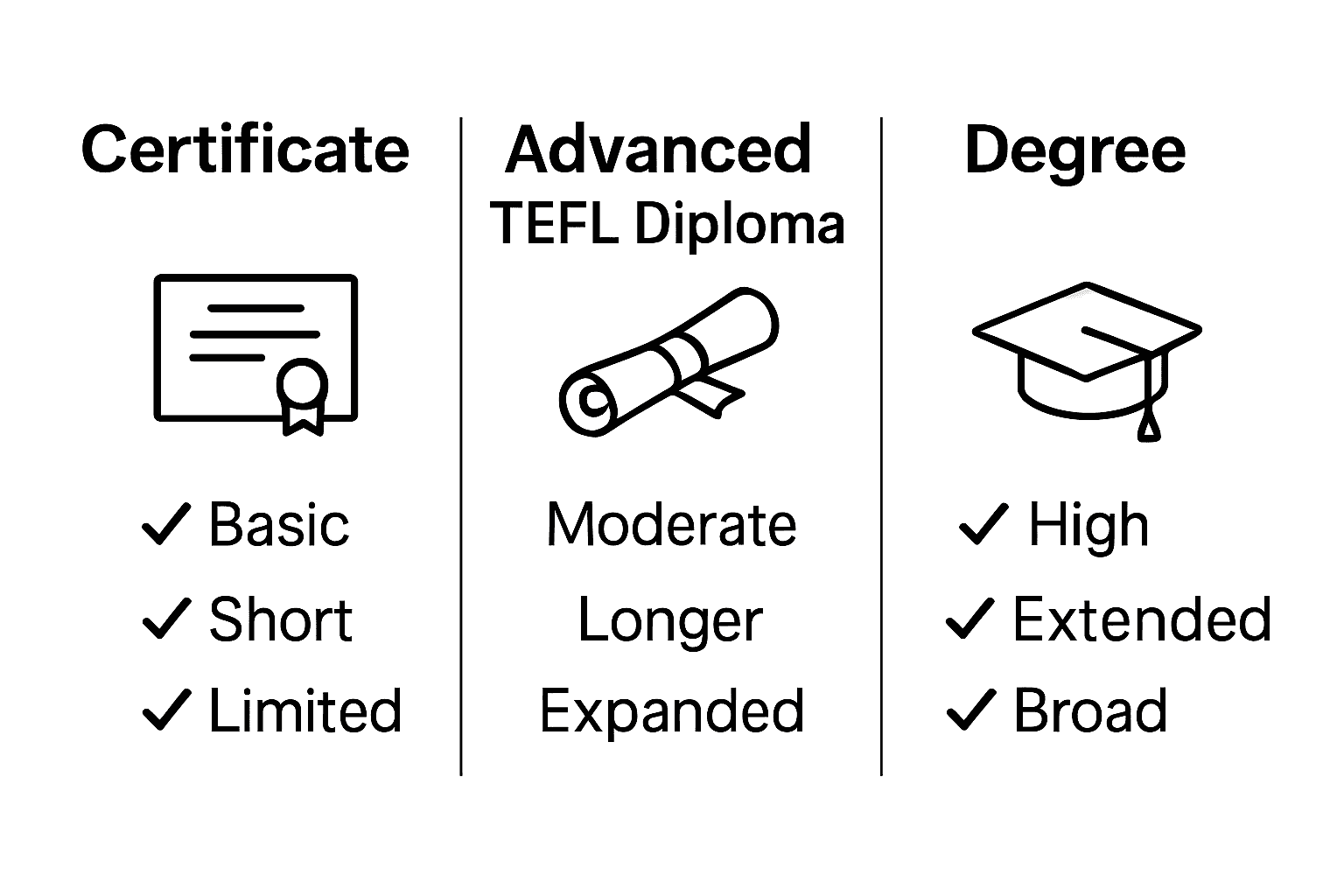
To help readers quickly understand the main distinctions between basic TEFL certificates and advanced TEFL diplomas, the following comparison table summarizes their key differences.
| Feature | Basic TEFL Certificate | Advanced TEFL Diploma |
|---|---|---|
| Academic Commitment | Entry-level, short duration | Extensive, advanced study |
| Curriculum Depth | General teaching methods | Specialized pedagogical, research |
| Typical Career Outcome | Entry-level teaching jobs | Senior, university, admin roles |
| Global Job Opportunities | Limited | Expanded, worldwide |
| Skill Development | Fundamental teaching skills | Advanced, holistic competencies |
Key characteristics of advanced TEFL diplomas include:
- Comprehensive curriculum covering specialized language teaching strategies
- In-depth research components and academic methodology exploration
- Advanced classroom management and curriculum design modules
Professional Impact and Career Advancement
According to Cambridge Assessment English, advanced diplomas significantly enhance teaching credentials and employability. These qualifications signal to employers that an instructor possesses sophisticated linguistic knowledge and advanced pedagogical skills.
Professional advantages of advanced TEFL diplomas include:
- Higher potential salary ranges in international teaching markets
- Eligibility for senior teaching positions and administrative roles
- Greater credibility in academic and professional language teaching environments
Advanced TEFL diplomas represent more than just additional paperwork. They are strategic investments in professional growth, offering educators sophisticated tools to transform language learning experiences and advance their careers in global education settings.

Why Pursue an Advanced TEFL Diploma for Teaching Careers?
Choosing an advanced TEFL diploma represents a strategic professional decision that can dramatically transform an educator’s career trajectory. These comprehensive programs offer more than standard certifications, providing deep insights into language teaching methodologies and creating substantial opportunities for career advancement.
Professional Growth and Competitive Advantage
Advanced TEFL diplomas create significant differentiation in the competitive international teaching landscape. Discover compelling reasons to choose teaching as a career and understand how advanced qualifications amplify your professional potential.
Key strategic advantages include:
- Enhanced employability across global educational markets
- Access to higher salary brackets and premium teaching positions
- Recognition as a specialized language education professional
Expanding Teaching Opportunities Internationally
According to TESOL International Association, advanced diplomas dramatically expand teaching opportunities worldwide. These qualifications demonstrate a commitment to pedagogical excellence and provide educators with a robust understanding of complex linguistic instruction techniques.
International teaching opportunities enabled by advanced diplomas encompass:
- University level language instruction positions
- Corporate language training programs
- Specialized academic English preparation roles
Personal and Professional Skill Development
Beyond career progression, advanced TEFL diplomas foster significant personal and professional skill development. They equip educators with sophisticated teaching methodologies, research skills, and a nuanced understanding of language acquisition theories. These programs transform teachers from basic instructors into comprehensive language education professionals capable of designing innovative curriculum and delivering exceptional learning experiences.
How Advanced TEFL Diplomas Enhance Teaching Skills
Advanced TEFL diplomas serve as comprehensive professional development tools that transform fundamental teaching abilities into sophisticated, research-backed instructional techniques. These programs go beyond traditional certification by providing deep, nuanced training that fundamentally reshapes an educator’s approach to language instruction.
Developing Advanced Pedagogical Competencies
Learn about the essential skills needed for exceptional TEFL teaching, and understand how advanced diplomas cultivate these critical professional capabilities. Advanced TEFL diplomas systematically build complex teaching skills through structured, intensive learning experiences that challenge and expand an instructor’s existing knowledge base.
Key pedagogical competencies developed include:
- Advanced classroom management strategies
- Sophisticated linguistic assessment techniques
- Culturally responsive teaching methodologies
Theoretical and Practical Skill Integration
According to Oxford University Press ELT, advanced TEFL diplomas bridge critical gaps between theoretical language acquisition research and practical classroom implementation. These programs equip educators with a comprehensive understanding of how linguistic theories translate into effective teaching practices.
Practical skill enhancements encompass:
- Curriculum design and instructional planning
- Adaptive learning technique implementation
- Advanced language assessment and evaluation methods
Holistic Professional Skill Development
Beyond technical teaching skills, advanced TEFL diplomas foster holistic professional growth. They cultivate critical thinking, research capabilities, and cross-cultural communication skills that extend far beyond traditional language instruction. Educators emerge from these programs as multifaceted professionals capable of designing innovative learning experiences, conducting educational research, and adapting to diverse global teaching environments.
Below is a table outlining the primary advanced pedagogical competencies and professional skills developed through advanced TEFL diploma programs, as described in the article.
| Competency/Skill | Description |
|---|---|
| Advanced Classroom Management | Mastery of complex behavioral and organizational strategies |
| Sophisticated Linguistic Assessment | Ability to design and implement nuanced language evaluations |
| Culturally Responsive Methodologies | Skills for adapting teaching to diverse cultural backgrounds |
| Curriculum Design and Planning | Expertise in creating and tailoring instructional content |
| Adaptive Learning Techniques | Flexibility to adjust lessons for different learner needs |
| Research and Critical Thinking | Applied research skills and deep analytical abilities |
| Cross-Cultural Communication | Proficiency in navigating multicultural learning environments |
Key Concepts in Advanced TEFL Training and Certification
Advanced TEFL training represents a sophisticated approach to language education that transcends traditional teaching methodologies. These comprehensive programs integrate complex linguistic theories, pedagogical innovations, and practical instructional strategies to produce highly skilled language educators.
Foundational Theoretical Frameworks
Discover the fundamental principles of Teaching English as a Foreign Language and explore the sophisticated conceptual foundations that underpin advanced TEFL training. These programs go beyond basic language instruction, delving into intricate understanding of linguistic acquisition, cognitive processing, and cross-cultural communication dynamics.
Critical theoretical components include:
- Sociolinguistic context of language learning
- Cognitive processing mechanisms in second language acquisition
- Psychological factors influencing language comprehension
Advanced Methodological Approaches
According to TESOL International Association, advanced TEFL training introduces sophisticated methodological approaches that challenge traditional instructional paradigms. These approaches emphasize adaptive, research-driven techniques that recognize the complex nature of language learning.
Key methodological innovations encompass:
- Differentiated instructional strategies
- Technology-enhanced language learning techniques
- Personalized learner assessment frameworks
Specialized Certification Components
Advanced TEFL diplomas distinguish themselves through specialized certification components that provide educators with deep, nuanced understanding of language education. These programs are meticulously designed to equip teachers with comprehensive skills that extend far beyond traditional language instruction, preparing them for complex educational environments and diverse learner needs.
Real-World Applications of Advanced TEFL Certifications
Advanced TEFL certifications transform theoretical knowledge into tangible professional capabilities, bridging academic understanding with practical language teaching expertise across diverse global contexts. These comprehensive qualifications enable educators to navigate complex linguistic and cultural environments with sophisticated instructional strategies.
Global Teaching Landscape Opportunities
Explore the essential facts about TEFL certification and international teaching, and understand the expansive professional opportunities these advanced credentials unlock. Advanced TEFL certifications provide educators with the flexibility to teach in multiple international settings, from corporate language programs to academic institutions.
Key international teaching opportunities include:
- University language departments worldwide
- International corporate training programs
- Specialized academic English preparation centers
- Multinational educational consulting roles
Specialized Professional Pathways
According to British Council International Education Research, advanced TEFL certifications create specialized professional pathways that extend beyond traditional classroom teaching. These credentials enable educators to design curriculum, develop language assessment tools, and contribute to linguistic research and methodology development.
Professional specialization areas encompass:
- Language curriculum design
- Educational technology integration
- Cross-cultural communication consulting
- Linguistic research and academic publishing
Adaptive Learning and Professional Flexibility
Advanced TEFL certifications equip educators with adaptive skills that transcend geographic and institutional boundaries. These qualifications demonstrate a profound commitment to professional development, enabling teachers to respond dynamically to evolving global language education requirements and technological innovations in instructional methodologies.
Ready to Elevate Your Teaching Career with an Advanced TEFL Diploma?
Are you feeling limited by basic qualifications or struggling to unlock higher-paying roles in global language education? This article highlighted how advanced TEFL diplomas offer specialized learning, deeper classroom mastery, and open up opportunities for university and senior positions. If you want comprehensive curriculum design skills and expert understanding of advanced pedagogy, your next step starts here with us.

Take control of your teaching future today. At TEFL Institute, you can explore our complete range of advanced TEFL diplomas and micro-credentials built for passionate educators like you. Discover flexible online courses, practical teaching tools, and real job opportunities that empower you to excel. Don’t wait for another opportunity to pass by—visit our website now and start shaping your global teaching career with confidence and expertise.
Frequently Asked Questions
What is an Advanced TEFL diploma?
An Advanced TEFL diploma is a sophisticated professional credential that provides in-depth training for language educators. It covers advanced pedagogical techniques, linguistic theories, and specialized teaching methodologies, enhancing teaching skills beyond standard certification.
How does an Advanced TEFL diploma benefit my teaching career?
Obtaining an Advanced TEFL diploma can significantly improve your employability and credibility in the language teaching field. It can open doors to higher salary opportunities, senior teaching positions, and academic roles, making you a more competitive candidate in the international teaching market.
What skills can I expect to develop through an Advanced TEFL diploma program?
Advanced TEFL diploma programs focus on developing advanced pedagogical competencies, including sophisticated classroom management strategies, linguistic assessment techniques, and culturally responsive teaching methodologies, which enhance overall teaching effectiveness.
What types of teaching opportunities are available with an Advanced TEFL diploma?
With an Advanced TEFL diploma, you can access a range of teaching opportunities, including positions at universities, corporate language training programs, and specialized academic English preparation roles, both nationally and internationally.