

 United Kingdom (UK)
 United States (US)
 Canada
 South Africa
 India
India Australia
 New Zealand
 China
China Russia
 Germany
 France
 Spain
Spain Netherlands
 Vietnam
 United Arab Emirates
 Italy
Italy Poland
 Thailand
 Türkiye





 Algeria


TOEFL Teacher Careers: Expanding Global Opportunities
TOEFL Teacher Careers: Expanding Global Opportunities

Most American universities require non-native speakers to submit TOEFL scores, opening international doors for thousands of students each year. For aspiring English teachers, understanding TOEFL teacher careers is essential if you want to work abroad or secure online TOEFL teaching jobs focused on test preparation.. This overview reveals how certified TOEFL teachers shape global academic futures while building unique skills that set them apart in the competitive field of English instruction.
Table of Contents
- What TOEFL Teachers Do Worldwide
- Required Qualifications And Certifications
- Types Of TOEFL Teaching Roles Explained
- Key Skills For Successful TOEFL Instruction
- Career Advancement, Demand, And Salaries
- Challenges, Common Mistakes, And Solutions
Key Takeaways
| Point | Details |
|---|---|
| TOEFL Teachers Are Critical | They prepare non-native English speakers for academic success through targeted language instruction and test preparation strategies. |
| Qualifications Matter | A bachelor’s degree and specific certifications like TESOL or CELTA are essential for credibility and opportunities in teaching TOEFL. |
| Diverse Teaching Roles | TOEFL educators can work in various settings, from classrooms to online platforms, each requiring different focuses on language skills. |
| Challenges Require Adaptation | Instructors must balance test preparation with holistic language development, leveraging technology and cultural sensitivity in their teaching. |
What TOEFL Teachers Do Worldwide
TOEFL teachers play a critical role in preparing students globally for academic English proficiency assessments. These professionals specialize in helping non-native English speakers develop comprehensive language skills necessary for success in English-speaking academic environments. TOEFL teachers help students navigate complex language requirements by implementing targeted strategies that address reading, listening, speaking, and writing components.
The core responsibilities of TOEFL teachers extend far beyond traditional language instruction. They are linguistic coaches who design specialized curriculum tailored to international students preparing for university entrance exams. These educators analyze test formats, develop practice materials, and provide individualized guidance to help students master academic English communication. Their work involves creating simulated academic scenarios that mirror real university testing environments, allowing learners to build confidence and competence simultaneously.
TOEFL teachers typically work in diverse settings including international language schools, universities, online platforms, and private tutoring centers across multiple countries. Their teaching approaches are highly adaptive, recognizing that each student brings unique cultural and linguistic backgrounds to the learning experience. Successful TOEFL instructors understand how to balance technical language skills with cultural comprehension, ensuring students can not only pass standardized tests but also effectively communicate in academic and professional contexts.
Pro Tip: Develop a comprehensive understanding of international academic communication standards by regularly engaging with academic journals, university lecture recordings, and cross-cultural communication resources.
Required Qualifications And Certifications
Becoming a successful TOEFL teacher requires a comprehensive educational background and specialized certifications. Educators typically need a bachelor’s degree in English, education, or a closely related field, with advanced training in language instruction and test preparation strategies. The minimum academic requirement includes a four-year undergraduate degree, which provides the foundational knowledge necessary for effective language teaching and understanding complex linguistic principles.
Professional certifications are critical for TOEFL instructors seeking credibility and advanced teaching opportunities. Most employers and international language programs require TESOL (Teaching English to Speakers of Other Languages) or CELTA (Certificate in English Language Teaching to Adults) credentials. These specialized certifications demonstrate a teacher’s expertise in designing curriculum, understanding language acquisition methodologies, and preparing students for comprehensive English proficiency assessments. Some advanced positions may also require additional qualifications such as a master’s degree in linguistics, international education, or specific language instruction methodologies.
The certification landscape for TOEFL teachers is dynamic and competitive. Professionals must continuously update their skills through ETS-approved development programs, workshops, and webinars that provide insights into evolving test formats and pedagogical approaches. Many institutions now seek instructors who demonstrate not just academic credentials, but also adaptability in teaching diverse student populations and a deep understanding of international academic communication standards.
Pro Tip: Invest in digital badges and online certification platforms that offer specialized TOEFL teaching credentials to enhance your professional portfolio and demonstrate commitment to continuous learning.
Types Of TOEFL Teaching Roles Explained
TOEFL teaching offers a diverse array of professional opportunities across multiple instructional contexts. Professionals can specialize in various teaching roles that address different aspects of English language preparation, ranging from classroom instruction to targeted test preparation. The most common roles include classroom instructors, online tutors, private coaches, and test preparation specialists who support students in developing comprehensive academic English skills.
Classroom teaching remains a fundamental role for TOEFL instructors, with opportunities in language schools, universities, and international education centers. These educators develop comprehensive curricula focusing on the four primary TOEFL test components: reading, listening, speaking, and writing. Some teachers specialize in specific skill areas, creating targeted instructional approaches that help students navigate the complex linguistic challenges of academic English proficiency assessments. Online teaching has expanded these opportunities, allowing instructors to work with global student populations through virtual learning platforms and personalized coaching sessions.

Beyond traditional teaching roles, TOEFL professionals can explore specialized career paths such as curriculum development, test center instruction, and educational consulting. These roles involve designing specialized teaching materials, conducting preparatory workshops, and providing detailed score analysis and strategic guidance to help students maximize their test performance. Advanced professionals might work directly with educational institutions, international student support programs, or certification organizations to develop comprehensive English language training strategies.
Here’s a quick overview of common TOEFL teaching roles and their core focus areas:
| Teaching Role | Main Setting | Primary Focus | Example Tasks |
|---|---|---|---|
| Classroom Instructor | Language school or university | Group academic skill development | Deliver lessons, assess progress |
| Online Tutor | Virtual platforms | Individualized instruction | Lead video sessions, assign digital tasks |
| Private Coach | One-on-one, in-person | Targeted test strategies | Tailor study plans, analyze weaknesses |
| Test Prep Specialist | Test centers or agencies | Intensive exam preparation | Create practice tests, review scores |
Pro Tip: Develop a diverse skill set by gaining experience across multiple TOEFL teaching contexts, which will significantly enhance your professional marketability and career flexibility.
Key Skills For Successful TOEFL Instruction
Successful TOEFL instructors must develop a comprehensive skill set that goes beyond traditional language teaching. Mastering the intricate components of the TOEFL test requires specialized instructional techniques targeting the four critical academic language domains: reading, listening, speaking, and writing. These educators need deep understanding of test structure, strategic test preparation methodologies, and the ability to help students build both linguistic competence and test-taking confidence.
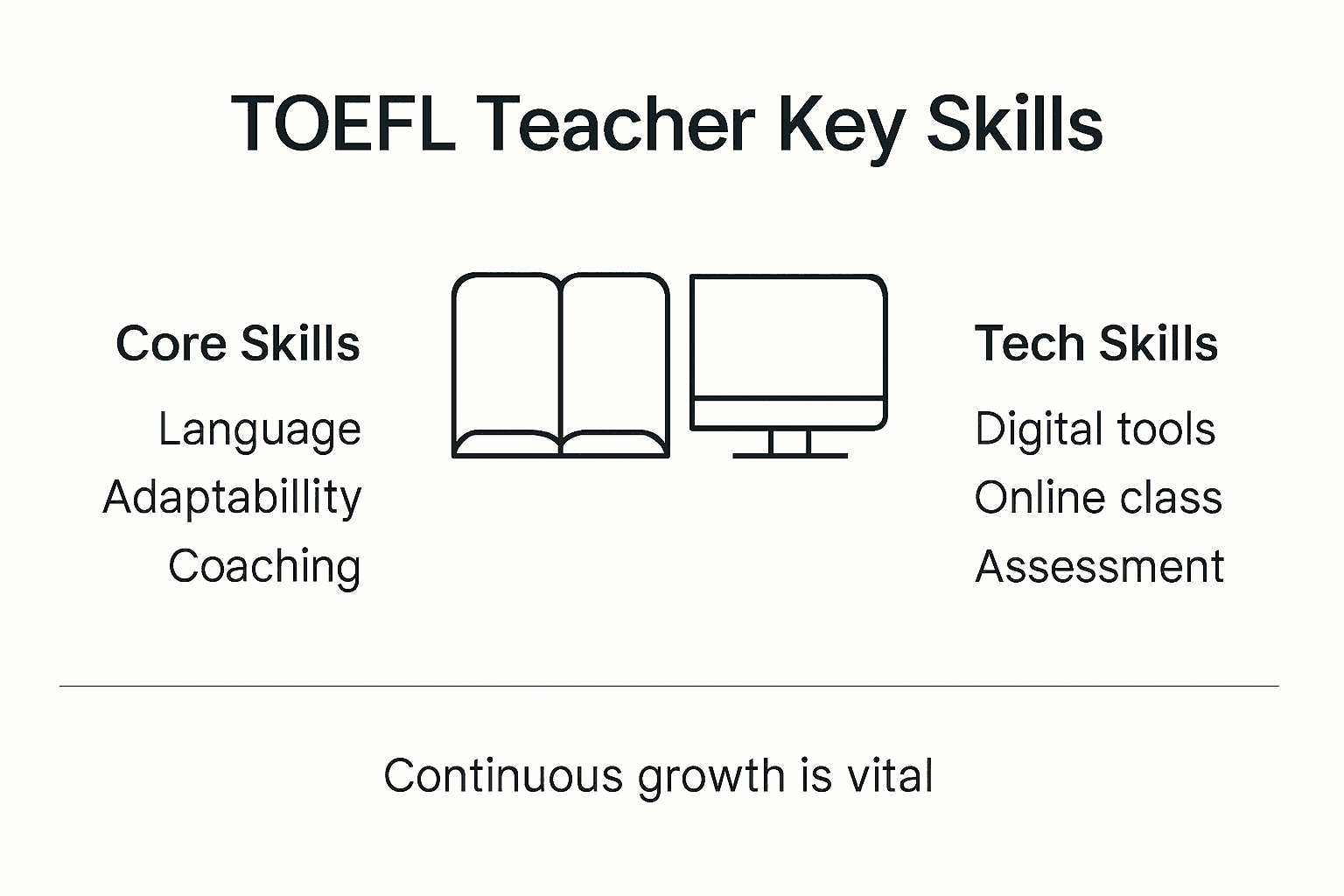
Technical proficiency plays a crucial role in modern TOEFL instruction. Instructors must be adept at utilizing digital learning platforms, creating interactive online teaching environments, and designing adaptive learning materials that address individual student needs. This involves developing sophisticated assessment strategies that can diagnose specific language weaknesses, create personalized improvement plans, and provide targeted practice across integrated skill sets. Technological fluency allows teachers to implement innovative teaching methods like simulated test environments, real-time performance tracking, and multimedia-enhanced learning experiences.
Cultural sensitivity emerges as another critical skill for TOEFL teachers working with diverse international student populations. Effective instructors understand how to navigate linguistic and cultural differences while maintaining high academic standards, helping students develop not just language skills but also the nuanced communication strategies required in academic settings. This involves creating supportive learning environments that recognize individual learning styles, provide constructive feedback, and build students’ academic confidence across different cultural contexts.
Pro Tip: Continuously expand your linguistic and technological skills by participating in professional development workshops, engaging with international teaching communities, and staying updated on the latest TOEFL test design innovations.
Career Advancement, Demand, And Salaries
Postsecondary language instructors can expect strong career prospects in the global education market, with median annual salaries for postsecondary teachers around $83,980 in the United States. The projected job growth of 7% indicates a robust demand for qualified TOEFL teachers, driven by increasing international student mobility and the growing importance of English proficiency in academic and professional settings. This career path offers substantial potential for educators with specialized training and advanced language teaching credentials.
Career advancement in TOEFL instruction involves multiple progression pathways, including specialization in specific test preparation areas, curriculum development, and leadership roles in language education institutions. Experienced instructors can transition into positions such as academic program directors, international education consultants, and test development specialists. Geographical flexibility remains a significant advantage, with opportunities ranging from traditional classroom settings to online platforms that connect teachers with students worldwide.
Global education trends reveal a growing global teacher shortage, creating unprecedented opportunities for well-prepared TOEFL teachers worldwide.Salary potential varies significantly by region, with some international locations offering competitive compensation packages that include housing allowances, travel benefits, and professional development support. Advanced degrees, specialized certifications, and demonstrated expertise in technology-enhanced language instruction can substantially increase an instructor’s marketability and earning potential.
Pro Tip: Develop a diversified professional portfolio by combining TOEFL instruction with additional language teaching specializations, online course development, and international teaching certifications.
Challenges, Common Mistakes, And Solutions
TOEFL instructors face complex challenges in preparing students for comprehensive language assessments, particularly when managing diverse student proficiency levels and evolving test formats. The primary difficulty lies in balancing rigorous test preparation with holistic language skill development. Many instructors mistakenly focus exclusively on test mechanics, which can limit students’ genuine linguistic growth and communicative competence. Successful teachers must develop nuanced strategies that simultaneously address test requirements and broader language acquisition goals.
Technological integration and adaptive teaching methodologies emerge as critical solutions to common instructional challenges. Modern TOEFL teaching requires sophisticated approaches that leverage interactive digital resources and personalized learning platforms, enabling instructors to differentiate instruction across varied student backgrounds. Key strategies include implementing diagnostic assessments, creating targeted intervention plans, and utilizing multimedia resources that simulate authentic academic communication scenarios. This approach helps mitigate the limitations of traditional test-preparation methods by fostering genuine language skill development.
Cultural competence represents another crucial dimension in addressing TOEFL teaching challenges. Instructors must navigate linguistic diversity by developing curriculum that respects students’ unique cultural and educational backgrounds while maintaining rigorous academic standards. This involves creating inclusive learning environments that validate students’ existing language knowledge while systematically building advanced English communication skills. Effective teachers recognize that successful language learning extends beyond test performance, requiring emotional intelligence, adaptable instructional techniques, and a deep commitment to students’ comprehensive linguistic development.
This table summarizes key challenges TOEFL teachers face and strategies for overcoming them:
| Challenge | Common Mistake | Effective Solution |
|---|---|---|
| Varied proficiency levels | Teaching to average level only | Use differentiated instruction methods |
| Focus on test mechanics only | Ignoring genuine language growth | Integrate skill-building with test prep |
| Cultural and linguistic diversity | One-size-fits-all curriculum | Design inclusive, adaptable materials |
| Keeping up with tech advances | Relying on outdated tools | Adopt digital platforms and resources |
Pro Tip: Develop a reflective teaching practice by regularly recording and analyzing your instructional sessions, seeking peer feedback, and participating in professional development workshops that focus on innovative language teaching methodologies.
Unlock Your Full Potential as a TOEFL Teacher with Specialized Training
The challenges highlighted in “TOEFL Teacher Careers: Expanding Global Opportunities” reveal the need for comprehensive skills in language instruction, test preparation strategies, and cultural sensitivity. Many aspiring and experienced TOEFL instructors face obstacles such as adapting to diverse student needs, mastering evolving test formats, and integrating technology effectively. If your goal is to overcome these hurdles and excel in this competitive field, targeted professional development is essential.
Take control of your teaching career today by enrolling in TEFL Institute’s extensive online courses designed specifically for language educators like you. Our programs include advanced diplomas, micro-credentials, and niche preparation courses that will boost your expertise and credibility. By joining the thousands of teachers who have enhanced their skills through our platform, you gain access to flexible learning paths that address both academic rigor and practical teaching challenges. Visit TEFL Institute now to start building the knowledge and confidence you need to thrive as a TOEFL instructor in global education markets.
Explore our course offerings and resources here: TEFL Institute Online Courses and discover how to transform your passion for teaching into an enriching international career.
Frequently Asked Questions
What qualifications are required to become a TOEFL teacher?
To become a TOEFL teacher, a bachelor’s degree in English, education, or a related field is typically required. Additionally, professional certifications such as TESOL or CELTA can enhance job prospects and credibility.
What types of teaching roles exist for TOEFL instructors?
TOEFL instruction offers various roles, including classroom instructors, online tutors, private coaches, and test prep specialists, each focusing on different aspects of English language preparation.
What skills are necessary for successful TOEFL teaching?
Successful TOEFL instructors need strong proficiency in the English language, cultural sensitivity, adaptability to diverse student needs, technical skills for using digital learning platforms, and the ability to design effective curricula.
What are the career advancement opportunities for TOEFL teachers?
Career advancement for TOEFL teachers includes pathways to roles such as academic program directors, curriculum developers, and international education consultants, often enhanced by additional training and specialization.
