

 United Kingdom (UK)
 United States (US)
 Canada
 South Africa
 India
India Australia
 New Zealand
 China
China Russia
 Germany
 France
 Spain
Spain Netherlands
 Vietnam
 United Arab Emirates
 Italy
Italy Poland
 Thailand
 Türkiye





 Algeria


Remote TEFL Teaching: How It Transforms Language Careers
Remote TEFL Teaching: How It Transforms Language Careers

Over 60 percent of American teachers now consider remote TEFL opportunities as a viable career move. This shift is not just about working from home, but about connecting with learners worldwide while mastering new digital skills. As the demand for online English instruction grows, understanding what remote TEFL teaching really involves helps you separate fact from fiction and discover how this innovative path can expand your own professional horizons.
Table of Contents
- Remote TEFL Teaching Defined and Debunked
- Types of Remote TEFL Teaching Roles
- Key Skills and Technical Requirements
- Legal, Tax, and Safety Considerations
- Benefits and Career Opportunities Online
Key Takeaways
| Point | Details |
|---|---|
| Remote TEFL Teaching requires advanced skills | Successful educators must master digital literacy and adapt teaching strategies for online platforms. |
| Diverse roles in Remote TEFL | Opportunities range from online tutoring to curriculum development, each necessitating unique technical abilities. |
| Legal and safety considerations are vital | Understanding work regulations, tax obligations, and personal cybersecurity is essential for online teaching success. |
| Career flexibility is a significant advantage | Remote TEFL offers location independence, diverse scheduling options, and opportunities for continuous professional growth. |
Remote TEFL Teaching Defined and Debunked
Remote TEFL teaching represents a transformative approach to language instruction that transcends traditional classroom boundaries, enabling educators to connect with students globally through digital platforms. While many misconceptions surround this emerging educational model, the reality is that remote teaching requires sophisticated pedagogical skills and technological adaptability. Technological pedagogical content knowledge has become increasingly critical in effectively delivering language education across virtual environments.
The core of remote TEFL teaching involves delivering English language instruction through online platforms, utilizing video conferencing, interactive digital tools, and specialized software to create engaging learning experiences. Educators must navigate complex challenges, including maintaining student engagement, managing technological infrastructure, and adapting communicative teaching strategies to digital contexts. Understanding communicative language teaching principles becomes paramount in preventing misapplications of instructional techniques in remote settings.
Key characteristics of successful remote TEFL teaching include:
- Robust digital literacy skills
- Flexible instructional design
- Strong intercultural communication abilities
- Advanced technological proficiency
- Capability to create interactive online learning environments
While remote TEFL teaching offers unprecedented opportunities for global education, it demands a significant shift in traditional pedagogical approaches. Instructors must reimagine classroom dynamics, develop innovative digital engagement strategies, and continuously adapt to emerging technological tools that enhance language learning experiences. The future of language education is increasingly digital, and remote TEFL teaching represents a dynamic pathway for educators seeking to expand their professional horizons beyond geographical limitations.
Types of Remote TEFL Teaching Roles
Remote TEFL teaching encompasses a diverse range of professional roles that leverage digital technologies to deliver language education across global platforms. Virtual exchange programs have dramatically expanded the possibilities for educators, creating innovative opportunities that extend far beyond traditional classroom settings. These roles range from one-on-one online tutoring to comprehensive digital language instruction platforms, each requiring unique skills and technological competencies.
The primary categories of remote TEFL teaching roles include synchronous and asynchronous instruction models. Synchronous roles involve real-time video conferencing with students, requiring immediate interaction and dynamic teaching strategies. These positions often include language learning platforms, corporate training programs, and international online language schools. Asynchronous roles focus on creating pre-recorded content, developing curriculum materials, and providing feedback through digital communication channels. Remote co-teaching practices have also emerged, particularly in collaborative educational environments that connect urban and rural learning spaces.
Specific remote TEFL teaching roles encompass:
- Online Language Tutors
- Corporate English Instructors
- Curriculum Development Specialists
- Digital Content Creators
- Virtual Language Assessment Professionals
- Intercultural Communication Facilitators
Successful remote TEFL professionals must develop a robust digital skill set, including technological proficiency, cross-cultural communication abilities, and adaptable instructional techniques. Exploring career pathways in online language teaching reveals a dynamic landscape of opportunities that continue to expand with technological advancements. The future of language education is increasingly digital, offering unprecedented flexibility and global connectivity for educators willing to embrace innovative teaching methodologies.

Key Skills and Technical Requirements
Remote TEFL teaching demands a sophisticated blend of technological proficiency and pedagogical expertise that goes far beyond traditional classroom skills. EFL teachers’ pedagogical-technological knowledge has become increasingly critical in creating engaging and effective online learning environments. Professionals must develop a comprehensive skill set that integrates digital literacy, adaptive communication techniques, and advanced technological competencies.
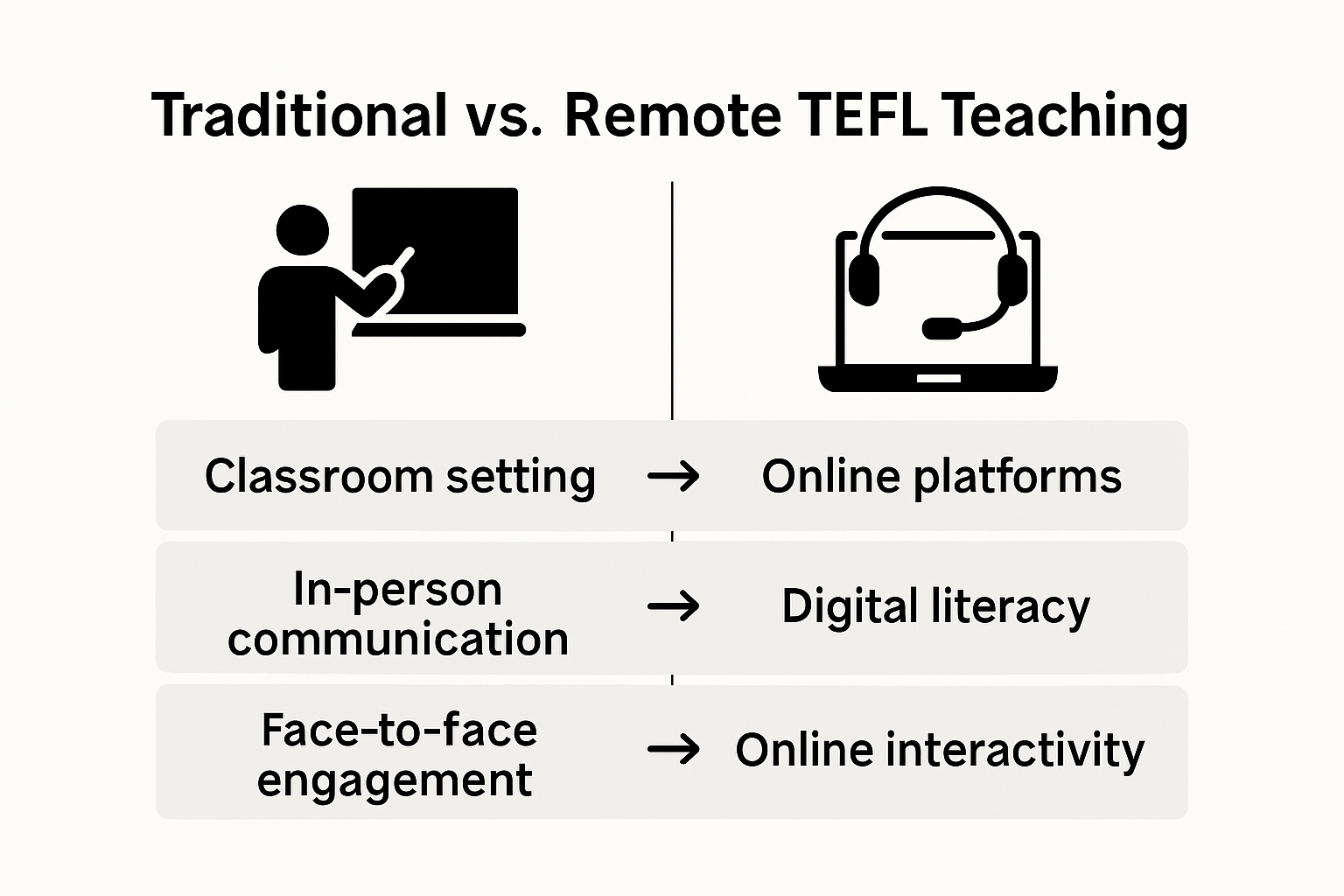
The technical requirements for remote TEFL teaching encompass a complex ecosystem of digital tools and platforms. Technological infrastructure is paramount, requiring high-speed internet connections, reliable computing equipment, and proficiency with video conferencing software, learning management systems, and interactive digital teaching resources. Online tutoring practices have revealed the importance of seamless technological integration and the ability to troubleshoot technical challenges in real-time.
Key technical skills and requirements include:
- Advanced digital communication platforms
- High-quality audio/video equipment
- Robust internet connectivity (minimum 25 Mbps)
- Proficiency in collaborative online teaching tools
- Cloud storage and file-sharing capabilities
- Digital assessment and feedback technologies
Successful remote TEFL professionals must cultivate a dynamic skill set that balances technological prowess with pedagogical creativity. Exploring essential skills for TEFL teachers reveals the complexity of modern language instruction. Beyond technical competence, educators must develop intercultural communication skills, adaptability, and the ability to create engaging digital learning experiences that transcend physical classroom limitations.
Legal, Tax, and Safety Considerations
Remote TEFL teaching involves navigating a complex landscape of legal and regulatory requirements that vary significantly across different international contexts. Understanding the distinctions between TEFL, TESL, and TESOL roles becomes critical for professionals seeking to establish a legally compliant and secure teaching career. The legal framework surrounding online language instruction encompasses work visas, tax obligations, professional certifications, and contractual responsibilities that demand meticulous attention.
Professional Certification plays a pivotal role in establishing legal credibility for remote TEFL teachers. Online TEFL certification programs require careful evaluation of accreditation status, ensuring that credentials are recognized by international educational institutions and potential employers. Key legal considerations include verifying the legitimacy of teaching platforms, understanding cross-border employment regulations, and maintaining appropriate professional liability insurance.
Critical legal, tax, and safety considerations include:
- International work permit requirements
- Tax reporting for independent contractors
- Professional liability insurance
- Data protection and student privacy regulations
- Contractual compliance with online teaching platforms
- Verification of platform legitimacy and payment structures
Professionals must also prioritize personal safety and digital security when engaging in remote TEFL teaching. This involves implementing robust cybersecurity practices, protecting personal and professional information, and establishing clear communication boundaries with students and educational platforms. Successful remote TEFL teachers develop a comprehensive understanding of the legal landscape, transforming potential challenges into opportunities for professional growth and international educational engagement.
Benefits and Career Opportunities Online
Remote TEFL teaching has revolutionized language education by creating unprecedented global opportunities for educators and learners alike. Extramural English opportunities have expanded dramatically, enabling language professionals to engage students beyond traditional classroom boundaries and create innovative learning experiences. This digital transformation allows teachers to connect with students worldwide, breaking down geographical and institutional limitations.
Career flexibility stands as a cornerstone of online TEFL teaching, offering professionals unprecedented autonomy and diverse employment options. Foreign language teaching research highlights the growing demand for skilled online language instructors across multiple platforms. Exploring online teaching opportunities reveals a dynamic landscape of potential career paths that extend far beyond traditional educational settings.
Primary benefits of remote TEFL teaching include:
- Global student interaction
- Location-independent work
- Flexible scheduling
- Competitive compensation rates
- Continuous professional development
- Multicultural professional experience
Successful online TEFL professionals leverage digital platforms to create engaging, interactive language learning experiences that transcend traditional educational models. The ability to adapt technological tools, understand diverse cultural contexts, and deliver high-quality instruction becomes paramount in this evolving professional landscape. Remote TEFL teaching represents more than a career path—it is a gateway to global educational innovation and personal professional transformation.
Transform Your Language Career with Expert TEFL Training
Remote TEFL teaching offers exciting new avenues but brings challenges like mastering digital tools and adapting to virtual classrooms. If you are eager to enhance your technological pedagogical content knowledge and build the skills needed to thrive in online education, TEFL Institute is here to support your journey. Our comprehensive online courses include essential training in digital communication, curriculum development, and intercultural skills designed to prepare you for the evolving landscape of remote language instruction.
Take the next step to transform your passion for teaching English into a flexible, location-independent career. Explore our advanced diplomas, niche courses like IELTS preparation, and hybrid programs with practicum components today at TEFL Institute. Equip yourself with the expertise to confidently navigate legal, technical, and pedagogical demands of the remote TEFL world and embrace global teaching opportunities now.
Frequently Asked Questions
What is remote TEFL teaching?
Remote TEFL teaching involves delivering English language instruction through digital platforms, allowing educators to connect with students globally without traditional classroom boundaries.
What skills are essential for remote TEFL teachers?
Successful remote TEFL teachers need strong digital literacy skills, adaptability, intercultural communication abilities, and the capability to create interactive online learning experiences.
What are the legal considerations for remote TEFL teaching?
Key legal considerations include understanding work permits, tax reporting for independent contractors, professional liability insurance, and ensuring compliance with data protection regulations.
What are the benefits of pursuing a career in remote TEFL teaching?
The benefits of remote TEFL teaching include global student interaction, flexible work schedules, competitive compensation, and opportunities for continuous professional development.
