
 United Kingdom (UK)
 United States (US)
 Canada
 South Africa
 India
India Australia
 New Zealand
 China
China Russia
 Germany
 France
 Spain
Spain Netherlands
 Vietnam
 United Arab Emirates
 Italy
Italy Poland
 Thailand
 Türkiye









 Algeria


Online vs In-Class TEFL – Choosing Your Best Path
Online vs In-Class TEFL – Choosing Your Best Path

Choosing the right TEFL certification path can feel overwhelming when you want freedom and real classroom skills at the same time. Whether you prefer studying from your laptop in California or hands-on experience in a Bangkok classroom, the options today offer more flexibility and depth than ever. Understanding your choices helps you find the balance between self-paced learning and practical training employers value most, so you can confidently launch your teaching career anywhere in the world.
Table of Contents
- What TEFL Certification Involves Today
- Comparing Online and In-Class TEFL Formats
- Key Features: Flexibility, Practicum, Accreditation
- Requirements, Costs, and Employer Preferences
- Risks, Common Mistakes, and Career Impact
Key Takeaways
| Point | Details |
|---|---|
| TEFL Certification Differentiation | Modern TEFL programs vary widely in hours, delivery formats, and practical experience, requiring careful selection based on personal goals and lifestyle. |
| Accreditation Importance | Opting for accredited programs is crucial, as employers globally prefer recognized certifications that ensure qualification acceptance. |
| Hands-On Teaching Practice | Quality TEFL programs include real teaching practice, which is essential for gaining confidence and operational skills in the classroom. |
| Cost vs. Quality | Investing in comprehensive TEFL certification may seem high initially, but the potential for better job opportunities and higher salaries justifies the expense. |
What TEFL Certification Involves Today
TEFL certification is no longer a one-size-fits-all credential. Modern programs combine flexibility with rigor, offering pathways that match your lifestyle and career goals. Understanding what’s actually involved helps you choose the right fit.
Core Requirements
TEFL certification requires between 20 to 200 hours of coursework, depending on the program depth and specialization. Most competitive programs recommend at least 120 hours minimum for serious job prospects abroad.
This coursework covers essential areas:
- Teaching methodology: Lesson planning, classroom management, and student engagement techniques
- Language structure: Grammar, phonetics, and linguistic concepts you’ll explain to non-native speakers
- Practical teaching experience: Observed practice lessons with real or simulated students
- Cultural awareness: Understanding learner backgrounds and adapting your approach accordingly
- Assessment techniques: Creating tests, evaluating progress, and providing feedback
How Programs Differ
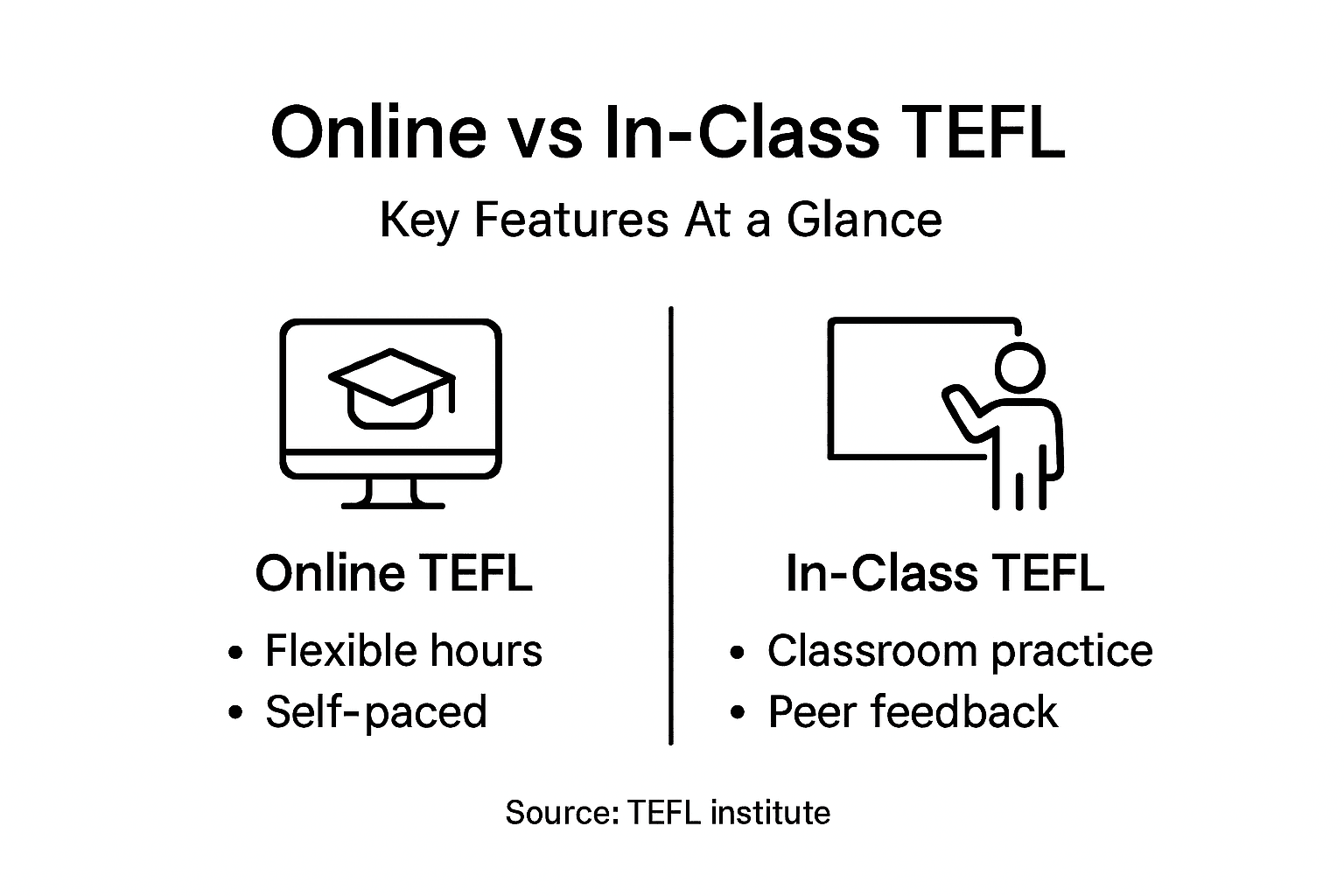
The delivery format shapes your entire experience. Online courses offer self-paced learning you control completely. In-class programs provide face-to-face interaction, immediate feedback, and built-in accountability.
Some hybrid options blend both approaches—online theory modules plus intensive in-person teaching practice sessions.
Accreditation Matters
Not all TEFL certificates carry equal weight internationally. Accredited programs ensure your qualification gets recognized when you apply for positions overseas. Schools in Asia, Middle East, and Latin America often specifically request accredited certifications.
Accreditation bodies vary by region, but major providers include Ofqual (United Kingdom), ACCET (United States), and TESOL international standards.
Teaching Practice Component
This separates quality programs from quick certifications. Real teaching practice means delivering actual lessons to real students under supervision. You receive constructive feedback on your delivery, pacing, and student interaction.
Some programs count ESL classroom experience toward this requirement. Others require observed teaching hours as part of the course itself.
Most employers prioritize programs with 120+ hours and demonstrated teaching practice over shorter certifications, regardless of delivery format.
Timeline Expectations
Online programs typically run 4 to 12 weeks at your pace. Intensive in-class courses often compress into 2 to 4 weeks of full-time attendance. Part-time in-class options extend across 3 to 6 months with evening or weekend sessions.
Your schedule, current location, and personal circumstances determine which timeline works.
Cost Structure
Program costs range significantly based on accreditation, duration, and teaching practice included. Budget anywhere from $300 to $1,500 depending on what’s included.
Online courses typically cost less upfront but may require additional fees for teaching practice components. In-class programs often bundle everything together but require geographic proximity or relocation.
Here’s a quick reference comparing TEFL program formats and their career value:
| Aspect | Online TEFL | In-Class TEFL | Hybrid TEFL |
|---|---|---|---|
| Flexibility | Self-paced, available anywhere | Fixed schedule, location-bound | Combines online and onsite |
| Teaching Practice | Simulated or virtual options | Real classroom experience | Both simulation and real practice |
| Upfront Cost | Lower | Higher | Highest |
| Career Impact | Good for remote/online roles | Best for in-person roles abroad | Ideal for all roles, most competitive |
Pro tip: Prioritize programs with verifiable teaching practice hours and accreditation status over the lowest price—employers evaluate both when reviewing your application.
Comparing Online and In-Class TEFL Formats
Choosing between online and in-class TEFL training means understanding how each format actually works. Both can deliver solid certifications, but they differ significantly in how you learn and interact.
Learning Effectiveness
Online and in-class formats show comparable effectiveness in terms of student performance outcomes. The format itself isn’t the determining factor—how well the program is designed matters far more.
What separates quality programs from mediocre ones is pedagogy. Strong instructors adapt their teaching methods to match the delivery format, whether synchronous or asynchronous.
Online Format Strengths
Online TEFL courses offer genuine flexibility you control completely:
- Complete self-paced learning fitting your schedule and timezone
- Access course materials anytime, from anywhere with internet
- Lower upfront costs compared to in-class programs
- Ability to maintain current employment while studying
- Recorded lessons you can review multiple times
This flexibility appeals to working professionals, parents, and anyone with unpredictable schedules.
Online Format Challenges
The main obstacle with online learning is staying engaged without external structure. Student engagement and motivation require intentional design in online environments.
You must be self-directed. Procrastination becomes your responsibility to manage. Interaction with instructors happens asynchronously, so immediate feedback isn’t automatic.
In-Class Format Strengths
In-class courses create immersive learning experiences through direct interaction:
- Real-time feedback from instructors and peers
- Immediate clarification when concepts confuse you
- Structured schedule providing accountability
- Peer collaboration and networking with future teachers
- Face-to-face teaching practice with guided observation
The social environment itself drives learning persistence and deeper understanding.
In-Class Format Challenges
In-class training requires geographic proximity and fixed time commitments. You must relocate or commute regularly, which isn’t feasible for everyone.

Intensive programs demand full-time focus during the course period. Part-time options extend months, limiting when you can start teaching. Costs run higher due to facility and instructor expenses.
Teaching Practice Delivery
Both formats include teaching practice, but execution differs. Online programs often use simulated students or recorded teaching for evaluation. In-class programs place you with real students in actual classrooms.
Real student interaction provides authentic feedback you can’t replicate online.
Format effectiveness depends on your learning style, schedule, and how seriously the program addresses engagement—not the delivery method itself.
Making Your Decision
Consider these factors when choosing:
- Your current work and life commitments
- How much structure you need to stay motivated
- Your preferred learning style (independent vs. collaborative)
- Your location relative to training centers
- Whether you need flexibility or can commit full-time
Pro tip: Choose online if you’re self-disciplined and juggling commitments; choose in-class if you thrive with structure, immediate feedback, and want to build relationships with other teachers starting their careers.
Key Features: Flexibility, Practicum, Accreditation
Three features separate exceptional TEFL programs from basic ones: flexibility in delivery, hands-on practicum experience, and recognized accreditation. Understanding each helps you evaluate which program truly fits your needs.
Flexibility in Course Delivery
Flexibility in course delivery helps learners from diverse backgrounds complete certification. Whether you’re working full-time, caring for dependents, or juggling multiple commitments, the right format removes barriers.
Flexibility means more than just online options. It includes:
- Self-paced online modules you complete on your timeline
- Part-time in-class sessions fitting evenings or weekends
- Hybrid programs blending recorded content with live sessions
- Extended timelines letting you study while employed
- Geographic options so location isn’t a barrier
Programs offering flexibility attract serious adult learners who can’t abandon current responsibilities.
The Practicum: Hands-On Teaching Experience
A quality practicum provides hands-on teaching experience that transforms theoretical knowledge into real classroom skills. This isn’t watching videos or reading case studies—it’s you, standing in front of students, teaching actual lessons.
Practicum benefits include:
- Building genuine teaching confidence through real practice
- Applying theory to actual student situations and questions
- Receiving instructor feedback on your teaching performance
- Creating a portfolio of teaching artifacts for job applications
- Understanding your teaching style under real pressure
Employers strongly prefer or require practicum completion. It proves you can actually teach, not just pass a test.
Types of Practicum Experiences
Practicum delivery varies between programs. In-class programs typically place you with real students in community centers or language schools. Online programs may use simulated students, recorded teaching analysis, or partner institutions abroad.
Both formats work—what matters is genuine feedback on your teaching performance.
Accreditation: International Recognition
Accreditation from recognized bodies ensures worldwide acceptance by employers and educational institutions. An accredited certificate opens doors globally; an unaccredited one doesn’t.
Accredited programs meet rigorous standards:
- Verified instructor qualifications and expertise
- Defined curriculum meeting international benchmarks
- Quality assurance through regular audits
- Recognition across multiple continents and job markets
Employers worldwide prioritize accredited certificates because they guarantee consistent, recognized standards regardless of where you studied.
Checking Accreditation Status
Before enrolling, verify the program’s accrediting body. Major accreditors include Ofqual (UK), ACCET (USA), and various national education authorities.
Programs should clearly display accreditation status on their website. If it’s hidden or vague, that’s a red flag.
Finding the Right Balance
Don’t sacrifice practicum quality for flexibility, or vice versa. The best programs offer all three: flexible delivery, authentic practicum experience, and legitimate accreditation.
This combination costs more upfront but pays dividends when securing teaching positions internationally.
Pro tip: Verify accreditation and practicum quality before considering cost—unaccredited programs or those with weak teaching practice components won’t compensate for being cheaper when employers reject your application.
Requirements, Costs, and Employer Preferences
Before enrolling in any TEFL program, understand the baseline requirements, realistic costs, and what employers actually want from candidates. These three factors determine whether your certification opens doors or sits unused.
Basic Eligibility Requirements
Most TEFL programs require straightforward qualifications. You must be at least 18 years old and demonstrate fluency in English—typically through native speaker status or proficiency exams.
Many employers add one more requirement: a bachelor’s degree from an accredited institution. This varies by region and institution, but it’s increasingly common, especially for international schools and competitive markets.
Check specific employer expectations in your target countries before choosing a program.
Understanding Program Costs
TEFL certification costs typically range from $500 to $3,000 depending on format and duration. This wide range reflects real differences between programs.
Cost breakdown generally looks like this:
- Budget online courses: $500-$800 (self-paced, minimal support)
- Mid-range online programs: $1,000-$1,500 (structured, teaching practice included)
- In-class intensive courses: $1,500-$2,500 (4-week programs with accommodation sometimes excluded)
- Premium hybrid programs: $2,000-$3,000 (accredited, comprehensive practicum, ongoing support)
Cheaper doesn’t mean better. Unaccredited programs costing $300 won’t improve your employability.
What Employers Actually Want
Employers usually prefer candidates with a minimum of 120 hours of certified TEFL courses including practical experience. This is the competitive baseline globally.
Hiring managers evaluate:
- Course hours: 120+ hours minimum; 150+ hours preferred
- Accreditation status: Verified, recognized credentials only
- Teaching practice: Real classroom experience, not simulated lessons
- Specialization: TEFL plus IELTS, YL, or business English adds value
- Recency: Completed within last 2 years preferred
A 60-hour online course saves money but signals you weren’t serious enough to complete competitive training.
The Cost-Employability Trade-off
More comprehensive and accredited programs improve employability and salary prospects internationally. This isn’t marketing speak—it’s demonstrable.
Programs with strong accreditation and practicum components lead to higher starting salaries and better job selection globally.
Investing an extra $500-$1,000 upfront in quality training often yields $2,000+ higher annual salary in your first teaching position.
Geographic Variations
Employer preferences shift by region. Asian schools emphasize accreditation heavily. Middle Eastern institutions often require bachelor’s degrees plus TEFL. Latin American positions may be more flexible with newer programs.
Research specific country requirements before committing.
Making the Investment Decision
Your TEFL certification is a career investment, not an expense. Analyze what employers in your target region actually require, then choose the lowest-cost program meeting those standards.
Don’t pay for luxury features irrelevant to your goals. Do pay for accreditation, teaching practice, and recognized hours.
Pro tip: Before enrolling, contact 5-10 schools in your target country and ask what certification they require—this takes 30 minutes and prevents enrolling in programs employers won’t accept.
Risks, Common Mistakes, and Career Impact
Choosing the wrong TEFL program or skipping certification entirely creates real consequences. Understanding common pitfalls protects your career investment and prevents expensive mistakes down the road.
Underestimating Classroom Reality
Common risks include inadequate preparation for classroom realities and insufficient cultural adaptation. Many aspiring teachers imagine themselves explaining grammar to attentive students. Reality is messier.
Classroom challenges include managing disruptive behavior, adapting lessons on the fly, and engaging unmotivated learners. Without practical training, you’ll feel overwhelmed within weeks.
Skipping Practical Training
Teachers without practical training struggle with classroom management, engagement, and lesson delivery. Theory alone doesn’t prepare you for 30 students with varying needs.
Common mistakes include:
- Choosing programs without real teaching practice components
- Completing online certifications without classroom experience
- Believing “experience” alone substitutes for formal training
- Enrolling in unaccredited programs to save money
- Ignoring employer preferences for 120+ certified hours
Each mistake limits your job options and starting salary.
Cultural Adaptation Gaps
Teaching English abroad means working within unfamiliar cultural contexts. Programs must address this explicitly—teaching grammar to Japanese learners differs fundamentally from teaching Brazilian students.
Quality programs include cultural pedagogy, adaptation strategies, and regional context. Cheap programs skip this entirely.
Career Impact: Certified vs. Uncertified
Well-qualified and certified TEFL teachers have better job prospects, higher pay, and more opportunities both abroad and online. This isn’t minor—it’s transformational.
Real salary differences:
- Unaccredited or no certification: $800-$1,200/month starting salary
- 120-hour accredited TEFL: $1,400-$1,800/month
- 180-hour diploma plus specialization: $2,000-$2,800/month
- With experience plus credentials: $2,500-$4,000+/month
The better certification pays for itself within 3-6 months.
This table summarizes how TEFL program quality affects your job prospects and salary.
| Certification Quality | Starting Salary (USD/mo) | Job Options | Long-Term Potential |
|---|---|---|---|
| Unaccredited/None | $800-$1,200 | Limited, low-tier schools | Minimal advancement |
| Accredited 120-hour | $1,400-$1,800 | Broad, global eligibility | Path to higher roles |
| Accredited 180-hour+ | $2,000-$2,800 | Prestigious, competitive roles | Opens leadership paths |
| With Experience | $2,500-$4,000+ | International, top schools | Curriculum/training roles |
Long-Term Career Doors
Certification opens pathways beyond entry-level teaching. With strong credentials, you can transition to curriculum development, teacher training, or international school positions commanding significantly higher salaries.
Without accredited credentials, you’re locked into private language school positions with limited advancement.
Investing in comprehensive TEFL training now determines whether you teach for one year or build a sustainable 10+ year international education career.
Geographic Employment Gaps
Some countries won’t hire uncertified teachers. Middle Eastern schools, international institutions, and competitive Asian markets explicitly require accredited TEFL certification. Choosing the wrong program eliminates entire regions.
Verify your target country’s requirements before enrolling.
Building Credibility
Employers evaluate certification status immediately. Strong credentials signal professionalism, preparation, and commitment. Weak credentials suggest you took shortcuts.
This perception affects everything: job offers, salary negotiation, and professional relationships.
Pro tip: View your TEFL investment as career insurance—the $1,500 spent on quality training protects you from earning $10,000 less annually and shields you from classroom management disasters that derail teaching careers before they start.
Find Your Ideal TEFL Path with Expert Support
Choosing between online and in-class TEFL certification can feel overwhelming as you balance flexibility, teaching practice, and accreditation. The article highlights key challenges like maintaining motivation in self-paced learning or accessing real classroom experience. At TEFL Institute, we understand these concerns and offer tailored solutions designed to fit your unique lifestyle and career goals. Our comprehensive course catalog includes flexible online options, hybrid programs with practicum, and specialized certifications that ensure you meet global employer standards.
Take control of your TEFL journey with:
- Accredited certifications recognized worldwide
- Authentic practicum experiences to build confidence
- Flexible learning schedules that respect your commitments
Ready to confidently choose your best TEFL path and maximize your teaching opportunities abroad or online? Explore our course offerings and resources today by visiting TEFL Institute. Start your journey now with programs that combine flexibility and proven quality, designed for real-world success. Don’t wait to invest in a certification employers respect and that sets you apart in the global ESL market.
Discover more about our online TEFL courses and how you can get certified with practical experience. Visit the TEFL Institute official website to enroll and take the next step toward your rewarding English teaching career.
Frequently Asked Questions
What are the key differences between online and in-class TEFL courses?
Online TEFL courses offer self-paced learning and greater flexibility, while in-class courses provide direct interaction, real-time feedback, and structured schedules.
How does teaching practice differ in online and in-class TEFL formats?
In-class programs typically require teaching real students in a classroom, whereas online programs often use simulated students or recorded teaching for evaluation.
Which format is better for self-motivated learners?
Online TEFL courses are generally better for self-motivated learners since they offer the flexibility to study at your own pace without a structured schedule.
What should I look for when choosing a TEFL certification program?
Prioritize programs with at least 120 hours of coursework, verified teaching practice, and accredited status to ensure your certification is recognized and respected by employers.
Recommended
- Online vs Offline TEFL Diploma: Which One is the Smarter Choice?
- TEFL and TESOL Difference: Choosing Your Best Path | TEFL Institute
- Online TEFL Course Advantages: Why They Matter for Aspiring Teachers | TEFL Institute
- How To Choose Best TEFL Course – TEFL Institute
- Career-Focused Achiever – Ikigai Personality Type | Ikigain
TEFL Institute guides

Czech Republic
Pay, visas and cities
Spain
Jobs, pay and visa routes
Mexico
Jobs, pay and cities
Portugal
Jobs, pay and visa routes
South Korea
EPIK, hagwons and pay