

 United Kingdom (UK)
 United States (US)
 Canada
 South Africa
 India
India Australia
 New Zealand
 China
China Russia
 Germany
 France
 Spain
Spain Netherlands
 Vietnam
 United Arab Emirates
 Italy
Italy Poland
 Thailand
 Türkiye





 Algeria


Lesson Planning Workflow: Building Effective ESL Lessons
Every American teacher knows that effective lesson planning can make the difference between a classroom that thrives and one that struggles. A strong workflow helps transform teaching goals into real student progress, yet over 80 percent of educators say the process can feel overwhelming without clear steps. Understanding how to create a practical lesson planning workflow gives you a foundation for more confident teaching, smoother days, and better outcomes for every learner.

Table of Contents
- What Is a Lesson Planning Workflow?
- Key Components of Effective Lesson Plans
- Main Lesson Plan Formats and Templates
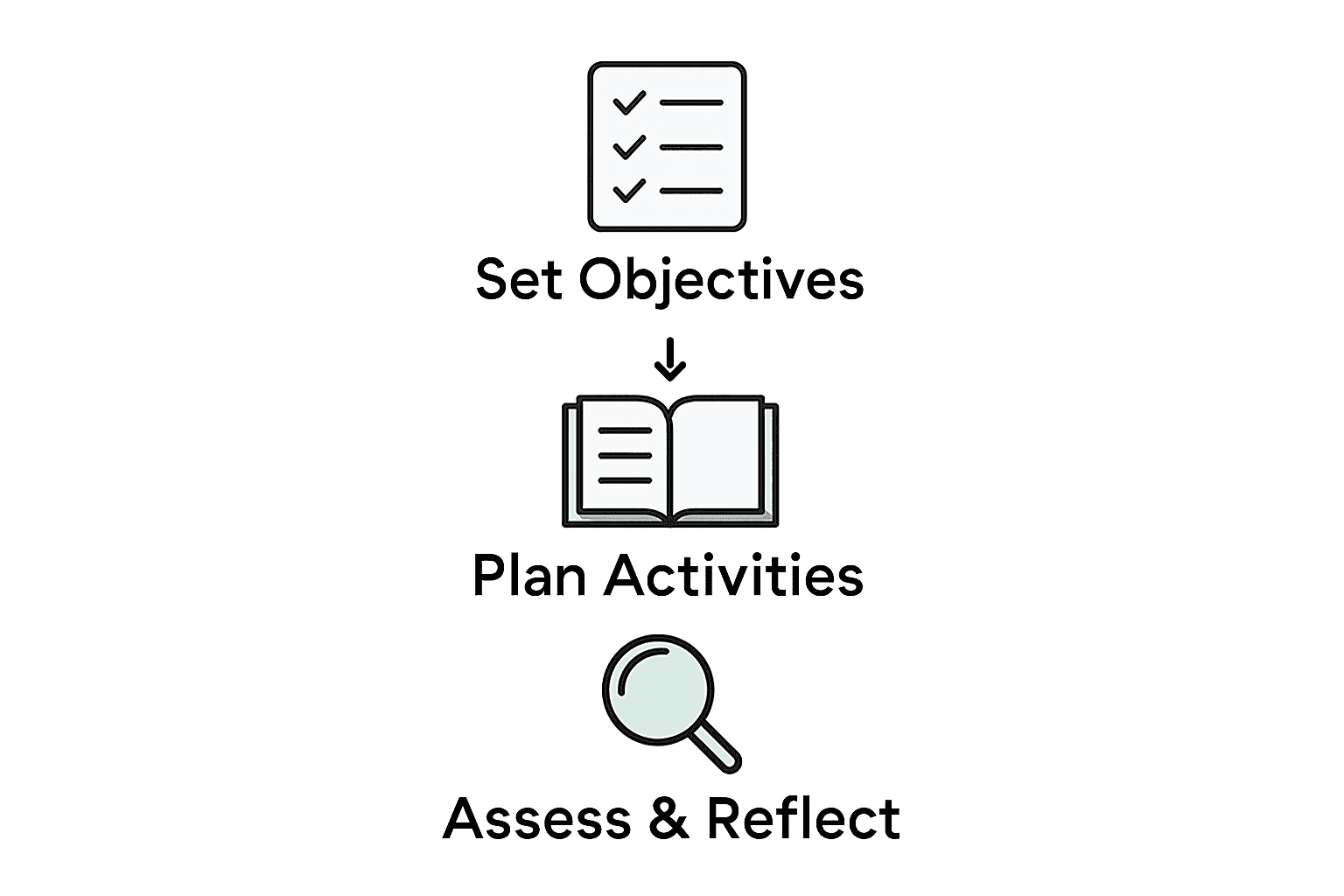
- Step-by-Step Lesson Planning Process
- Common Lesson Planning Mistakes to Avoid
Key Takeaways
| Point | Details |
|---|---|
| Systematic Workflow | A lesson planning workflow serves as a roadmap for educators, transforming educational goals into actionable teaching steps. |
| Key Components | Effective lesson plans include measurable objectives, engaging activities, and structured assessments aligned with learning goals. |
| Main Formats | Three primary ESL lesson plan formats (PPP, ESA, TBL) cater to different instructional needs, allowing for flexibility and adaptability. |
| Common Mistakes | Avoid vague objectives and misaligned activities by using specific goals and ensuring activities connect directly to learning outcomes. |
What Is a Lesson Planning Workflow?
A lesson planning workflow represents a systematic approach educators use to design, structure, and implement effective teaching strategies. According to eslmaterials, it serves as a roadmap for educators, outlining key instructional components that guide successful learning experiences.
At its core, a lesson planning workflow transforms abstract educational goals into concrete, actionable teaching steps. Wikipedia describes this process as a detailed description of instructional guidance that helps teachers create purposeful and organized classroom experiences. The workflow typically encompasses several critical stages:
- Objective Setting: Clearly defining learning outcomes
- Content Selection: Choosing appropriate materials and resources
- Activity Design: Creating engaging instructional strategies
- Assessment Planning: Developing methods to measure student understanding
- Reflection: Evaluating lesson effectiveness and making future improvements
Successful lesson planning workflows are not rigid templates but flexible frameworks that adapt to student needs, learning environments, and educational contexts. They provide structure while allowing creative instructional approaches that keep students motivated and engaged. Modern workflows increasingly incorporate technology, digital resources, and adaptive teaching methods to enhance learning experiences.
Pro Tip: Lesson Plan Preparation: Always draft your initial workflow as a rough sketch, leaving room for spontaneity and real-time classroom adjustments that can make learning more dynamic and responsive.
Key Components of Effective Lesson Plans
Creating effective lesson plans requires a strategic approach that goes beyond simple instructional documentation. According to eslmaterials, successful lesson plans include clear objectives, engaging activities, and assessments that are precisely aligned with specific learning goals.
The fundamental key components of a robust lesson plan encompass several essential elements that transform theoretical learning into practical educational experiences:
- Learning Objectives: Clearly defined, measurable outcomes that specify what students will know or accomplish
- Content Sequence: Logical progression of instructional materials and concepts
- Teaching Strategies: Diverse instructional methods tailored to student learning styles
- Assessment Methods: Structured approaches to evaluate student comprehension and progress
- Resource Allocation: Identifying and preparing necessary instructional materials
Comprehensive lesson planning approaches from professional education resources emphasize the importance of creating flexible frameworks that can adapt to individual classroom dynamics. These components work together to create a comprehensive roadmap that guides both teacher instruction and student learning.
Modern lesson planning recognizes that effective educational design is not about rigid adherence to a template, but about creating responsive, engaging learning experiences that meet diverse student needs. Successful educators continuously refine their approach, integrating feedback, technological resources, and innovative teaching strategies.
Pro Tip: Lesson Plan Customization: Develop a personal template that allows for spontaneity, but provides enough structure to ensure clear educational objectives are consistently met.
Main Lesson Plan Formats and Templates
ESL lesson planning requires strategic frameworks that provide structure while allowing instructional flexibility. Common lesson plan formats offer educators systematic approaches to designing effective language learning experiences, each with unique strengths and pedagogical principles.
Three primary lesson plan formats dominate ESL instruction:
- PPP (Presentation, Practice, Production) Model
- Introduces new language concepts systematically
- Begins with a clear teacher-led explanation
- Transitions to controlled student practice
- Concludes with independent language production
- ESA (Engage, Study, Activate) Framework
- Starts with student motivation and interest
- Moves through structured learning phases
- Emphasizes interactive language acquisition
- Allows more flexibility than traditional models
- TBL (Task-Based Learning) Approach
- Centres learning around completing meaningful tasks
- Prioritizes communicative language use
- Encourages natural language development
- Focuses on practical, real-world communication skills
Professional educational resources highlight the importance of selecting appropriate lesson plan templates that align with specific learning objectives and student needs. Effective educators often blend elements from multiple frameworks to create customized instructional approaches.

Modern language teaching recognizes that no single template fits all situations. Successful lesson planning requires adaptability, understanding of student dynamics, and a willingness to modify approaches based on classroom interactions.
Here’s a comparison of the three main lesson plan formats used in ESL instruction:
| Model Name | Planning Focus | Best For | Flexibility |
|---|---|---|---|
| PPP (Presentation, Practice, Production) | Step-by-step skill building | Structured language introduction | Moderate, requires clear stages |
| ESA (Engage, Study, Activate) | Motivating engagement, interactive learning | Varying student needs, dynamic classes | High allows lesson adaptation |
| TBL (Task-Based Learning) | Real-life communication skills | Practical, communicative goals | Very high, tasks are easily customized |
Pro Tip: Template Customization: Develop a personal lesson plan template that combines the best elements from different frameworks, allowing flexibility while maintaining a clear instructional structure.
Step-by-Step Lesson Planning Process
Lesson planning transforms educational vision into actionable classroom strategies. A systematic lesson planning process provides educators with a structured approach to designing effective instructional experiences, ensuring comprehensive and purposeful learning outcomes.
The comprehensive lesson planning process typically involves six critical stages:
- Needs Assessment
- Analyze student language proficiency levels
- Identify specific learning objectives
- Understand cultural and individual learning contexts
- Objective Formulation
- Create clear, measurable learning goals
- Align objectives with curriculum standards
- Ensure objectives are specific and achievable
- Material Selection
- Choose appropriate language learning resources
- Select materials matching student skill levels
- Incorporate diverse multimedia learning tools
- Activity Design
- Develop engaging, interactive learning experiences
- Balance input, practice, and production activities
- Create scaffolded learning sequences
- Assessment Planning
- Design formative and summative evaluation methods
- Create rubrics for measuring language skill progression
- Develop multiple assessment formats
- Reflection and Adaptation
- Review lesson effectiveness
- Collect student feedback
- Modify future lesson plans based on insights
Successful lesson planning is not a linear process but a dynamic, cyclical approach that requires continuous refinement. Effective educators remain flexible, understanding that each classroom interaction provides an opportunity for instructional improvement.
Pro Tip: Lesson Plan Preparation: Create a template that allows for quick modification and includes space for real-time notes and spontaneous adjustments during classroom instruction.
Common Lesson Planning Mistakes to Avoid
ESL lesson planning requires strategic thinking and careful preparation. Common lesson planning mistakes can significantly undermine the effectiveness of language instruction, creating barriers to student learning and engagement.
Educators frequently encounter several critical pitfalls in their lesson planning process:
- Vague Objective Setting
- Failing to define specific, measurable learning outcomes
- Creating broad, unfocused lesson goals
- Neglecting to align objectives with student proficiency levels
- Misaligned Activities
- Designing activities disconnected from core learning objectives
- Overloading lessons with unnecessary complexity
- Ignoring student learning styles and preferences
- Inadequate Assessment Strategies
- Relying on single assessment methods
- Neglecting formative assessment opportunities
- Failing to provide constructive feedback mechanisms
- Time Management Errors
- Unrealistic time allocation for activities
- Insufficient flexibility in lesson structures
- Lack of contingency planning for unexpected classroom dynamics
- Resource Selection Mistakes
- Using outdated or inappropriate learning materials
- Neglecting students cultural and linguistic backgrounds
- Failing to incorporate diverse multimedia learning tools
Successful lesson planning demands continuous reflection and adaptability. Experienced educators understand that lesson plans are living documents, requiring constant refinement and responsiveness to student needs.
This table summarizes common lesson planning mistakes, their consequences, and suggestions for prevention:
| Mistake Type | Potential Impact | Prevention Tip |
|---|---|---|
| Vague Objectives | Students lack clear goals | Use measurable, specific targets |
| Misaligned Activities | Reduced learning effectiveness | Connect tasks directly to goals |
| Poor Assessment Design | Limited feedback or insights | Mix evaluation methods, provide rubrics |
| Time Management Errors | Unfinished lessons, wasted time | Build flexibility, plan contingencies |
| Weak Resource Choices | Engagement or relevance suffers | Update materials, match learner needs |
Pro Tip: Error Prevention: Develop a personal checklist that systematically addresses potential planning mistakes, and review your lesson plans critically before classroom implementation.
Master Your Lesson Planning Workflow with TEFL Institute
Crafting effective ESL lessons requires a clear, adaptable workflow that addresses objectives, activity design, and assessment planning. If you want to overcome common pitfalls like vague goals or misaligned activities, developing strong lesson planning skills is essential. At TEFL Institute, we understand the challenges educators face in creating dynamic and engaging lesson plans that truly connect with students.
Explore our comprehensive online TEFL courses designed to strengthen your understanding of lesson planning frameworks such as PPP, ESA, and TBL. Gain practical strategies to customize your lessons and assess learner progress effectively. Don’t wait to elevate your teaching career with expert training tailored for aspiring and experienced educators alike. Visit TEFL Institute, browse our course catalogue, and start building impactful ESL lessons today.
Frequently Asked Questions
What is a lesson planning workflow?
A lesson planning workflow is a systematic approach educators use to design and implement effective teaching strategies. It serves as a roadmap outlining key instructional components for successful learning experiences.
What are the key components of an effective lesson plan?
Key components of an effective lesson plan include learning objectives, content sequence, teaching strategies, assessment methods, and resource allocation. These elements work together to create a comprehensive roadmap for instruction.
What are the main lesson plan formats used in ESL instruction?
The primary lesson plan formats employed in ESL instruction include the PPP (Presentation, Practice, Production) model, the ESA (Engage, Study, Activate) framework, and the TBL (Task-Based Learning) approach, each with distinct strengths and pedagogical principles.
What common mistakes should I avoid when planning lessons?
Common mistakes to avoid include vague objective setting, misaligned activities, inadequate assessment strategies, time management errors, and poor resource selection. Staying reflective and adaptable can help prevent these issues.
