
 United Kingdom (UK)
 United States (US)
 Canada
 South Africa
 India
India Australia
 New Zealand
 China
China Russia
 Germany
 France
 Spain
Spain Netherlands
 Vietnam
 United Arab Emirates
 Italy
Italy Poland
 Thailand
 Türkiye








 Algeria


Last updated: 7 May 2026 | Reviewed by: TEFL Institute Editorial Team | Reading time: ~12 min
Key Takeaways (2026)
- Strong passport: Australians enjoy excellent TEFL access in 2026 across Asia, the Gulf, Europe and Latin America thanks to native-speaker recognition.
- Top markets: South Korea, Japan, UAE, Vietnam and Spain are the highest-volume destinations for Australian TEFL teachers.
- Salary range: AUD $1,800–$5,500/month depending on country; the UAE leads with tax-free packages, while Asia offers strong savings.
- Qualifications: A 120-hour accredited TEFL certificate is the universal baseline; a bachelor’s degree is required for most Asian and Gulf work visas.
- Working Holiday options: Australians can leverage WHV agreements (e.g. Japan, South Korea, Argentina, Chile) to teach without standard work-visa sponsorship.
Australia remains one of the most advantageous passports for teaching English abroad. With a strong global reputation and a high‑quality education system, Australians are welcomed by language schools, private institutions, and international schools across Asia, Europe, Latin America, and the Middle East. Demand for native‑speaking English teachers is still strong in 2026, and a well‑chosen TEFL qualification can turn travel and teaching into a long‑term career rather than a short‑term gap‑year job.
This guide is written specifically for Australians who want to teach English abroad. It explains the value of the 180‑hour Level 5 TEFL Diploma, the role of specialist micro‑credentials, and how The TEFL Institute’s Employability Department, led by Nikki, supports graduates as they plan their move overseas.
Why Australians Are in High Demand Overseas
Australian English is widely recognised as a native‑speaker variety, placing Australian teachers in the same bracket as those from the UK, Ireland, the USA, Canada, and New Zealand. Many countries’ visa and recruitment policies explicitly prioritise applicants from “majority English‑speaking countries,” which gives Australian graduates a structural advantage.
Beyond the passport, Australians are often seen as friendly, culturally adaptable, and professional in the classroom. These traits make them attractive hires in markets such as:
- East and Southeast Asia (China, South Korea, Japan, Vietnam, Thailand, Taiwan).
- Western and Southern Europe (Spain, France, Italy, Germany, Portugal).
- Latin America (Mexico, Colombia, Argentina, Brazil).
- The Middle East (UAE, Saudi Arabia, Qatar).
Combined with Australia’s reputation for high‑quality education, this creates a strong foundation for Australian teachers aiming to build a career abroad.
What You Need to Teach English Abroad in 2026
To teach English abroad in 2026, most reputable employers expect several core requirements:
- A recognised TEFL certificate (typically 120+ hours).
- A bachelor’s degree (often required for visa sponsorship in Asia and the Gulf).
- A valid passport from a majority English‑speaking country (Australia qualifies).
- A willingness to complete background checks and, in some countries, a medical check.
Many casual or lower‑paying roles may accept only a 120‑hour certificate, but employers in competitive markets (South Korea, Japan, parts of Europe, the Gulf) increasingly prefer or require Level 5 TEFL Diplomas or equivalent qualifications such as CELTA or Trinity CertTESOL. This is where the 180‑hour Level 5 TEFL Diploma becomes the “gold standard” for Australians who want to maximise their options and earning potential overseas.
The 180‑Hour Level 5 TEFL Diploma – Gold Standard Explained
A Level 5 TEFL Diploma is a government‑regulated qualification (often Ofqual‑regulated in the UK) that sits at the same framework level as the CELTA and Trinity CertTESOL. It is equivalent to the first year of a university degree and is designed for people who want to teach English as a professional career, not just a short‑term adventure.
A 180‑hour Level 5 TEFL Diploma typically includes:
- Advanced methodology – how to plan, sequence, and deliver lessons for different age groups and levels.
- In‑depth grammar and language awareness – helping you explain rules clearly and correct mistakes accurately.
- Classroom management and differentiation – techniques for handling mixed‑ability classes and keeping all learners engaged.
- Assessment design and feedback strategies – how to set appropriate tasks, grade work, and give constructive feedback.
- Practical teaching practice – where available, opportunities to be observed teaching and receive feedback.
For Australian teachers, this qualification is especially valuable because it:
- Signals serious professional intent to employers.
- Helps meet or exceed visa‑ and school‑level requirements in highly competitive markets.
- Opens doors to higher‑paid roles, international schools, and university‑preparedness programmes.
The 180‑hour Level 5 TEFL Diploma is not just a “tick‑the‑box” certificate; it is a professional gateway that can significantly improve your long‑term career prospects abroad.
Specialist Micro‑Credentials to Boost Your CV
Once you hold a core TEFL qualification, especially a Level 5 Diploma, specialist micro‑credentials can help you stand out in 2026’s crowded global job market. These short, focused modules allow Australian teachers to build a portfolio of skills that match real‑world demand.
Every TEFL opening, salary and deadline that matters.
In your inbox every two weeks. Free, no spam, unsubscribe any time.
Teacher pay by country
New TEFL openings
Programme and visa dates
Key micro‑credentials for Australians include:
- Young Learners (YL) – Teaches you how to adapt lessons for children and teenagers, including classroom management, games‑based learning, and age‑appropriate materials.
- Business English – Trains you to teach professionals, executives, and corporate clients, focusing on meetings, presentations, negotiations, and workplace communication.
- IELTS / Exam Preparation – Covers how to prepare students for high‑stakes English tests, including structure, task types, timing strategies, and feedback.
- Online Teaching – Shows you how to design and deliver effective remote lessons, use digital tools, manage online classrooms, and maintain student engagement at a distance.
Each of these micro‑credentials can be added to your CV and LinkedIn profile, giving employers a clear picture that you are not just a generic English teacher, but someone with targeted expertise in specific teaching contexts. For Australians aiming for roles in private language schools, corporate training, or online-only platforms, this extra focus can be the difference between being one of many applicants and being shortlisted.
How The TEFL Institute Supports Australian Graduates
The TEFL Institute is built around the idea that certification is only the first step; real‑world employability is the end goal. For Australian teachers planning to move abroad, the institute’s Employability Department—led by Nikki—plays a central role in bridging the gap between completing a course and landing a viable overseas job.
Nikki and the Employability team provide:
- CV and cover‑letter reviews tailored to international TEFL roles, including how to position an Australian degree and passport for Asian, European, and Latin American employers.
- Interview preparation for common questions used by language‑school recruiters worldwide.
- Guidance on work‑visas and work permits, including which countries tend to sponsor Australian teachers and which require additional documentation.
- Advice on choosing destinations that align with your budget, lifestyle, and career goals (e.g., high‑salary vs low‑cost‑of‑living markets).
- Networking and job‑search strategies, including where to look for reputable agencies, direct‑hire schools, and online‑teaching platforms.
This support is especially helpful for first‑time teacher‑travellers who may feel overwhelmed by the logistics of moving abroad. The Employability Department helps Australians turn a TEFL certificate into a clear, actionable plan for teaching abroad, rather than relying on guesswork or random online job boards.
TEFL Qualification Comparison Table for Australian Teachers
To make it easier to choose the right path, here is a concise comparison of common TEFL qualification options relevant to Australian teachers:
| Qualification type | Typical duration | Accreditation level | Best suited for |
|---|---|---|---|
| 120‑hour TEFL certificate | 120 hours | Entry‑level | First‑time teachers, low‑cost markets, short‑term roles |
| 180‑hour Level 5 TEFL Diploma | 180 hours | Level 5 (Ofqual‑equivalent) | Professional careers, higher‑paid schools, visa‑competitive countries |
| Specialist micro‑credentials (YL, BE, IELTS, Online) | 30–60 hours each | Module‑specific | Targeted roles (kids, business, exam prep, online teaching) |
| 240+‑hour advanced TEFL package | 240+ hours | Mixed (often Level 5 plus micro‑creds) | Ambitious career‑changers, long‑term international teachers |
If you are an Australian teacher aiming to maximise your options in 2026, the Level 5 TEFL Diploma plus one or two specialist micro‑credentials is the most future‑proof combination. This stack gives you the breadth of a recognised professional qualification, plus the depth of niche skills that employers value.
Popular Destinations for Australian TEFL Teachers
Australians are particularly welcome in several major TEFL markets. The most common destinations in 2026 include:
- Asia: China, South Korea, Japan, Vietnam, Thailand, and Taiwan. These countries often sponsor work visas for teachers from majority-English-speaking countries, provided they hold a bachelor’s degree and a TEFL certificate.
- Europe: Spain, France, Italy, Germany, Portugal, and other Western European states, as well as many Eastern European countries. Many accept TEFL‑certified teachers even without a degree, especially for private‑lesson and language‑centre roles.
- Latin America: Mexico, Colombia, Argentina, and Brazil. These markets are often more flexible around degree requirements and are popular with younger, adventure‑oriented TEFL graduates.
- Online‑only platforms: Teachers can work remotely from Australia or abroad, teaching students in Europe, Asia, and the Middle East via video‑conferencing platforms.
Each of these options offers different advantages: higher salaries and structured contracts in Asia and the Gulf, lower cost of living in parts of Latin America, and more flexible, lifestyle‑oriented work in Europe and online. The choice depends on your personal priorities, budget, and how long you want to stay overseas.
Planning Your Move: A Practical Roadmap for Australians
If you are an Australian thinking about teaching English abroad, a practical roadmap for 2026 might look like this:
- Choose a suitable TEFL course (ideally Level 5‑equivalent, 180 hours, with optional micro‑credentials).
- Complete your certification alongside any remaining degree requirements.
- Work with the Employability Department (Nikki’s team) to refine your CV, prepare for interviews, and research target countries.
- Decide on a destination and understand the visa and work‑permit process.
- Apply for jobs through agencies, direct‑hire schools, and online platforms.
- Organise logistics (visa, flights, accommodation, health insurance) before departure.
By following this sequence, Australian graduates position themselves as prepared, professional candidates rather than last‑minute applicants scrambling for any role that will take them.
Professional Disclaimer
The information in this article is provided for general informational purposes only and does not constitute professional, legal, or immigration advice. Requirements for TEFL teaching, work visas, and employer expectations can vary by country and change over time. Before applying for any overseas teaching position, you should check the specific requirements of the host country’s immigration authorities and the hiring school or platform. The TEFL Institute and its partners are not responsible for any decisions made solely on the basis of the information presented in this article.
Footer: The TEFL Institute
The TEFL Institute is a leading provider of accredited TEFL courses and certification programmes, designed to help teachers qualify and find work teaching English abroad or online. With a strong focus on quality training, flexible study options, and employability support, The TEFL Institute helps Australian graduates build the skills, qualifications, and confidence needed to succeed in international English teaching roles. Whether you begin with a 120‑hour certificate or a full Level 5 TEFL Diploma plus specialist micro‑credentials, The TEFL Institute aims to make your move into global teaching as clear, structured, and supported as possible.
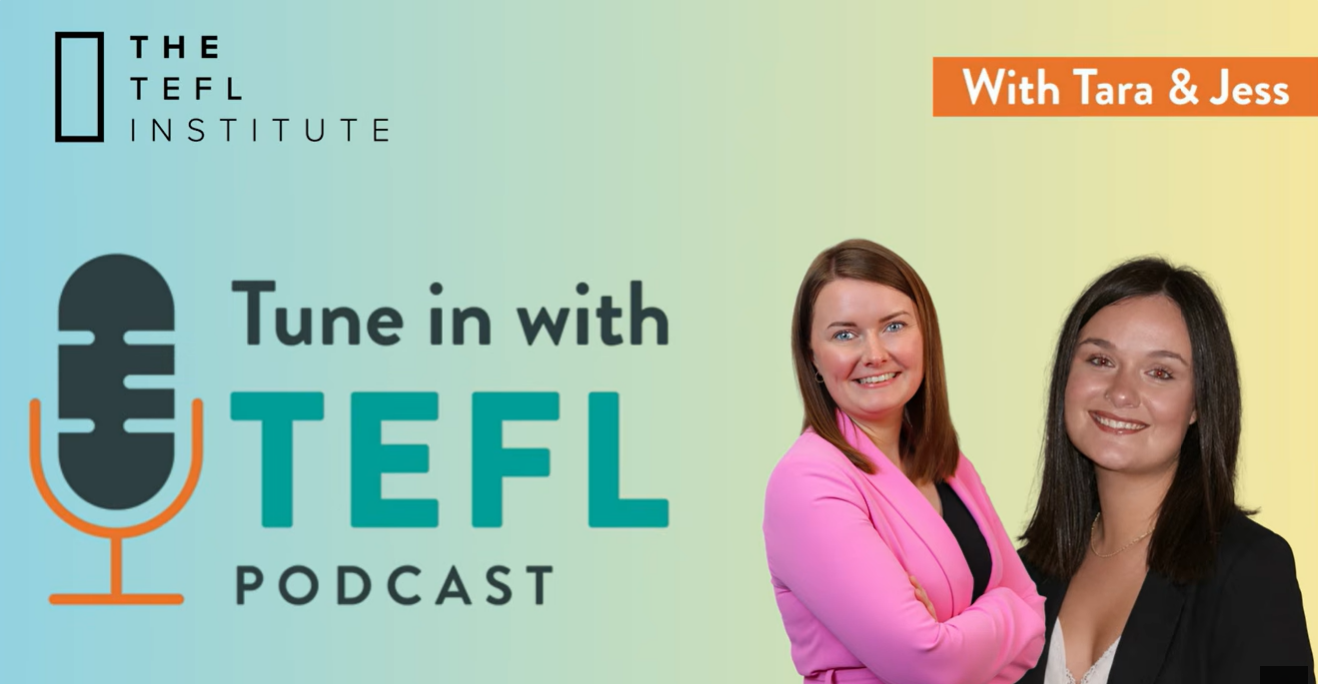
Tara and Jess talk through different TEFL and EFL topics, from finding work abroad to life in the classroom.
FAQs
Questions students ask us
Yes. Australians with a recognised TEFL certificate (ideally 120+ hours, with many employers preferring a Level 5 TEFL Diploma) are well‑placed to teach English abroad, especially in countries that value majority‑English‑speaking passports.
Many countries (such as South Korea, Japan, and parts of the Middle East) require a bachelor’s degree for visa sponsorship, but some European and Latin American markets will hire TEFL‑certified teachers without a degree for private lessons or seasonal roles.
Yes. A 180‑hour Level 5 TEFL Diploma is considered the gold standard in the industry and significantly improves your chances of securing higher‑paid, long‑term roles in competitive markets like Asia and Europe.
For most Australian teachers aiming for a professional career abroad, a 180‑hour Level 5 TEFL Diploma plus 1–2 specialist micro‑credentials (e.g., Young Learners, Business English, IELTS, or Online Teaching) offers the strongest balance of prestige and practical skills.
Australians often find their first teaching roles in Thailand, Vietnam, Spain, Poland, Colombia, and Mexico, where demand is high and requirements are relatively flexible, especially for TEFL‑certified graduates.
Yes. Many online‑teaching platforms hire Australian TEFL graduates to teach English to students worldwide, allowing you to work from Australia or from abroad while maintaining flexibility.
Most 180‑hour Level 5 TEFL Diplomas can be completed in 8–12 weeks of part‑time study, though some intensive online courses let you finish faster if you can dedicate more hours per week.
Most entry‑level TEFL roles do not require prior classroom experience, but practical teaching practice included in Level 5 courses and strong interview preparation can significantly boost your employability.
The TEFL Institute’s Employability Department, led by Nikki, provides CV and cover‑letter reviews, interview coaching, visa and destination guidance, and job‑search strategies tailored to Australian TEFL graduates.
Yes. While Australia’s regulated education sector often prefers formal teaching qualifications, international language schools, private tutoring networks, and online‑teaching platforms welcome TEFL‑certified teachers, including Australians with an international‑focus background.