
 United Kingdom (UK)
 United States (US)
 Canada
 South Africa
 India
India Australia
 New Zealand
 China
China Russia
 Germany
 France
 Spain
Spain Netherlands
 Vietnam
 United Arab Emirates
 Italy
Italy Poland
 Thailand
 Türkiye





 Algeria


TESOL Test: Key Steps for Global Teaching Success
TESOL Test: Key Steps for Global Teaching Success

Over half of the world’s English language teachers pursue international credentials like the TESOL test to unlock opportunities far beyond their home countries. Whether you are an American ready to teach abroad or planning to work online, understanding how TESOL certification impacts your career is crucial. This guide reveals how a TESOL test can distinguish you as a qualified educator, explains different certification levels, and outlines practical steps for preparing for global teaching roles.
Table of Contents
- TESOL Test Defined And Why It Matters
- Types Of TESOL Certification And Their Purpose
- Core Content And How The TESOL Test Works
- Eligibility, Registration, And Study Requirements
- Costs, Scoring, And Common Pitfalls To Avoid
- TESOL Test Versus Other English Teaching Exams
Key Takeaways
| Point | Details |
|---|---|
| TESOL Importance | TESOL certification is essential for teaching English globally, improving educators’ skills in diverse contexts. |
| Certification Types | Certificates range from basic to advanced levels, catering to various teaching needs and career paths. |
| Core Content Assessment | The TESOL test evaluates language pedagogy, classroom management, and practical teaching skills to ensure effectiveness. |
| Cost Considerations | Certification costs vary widely; candidates should plan financially and allocate time for thorough preparation. |
TESOL Test Defined and Why It Matters
The TESOL Test represents a professional certification that prepares educators to teach English to speakers of other languages in diverse international contexts. Preparing teachers for English instruction across global regions has become increasingly critical as English emerges as the primary language of international communication, education, and professional advancement.
At its core, a TESOL certification validates an instructor’s ability to effectively communicate linguistic skills, teaching methodologies, and cultural understanding across different learning environments. Professionals who complete this certification demonstrate competency in designing curriculum, understanding language acquisition theories, and implementing adaptive teaching strategies that work for students from varied linguistic backgrounds.
The global significance of TESOL extends far beyond traditional classroom settings. Students pursuing this certification can unlock opportunities in multiple sectors, including international schools, corporate language training programs, online education platforms, and international language institutes. Whether teaching in South Korea, Brazil, or conducting virtual classes from home, a TESOL credential provides a standardized benchmark of teaching excellence that employers worldwide recognize.
Pro Tip: When preparing for your TESOL test, focus not just on memorizing content, but on developing practical skills that demonstrate your ability to connect with students from diverse cultural backgrounds.
Types of TESOL Certification and Their Purpose
TESOL certifications come in various levels and formats, designed to meet the diverse needs of educators seeking to teach English internationally. TESL certification provides a comprehensive understanding of teaching methodologies specifically tailored for different student populations and learning environments.
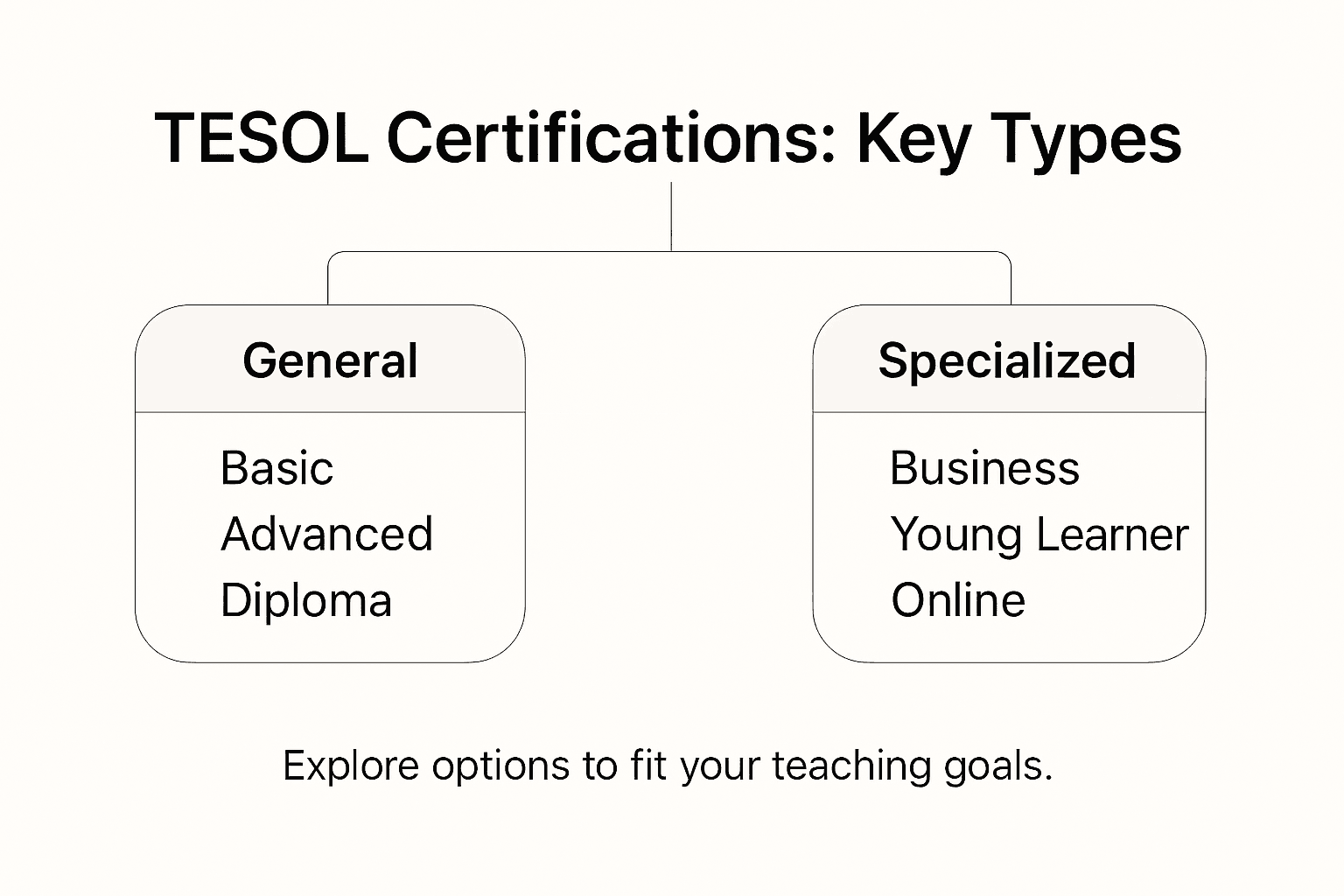
The primary types of TESOL certifications include:
- Basic TESOL Certificate: An entry-level qualification ideal for newcomers to English language teaching
- Advanced TESOL Diploma: A more comprehensive program targeting experienced educators
- Specialized TESOL Certifications: Focused on specific teaching contexts like business English, young learners, or online instruction
Each certification level offers unique advantages for language educators. Understanding who needs TEFL certification can help professionals choose the most appropriate credential for their career goals. The basic certificate provides foundational skills, while advanced diplomas offer deeper pedagogical knowledge and potentially higher earning potential in international teaching markets.
Professionals can also pursue specialized certifications that align with specific teaching niches. For instance, a business English TESOL certification might be perfect for instructors targeting corporate language training, while a young learners certification could open opportunities in international schools or children’s language programs.
Pro Tip: Research the specific requirements of your target teaching market before selecting a TESOL certification to ensure you choose the most relevant and recognized credential.
Core Content and How the TESOL Test Works
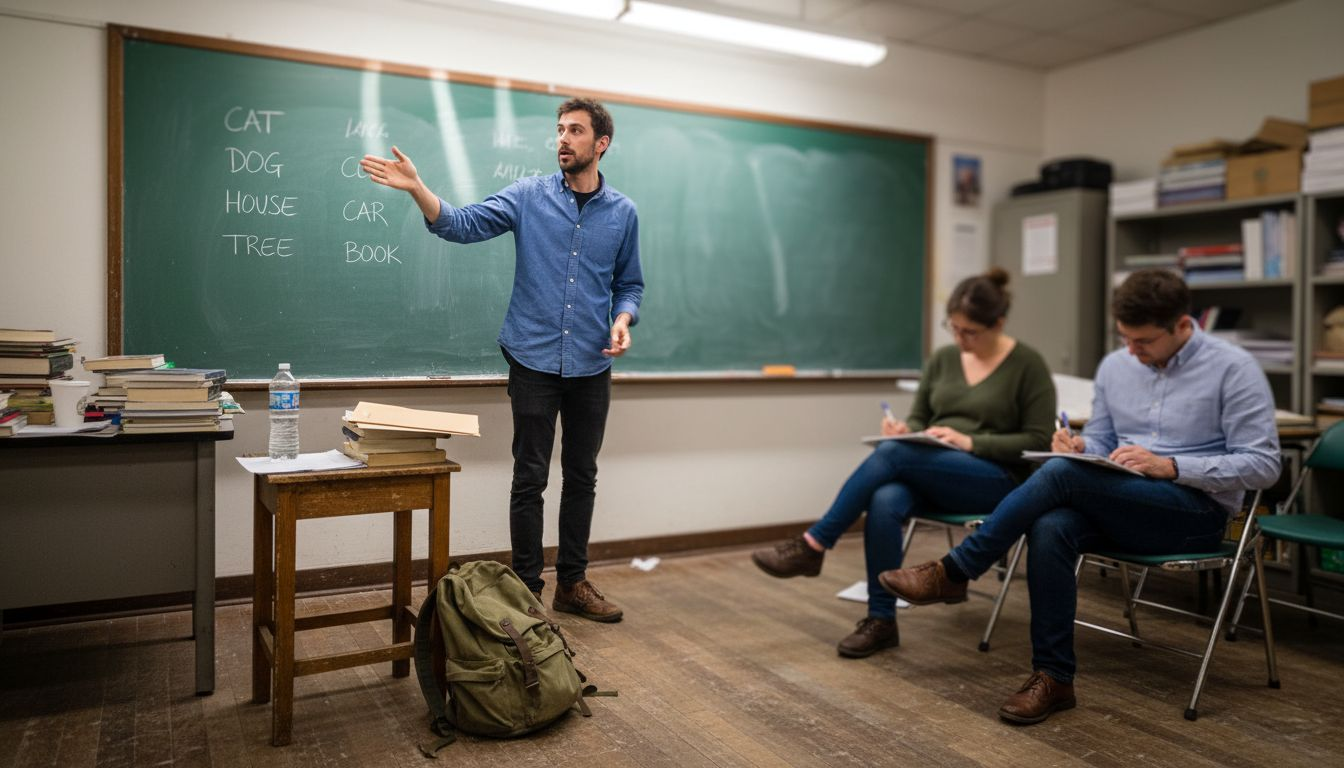
The TESOL test is a comprehensive evaluation designed to assess an educator’s ability to teach English effectively across diverse learning environments. Classroom-based assessment techniques explore the theoretical foundations of language instruction, measuring both theoretical knowledge and practical teaching skills through structured activities and demonstrations.
The core content of the TESOL test typically encompasses several critical components:
- Language Pedagogy: Understanding of language learning theories
- Classroom Management: Strategies for creating effective learning environments
- Curriculum Development: Skills in designing engaging English language lessons
- Assessment Techniques: Methods for evaluating student language proficiency
Practical assessment often involves multiple evaluation methods, including written examinations, teaching demonstrations, and lesson planning exercises. Candidates must showcase their ability to adapt teaching strategies to different student groups, demonstrate cultural sensitivity, and apply advanced linguistic knowledge in real-world teaching scenarios.
Free teaching resources can provide valuable preparation materials, helping candidates understand the test’s structure and expectations. The comprehensive nature of the TESOL test ensures that certified educators are well-equipped to handle the complex challenges of international English language instruction.
Pro Tip: Practice micro-teaching sessions and record yourself to critically analyze your instructional techniques before taking the actual TESOL test.
Eligibility, Registration, and Study Requirements
The TESOL certification process involves specific eligibility criteria designed to ensure candidates have the foundational skills necessary for effective English language instruction. Understanding the role of ESL teachers provides crucial context for potential applicants considering this professional pathway.
Basic eligibility requirements typically include:
- Educational Background: Minimum of a bachelor’s degree (in any field)
- Language Proficiency: Native or near-native English speaking skills
- Age Requirement: Candidates must be at least 18 years old
- Technical Requirements: Access to computer and internet for online components
The registration process for TESOL certification involves several key steps. Prospective candidates must complete an online application, submit required documentation, and pay the certification examination fee. Most programs offer flexible study options, including full-time, part-time, and online learning formats to accommodate diverse professional schedules.
Study requirements are comprehensive and designed to prepare educators for real-world teaching challenges. What is TEFL certification provides additional insights into the broader landscape of English language teaching credentials. Typical study components include theoretical coursework, practical teaching demonstrations, language methodology modules, and comprehensive written examinations.
Pro Tip: Gather all necessary documentation early and create a dedicated study schedule at least three months before your planned certification examination.
Costs, Scoring, and Common Pitfalls to Avoid
The financial investment and scoring mechanisms of the TESOL certification process require careful consideration and strategic preparation. Free TEFL and TESOL teaching resources can help candidates understand the nuanced aspects of test preparation and potential cost management.
Cost Breakdown for TESOL Certification:
- Basic Certification: $300 – $800
- Advanced Diploma: $800 – $2,500
- Specialized Certifications: $500 – $1,500
- Additional Examination Fees: $100 – $300
Scoring typically follows a comprehensive evaluation framework that assesses multiple competency areas. The scoring system generally includes:
- Written examination performance (40%)
- Practical teaching demonstration (30%)
- Lesson planning and curriculum design (20%)
- Cultural competency and language understanding (10%)
What is TEFL certification provides context for understanding common pitfalls. Most candidates struggle with practical teaching demonstrations, complex linguistic theory application, and maintaining cultural sensitivity during instructional scenarios. Typical mistakes include overreliance on theoretical knowledge, insufficient practical teaching experience, and limited understanding of diverse learning environments.
Pro Tip: Allocate at least 20% of your preparation time to mock teaching sessions and record yourself to identify and improve potential weaknesses before the actual examination.
The following table summarizes common TESOL test pitfalls and strategies to avoid them:
| Challenge Area | Common Pitfall | Success Strategy |
|---|---|---|
| Practical Teaching | Insufficient demonstration of skills | Rehearse lessons with peer review |
| Linguistic Theory | Overreliance on memorization | Apply concepts to real scenarios |
| Cultural Sensitivity | Limited awareness of student backgrounds | Study global classroom diversity |
| Time Management | Rushed lesson planning | Allocate time for each test section |
TESOL Test versus Other English Teaching Exams
Different English teaching certifications serve unique purposes in the global language education landscape. CELTA certification offers a detailed comparison that highlights the nuanced differences between various teaching credentials.
Key Comparative Aspects of English Teaching Exams:
- TESOL: Comprehensive, globally recognized certification
- TEFL: Broad international teaching qualification
- CELTA: Cambridge-accredited, intensive classroom-based program
- IELTS: Language proficiency assessment, not a teaching certification
While each certification has distinct characteristics, TESOL stands out for its comprehensive approach to language instruction. Understanding IELTS teaching requirements provides additional context for educators considering different certification pathways. The TESOL test typically offers more flexibility in curriculum design, cultural adaptation, and teaching methodologies compared to more rigid certification programs.
The primary differences emerge in scope, depth, and international recognition. CELTA focuses intensively on classroom teaching techniques, while TESOL provides a broader theoretical and practical framework for language education across diverse learning environments. TEFL certifications are generally more generalized, whereas TESOL offers more specialized linguistic and cultural understanding.
Here’s how major English teaching certifications compare across key dimensions:
| Certification | Main Focus | Typical Duration | Best Fit For |
|---|---|---|---|
| TESOL | Theory plus practice | 2–6 months | Teaching diverse global learners |
| TEFL | Practical teaching skills | 1–4 months | Entry-level international teachers |
| CELTA | Intensive classroom teaching | 4–12 weeks | Academic and exam-focused instructors |
| IELTS | English proficiency testing | Varies (exam only) | Non-native English speakers seeking proof |
Pro Tip: Research the specific requirements of your target teaching market to determine which certification will provide the most relevant credentials for your career goals.
Advance Your TESOL Journey with Expert Guidance and Flexible Certification
Navigating the challenges of TESOL certification requires more than just theoretical knowledge. If you want to master practical teaching skills, curriculum design, and cultural awareness as highlighted in the article, the path to success begins with the right training. Many TESOL candidates struggle with practical demonstrations and lesson planning. Our comprehensive online TEFL courses at TEFL Institute provide targeted support to overcome these hurdles and build the confidence you need for global teaching opportunities.
Take control of your teaching career today by enrolling in a flexible program designed to fit your schedule and learning style. From foundational certificates to advanced diplomas and niche courses like IELTS preparation, we offer everything you need to succeed internationally. Visit TEFL Institute now and start preparing with expert resources and proven methods crafted for aspiring and experienced educators alike.
Frequently Asked Questions
What is the TESOL Test and why is it important?
The TESOL Test is a professional certification that prepares educators to teach English to speakers of other languages, validating their skills in language instruction and cultural understanding. This certification is increasingly vital as English is recognized as the primary language for international communication and education.
What are the different types of TESOL certifications available?
TESOL certifications include the Basic TESOL Certificate for beginners, the Advanced TESOL Diploma for experienced educators, and Specialized TESOL Certifications focusing on specific areas like business English or teaching young learners.
What does the TESOL test evaluate?
The TESOL test evaluates core competencies such as language pedagogy, classroom management, curriculum development, and assessment techniques. Candidates need to demonstrate both theoretical knowledge and practical teaching skills through various assessments, including written exams and teaching demonstrations.
What are the eligibility requirements for taking the TESOL test?
Eligibility for the TESOL certification typically requires a minimum of a bachelor’s degree in any field, native or near-native English proficiency, candidates must be at least 18 years old, and access to a computer and Internet for online components.