United Kingdom (UK)
 United States (US)
 Canada
 South Africa
 India
India Australia
 New Zealand
 China
China Russia
 Germany
 France
 Spain
Spain Netherlands
 Vietnam
 United Arab Emirates
 Italy
Italy Poland
 Thailand
 Türkiye








 Algeria


Salary Negotiation Tips for TEFL Teachers in 2025
Salary Negotiation Tips for TEFL Teachers in 2025

TL;DR:
- Effective salary negotiation for TEFL teachers focuses on a professional, collaborative approach after receiving an offer to maximize total compensation. Teachers should thoroughly research market standards, highlight their qualifications, and prioritize benefits like housing and flights when base pay is fixed. Confidence and preparation are key to securing better packages and ensuring a positive negotiation experience.
Salary negotiation for TEFL teachers is defined as the professional process of discussing and adjusting compensation terms before accepting an international teaching contract. Most aspiring teachers accept the first offer they receive, leaving real money and benefits on the table. The best salary negotiation tips for TEFL teachers go beyond base pay. Compensation packages often include housing support, relocation assistance, flight allowances, and contract bonuses. Knowing how to negotiate those elements can change your financial outcome and your quality of life abroad. Teflinstitute has compiled this guide to help you enter every negotiation prepared, confident, and professional.
What are the best salary negotiation tips for TEFL teachers?
Effective TEFL salary negotiation starts with understanding that you are not making a demand. Negotiation is a professional discussion aimed at a mutually beneficial agreement. Employers expect candidates to discuss terms. Treating it as a conversation rather than a confrontation puts both sides at ease and produces better results.
Arrive with evidence: official programme pay in our TEFL Salary Index gives you a fair benchmark to point to when you discuss pay.
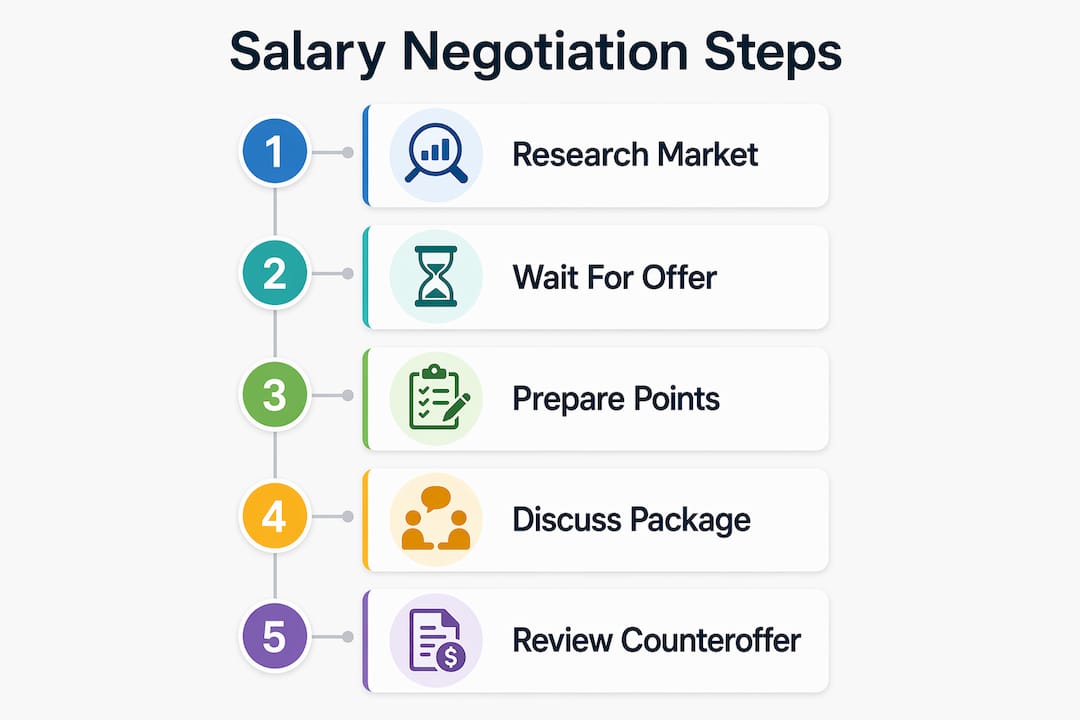
The second principle is timing. Negotiate after the official job offer, not before. Once an employer has decided they want you, your leverage is at its highest. Raising salary before that point signals poor judgment and can cost you the offer entirely.
The third principle is scope. Base salary is only one part of the package. Housing allowances, annual flight reimbursements, health coverage, and end-of-contract bonuses all affect your take-home value. Teachers who negotiate the full package consistently secure better outcomes than those who focus on salary alone.
What should you research before negotiating TEFL pay?
Confidence in negotiation comes from knowing typical salary ranges, benefits norms, and market expectations for your target country and school type. Without that knowledge, you cannot assess whether an offer is fair or identify where to push back.
Start with country-level salary data. The TEFL teacher salary guide from Teflinstitute breaks down earnings by country, giving you a reliable baseline before any conversation. Platforms like EDU Passport also publish regional compensation benchmarks that are useful for cross-referencing offers.
Your qualifications directly affect your bracket. A 120-hour TEFL certificate places you in a different salary tier than a 240-hour master-level qualification. Experience in specialized areas such as IELTS preparation or business English also shifts expectations upward. Know where your credentials sit before you walk into any discussion.
The table below shows how compensation elements typically vary by region. Use it as a starting framework, not a guarantee, since individual schools and contracts differ.
| Region | Base Salary Range | Housing Provided | Flight Allowance | End-of-Contract Bonus |
|---|---|---|---|---|
| East Asia (South Korea, Japan, China) | Competitive to high | Often included | Common | Frequent |
| Middle East (UAE, Saudi Arabia) | High | Usually included | Common | Less common |
| Southeast Asia (Thailand, Vietnam) | Low to moderate | Rarely included | Rare | Rare |
| Europe (Spain, Czech Republic) | Moderate | Rarely included | Rare | Rare |
| Latin America | Low to moderate | Rarely included | Rare | Rare |
Key benefits to research before any negotiation:
- Housing allowance or employer-provided accommodation
- Annual or one-way flight reimbursement
- Health insurance coverage
- Paid vacation and public holidays
- End-of-contract or renewal bonuses
- Visa and work permit sponsorship
When and how to start the negotiation conversation
The right moment to begin negotiating is immediately after receiving a written offer. At that point, the employer has committed to you. Raising compensation before a formal offer risks appearing presumptuous. Waiting until after you have signed eliminates your leverage entirely.
Frame the conversation around the full package, not just the number. Asking “Is there flexibility in the compensation package?” opens a collaborative dialogue. It signals professionalism and gives the employer room to respond constructively, even if the base salary is fixed.
Prepare your talking points before the call or email. Know your target salary, your acceptable floor, and which benefits matter most to you. Entering the conversation without that preparation leads to hesitation, which employers read as uncertainty about your own value.
Pro Tip: Write out two or three specific questions before any negotiation call. For example: “Is housing assistance available for this role?” and “Does the contract include a flight allowance?” Specific questions get specific answers and keep the conversation focused.
Avoid these common timing mistakes:
- Asking about salary in the first interview before an offer exists
- Accepting verbally before reviewing the written contract
- Waiting days to respond to an offer without acknowledging receipt
- Negotiating over text or messaging apps instead of email or phone
What negotiation tactics work specifically for TEFL roles?
TEFL salary negotiation strategies differ from standard corporate negotiation because international contracts bundle salary with lifestyle benefits. A school in South Korea may offer a modest base salary but include free housing and a return flight, making the total package highly competitive. Evaluating each element separately gives you a clearer picture of real value.

Highlighting your qualifications and experience is the most direct way to justify a higher offer. Be specific. Mention your certification level, the hours of training completed, any specialist credentials such as IELTS instruction, and the number of students or classes you have managed. Vague claims about being “experienced” carry little weight. Concrete details do.
If you hold competing offers, you can reference them without naming the school. Saying “I have another offer at a higher salary level and I would prefer to work with your institution” is professional and factual. It creates urgency without aggression.
Hiring windows close while you scroll.
Deadlines, salaries and visa notes for teaching jobs worldwide, checked against official sources and sent free every two weeks.
Get on the WirePro Tip: If the base salary is non-negotiable, shift focus to benefits. Ask whether the housing allowance can be increased, whether the school covers visa fees, or whether the contract includes a completion bonus. Small gains across multiple benefits add up significantly over a one-year contract.
The table below compares two common negotiation approaches and their typical outcomes in TEFL contexts.
| Approach | Example Phrase | Likely Outcome |
|---|---|---|
| Collaborative | “Is there flexibility in the package?” | Opens dialogue, preserves relationship |
| Aggressive | “I need a higher salary or I won’t accept.” | Risks offer withdrawal, damages rapport |
| Benefits-focused | “Could the housing allowance be adjusted?” | Often successful when base is fixed |
| Credential-based | “My 240-hour certification places me above entry level.” | Justifies higher bracket with evidence |
A numbered sequence for the negotiation itself:
- Acknowledge the offer positively before discussing terms.
- State your interest in the role clearly.
- Ask one open question about package flexibility.
- Present your qualifications as the basis for your request.
- Propose a specific adjustment, not a vague “more.”
- Give the employer time to respond without pressure.
- Confirm any agreed changes in writing before signing.
How do you handle common TEFL negotiation challenges?
Low initial offers are the most frequent obstacle. A low offer does not mean the school is unwilling to adjust. It often reflects a standard opening position. Respond by referencing salary expectations for TEFL roles in that market and presenting your qualifications as the basis for a higher figure.
Fixed salary policies are common in public school programs and government-sponsored placements. When the base is genuinely fixed, shift the conversation to benefits. Small improvements in benefits across a full contract add up to a meaningfully better financial position. Ask about housing, flights, and bonuses before accepting that nothing can change.
Counteroffers require a calm response. If the employer meets you halfway, assess whether the revised package meets your minimum requirements. Do not accept out of relief or reject out of pride. Evaluate the numbers objectively.
Knowing when to walk away is a skill. If an offer falls below your financial floor after negotiation and the benefits do not compensate, declining is a professional decision. Accepting a package that does not work for you creates resentment and affects your performance in the classroom.
Key principles for handling difficult moments:
- Stay calm and professional regardless of the employer’s tone
- Never issue ultimatums unless you are prepared to follow through
- Always get revised terms in writing before withdrawing other applications
- Thank the employer for their time even if you decline the offer
Key takeaways
Effective TEFL salary negotiation requires preparation, correct timing, and a collaborative tone focused on the full compensation package, not just base salary.
| Point | Details |
|---|---|
| Negotiate after the offer | Wait for a written offer before discussing terms to maximize your leverage. |
| Research the full package | Compare housing, flights, and bonuses alongside base salary for each role. |
| Use collaborative language | Ask about flexibility rather than making demands to keep the dialogue open. |
| Lead with credentials | Reference your certification level and experience to justify a higher package. |
| Benefits over base when needed | If salary is fixed, negotiate housing, flights, or bonuses to improve total value. |
The part of TEFL negotiation most teachers skip
Most aspiring TEFL teachers spend hours researching destinations and almost no time preparing for the negotiation itself. That imbalance is the single biggest reason teachers end up underpaid in their first contract abroad.
What I have observed consistently is that a calm, collaborative tone produces better results than any specific tactic. Teachers who enter the conversation with a clear sense of their own value, a specific ask, and genuine appreciation for the offer tend to walk away with better packages. Teachers who either avoid the conversation entirely or push too hard tend to get the worst outcomes.
The preparation piece is non-negotiable. Knowing the top-paying countries for TEFL before you apply changes how you evaluate every offer you receive. It also changes how you present yourself. When you know what the market pays, you negotiate from fact, not feeling.
My honest advice: treat every negotiation as a professional conversation between two parties who both want the placement to work. That framing removes the anxiety and replaces it with confidence. Confidence, backed by preparation, is what gets results.
How advanced TEFL certification strengthens your negotiation position
Higher qualifications translate directly into stronger negotiation leverage. Schools in competitive markets, particularly in East Asia and the Middle East, routinely offer better packages to candidates with advanced credentials.

Teflinstitute offers certification programs designed to place teachers in higher salary brackets from the start. The 120-hour advanced TEFL course builds on foundational training with specialized skills that employers recognize and reward. For teachers seeking the strongest possible credential, the 240-hour master TEFL course provides externally accredited training that positions you at the top of the candidate pool. A stronger qualification does not just improve your chances of getting hired. It gives you a concrete, documented basis for requesting a better package from day one.
FAQ
When is the best time to negotiate a TEFL salary?
The best time to negotiate is immediately after receiving a written job offer. At that point, the employer has confirmed their interest, which gives you the strongest negotiating position.
What should I negotiate beyond base salary in a TEFL contract?
Focus on housing allowances, flight reimbursements, health insurance, visa sponsorship, and end-of-contract bonuses. These benefits can significantly increase the total value of a package even when the base salary is fixed.
How do I negotiate if the school says the salary is fixed?
Ask about adjustments to benefits instead. Housing support, additional vacation days, or a completion bonus are often more flexible than the base salary and can meaningfully improve your overall compensation.
Does a higher TEFL certification level improve salary negotiation outcomes?
Yes. A 240-hour or master-level TEFL qualification places you in a higher salary bracket and gives you documented evidence to reference during negotiations. Specialized credentials such as IELTS teacher training add further leverage.
What language should I use when negotiating a TEFL salary?
Use collaborative, open-ended phrasing. Asking “Is there flexibility in the compensation package?” is more effective than stating a demand. It opens a dialogue and signals professionalism without creating tension.
Recommended
TEFL Institute guides

Taiwan
Buxibans, pay and visas
Japan
JET, ALT and eikaiwa pay
Portugal
Jobs, pay and visa routes
Thailand
Visas and teaching licences
Cambodia
Pay, requirements and visas