

 United Kingdom (UK)
 United States (US)
 Canada
 South Africa
 India
India Australia
 New Zealand
 China
China Russia
 Germany
 France
 Spain
Spain Netherlands
 Vietnam
 United Arab Emirates
 Italy
Italy Poland
 Thailand
 Türkiye








 Algeria


Every year, thousands of recent American and British graduates set off across the globe to teach English, fuelling adventures while earning an income. For those with student loans and a sense of wanderlust, a TEFL certification opens doors in over 50 countries. If you want to travel and teach English abroad, this step-by-step guide covers what you need to know, from researching certifications to finding the perfect international job.

Table of Contents
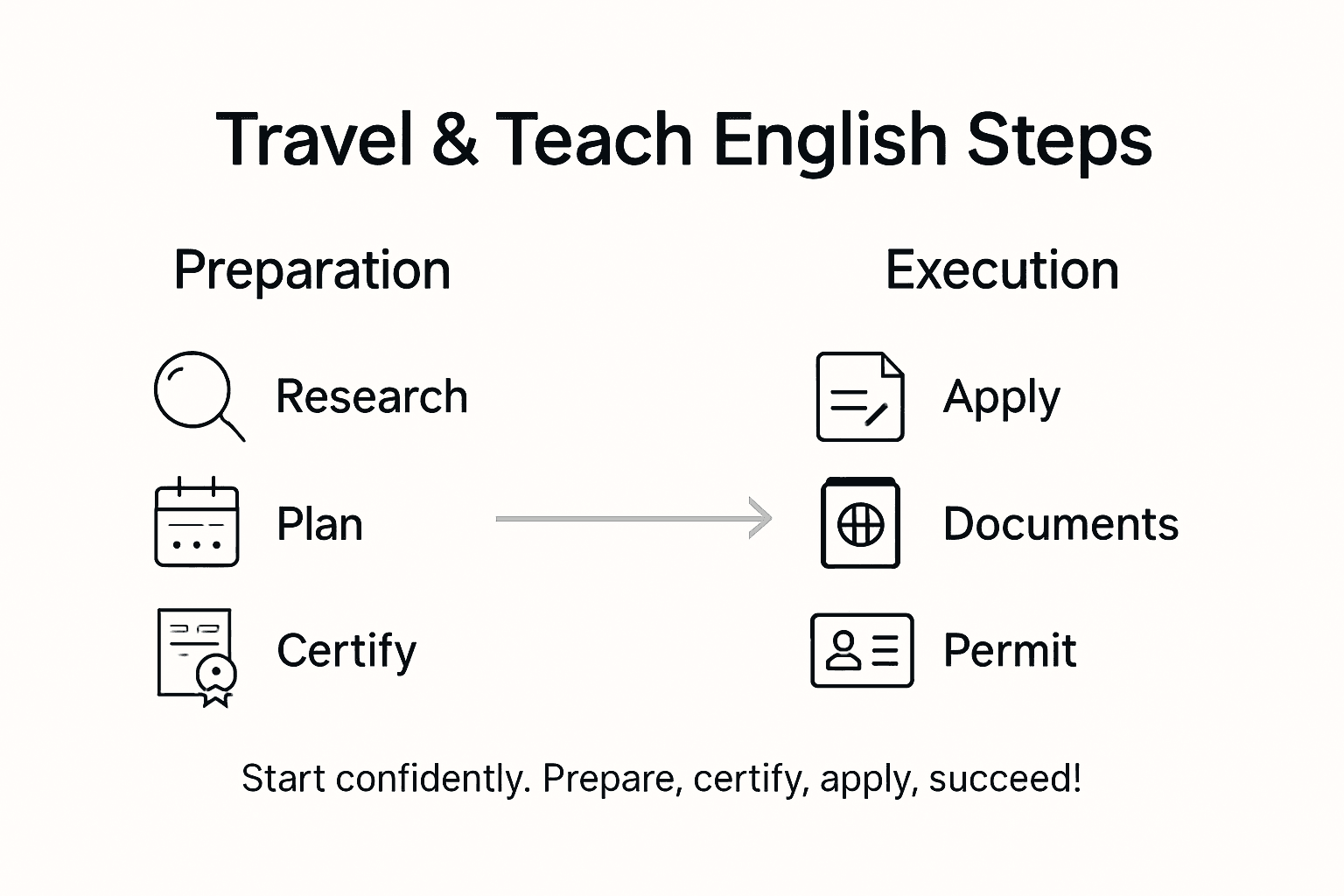
- Step 1: Research TEFL Certification and Requirements
- Step 2: Choose Your Destination and Prepare Documents
- Step 3: Enroll in and Complete a TEFL Course
- Step 4: Apply for Teaching Jobs Abroad
- Step 5: Verify Qualifications and Secure Work Permits
Quick Summary
| Key Insight | Explanation |
|---|---|
| 1. Research TEFL Certifications | Understand different types of certifications to find the best options for your teaching goals. |
| 2. Choose Your Teaching Destination | Evaluate countries based on salary, cost of living, and demand for English teachers before making a selection. |
| 3. Complete a TEFL Course | Enrol in a comprehensive course that offers practical training and internationally recognized credentials. |
| 4. Apply Strategically for Jobs | Use multiple channels to apply for teaching positions and prepare a professional digital portfolio showcasing your qualifications. |
| 5. Prepare for Work Permits | Gather necessary documentation early to meet visa requirements and streamline the application process. |
Step 1: Research TEFL Certification and Requirements
Researching TEFL certification requirements is your first critical step towards teaching English abroad. This phase helps you understand the qualifications needed to secure teaching positions worldwide and select the right training program for your career goals.
Start by exploring the various types of TEFL certifications available. Some programs offer standard 120-hour certificates, while others provide more comprehensive TEFL diplomas and advanced credentials. Look for courses that provide internationally recognized certifications and include practical teaching components. Check the specific requirements for countries where you want to teach, as some regions have more stringent qualification standards than others.
When researching certification options, pay attention to course content, accreditation, and potential job placement support. Comprehensive TEFL course selection guides can help you compare different programs and understand the nuances between online and in-person training. Consider factors like course duration, curriculum depth, teaching practicum opportunities, and alumni success rates.
Pro tip: Create a detailed spreadsheet comparing different TEFL certification programs, tracking key details like cost, course length, practical training hours, and job placement assistance to help you make an informed decision.
Use this summary to understand key TEFL certification program features:
| Program Feature | Importance for Teachers | Example Questions to Ask |
|---|---|---|
| Accreditation | Ensures global recognition | Is the program accredited? |
| Practical Training | Develops real classroom skills | Does it include teaching hours? |
| Job Placement Support | Eases transition to employment | Is job support provided? |
| Online/In-person Mode | Affects flexibility and cost | Which format suits my needs? |
Step 2: Choose Your Destination and Prepare Documents to travel and teach in 2026
Selecting the right destination for teaching English abroad is a pivotal decision that will shape your entire international experience. This step involves researching potential countries, understanding their specific job markets, and gathering the necessary documentation to make your teaching adventure a reality.
Start by narrowing down your destination options based on several key factors. Consider aspects like salary potential, cost of living, cultural environment, language barriers, and job market demand. Countries in Asia like South Korea, China, and Japan often offer competitive salaries and comprehensive benefits packages. Middle Eastern countries such as Saudi Arabia and the United Arab Emirates provide high-paying opportunities, while European destinations like Spain and the Czech Republic attract teachers seeking a more relaxed lifestyle. Latin American countries, including Chile, Mexico, and Brazil, offer unique cultural experiences with generally lower living costs.
Here’s a quick comparison of popular TEFL destinations across different global regions:
| Region | Typical Salary Range | Cost of Living | Teaching Environment |
|---|---|---|---|
| East Asia | $1,800–$3,000/month | Moderate to high | Structured, competitive |
| Middle East | $2,500–$4,500/month | Moderate | Strict, high benefits |
| Europe | $1,100–$2,000/month | High in cities | Relaxed, diverse cultures |
| Latin America | $700–$1,500/month | Low to moderate | Informal, flexible schedules |
Prepare your essential documents meticulously. You will typically need a valid passport, original or certified copies of your university degree, a criminal background check, and comprehensive TEFL certification documents. Some countries require additional documentation like health certificates, professional references, and sealed university transcripts. Research the specific visa requirements for your chosen destination, as each country has unique entry and work permit regulations.
Pro tip: Create digital and physical copies of all important documents, storing them in both cloud storage and a secure physical folder to ensure you have backup copies in case of loss or unexpected complications during your international teaching journey.
Step 3: Enrol in and Complete a TEFL Course
Enrolling in and completing a TEFL certification course is a pivotal milestone in your journey to teach English abroad. This step transforms your aspirations into tangible professional qualifications that will open doors to teaching opportunities worldwide.

When selecting a TEFL course, focus on programs that offer comprehensive training and internationally recognized credentials. Learn about the critical aspects of TEFL course selection to ensure you choose a program that meets global teaching standards. Look for courses that provide a minimum of 120 training hours, include practical teaching components, and offer support for job placement. Online courses provide flexibility, while hybrid options with in-person practicum experiences can give you more hands-on teaching practice.
Dedicate consistent time and effort to complete your course modules thoroughly. Most TEFL programs include theoretical learning about language teaching methodologies, grammar instruction, classroom management, and practical lesson planning skills. Keep in mind, these are the op essential skills you need to travel and teach English. Take detailed notes, participate actively in discussion forums, and complete all assignments with care. Many courses include a final teaching practicum or demonstration lesson that allows you to showcase your newly acquired skills and receive professional feedback.
Pro tip: Create a structured study schedule and set aside dedicated daily time for your TEFL coursework to ensure steady progress and avoid last-minute cramming during your certification process.
Every TEFL opening, salary and deadline that matters.
In your inbox every two weeks. Free, no spam, unsubscribe any time.
Teacher pay by country
New TEFL openings
Programme and visa dates
Step 4: Apply for Teaching Jobs Abroad
Applying for teaching jobs abroad represents the critical transition from certification to actual international employment. This stage transforms your TEFL credentials into real-world teaching opportunities across global classrooms.
Discover which countries are currently hiring English teachers and develop a strategic approach to your job search. Research job markets in regions like East Asia, the Middle East, and Latin America, where demand for English instructors remains consistently high. Build a comprehensive digital portfolio including your TEFL certificate, updated resume, professional headshot, and sample lesson plans. Most international schools and language centres prefer candidates who demonstrate both professional qualifications and cultural adaptability.
Navigate the application process by targeting multiple recruitment channels. Online platforms specialized in international teaching recruitment, school direct websites, and professional networking sites can provide extensive job listings. Prepare for potential video interviews by creating a professional background, testing your technology, and practising responses to common questions about classroom management and teaching philosophy. Some countries require additional documentation like background checks, medical certificates, and authenticated academic transcripts, so begin gathering these materials early in your job search process.
Pro tip: Create a standardized email template for job applications that you can quickly customize, including a professional introduction, your key qualifications, and a brief explanation of why you are interested in teaching in their specific country or institution.
Step 5: Verify Qualifications and Secure Work Permits
Verifying your qualifications and obtaining the correct work permits are critical steps that transform your teaching aspirations into legal international employment. This stage ensures you meet professional standards and comply with immigration regulations in your chosen country.
Navigate the complex process of international credential recognition by gathering all necessary academic and professional documentation. Collect original copies of your university degree, TEFL certification, academic transcripts, and professional references. Many countries require official translations and notarization of these documents. Some nations have specific evaluation processes that assess the equivalency of your educational credentials, so research the exact requirements for your target destination carefully.
Work permit applications demand meticulous attention to detail. Contact the embassy or consulate of your destination country to understand their specific visa requirements for educators. Typical documentation includes a valid passport, signed employment contract, background check, medical clearance, and proof of financial stability. Some countries require additional steps like skill assessments, language proficiency tests, or local teaching credential validation. Start this process early, as bureaucratic procedures can take several weeks or even months to complete.
Pro tip: Create a dedicated digital and physical folder for your work permit documents, keeping both scanned and original copies organized and easily accessible to streamline your international job application process.
Begin Your Journey to Teach English Abroad with Confidence
Many aspiring teachers face challenges such as choosing the right TEFL certification, preparing critical documents, and navigating complex work permit procedures. This article highlights the importance of accredited courses, practical training, and strategic job applications to succeed in teaching English internationally. If you feel overwhelmed by these steps or want to ensure your certification meets global standards, you are not alone.
Take control of your teaching adventure today with TEFL Institute’s comprehensive online training programs. We offer flexible courses that include internationally recognised certification, practical teaching components, and job support to help you stand out. From foundational 120-hour certificates to advanced diplomas and niche courses, our platform supports your unique goals and equips you with skills that employers worldwide demand.
Ready to step confidently into your new life teaching English abroad? Visit TEFL Institute’s official site and explore our full catalog of courses. Don’t wait to turn your dream into reality. Start your TEFL certification today and prepare to travel, teach, and transform your future with expert guidance every step of the way.
Frequently Asked Questions
What are the requirements for obtaining a TEFL certification?
To obtain a TEFL certification, you generally need a high school diploma or a bachelor’s degree and must complete a recognized TEFL course that typically lasts at least 120 hours. Research different programs and select one that meets the qualification standards of your desired teaching destination.
How do I choose the best destination for teaching English abroad?
To choose the best destination, consider factors such as salary, cost of living, and cultural environment. Make a list of key priorities that matter to you, and research corresponding countries that match those criteria.
What documents do I need to prepare to teach English abroad?
You will typically need a valid passport, original or certified copies of your university degree, a criminal background check, and your TEFL certification documents. Gather these documents early and ensure you have both digital and physical copies ready for submission.
How can I apply for teaching jobs abroad effectively?
Apply for teaching jobs by targeting multiple recruitment channels, including online job boards and professional networking sites. Create a standout digital portfolio that includes your TEFL certificate, updated resume, and sample lesson plans to enhance your application.
What steps do I need to take to secure a work permit for teaching abroad?
To secure a work permit, start by gathering your academic and professional documentation, such as your university degree and TEFL certification. Research the specific visa requirements for your chosen country, and ensure your application is complete to avoid potential delays.
How long does it take to complete a TEFL certification course?
Completing a TEFL certification course usually takes about 4 to 12 weeks, depending on whether you choose a part-time or intensive program. Dedicate consistent study time each week to complete your coursework and practical teaching components on schedule.
Recommended

Tara and Jess talk through different TEFL and EFL topics, from finding work abroad to life in the classroom.