

 United Kingdom (UK)
 United States (US)
 Canada
 South Africa
 India
India Australia
 New Zealand
 China
China Russia
 Germany
 France
 Spain
Spain Netherlands
 Vietnam
 United Arab Emirates
 Italy
Italy Poland
 Thailand
 Türkiye









 Algeria


Why TEFL is in demand: global career growth explained
Why TEFL is in demand: global career growth explained

The global English Language Teaching (ELT) market is valued at $95 billion in 2026, a figure that reflects decades of accelerating demand for qualified English instructors worldwide. TEFL, or Teaching English as a Foreign Language, is the certification pathway that prepares educators to meet this demand, whether in a classroom abroad or through an online platform. For anyone considering a career in ESL (English as a Second Language) education, understanding what is driving this growth is the first step toward making an informed decision about entering the field.
Table of Contents
- What is TEFL and why is it important?
- Global market forces driving TEFL demand
- Educational shifts and international opportunities
- TEFL qualifications as a competitive advantage
- Who benefits from the TEFL boom?
- How to capitalize on TEFL opportunities in 2026
- Get started with TEFL: Courses and support
- Frequently asked questions
Key Takeaways
| Point | Details |
|---|---|
| Global market growth | TEFL is surging thanks to a booming $95+ billion global English language market. |
| Career flexibility | TEFL offers opportunities to work abroad or online for people of all backgrounds. |
| Certification advantage | A TEFL certificate gives you a hiring edge and access to higher-paying teaching positions. |
| Ongoing demand | Teacher shortages and educational reforms will keep TEFL in high demand for years. |
What is TEFL and why is it important?
TEFL stands for Teaching English as a Foreign Language. It refers to both the practice of teaching English to non-native speakers and the certification programs that train educators to do so effectively. A TEFL qualification equips teachers with core skills in lesson planning, classroom management, grammar instruction, and learner assessment.
English language skills have become a strategic asset for students and professionals across the globe. Employers in multinational companies, universities with international programs, and government agencies increasingly require English proficiency as a baseline qualification. This reality has made English instruction one of the most consistently sought-after educational services worldwide.
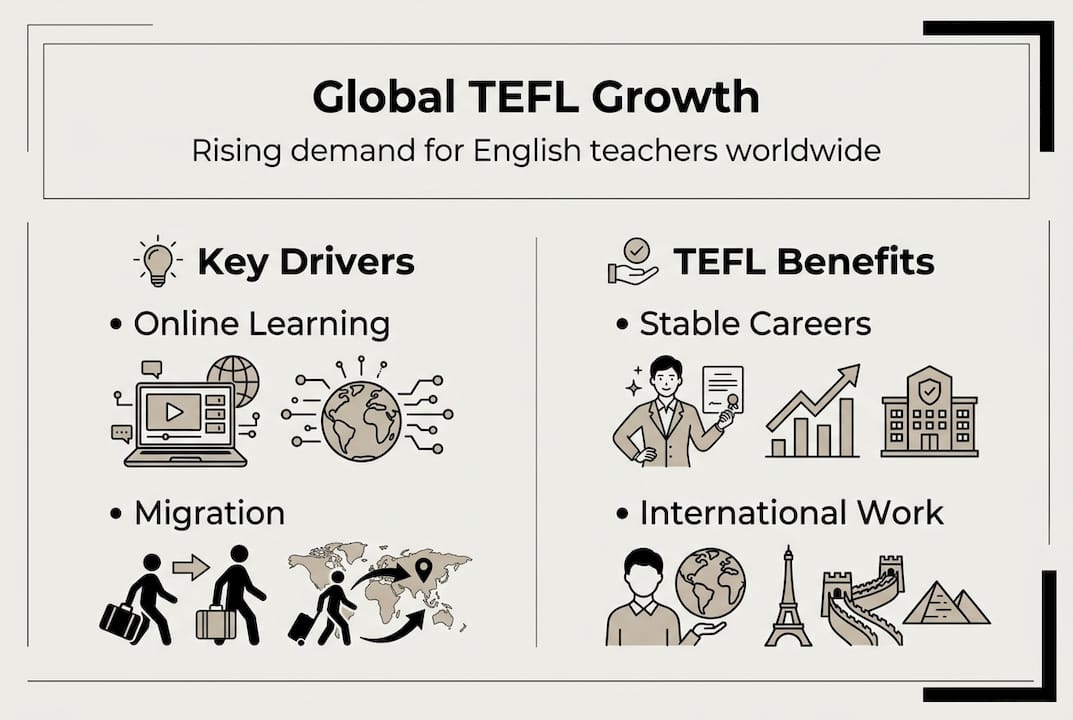
Several structural forces are driving TEFL teacher demand to new heights:
- Globalization and cross-border commerce requiring English communication
- International migration creating new communities of adult English learners
- University admissions processes that mandate English proficiency test scores
- Government-funded English programs in Asia, Latin America, and the Middle East
According to top TEFL facts, the profession is expanding faster than many traditional teaching sectors. The global teacher shortage is compounding this trend, making certified instructors more necessary than ever before.
“The global teacher shortage is not a temporary disruption. It is a structural challenge that is reshaping how schools and institutions recruit, train, and retain educators across every subject area, including English.”
Global market forces driving TEFL demand
The numbers behind TEFL’s growth are striking. The ELT market is projected to reach $194 billion by 2034, representing a near doubling of its current value within a single decade. State of TEFL 2026 report highlights this growth trajectory. This trajectory is not accidental. It reflects a convergence of economic development, educational reform, and technology adoption.
| Metric | 2026 Value | 2034 Projection | Growth Rate |
|---|---|---|---|
| Global ELT market size | $95 billion | $194 billion | ~8% CAGR |
| Online English learning share | 35% of market | 50%+ projected | Accelerating |
| Countries with national English programs | 70+ | Expanding | Steady increase |
Three forces are particularly significant in driving this expansion. First, English as a Medium of Instruction (EMI) is being adopted by universities across Europe, Asia, and Africa, requiring more qualified English educators at the tertiary level. Second, economic growth in emerging markets is creating a middle class that views English proficiency as a pathway to better employment. Third, digital learning platforms have removed geographic barriers, allowing learners in remote regions to access English instruction for the first time.
For those tracking TEFL job market trends, the data consistently points to sustained opportunity. The combination of rising learner numbers and a persistent shortage of qualified teachers means that navigating TEFL careers in 2026 involves choosing from a wide range of options rather than competing for a limited pool of positions.
Educational shifts and international opportunities
Educational policy changes around the world are directly expanding the market for TEFL-certified teachers. Universities in non-English-speaking countries increasingly require applicants to demonstrate English proficiency through standardized tests such as IELTS or TOEFL. This requirement creates sustained demand for English preparation courses and the teachers who deliver them.

Migration is another significant driver. As populations move across borders for work, family, or safety, the need for communicative English instruction in destination countries grows. Adult learners in particular require practical, conversational English skills that TEFL-trained instructors are specifically prepared to teach.
Institutions such as the British Council are increasing international recruitment for ESL teachers in response to EMI expansion and exam-driven demand. This institutional investment signals that the need for qualified teachers is not a short-term trend.
Key regions actively recruiting TEFL teachers in 2026 include:
- East Asia, particularly China, Japan, South Korea, and Vietnam
- The Middle East, including Saudi Arabia and the UAE
- Latin America, with growing programs in Brazil, Colombia, and Mexico
- Europe, especially in countries expanding EMI at the university level
Pro Tip: Research government-sponsored English programs in your target region before applying. These programs often offer structured contracts, housing support, and competitive salaries, making them an excellent entry point for new TEFL teachers.
For those exploring teaching English certification options, understanding regional demand patterns helps narrow down both the type of certification needed and the most viable job markets. The evidence that TEFL teachers are in demand across multiple continents makes geographic flexibility a genuine advantage.
Hiring windows close while you scroll.
Deadlines, salaries and visa notes for teaching jobs worldwide, checked against official sources and sent free every two weeks.
Get on the WireTEFL qualifications as a competitive advantage
Holding a recognized TEFL certificate is no longer simply a differentiator. For many employers, it is a baseline requirement. Certification is increasingly required for top TEFL positions, signaling both pedagogical readiness and a commitment to professional standards.
The difference between certified and non-certified candidates is measurable across several dimensions:
| Factor | Certified teacher | Non-certified teacher |
|---|---|---|
| Access to top-tier jobs | High | Limited |
| Starting salary range | Higher bracket | Lower bracket |
| Visa sponsorship eligibility | Frequently included | Rarely offered |
| Career advancement options | Broad | Narrow |
| Employer confidence | Strong | Variable |
Employers prioritize certified teachers for several specific reasons:
- Pedagogical training: Certified teachers understand second language acquisition theory and can apply it in the classroom.
- Classroom management: TEFL programs train teachers to handle diverse learner groups, mixed ability levels, and large class sizes.
- Lesson planning: Structured lesson design is a core TEFL competency that directly affects student outcomes.
- Assessment skills: Certified teachers can evaluate learner progress and adapt instruction accordingly.
- Professional credibility: Certification demonstrates that a candidate has met a recognized standard of preparation.
The benefits of TEFL certification extend beyond initial hiring. Certified teachers are more likely to receive contract renewals, promotions, and opportunities to move into teacher training roles. Understanding the qualifications for teaching English abroad before applying ensures you meet the specific requirements of your target market.
Pro Tip: When selecting a TEFL program, verify that it is accredited by a recognized body. Accreditation affects how employers in competitive markets such as South Korea, Japan, and the UAE evaluate your credentials. Review options for the best TEFL certification to identify programs that align with your career goals.
Who benefits from the TEFL boom?
The expansion of the global ELT market has broadened the profile of who can realistically pursue a TEFL career. Rising demand for TEFL allows a diverse range of professionals to access new teaching careers, not just those with traditional education backgrounds.
The main groups positioned to benefit include:
- Recent graduates seeking international experience and a structured career entry point
- Career changers from fields such as business, healthcare, or communications who want to apply their subject knowledge in an educational context
- Retirees looking for part-time or volunteer teaching opportunities abroad or online
- Digital nomads who want location-independent income through online English teaching platforms
- Experienced educators who want to specialize in ESL or expand into international school markets
The growth of online teaching has been particularly significant. Platforms connecting English learners with certified teachers have expanded access for both instructors and students. A teacher based in the United States can now work with learners in Brazil, Japan, or Germany without relocating. This flexibility has made TEFL accessible to candidates who cannot or do not want to move abroad.
For those exploring TEFL career navigation, the key insight is that the market now accommodates a wide range of working arrangements, from full-time classroom positions in international schools to part-time online tutoring alongside other employment.
How to capitalize on TEFL opportunities in 2026
With sustained ELT market growth projected through the decade, the conditions for entering or advancing in a TEFL career are favorable. Taking structured action now positions you ahead of candidates who delay.
Follow these steps to move forward effectively:
- Research your target market. Identify the countries or online platforms where demand aligns with your qualifications, language background, and lifestyle preferences. Review TEFL market insights to understand where hiring is strongest.
- Choose an accredited TEFL program. Select a course that meets the requirements of your target employers. Consider whether you need a standard 120-hour certificate, a specialized diploma, or a program with a practicum component.
- Complete your certification. Finish your course and obtain your certificate before applying for positions. Many employers will not review applications from uncertified candidates.
- Build your application materials. Prepare a resume that highlights your TEFL qualification, any relevant teaching or tutoring experience, and your language skills.
- Apply strategically. Target positions in regions with active recruitment cycles. Use job boards, recruitment agencies, and direct school applications to maximize your reach.
- Continue your professional development. Once employed, pursue additional qualifications such as IELTS preparation training or advanced diplomas to increase your earning potential and career options. Explore what teaching English in 2026 looks like in your chosen region to stay current.
Get started with TEFL: Courses and support
The data is clear: the global demand for qualified English teachers is growing, and a recognized TEFL certification is the most direct route to accessing these opportunities. Whether your goal is to teach in a classroom abroad or build a flexible online teaching career, starting with the right course makes a measurable difference in your outcomes.

TEFL Institute offers a range of accredited courses designed to match different career goals and experience levels. From in-person options such as TEFL courses in Newcastle to flexible online programs with TEFL course extensions for those who need additional time or specialization, the platform provides structured pathways from certification to employment. Support is available at every stage, from course selection through to job placement guidance, ensuring that you enter the market with both the credentials and the confidence to succeed.
Frequently asked questions
Why is TEFL so in demand around the world?
English functions as the primary language of international business, academic study, and global travel, creating consistent demand for TEFL-certified teachers across every region. The global teacher shortage further intensifies this need, as qualified instructors remain scarce relative to learner populations.
What qualifications are needed for TEFL jobs in 2026?
Most employers require a recognized TEFL certificate of at least 120 hours from an accredited provider. Certification requirements vary by country and institution, but accredited courses consistently improve access to higher-paying and more competitive positions.
Is the TEFL market expected to keep growing?
Yes. The global ELT market is projected to reach $194 billion by 2034, driven by expanding English as a Medium of Instruction programs, rising learner numbers in emerging markets, and the continued growth of online English learning platforms.
Can I teach English online with a TEFL certificate?
A TEFL certificate qualifies you to teach English online through a wide range of platforms and institutions. Online TEFL opportunities have expanded significantly, allowing certified teachers to work with learners worldwide without relocating.
Recommended
TEFL Institute guides

Japan
JET, ALT and eikaiwa pay
China
Z visa, pay and cities
Vietnam
Work permits and requirements
South Korea
EPIK, hagwons and pay
Cambodia
Pay, requirements and visas