
 United Kingdom (UK)
 United States (US)
 Canada
 South Africa
 India
India Australia
 New Zealand
 China
China Russia
 Germany
 France
 Spain
Spain Netherlands
 Vietnam
 United Arab Emirates
 Italy
Italy Poland
 Thailand
 Türkiye








 Algeria


Last updated: 7 May 2026 | Reviewed by: TEFL Institute Editorial Team | Reading time: ~11 min
Key Takeaways (2026)
- Recognised qualification: A Level 5 TEFL is the equivalent of a CertTESOL/CELTA on the UK Regulated Qualifications Framework (RQF) and is widely respected by international employers in 2026.
- Hours and depth: Most Level 5 TEFL programmes are 168–180 guided learning hours, going significantly deeper than a 120-hour TEFL.
- Career impact: Level 5 graduates qualify for higher-paying roles, international schools, government schemes and senior teaching positions.
- Best for: Career changers, long-term TEFL teachers, anyone targeting the Middle East, East Asia or international school employers.
- Format: Fully online and self-paced with tutor support; assessment is via assignments and a teaching practice component.
Credits, Frameworks and What It Means for Your Career
What Are Credits and Why Do They Matter?
In the UK’s education system, every regulated qualification is assigned both a level (indicating its level of complexity) and a credit value (indicating the amount of learning it represents). One Ofqual credit is roughly equivalent to 10 notional hours of learning time, including your guided study, independent reading, assignments, and assessments. So when you see that the Highfield Level 5 Advanced Diploma in Teaching English as a Foreign Language carries 54 credits, you’re looking at approximately 540 hours of total learning commitment.
That’s a substantial qualification. To put it in perspective, most unregulated “TEFL certificates” advertise 120 hours of content, but because they’re not on the official register, there’s no formal verification of what those hours actually include. With an Ofqual-regulated course, every credit is accounted for, every module is scrutinised, and the standard is independently verified by the UK government’s qualifications regulator.
How Credits Define the Type of Qualification
Within the RQF, qualifications aren’t just sorted by level; they’re also categorised by size, which is determined by the total number of credits:
- Awards: 1–12 credits (up to about 120 hours)
- Certificates: 13–36 credits (130–360 hours)
- Diplomas: 37+ credits (370+ hours)
- Advanced Diplomas: 42+ credits, with a minimum Total Qualification Time (TQT) of 420 hours
With 54 credits and a TQT of around 542 hours, the Highfield Level 5 qualification we deliver at The TEFL Institute sits comfortably in the Advanced Diploma band. That classification signals depth, rigour and a commitment to quality that goes well beyond entry-level training.
The 180-Hour and 300-Hour Routes: What’s the Difference?
Both the 180-hour and 300-hour options sit within the same Ofqual-regulated Level 5 framework and share the same 54-credit foundation. The difference lies in breadth, specialisation and how you choose to package your learning.
The 180-Hour Level 5 TEFL Diploma
This is the core pathway. It covers all the essential ground you need to teach English as a foreign language to both children and adults, online or in the classroom. You’ll work through 11 structured modules that cover grammar, vocabulary, teaching methodologies, the four skills (reading, writing, listening, speaking), lesson planning, classroom management and working with different age groups.
Each module ends with an assessment, a mix of multiple-choice questions and open-ended tasks that our academic team reviews. Because this is a Level 5 qualification, the pass mark is set at 100%, but don’t let that put you off. You can retake quizzes as many times as you need, and if the tutors ask you to rework an answer, it’s because they want to ensure your work genuinely meets higher-education standards. The result is a lifetime TEFL qualification that’s recognised worldwide and positioned at the same level as CELTA and Trinity CertTESOL.
The 300-Hour Level 5 Advanced TEFL Diploma
The 300-hour route includes everything in the 180-hour Diploma, then adds two specialist 60-hour Level 5 modules. These aren’t “bonus extras”, they’re fully assessed, in-depth courses designed to give you expertise in niche teaching contexts. Typical specialisms include:
- Level 5 Teaching in Other Subjects in English: Advanced techniques. Teaching other subjects in English can be an exciting diversion from General English and a great way to combine two areas of your knowledge!
- Level 5 Teaching Business English: Language for meetings, presentations, negotiations and corporate communication, plus needs analysis and course design for professional clients.
- Level 5 Teaching English Online: Digital tools, platform skills, one-to-one teaching strategies and how to deliver high-quality lessons without a physical classroom.
- Level 5 Exam Preparation: Preparing students for IELTS, TOEIC or similar exams, with a focus on test strategies and academic skills.
By completing the 300-hour Advanced Diploma, you’re not just ticking a box; you’re building a portfolio of specialist skills that make you more competitive in the jobs market, open doors to higher-paid roles, and give you the confidence to tackle diverse teaching scenarios from day one.
Comparison Table
| Aspect | 180-Hour Level 5 TEFL Diploma | 300-Hour Level 5 Advanced TEFL Diploma |
|---|---|---|
| Framework & Regulation | Ofqual-regulated Highfield Level 5 TEFL Diploma on the RQF | Same Ofqual-regulated Highfield Level 5 TEFL Advanced Diploma, delivered in an extended 300-hour format |
| Level | RQF Level 5, aligned with EQF Level 5 | RQF Level 5, aligned with EQF Level 5 (same level, broader specialisation) |
| Credits & Hours | Part of the overall 54-credit, 540+ hour qualification (core component) | Full use of the 54 credits (approx. 542 hours TQT), classified as an Advanced Diploma |
| Core Content | General Level 5 TEFL methodology: grammar, skills, lesson planning, classroom management, assessment | Same core Level 5 content plus additional Level 5 micro-courses (young learners, business English, online teaching, exam prep) |
| Classification by Size | Forms the main diploma-level content within the 54-credit programme | Sits squarely in the Advanced Diploma band (42+ credits), signalling a substantially higher-education-level programme |
| Typical Learner Profile | New teachers wanting a strong, regulated Level 5 qualification for a wide range of TEFL roles | Teachers aiming for maximum employability, clear specialisms and stronger positioning in competitive markets |
RQF Level 5: What Does It Actually Mean?
The Regulated Qualifications Framework is the official system used in England and Northern Ireland to classify qualifications from entry level right up to Level 8 (doctoral level). Level 5 sits in the middle, above A-levels and typical college programmes, but below a full bachelor’s degree. In practical terms, it’s aligned with short-cycle higher education and advanced vocational diplomas, comparable in level to a Diploma of Higher Education or foundation degree.
At Level 5, you’re expected to demonstrate comprehensive, specialised knowledge in your field, apply a broad range of cognitive and practical skills to solve complex problems, and take responsibility for managing learning contexts where unpredictable change can occur. In a TEFL context, that means you’re not just learning grammar rules by rote, you’re understanding how language systems work, why certain methodologies are effective and how to adapt your teaching to different learners and environments.
This is why a Level 5 TEFL Diploma is often described as equivalent to the CELTA or Trinity CertTESOL. Whilst the structure, delivery and branding differ, all three qualifications sit at Level 5 and prepare you to teach at a professional standard. For employers, seeing “Level 5” on your CV immediately signals that you’ve completed higher-education-level training, not just a short online course.
Every TEFL opening, salary and deadline that matters.
In your inbox every two weeks. Free, no spam, unsubscribe any time.
Teacher pay by country
New TEFL openings
Programme and visa dates
How RQF Level 5 Aligns with the European Qualifications Framework
If you’re planning to teach abroad, particularly in Europe, you’ll often come across the term “EQF” or European Qualifications Framework. The EQF is a common reference system that allows qualifications from different countries to be compared and understood. It runs from Level 1 (basic education) to Level 8 (doctoral level), and each member state maps its national framework to the EQF to facilitate cross-border recognition.
In 2010, the UK formally referenced its qualifications frameworks to the EQF, and RQF Level 5 was mapped directly to EQF Level 5. That means your Ofqual-regulated Level 5 TEFL Diploma from The TEFL Institute is recognised across Europe as being at the same level as other EQF Level 5 qualifications, whether that’s a higher diploma in Spain, a short-cycle degree in Poland or an advanced vocational award in Germany.
What EQF Level 5 Represents
According to the official EQF descriptors, Level 5 is characterised by:
- Knowledge: Comprehensive, specialised, factual and theoretical knowledge within a field of work or study, with awareness of the boundaries of that knowledge.
- Skills: A comprehensive range of cognitive and practical skills required to develop creative solutions to abstract problems.
- Responsibility and Autonomy: The ability to manage and supervise in contexts of work or study activities where there is unpredictable change, and to review and develop the performance of self and others.
For a TEFL teacher, that means being able to design lessons from scratch, adapt materials to different learner needs, manage a classroom where every student has a different starting point, and reflect critically on your own practice to continually improve. It’s a world away from following a script or delivering pre-made lessons without understanding the theory behind them.
Why This Matters for Your Career
When you apply for TEFL roles in Europe, employers and visa authorities often ask for qualifications “at EQF Level 5 or equivalent”. Because your RQF Level 5 Diploma is officially referenced to EQF Level 5, you can confidently state that your qualification meets that requirement. It removes ambiguity, speeds up the hiring process and gives schools and ministries a clear benchmark to assess your training against their own national standards.
Beyond Europe, many employers in Asia, the Middle East and Latin America are also familiar with the EQF as a reference point, particularly in international schools and more competitive markets. Being able to say “I hold a Level 5 qualification aligned with EQF Level 5, carrying 54 Ofqual credits” gives you instant credibility and helps you stand out in a crowded field.
The Role of Level 5 Micro-Courses
Within the 300-hour Advanced Diploma, the additional modules function as focused Level 5 micro-courses. These aren’t just “add-ons”—they’re integral to reaching the full 54-credit, Advanced Diploma capacity, and they give you skills that are directly marketable.
Each micro-course is structured around clear learning outcomes, professionally developed materials and assessed tasks that require you to apply what you’ve learnt in realistic teaching scenarios. For example, in the Teaching Business English module, you might design a needs-analysis questionnaire, plan a series of lessons for a corporate client and reflect on how to adapt your approach for professionals with limited study time.
What makes these modules particularly valuable is that they sit at Level 5, which means they demand the same depth of understanding, critical thinking and autonomous practice as the core diploma. You’re not just learning “tips and tricks”—you’re developing specialist expertise that you can reference on your CV, discuss in interviews and use to negotiate higher salaries or more interesting contracts.
Why 54 Credits, Level 5 and EQF Alignment Matter for Your TEFL Career
By now, you should have a clear picture of what sits behind the numbers and labels on your TEFL certificate. But let’s bring this back to what really counts: your career, your earning potential and your ability to move freely across borders.
Higher Salaries and Better Contracts
Many employers, particularly in competitive markets like the UAE, South Korea, Japan and parts of Europe, differentiate between “120-hour TEFL” and “Level 5 TEFL”. Schools that require or prefer Level 5 qualifications often reserve their better-paid roles, more secure contracts and additional benefits (housing, flights, insurance) for candidates who meet that standard. In practical terms, that can mean an extra £300–£500 per month, or access to roles that simply aren’t advertised to holders of unregulated certificates.
Visa and Work Permit Requirements
In several countries, work visa regulations specify that applicants must hold a qualification “at Level 5 or equivalent” or “aligned with EQF Level 5”. Having an Ofqual-regulated, 54-credit Level 5 Diploma gives you the documentation you need to satisfy immigration authorities, reducing the risk of your application being rejected on qualification grounds. It also means you can use The TEFL Institute’s online verification page to allow employers and embassies to independently confirm the authenticity and level of your certificate.
Career Progression and Further Study
Because your Level 5 TEFL Diploma is part of the official UK qualifications framework, it may be considered by universities and professional bodies for Recognition of Prior Learning (RPL) or credit transfer into related programmes—such as a Postgraduate Certificate in Education (PGCE), a master’s in TESOL or other teacher-training pathways. Whilst each institution sets its own policies, starting with a regulated, credit-bearing qualification puts you in a stronger position than someone with an unregulated certificate.
Professional Credibility
Finally, there’s the intangible but very real benefit of professional credibility. When you walk into an interview or submit an application with a Level 5 Diploma from The TEFL Institute, you’re signalling that you’ve invested in serious, higher-education-level training. You’ve been assessed by qualified tutors, you’ve worked to meet rigorous standards, and you’ve earned a qualification that’s recognised by the UK government and referenced across Europe. That level of commitment and professionalism speaks volumes, and it’s often the deciding factor when employers are choosing between candidates with similar experience.
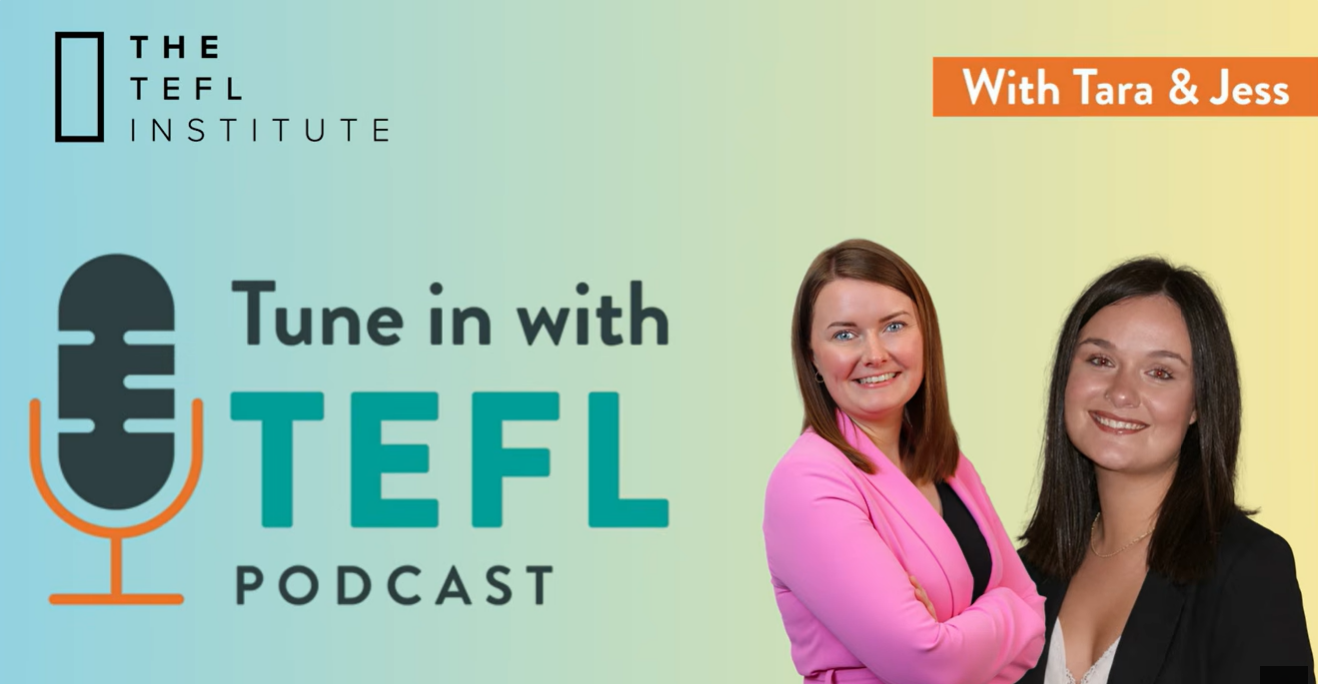
Tara and Jess talk through different TEFL and EFL topics, from finding work abroad to life in the classroom.
FAQs
Questions students ask us
Both qualifications sit at RQF Level 5 and carry the same 54 Ofqual credits. The 180-hour diploma covers core TEFL methodology, grammar, skills teaching and classroom management. The 300-hour Advanced Diploma includes the same core content plus two additional Level 5 micro-courses in specialisms such as teaching young learners, business English, online teaching or exam preparation. Both are equally valid; the 300-hour route simply offers broader specialisation and positions you for more competitive roles in niche markets.
One Ofqual credit equals approximately 10 notional hours of learning, including guided study, independent reading, assignments, and assessment. Therefore, 54 credits represent roughly 540–542 hours of Total Qualification Time (TQT). This is substantially more than unregulated “120-hour TEFL” courses because every hour is formally accounted for and verified by the UK government’s qualifications regulator, Ofqual. The 54-credit value also places the Level 5 TEFL qualification in the Advanced Diploma category (42+ credits), signalling a higher-education-level programme rather than a basic certificate.
The Regulated Qualifications Framework (RQF) is the official system used in England and Northern Ireland to classify qualifications by level of demand and complexity. Level 5 sits between A-levels and a full bachelor’s degree, typically aligned with a Diploma of Higher Education or foundation degree. At Level 5, you’re expected to demonstrate specialised knowledge, apply cognitive and practical skills to solve complex problems, and take responsibility for managing learning contexts independently. This is why a Level 5 TEFL Diploma is considered equivalent to CELTA and Trinity CertTESOL—all three sit at the same framework level and prepare you for professional teaching roles worldwide.
The European Qualifications Framework (EQF) is a reference system that allows qualifications from different countries to be compared and understood across Europe and beyond. RQF Level 5 is officially referenced to EQF Level 5, meaning your Ofqual-regulated Level 5 TEFL Diploma is recognised across Europe as being at the same level as other EQF Level 5 qualifications. Many employers and visa authorities ask for qualifications “at EQF Level 5 or equivalent”, and your TEFL Institute diploma meets that requirement. This makes it easier to secure work permits, satisfy immigration authorities and access better-paid roles in European schools and international organisations.
Both 180-hour and 300-hour qualifications are assessed through a combination of multiple-choice quizzes and open-ended written tasks. Each module has an end-of-module assessment that must be passed at 100%. Quizzes are auto-marked, whilst written assignments are reviewed by our qualified academic team. If tutors request revisions, it’s because they want to ensure your work meets Level 5 standards. You can retake quizzes as many times as you need, and there are no limits on resubmissions for written work. This rigorous assessment approach ensures the integrity of your TEFL qualification and guarantees that employers can trust the standard you’ve achieved.
The 300-hour Advanced Diploma includes the full 180-hour core plus two additional Level 5 specialist micro-courses. Common specialisms include Teaching Young Learners (advanced techniques for children aged 3–18), Teaching Business English (corporate communication, needs analysis, and professional language), Teaching English Online (digital tools, platform skills, and one-to-one strategies), and Exam Preparation (IELTS, TOEIC, and Cambridge exam skills). Each micro-course is fully assessed at Level 5 and gives you documented evidence of expertise in that niche, making you more competitive in specialist job markets and allowing you to command higher salaries for roles that require those specific skills.
Yes. Many employers, particularly in competitive markets like the UAE, South Korea, Japan, and Western Europe—differentiate between unregulated “120-hour TEFL” and regulated Level 5 qualifications. Schools that require or prefer Level 5 status often reserve their higher-paid roles, more secure contracts and additional benefits (housing, flights, insurance) for candidates with regulated qualifications. In practice, this can mean an extra £300–£500 per month or access to premium positions that aren’t advertised to holders of unregulated certificates. The 300-hour Advanced Diploma, with its specialist micro-courses, positions you even more favourably for niche, high-paying roles.
Absolutely. Several countries specify that TEFL applicants must hold a qualification “at Level 5 or equivalent” or “aligned with EQF Level 5” for work visa purposes. Because your Level 5 TEFL Diploma is Ofqual-regulated, 54-credit, and formally referenced to EQF Level 5, it satisfies these requirements. The TEFL Institute also provides an online verification page where employers and immigration authorities can independently confirm the authenticity and level of your certificate, speeding up the application process and reducing the risk of your qualification being questioned.
Yes, very much so. The Level 5 TEFL qualification from The TEFL Institute is Ofqual-regulated, which gives it credibility in the UK and across Europe through its alignment with the EQF Level 5. Beyond Europe, many international schools, language institutes and employers in Asia, the Middle East and Latin America are familiar with the RQF and EQF as reference frameworks, particularly in more competitive or regulated markets. Being able to state “I hold a Level 5 qualification carrying 54 Ofqual credits, aligned with EQF Level 5” gives you instant international credibility and helps you stand out in a crowded field of TEFL applicants.
Because your Level 5 TEFL Diploma is part of the official UK Regulated Qualifications Framework and carries 54 formally recognised credits, it may be considered by universities and professional bodies for Recognition of Prior Learning (RPL) or credit transfer into related qualifications, such as a Postgraduate Certificate in Education (PGCE), a master’s in TESOL or other teacher-training programmes. Whilst each institution sets its own policies, starting with a regulated, credit-bearing qualification puts you in a stronger position than someone with an unregulated certificate. We recommend contacting prospective institutions directly to discuss how they might recognise your Level 5 TEFL qualification towards further study.
Both the 180-hour and 300-hour Level 5 TEFL Diplomas are delivered online, which means you have complete flexibility over when and how you study. Most learners complete the 180-hour diploma in 8–12 weeks of part-time study, depending on the number of hours per week they can dedicate to coursework. The 300-hour Advanced Diploma typically takes 12–16 weeks or longer, as the additional micro-courses require more reading, planning and assessed work. There are no fixed start or end dates—you can begin whenever you’re ready and progress at your own pace. This flexibility is ideal if you’re currently working, travelling or managing other commitments whilst building your TEFL credentials. However, whilst there’s no time pressure, we recommend setting a realistic study schedule and sticking to it to maintain momentum and stay engaged with the material.
Once you’ve completed your Level 5 TEFL Diploma, you’ll receive your Ofqual-regulated certificate with your unique qualification number, which you can verify online through the TEFL Institute’s verification page. This certificate is valid for life and never expires. Beyond certification, the TEFL Institute offers ongoing career support, including job placement assistance, access to a global community of TEFL professionals, and opportunities to explore further professional development, such as specialised postgraduate courses or advanced teaching certifications. We also provide guidance on navigating different international job markets, understanding visa requirements and positioning yourself competitively in your chosen region. Many of our graduates stay connected through our alumni network, where they share job leads, teaching resources and professional insights. Whether you’re just starting your TEFL career or looking to advance to a management or training role, The TEFL Institute remains your partner throughout your journey.