

 United Kingdom (UK)
 United States (US)
 Canada
 South Africa
 India
India Australia
 New Zealand
 China
China Russia
 Germany
 France
 Spain
Spain Netherlands
 Vietnam
 United Arab Emirates
 Italy
Italy Poland
 Thailand
 Türkiye











 Algeria


Two windows matter. Speculative applications land best between March and May, when school owners are planning their September staffing. The real hiring happens between mid August and early October, when most contracts are actually filled. There is a smaller second round in January replacing teachers who leave mid year.
How to Get an English Teaching Job in Greece: A Step by Step Guide
Most English teaching jobs in Greece are filled between mid August and early October, by private language schools called frontistiria, often after a face to face conversation and a trial lesson. Apply from March for the best speculative response, be in the country during the hiring window if you can, and settle your right to work first. A 120 hour TEFL qualification and a degree are the standard asks.
Key takeaways
- Frontistiria are the market. Thousands of small private language schools do the bulk of the hiring
- The real hiring window is mid August to early October, with a smaller second round in January
- Being physically in Greece during that window converts far better than applying from abroad
- Speculative applications land best in March to May, when schools are planning September
- Expect a trial lesson rather than a formal interview process
- If you hold a UK, US, Canadian or Australian passport, your right to work is the first problem to solve, not the last
Step one: settle your right to work
Nothing else matters until this is resolved, and skipping it is the most common way people waste a summer.
UK, US and other non EU passport holders. You are a third country national in Greece, which means you need an employer willing to sponsor you and a national long stay visa before you can legally teach. Small language schools rarely take that on. In practice the routes that work are international schools, the Fulbright English Teaching Assistant award for US graduates, online teaching, or an EU passport through ancestry. We cover all of these in detail in our guide to teaching English in Greece without an EU passport, and it is worth reading before you apply for anything.
EU and EEA passport holders. You have freedom of movement. No visa, no permit, no sponsorship. You register locally, get a Greek tax number known as the AFM and a social insurance number, and that is administration rather than permission. Say so explicitly in your first line to a school, because it is the single thing they most want to know.
Work out which of these you are before you start applying, rather than after twenty unanswered emails. The rest of this guide assumes the question is settled.
Step two: get the qualification sorted early
A TEFL certificate of at least 120 hours is the practical baseline for a contracted role, and a bachelor’s degree in any subject is expected by most schools.
Two details make a difference in this market. The first is regulation. School owners are increasingly aware of the gap between a certificate accredited by a body the course provider owns and one that is externally regulated and independently checkable. Our Ofqual regulated Level 5 TEFL course carries qualification number 610/1571/4 and can be verified on the Ofqual public register, and the distinction is explained fully in our guide to accredited versus regulated TEFL certification. When two applications look similar, verifiable wins.
The second is specialism. A large share of frontistiria teaching is exam preparation for Cambridge and Michigan qualifications, so any evidence you can teach toward those moves you up the pile.
★★★★★Verified review
“Spoke to John who was brilliant
”
“Spoke to John who was brilliant providing full details re their internships/placement and services they offer
John gave clear timelines of further opportunists that will come up. As well as going out his way to confirm my eligibility and finding further info. Will definitely be reaching out to them again in the near future when those abroad opportunities come up”
Lukas · August 2026 · Read the full review · All our reviews
Step three: understand the hiring calendar
Greece runs on a tight annual rhythm and applying at the wrong point in it is the difference between a reply and silence.
| Period | What is happening | What to do |
|---|---|---|
| March to May | Schools know their September staffing gaps | Send speculative applications. Best response rate of the year |
| June to July | End of year exams, then holidays. Admin staff away | Do not judge your prospects on the silence. Prepare and travel |
| Mid August to early October | The real hiring window. Most contracts filled | Be in the country, be reachable, say yes to trial lessons quickly |
| January | Smaller round replacing mid year departures | Worth a second push if September did not work out |
The pattern to notice is that the planning happens in spring and the deciding happens in late summer. Applying in spring puts your name in front of an owner who is thinking ahead. Being present in September puts you in front of one who needs a teacher this week.
US graduates have a separate calendar to watch. The Fulbright English Teaching Assistant award in Greece runs on the national Fulbright cycle, and the Fulbright US Student Program’s Greece page lists a deadline of 6 October 2026 for the 2027 to 2028 year. That is roughly eleven months ahead of the start date, so it needs planning a full cycle earlier than a frontistirio job.
Step four: know who you are applying to

Frontistiria. Private language schools, thousands of them, scattered through every city and most sizeable towns. Small classes, students from young children to adults, heavy on exam preparation. This is where nearly every teacher starts and where nearly all the vacancies are.
Summer camps. June to August, mainly coastal and island, English combined with activities. Often the easiest first foot in the door, and a useful bridge across the unpaid summer that a term time contract leaves you with.
International schools. Athens and Thessaloniki mostly, far better paid, but they hire licensed schoolteachers rather than TEFL certified teachers. Worth targeting only if you have qualified teacher status. These are also the employers most likely to have sponsored a visa before.
Private tutoring. Not a job you apply for, but a substantial part of most teachers’ income once they are established. It grows through word of mouth from the parents at your school.
Universities and public schools. Difficult to enter, usually requiring Greek language ability and local teaching credentials. Do not build a plan around them.
Step five: write an application a school owner will read
These are small businesses and the person reading your email is usually the owner, between lessons, on a phone. Long personal essays about your love of the Mediterranean do not survive that context.
Lead with your right to work. Then your qualification, its hours and whether it is regulated. Then your degree. Then what you can teach, naming exam boards if you can. Then your availability, with actual dates. Then where you are willing to live, and say yes to more than Athens if you can, because the competition thins dramatically outside it.
Keep the CV to one page with a photo, which is normal and expected in Greece and catches a lot of British and American applicants by surprise. Attach your certificate as a PDF rather than promising it on request. If you are already in the country, put that in the subject line, because it changes how the email is read.
Academic
The TEFL Institute Group
How to Get an English Teaching Job in Greece
teflinstitute.comWatch on YouTube · The TEFL Institute Group
● THE HIRE WIRE
Hiring windows close while you scroll.
Deadlines, salaries and visa notes for teaching jobs worldwide, checked against official sources and sent free every two weeks.
Get on the WireStep six: prepare for the trial lesson
Greek hiring leans on demonstration rather than interview. Expect to be asked to teach a short lesson, sometimes to a real class, sometimes to staff pretending to be one, sometimes at very short notice.
Have one adaptable lesson ready to go for a mixed level teenage class, which is the most common scenario. Bring your own materials. Keep the teacher talking time low and get the students producing language early, because that is what an experienced owner is watching for. Ask what the class is working toward, since if the answer is a Cambridge exam then your lesson should visibly point at it.
Step seven: check the contract before you agree
Most contracts run September to June for one academic year and are renewable. Full time pay in a language school is typically somewhere around 900 to 1,400 euro gross a month, with hourly work commonly 10 to 15 euro. Both are approximate ranges rather than fixed rates, and you can compare them against other markets on our TEFL Salary Index.
Points to clarify before signing. Whether the pay is gross or net, and whether social insurance contributions are being properly registered. How many teaching hours the salary covers, and what happens beyond them. Whether July and August are paid, because usually they are not and you need to plan for a ten month income. Whether travel between branches is expected. And whether private tutoring on the side is permitted, since it generally is but you want that clear.
What does the teaching week actually look like?
Worth knowing before you sign, because the shape of a frontistirio week surprises people who have only taught in a school.
Your hours are the afternoons and evenings. Greek children attend state school in the morning and come to the language school afterwards, so a typical timetable runs from roughly three in the afternoon to nine or ten at night, Monday to Friday, with Saturday mornings common for exam groups. That is a genuine lifestyle change rather than a detail. It frees your mornings completely, which is why so many teachers build private tutoring or online hours into that gap, and it means your social life runs on Greek time rather than an office one.
Class sizes are small, often six to twelve students, and you will usually hold the same groups all year. Levels run from young children starting out to adults preparing for proficiency exams, and most teachers carry a spread of both in one timetable. The curriculum is generally set by the school and built around a coursebook, so you are delivering a planned syllabus rather than designing one, which is a relief in a first year and a constraint in a third.
The exam pressure is real and it is the defining feature of the market. Greek families invest heavily in English certification, and the Cambridge and Michigan exams are the reason most students are in the room. Your results matter to the owner in a way that is more direct than in most markets, because parents talk and the school’s reputation in the neighbourhood is built on pass rates. Teachers who take that seriously get renewed and recommended.

Meet the founder
Ian O’Sullivan, The TEFL Institute Group
Ian founded the group in 2017 to bring honesty to TEFL training, after twenty years in the field. The Institute is Europe’s largest TEFL trainer by teachers certified, with 161,000 teachers certified and graduates now teaching in 80 countries.
Which cities give you the best odds?
Athens holds roughly half the market by volume and also half the competition, so it is the easiest place to find vacancies and the hardest place to stand out in. If you have no contacts and no Greek, it is still the sensible first target, because the sheer number of schools means somebody is short a teacher in September.
Thessaloniki is the quieter version of the same bet. A large student city with a real concentration of schools, noticeably cheaper rent, and fewer foreign applicants competing for each post. Several teachers who struggle in Athens find work in a fortnight after moving north.
The mid sized cities are where the odds genuinely shift. Patras, Larissa, Ioannina, Volos and Heraklion all have working frontistiria networks and receive a fraction of the speculative applications. A school in a town that rarely sees a qualified native speaker applicant will often make time for one, and the cost of living difference means a lower salary goes further. The trade is a smaller English speaking community and more reliance on your own resourcefulness.
The islands are a separate case. Year round teaching work exists on the larger ones, Crete and Rhodes in particular, but on smaller islands the population does not support a full timetable and the work is seasonal. Teachers who want island life usually combine summer camp work with a term time contract somewhere else, or teach online alongside a smaller local roster.
If you are flexible about location, say so in your first email. It is the single line most likely to get a reply, because it answers the question every owner outside Athens is quietly asking.
Where to look
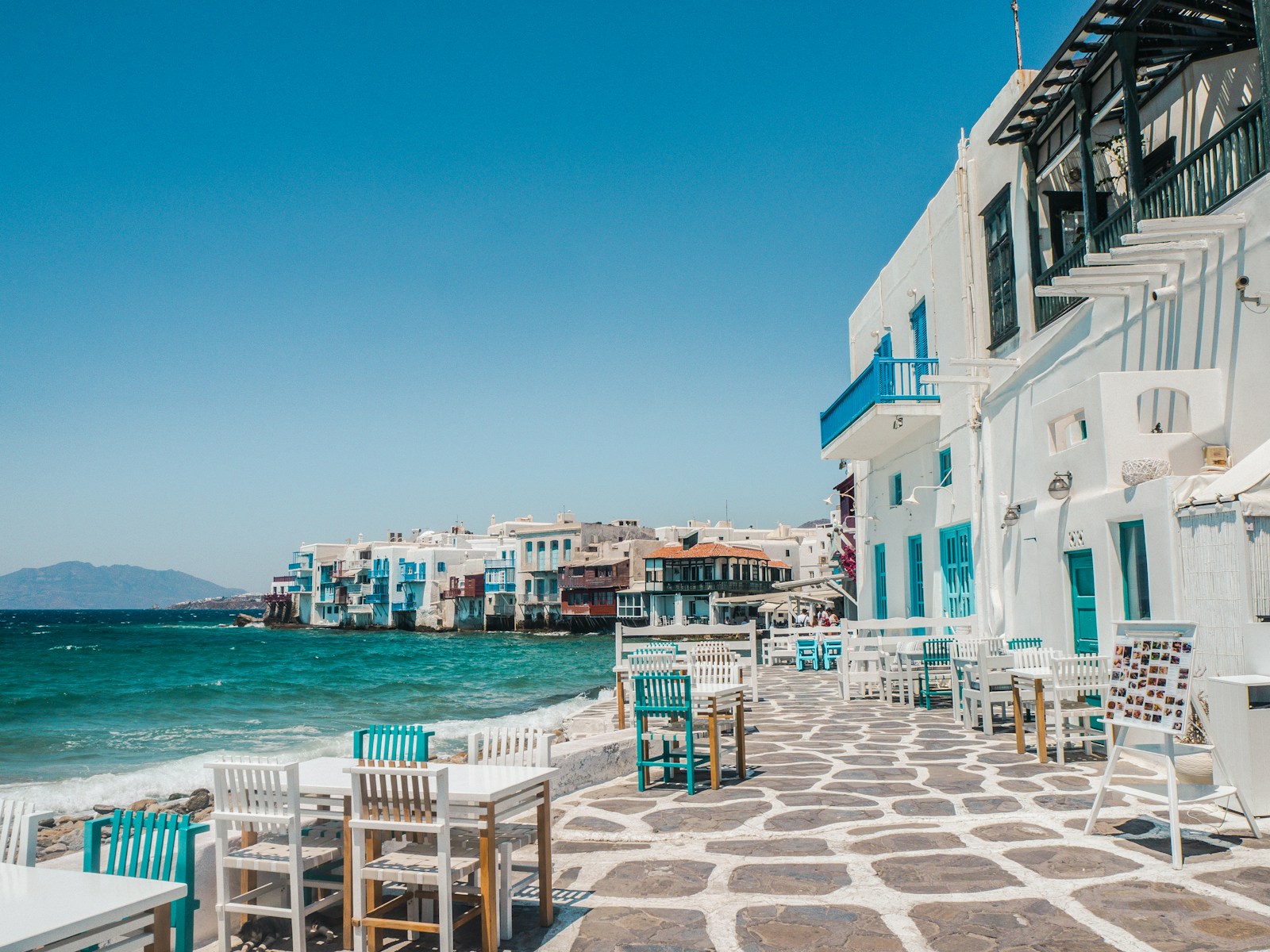
Walking in works in Greece in a way it does not in most markets. During the hiring window, printing twenty CVs and visiting schools in person in one neighbourhood will typically outperform a hundred emails. Beyond that, use Greek job boards and school networks, local Facebook groups for English teachers in Athens and Thessaloniki, and direct approaches to school websites, which almost all list a contact address.
One habit that pays off. Keep a simple record of who you contacted and when, and follow up once in early September. A polite second email arriving in the week a teacher drops out is how a lot of people get hired.
A realistic timeline
- Now to March. Complete a regulated TEFL qualification, settle your right to work, and prepare your CV
- March to May. Speculative applications, targeting more than one city
- June to July. Expect quiet. Arrange accommodation and travel
- Mid August. Arrive if you can. Begin in person visits and follow ups
- September. Trial lessons, offers, contract checks, start date
Before you accept an offer, work the numbers with our breakdown of the cost of living in Greece for English teachers, and plan the unpaid summer with our guide to summer English camp jobs in Greece. For the fuller picture of cities and legal requirements, read our complete guide to teaching English in Greece, check entry rules for other destinations on the Visa Desk, or browse other countries on the Teach English Abroad hub.
Ready to apply for your first Greek classroom?
A school owner reading twenty applications in September is looking for the one they can verify quickly. Our Ofqual regulated Level 5 TEFL course appears on the public register as 610/1571/4, and the 120 Hour Advanced TEFL Course covers the standard 120 hour requirement if you want to be ready for the spring application window. The TEFL Institute Group has certified 161,000 teachers since 2017, now teaching in 80 countries, and every certificate carries a reference an employer can check before they interview you.

Olivia Klimczyk
Marketing Executive at The TEFL Institute Group and the creative heart of our social media. A marketing graduate who keeps students up to date through newsletters, blogs and reels.
Reviewed 19 September 2026. Pay figures are approximate typical ranges, and programme deadlines change annually. Confirm current details with the employer and with official programme pages before making plans.
We love taking your call.

TEFL Institute guides
Plan for 2027
Czech Republic
Pay, visas and cities
Read the guide
Plan for 2027
Mexico
Jobs, pay and cities
Read the guide
Plan for 2027
Italy
Jobs, pay and visa routes
Read the guide
Plan for 2027
Dubai
Pay, requirements and visas
Read the guide
Plan for 2027
Germany
Freelance work and pay
Read the guide
Not strictly, but it converts far better. A lot of frontistiria hiring still happens through a conversation and a trial lesson rather than a formal online process. During the hiring window, visiting schools in person with printed CVs in one neighbourhood will usually outperform a hundred emails sent from abroad.
A TEFL certificate of at least 120 hours and a bachelor’s degree in any subject are the standard asks for a contracted role. Externally regulated qualifications carry more weight than certificates accredited by a body the course provider owns, because they can be checked on a public register rather than taken on trust.
A frontistirio is a private language school, and the plural is frontistiria. There are thousands of them across Greece and they do the bulk of English teaching hiring. Classes are small, students range from young children to adults, and a large share of the teaching is preparation for Cambridge and Michigan exams.
You teach a short lesson, sometimes to a real class and sometimes to staff, often at short notice. Have one adaptable lesson ready for a mixed level teenage class, bring your own materials, keep teacher talking time low and get students producing language early. Ask what the class is working toward, and point the lesson at it.
Whether the pay is gross or net and whether social insurance is properly registered. How many teaching hours the salary covers and what happens beyond them. Whether July and August are paid, because usually they are not. Whether travel between branches is expected, and whether private tutoring on the side is permitted.