
 United Kingdom (UK)
 United States (US)
 Canada
 South Africa
 India
India Australia
 New Zealand
 China
China Russia
 Germany
 France
 Spain
Spain Netherlands
 Vietnam
 United Arab Emirates
 Italy
Italy Poland
 Thailand
 Türkiye









 Algeria


Best TEFL Summer Jobs in 2026: A Guide for U.S. Candidates
Best TEFL Summer Jobs in 2026: A Guide for U.S. Candidates

What TEFL summer jobs are available to U.S. candidates?
TEFL summer jobs fall into four main categories: summer language camps, language school positions, short-term teaching contracts, and online ESL roles. U.S. candidates can access all four, though international positions require advance visa planning since most programs do not sponsor seasonal work permits.
Key facts at a glance:
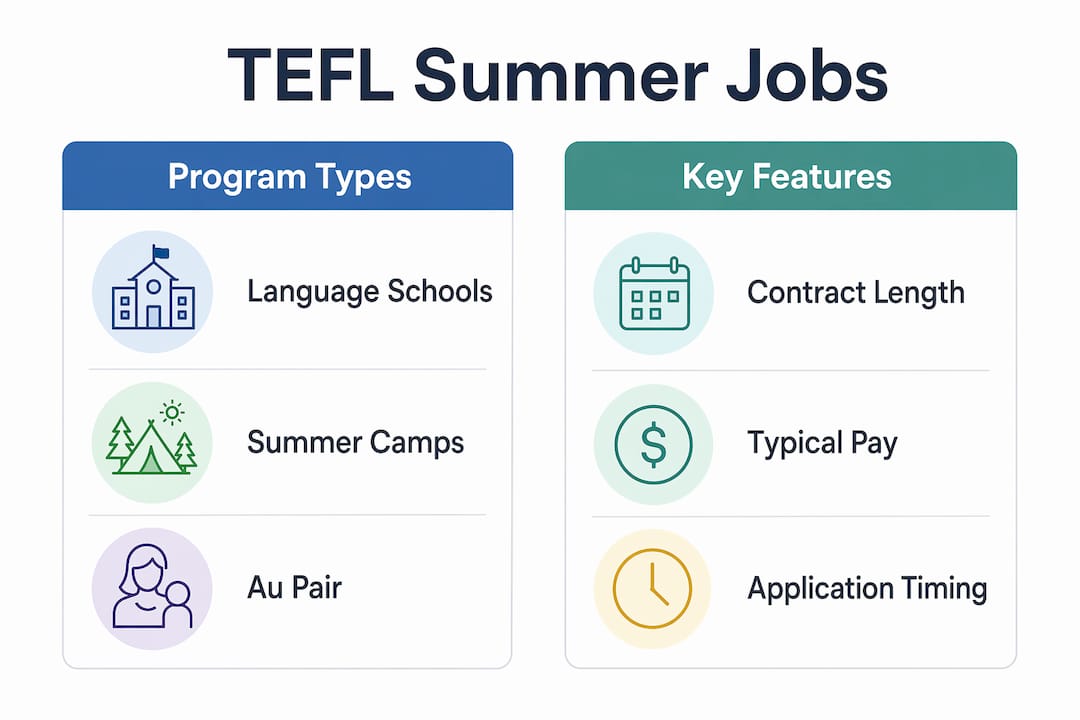
- Summer camps: Organizations like EF Education First, Twin English, and Fun&Learn run structured camp programs across Europe, the UK, and Spain, typically from June through August. Greece is one of the easier markets to break into here, since camps there recruit from February and the package usually covers accommodation and meals: see our guide to summer English camp jobs in Greece.
- Language schools: Programs such as English in Action, Academia Contacto, and English Summer S.A. place teachers in classroom settings at established schools, often with fixed curricula.
- Cultural immersion programs: Angloville, The English Camp, International Study and Vacation, and Cultural Care Au Pair combine teaching with cultural exchange, sometimes pairing teachers with au pair responsibilities.
- Online ESL positions: Remote summer English teaching roles are available through various platforms and are particularly accessible for U.S.-based candidates who lack an international work permit.
- Contract length: Most positions run 2–8 weeks, concentrated between June and August, with some requiring a minimum two-week commitment.
- Pay: Hourly rates at U.S.-based summer programs range from $21 to $27 depending on campus location and program size. European positions often include accommodation and full board in lieu of higher cash pay.
- Visa basics: U.S. passport holders working in Europe generally need a work authorization specific to each country. Most short-term programs do not sponsor visas, so candidates must secure the right to work independently before applying.
Popular destinations for international summer ESL positions include Spain, the UK, Poland, and other European countries. For U.S. candidates who want to stay domestic, programs like Brook Hill Alliance run summer EFL camps at North American college campuses. For destination research, Teflinstitute’s guide to top summer TEFL destinations covers current options by region and pay.
How do the top TEFL summer programs compare?
The ten leading providers differ significantly in location, program structure, and what they expect from applicants. Spain dominates the European market, while EF Education First operates across multiple continents.

| Program | Best For | Location | Contract Length | Typical Pay | Requirements | Application Timing |
|---|---|---|---|---|---|---|
| EF Education First | Global summer camps | UK, Europe, worldwide | Min. 2 weeks, June–August | Competitive; accommodation available | TEFL/CELTA, right to work | January–March |
| Twin English | Youth language immersion camps | UK, Europe | 2–8 weeks | Varies by location | TEFL cert, degree preferred | February–April |
| English in Action | European summer programs | Multiple European countries | 2–8 weeks | Varies | TEFL cert, degree | February–April |
| Angloville | Short-term immersion | Poland, Europe | — | Accommodation + meals included | Native/near-native English, TEFL preferred | Rolling |
| The English Camp | Summer camps in Spain | Spain | 2–8 weeks | Accommodation + full board | TEFL cert, experience with young learners | January–March |
| Cultural Care Au Pair | Au pair combined with teaching | Spain, Europe | Summer season | Stipend + room and board | TEFL preferred, childcare experience | — |
| English Summer S.A. | Diverse locations, Spain and Latin America | Spain, Latin America | 2–8 weeks | Accommodation often included | TEFL cert, degree | February–April |
| Academia Contacto | Spanish language schools | Spain | 2–8 weeks | Varies | TEFL cert, degree preferred | January–March |
| Fun&Learn | Multi-country summer camps | Europe | 2–8 weeks | Accommodation often included | TEFL cert | February–April |
| International Study and Vacation | Cultural immersion teaching | Spain, other destinations | 2–8 weeks | Varies | TEFL cert, degree | January–March |
A few programs stand out for specific reasons. EF Education First provides teaching materials and curriculum, which significantly reduces unpaid preparation time. Angloville operates on a rolling recruitment model, making it one of the more accessible entry points for first-time summer teachers. The English Camp and English Summer S.A. both offer full-board packages in Spain, which effectively offsets the modest cash pay typical of European summer roles.
Cultural Care Au Pair suits candidates who are comfortable combining childcare with classroom teaching. It requires more flexibility than a standard camp role but often provides more stable summer-long placements. Academia Contacto and International Study and Vacation both focus on Spain’s established summer school network, with Academia Contacto drawing on a particularly broad national network of partner schools.
Pro Tip: Ask each program directly whether lesson plans and materials are provided before accepting a contract. Large chains like EF Education First supply curriculum and materials, but smaller independent camps often expect teachers to prepare everything themselves, which adds hours of unpaid work each week.
What qualifications do you need for summer TEFL jobs?
The baseline requirement across nearly all programs is a bachelor’s degree and a recognized TEFL, TESOL, or CELTA certification. Age minimums apply in most host countries, and U.S. applicants must be at least 18 years old to qualify for the majority of positions.

For U.S.-based summer roles, programs often give preference to candidates with active state teaching licenses or those pursuing a master’s degree in education or TESOL. This is less common for European camp positions, where a 120-hour TEFL certificate typically satisfies the minimum standard.
Key documentation and process points:
Hiring windows close while you scroll.
Deadlines, salaries and visa notes for teaching jobs worldwide, checked against official sources and sent free every two weeks.
Get on the Wire- TEFL/TESOL/CELTA certification: A 120-hour course is the standard minimum. Some programs, particularly those at accredited language schools, prefer a 180-hour or 240-hour diploma.
- Degree verification: Most employers require official transcripts or a degree certificate at the point of offer.
- Work authorization: U.S. citizens working abroad must independently secure the right to work in the host country. Most summer programs do not sponsor visas, so this step must happen before applying.
- Background checks: Programs working with minors, including most summer camps, require a criminal background check. In the UK, this is a DBS check; other countries have equivalent processes.
- Application timeline: Submit applications between January and March for June starts. Positions at popular programs fill quickly, and late applicants often find only last-minute vacancies.
For candidates researching TEFL age requirements or country-specific eligibility rules, Teflinstitute’s resource guides cover both in detail.
Pro Tip: Verify work authorization requirements for your target country before you apply, not after you receive an offer. Most summer programs cannot hold a position while you arrange a visa, and losing a placement at that stage is a common and avoidable outcome.
What skills help you succeed in a summer TEFL role?
Adaptability is the most consistently valued quality in short-term summer teaching positions. Student attendance fluctuates, proficiency levels vary within a single class, and peak enrollment weeks in late july can require teaching up to six days a week. Teachers who adjust quickly to those conditions perform better and receive stronger end-of-contract evaluations.
Core skills that summer programs actively look for:
- Classroom management: Keeping mixed-age, multilingual groups engaged in a short-term format requires clear routines and confident delivery.
- Lesson planning: Even when materials are provided, teachers need to adapt content to the group in front of them.
- Technology proficiency: Programs like Brook Hill Alliance expect fluency with Google Slides and the Microsoft Office suite for lesson delivery and record keeping.
- Cultural sensitivity: Summer camps draw students from many countries simultaneously. Teachers who recognize and respect those differences create better learning environments.
- Administrative accuracy: Tracking attendance, assessing progress, and maintaining records are standard duties at most programs.
Pro Tip: Build a short bank of flexible lesson activities before your contract starts. When a planned lesson runs short or a group’s level is different from what you expected, having two or three ready-to-use backup activities prevents dead time and keeps classes on track.
Scheduling flexibility also matters practically. Most summer programs run classes four to six days per week, including some Saturday mornings. Candidates who indicate full availability in their applications are consistently preferred over those with restricted schedules.
How can TEFL certification help you qualify for summer positions?
A recognized TEFL certification is the single most direct way to meet the minimum requirements for summer teaching roles. Teflinstitute offers courses at multiple levels, from 120-hour elective courses to 240-hour master-level diplomas, all designed to meet the credentialing standards that summer programs check.
- 120-hour certification: Meets the baseline requirement for most summer camp and language school positions. Suitable for candidates entering the field or adding a formal credential to existing teaching experience.
- 240-hour master diploma: Preferred by accredited language schools and programs that require a higher level of demonstrated training. Externally accredited and recognized by international employers.
- Level 5 TEFL Diploma: A government-regulated qualification at Ofqual Level 5, well-suited for U.S. applicants targeting European summer programs that specify a regulated certification.
- Specialist courses: Teflinstitute’s IELTS preparation instructor course and online teaching credentials add value for candidates targeting exam-focused roles or remote summer ESL positions.
- Paid internships: Teflinstitute’s TEFL internship program combines training with hands-on classroom experience, directly addressing the “prior experience preferred” requirement that appears in most summer job listings.
- Scholarships: Financial support through Teflinstitute’s scholarship program reduces the cost of certification for candidates who need to credential quickly before the summer application window opens.
Candidates who hold a recognized certification and can demonstrate practical classroom hours are consistently more competitive than those with a degree alone. For a broader view of which credentials carry the most weight internationally, Teflinstitute’s guide to certification for teaching abroad compares the main options by program type and destination.
Teflinstitute offers a direct path to summer teaching readiness
If you’re working toward a summer TEFL role and need a certification that employers actually recognize, Teflinstitute provides a faster, more direct route than piecing together credentials from multiple sources.
The 120-hour Advanced TEFL Course meets the minimum standard for most summer camp and language school positions, while the 240-hour Master TEFL Course satisfies the higher bar set by accredited programs. Both are available entirely online, so you can complete them around your current schedule before the january-to-march application window opens. Teflinstitute also offers paid internships and scholarships to help candidates build classroom hours and manage certification costs. For U.S. candidates targeting summer ESL positions abroad or online, this is a practical starting point.
Key Takeaways
A recognized TEFL certification combined with early visa planning and a flexible schedule gives U.S. candidates the strongest foundation for securing a summer teaching position in 2026.
| Point | Details |
|---|---|
| Application timing | Submit applications between January and March; most summer programs fill positions well before June. |
| Pay and conditions | U.S.-based summer roles pay $21–$27 per hour; European positions often substitute accommodation and full board for higher cash pay. |
| Visa responsibility | Most programs do not sponsor work permits; U.S. applicants must secure the right to work in the host country independently before applying. |
| Certification level | A 120-hour TEFL certificate meets most summer camp minimums; accredited language schools often require a 180-hour or 240-hour diploma. |
| Teflinstitute | Offers 120-hour, 240-hour, and Level 5 diploma courses online, plus paid internships and scholarships, to help candidates meet summer program requirements. |
Recommended
TEFL Institute guides

Japan
JET, ALT and eikaiwa pay
Cambodia
Pay, requirements and visas
Mexico
Jobs, pay and cities
China
Z visa, pay and cities
Germany
Freelance work and pay