

 United Kingdom (UK)
 United States (US)
 Canada
 South Africa
 India
India Australia
 New Zealand
 China
China Russia
 Germany
 France
 Spain
Spain Netherlands
 Vietnam
 United Arab Emirates
 Italy
Italy Poland
 Thailand
 Türkiye











 Algeria


Warsaw has the most jobs and the highest pay, Krakow is the most popular all round choice, and Wroclaw and Poznan offer strong business English demand with lower rents. Gdansk suits teachers who want the coast, while Lodz and smaller cities are best for saving money and facing less competition.
Best Cities and TEFL Certification to Teach English in Poland (2026 Guide)
The best cities to teach English in Poland are Warsaw for the most jobs and highest pay, Krakow for a balance of demand and lifestyle, Wroclaw and Poznan for business English with lower rents, and Gdansk for the coast. Smaller cities such as Lodz, Lublin and Katowice have less competition and the lowest living costs. Every city expects a 120 hour TEFL certificate as the baseline.
Key takeaways
- Warsaw has the largest job market and the highest pay, but rents eat much of the difference
- Krakow, Wroclaw, Poznan and Gdansk offer steady demand with rents typically 20 to 35 percent lower than Warsaw
- Business English is strongest in Warsaw, Krakow and Wroclaw, where many international business service centres are based
- Lodz, Lublin, Katowice, Torun and Rzeszow are the best choice for saving money and for less competition from other foreign teachers
- A TEFL certificate of at least 120 hours is the standard requirement in every city, and Poland’s minimum wage of 4,806 zloty gross a month in 2026 is a useful floor for judging offers
- Pay and rents below are approximate typical ranges, with euro at roughly 4.3 zloty
Which Polish city is best for English teachers?
It depends on what you want from the year. The table compares the main cities on pay, rent and the kind of work each is known for.
| City | Typical pay (PLN) | Room rent (PLN) | Best for |
|---|---|---|---|
| Warsaw | 5,000 to 7,000 | 1,600 to 2,200 | Most jobs, business English, career building |
| Krakow | 4,500 to 6,500 | 1,400 to 1,900 | All age groups, lifestyle, first year teachers |
| Wroclaw | 4,500 to 6,500 | 1,300 to 1,800 | Business English with lower rents |
| Gdansk and the Tricity | 4,500 to 6,200 | 1,300 to 1,800 | Coastal life, a mix of adult and young learner work |
| Poznan | 4,500 to 6,200 | 1,100 to 1,600 | Saving money in a big city |
| Lodz | 4,300 to 5,800 | 1,100 to 1,500 | Low costs close to Warsaw |
| Smaller cities | 4,200 to 5,500 | 900 to 1,400 | Less competition, the lowest living costs |
Pay at the lower end of these ranges is typical of hourly civil law contracts. A full time employment contract must pay at least the national minimum wage, which the Polish Ministry of Family, Labour and Social Policy sets at 4,806 zloty gross a month from 1 January 2026. Private lessons, typically 80 to 150 zloty an hour, are how most teachers in every city lift their income.
Is Warsaw a good city to teach English?
Yes, if you want the most choice and the best paid work. Warsaw is Poland’s capital and corporate centre, with the largest number of language schools, international schools and companies paying for in-house English training.
Business English is the standout. Many international banks, consultancies and technology firms run their regional operations from Warsaw, and in-company classes there pay some of the best hourly rates in the country. The trade-off is rent. A room in a shared flat commonly costs 1,600 to 2,200 zloty, and a central one bedroom flat 3,500 to 4,500 zloty, so a Warsaw salary does not always leave more at the end of the month than a Krakow one. Warsaw suits teachers with some experience, a business background, or plans to stay in Poland for several years.
Is Krakow a good city to teach English?
Yes, and it is the most popular first choice for foreign teachers. Krakow combines a large student population, a strong tourism economy and a growing outsourcing and technology sector, so language schools hire steadily for children, teenagers and adults.
The historic old town, a lively social life and good transport links make it easy to settle into, and rents are lower than in Warsaw. The flip side of its popularity is competition, particularly for adult classes in the city centre, so the best posts go to teachers who apply early in the hiring season. Krakow is a strong all round choice for a first year in Poland.
Is Wroclaw a good city to teach English?
Yes, especially for business English. Wroclaw is one of Poland’s main locations for international business service centres, where English is often the working language, and companies there fund regular staff training.
That creates steady in-company work at good hourly rates, alongside a busy market of private language schools and a large university population. Rents are noticeably lower than in Warsaw, and the city’s islands, bridges and market square make it one of the most attractive places in Poland to live. Teachers with professional experience in another field will find their background valued here.
What is it like to teach English in Gdansk?
Gdansk, together with Gdynia and Sopot, forms the Tricity on the Baltic coast, and it offers a lifestyle no inland city can match: beaches, a historic port and an easy rail link between the three towns.
The job market is solid rather than huge, with language schools teaching all ages, business clients in shipping, logistics and services, and seasonal demand linked to tourism. Pay is close to Krakow and Wroclaw levels, and the three cities together give more work than Gdansk alone. It suits teachers who value quality of life and are happy with a slightly smaller market.
Is Poznan a good place to teach English?
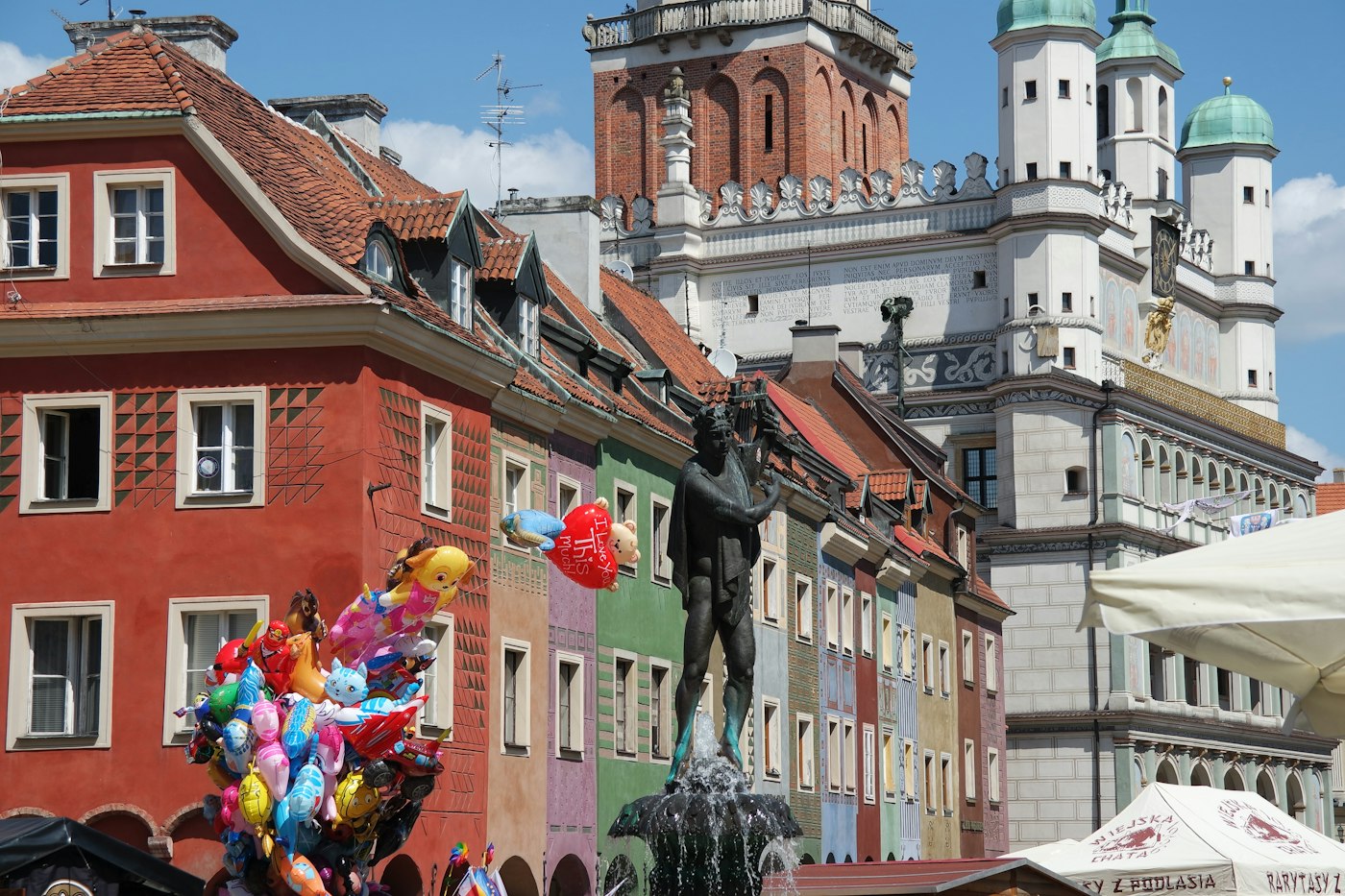
Yes, and it is one of the best cities in Poland for saving money. Poznan is a major university and business city, home to an international trade fair and many companies that pay for English training, yet its rents are among the lowest of Poland’s large cities.
Teachers here typically find a mix of language school classes, business clients and exam preparation, with less competition from other foreign teachers than in Krakow or Warsaw. Its central location between Warsaw and Berlin makes travel easy. For a teacher who wants a real city without big city costs, Poznan is often the best value in the country.
Should you teach English in Lodz or a smaller city?
For saving money and standing out, often yes. Lodz, Poland’s third largest city, sits just over an hour from Warsaw by train, has a large student population and rents well below the capital’s.
Beyond Lodz, cities such as Lublin, Katowice, Torun, Rzeszow and Bialystok all have language schools and steady demand, but far fewer foreign teachers competing for posts. Pay is a little lower, but living costs are lower again, and a native English speaker is more of an asset to a school there. The trade-offs are a smaller expatriate community and more need for some Polish in daily life. For a first year focused on experience and savings, a smaller city is frequently the smartest choice.
How do you choose the right city?
Start with what matters most to you, then work back to a city.
- Highest pay and the most jobs: Warsaw, particularly with business English experience.
- Best all round first year: Krakow, applying early in the season.
- Business English with lower rents: Wroclaw or Poznan.
- Coastal lifestyle: Gdansk and the Tricity.
- Saving money and less competition: Lodz, Lublin, Katowice, Torun or Rzeszow.
Whichever you choose, compare offers on the net monthly figure, the contract type and whether July and August are paid, not on the headline rate. Our guide to English teaching jobs in Poland explains how to compare offers, and the cost of living in Poland for English teachers sets out rents by city and a worked monthly budget.
What TEFL certification do Polish schools expect?
A TEFL certificate of at least 120 hours is the standard requirement in every Polish city, alongside native or near native English. Most employers also prefer a bachelor’s degree, and the larger chains, business English providers and international schools usually expect one.
The better paid posts increasingly go to teachers with a qualification an employer can verify. Our 120 Hour Advanced TEFL Course meets the standard language school requirement, and the Ofqual-regulated Level 5 TEFL course is a regulated qualification that a Polish director of studies can check on the Ofqual register, which matters most for business English and exam preparation roles in Warsaw, Krakow and Wroclaw.
Your passport matters as much as your certificate. EU citizens can work in Poland without a permit. UK, US and other non EU teachers usually need a work permit arranged by the employer, although foreign language teachers in schools within the Polish education system are exempt. Read teaching English in Poland without an EU passport before you apply.
When should you apply?
The main hiring season runs from late August to early October, when language schools prepare for courses starting in late September or October, with a second round in January. Non EU teachers should start in spring, because work permits take time. Polish CVs normally include a photo and a short data consent clause, and most schools ask for a demonstration lesson.
Ready to teach English in Poland?
The TEFL Institute Group has certified 161,000 teachers since 2017 in 80 countries, and our employability team helps graduates find their first post. For the full picture of the Polish market, from visas to classroom culture, start with our guide to teaching English in Poland, and if you want to train in the capital, see our TEFL courses in Warsaw. Compare pay across countries on the TEFL Salary Index.
Teaching in Poland: read next
- The full country guide: teaching English in Poland.
- Who hires and how to apply: English teaching jobs in Poland.
- Rent by city and a worked budget: cost of living in Poland for English teachers.
- UK or US passport: teaching English in Poland without an EU passport.
Katie Troy
Managing Director of The TEFL Institute Group. With the team since 2018, Katie is a qualified teacher with a degree in education and years of experience teaching abroad, and works closely with our academic team.
Reviewed 1 October 2026. Pay and rents are approximate typical ranges from teacher reports, job advertisements and listings, not quotes or guarantees, and vary by employer, contract and season. Euro figures use about 4.3 zloty to the euro. The minimum wage figure is from the Polish Ministry of Family, Labour and Social Policy.
We love taking your call.

TEFL Institute guides
Plan for 2027
China
Z visa, pay and cities
Read the guide
Plan for 2027
Japan
JET, ALT and eikaiwa pay
Read the guide
Plan for 2027
Thailand
Visas and teaching licences
Read the guide
Plan for 2027
Czech Republic
Pay, visas and cities
Read the guide
Plan for 2027
South Korea
EPIK, hagwons and pay
Read the guide
Language school teachers on a full timetable typically earn around 5,000 to 7,000 zloty gross a month in Warsaw and 4,500 to 6,500 zloty in Krakow or Wroclaw. Smaller cities pay a little less. Private lessons usually pay 80 to 150 zloty an hour in every city.
Usually, yes. A room in a shared flat typically costs around 1,400 to 1,900 zloty a month in Krakow compared with 1,600 to 2,200 zloty in Warsaw. Warsaw pays a little more, but often not enough to cover the difference in rent.
Warsaw, Krakow and Wroclaw have the strongest business English markets, because many international companies and business service centres are based there and pay for staff English training. Poznan also has steady corporate demand.
Polish employers in every city expect a TEFL certificate of at least 120 hours, plus native or near native English. A degree is preferred. A regulated qualification such as an Ofqual Level 5 TEFL course helps for business English and exam roles because employers can verify it.
Often, yes. Cities such as Lodz, Lublin, Katowice, Torun and Rzeszow have steady demand but far fewer foreign teachers competing for posts, and living costs are lower, so teachers there can save more. The trade-off is a smaller expatriate community.
