
 United Kingdom (UK)
 United States (US)
 Canada
 South Africa
 India
India Australia
 New Zealand
 China
China Russia
 Germany
 France
 Spain
Spain Netherlands
 Vietnam
 United Arab Emirates
 Italy
Italy Poland
 Thailand
 Türkiye











 Algeria


Total Physical Response is a language teaching method where students respond to spoken commands with physical movement instead of speech. Developed by James Asher, it links new vocabulary directly to action, mirroring how children absorb their first language by listening and moving before they talk.
What Is Total Physical Response (TPR)? A Teacher’s Guide
What is Total Physical Response (TPR)?
Total Physical Response is a language teaching method in which the teacher gives spoken commands and learners respond with physical movement rather than speech. Developed by psychologist James Asher in the 1960s, it lets students absorb meaning through action before they are asked to produce any language themselves, which removes the pressure to speak too early.
Last updated 22 September 2026.
For TEFL teachers, it is one of the fastest ways to teach vocabulary and classroom instructions to beginners and young learners without leaning on translation. TPR sits alongside the other core classroom methods on our TEFL qualifications and terminology reference.
- Total Physical Response links language directly to physical action, skipping translation entirely.
- It was developed by James Asher, who argued that stress free, listening first instruction speeds up language acquisition.
- TPR works best with beginners, young learners and vocabulary or command based language, though it can be adapted for higher levels too.
- Common activities include Simon Says, action songs, TPR storytelling and command sequences.
- It has real limits: TPR does not teach abstract vocabulary well and does little for speaking or writing production on its own.
Dated reference data
The authoritative figure set for this topic. Every source below was opened and confirmed live on 22 September 2026.
The original research
- James J. Asher, The Learning Strategy of the Total Physical Response: A Review, February 1966. Reports five pilot studies teaching Japanese and Russian to adults and children, and concludes that facilitation in second-language listening is linked to acting out during retention tests.
The best available evidence on vocabulary
- Inciman Celik, Cay and Kanadli, The Effect of Total Physical Response Method on Vocabulary Learning/Teaching: A Mixed Research Synthesis, English Language Teaching, 2021. Combines 13 quantitative and 7 qualitative studies and reports a strong effect size of 1.131 on academic achievement, with gains in word learning, correct use and creativity.
The learner levels TPR is normally used at
- A1 and A2, Basic User. B1 and B2, Independent User. C1 and C2, Proficient User. TPR is used most heavily at A1 and A2.
- Defined by the Council of Europe through the Common European Framework of Reference for Languages, using “can do” descriptors rather than year groups or hours studied.
Regulated TEFL qualifications on the Ofqual public register
- Level 5 Diploma in TEFL, qualification number 610/1571/4, 180 guided learning hours, total qualification time 382 hours.
- Level 5 Advanced Diploma in TEFL, qualification number 610/1573/8, 300 guided learning hours, total qualification time 542 hours, 54 credits.
- Both are awarded by Highfield Qualifications, which holds Ofqual recognition number RN5219. They are separate specifications and should not be combined.
Sources. Asher 1966: ERIC, the education research database of the US Department of Education’s Institute of Education Sciences, record ED028664. The 2021 synthesis: ERIC record EJ1324215. Level descriptions: Council of Europe, Common European Framework of Reference for Languages. Qualification numbers: Ofqual, the qualifications regulator for England, publishes the Register of Regulated Qualifications, where each number above can be searched. The register is named here rather than linked because it blocks automated checking, so the entries were confirmed by hand on the date shown.
How to cite this. The TEFL Institute, “What Is Total Physical Response (TPR)? A Teacher’s Guide”, updated 22 September 2026, https://teflinstitute.com/blog/what-is-tpr-total-physical-response/.
What is total physical response in language teaching?
Total physical response is a method that teaches language by pairing spoken commands with physical actions, so students demonstrate understanding by moving rather than by speaking. The teacher says a command such as “stand up” or “touch the door” and performs the action; students copy the movement while hearing the words. Over repeated cycles, students begin to respond correctly to commands without needing the teacher to model the action first, and eventually start producing the language themselves.
James Asher, a professor of psychology at San José State University, built TPR on a simple observation: young children understand hundreds of words in their first language long before they can speak in full sentences. Parents give simple instructions (“give me the ball”, “come here”) and children respond physically first, verbally later. Asher’s 1966 review of five pilot studies on the learning strategy of total physical response tested this idea on adults and children learning Japanese and Russian, and found that acting out commands during retention tests produced noticeably stronger recall than passive listening alone.
TPR sits within what linguists call the comprehension approach: methods that prioritise listening comprehension and delay speaking until the learner is ready, rather than forcing early production. This is a deliberate contrast to methods like the Grammar Translation Method, which drills explicit rules and written translation from day one. TPR asks for none of that. Grammar is absorbed implicitly through repeated, meaningful physical input, not taught as a set of rules to memorise.
Pro tip: start every TPR sequence with actions your students can physically do at their desks (point, touch, raise) before moving to actions that need space (jump, walk, turn around). This keeps early lessons manageable in a crowded classroom.
Why does total physical response work for language learners?

Total physical response works because it links new vocabulary to physical memory rather than to a translated word list, which creates a stronger and more durable memory trace. Asher’s theory rests on three linked hypotheses: language is learned primarily through listening, language learning should engage the brain’s right hemisphere alongside the left, and learning should happen without stress or performance pressure. Movement engages muscle memory and spatial awareness, both processed differently to abstract verbal information, so pairing a word with an action effectively doubles the learner’s chances of recalling it later.
The stress reduction element matters more than many new teachers realise. In a typical beginner class, students are terrified of being asked to speak before they feel ready, and that anxiety (Krashen’s affective filter, in later second language acquisition theory) can shut down learning almost entirely. TPR removes that pressure completely in its early stages: nobody has to say a word, they only have to move. This makes it a genuinely low stakes entry point, particularly for shy teenagers and adults who freeze up in speaking focused classrooms.
A 2021 mixed research synthesis on total physical response and vocabulary learning, combining 13 quantitative and 7 qualitative studies, found that TPR based instruction had a strong effect on academic achievement, measured at an effect size of 1.131, and consistently improved learner motivation, particularly through increased active participation and a more enjoyable classroom atmosphere. The same synthesis flagged that TPR’s biggest wins come from active participation and “learning by having fun” rather than from rote repetition, which lines up with what most working TEFL teachers notice anecdotally: classes go quiet and disengaged with worksheets, but light up the moment they are asked to stand and act something out.
None of this makes TPR a complete methodology on its own. It teaches receptive skills (listening and understanding) far more effectively than it teaches productive skills (speaking and writing), so most teachers use it as one tool inside a broader lesson plan rather than as the entire curriculum.
How do you run a total physical response lesson step by step?
A total physical response lesson runs through a predictable sequence: the teacher demonstrates a command while performing the action, the class copies together, individuals are tested without a model, and finally students give the commands themselves. This gradual handover of control from teacher to student is what makes TPR reliable across very different class sizes and age groups.
- Model the command: say the word or phrase clearly while performing the action yourself, so students see and hear it simultaneously. Repeat three to five times at a natural pace.
- Group response: give the command again and have the whole class perform the action together, without you modelling it this time. This checks comprehension as a group, which feels safe for anxious students.
- Individual response: call on individual students or small groups to perform the command alone, still without speaking. This is a comprehension check, not a speaking test.
- Verbalisation: once actions are secure, ask students to say the word or phrase while performing the action, linking pronunciation to the movement they already know.
- Student-led commands: hand control to students, who take turns giving commands to classmates. This builds confidence and independence and is usually where the real fun starts.
- Creative application: extend the vocabulary into a short story, a game or a new context so students apply it beyond the original commands.
Keep the order of commands consistent early on. Asher’s original research emphasised that changing the sequence too soon undermines the memory link students are building; only vary the order once the class can perform actions confidently and out of sequence. If you are still building your own bank of warm-up material, a set of ready-made classroom games for teaching English is a useful companion to a TPR sequence, since many translate directly into command-based activities.
What total physical response activities work best by age group?
The best total physical response activities change by age group: young learners respond best to songs, stories and games with movement, teenagers need activities with a competitive or social edge to stay engaged, and adults benefit most from command sequences tied to practical, real-world scenarios. The table below is a master reference for planning TPR activities across a typical TEFL class range, based on common practice across ESL classrooms and TEFL teacher training materials.
| Age group | Best TPR activities | Typical focus | Session length | Notes |
|---|---|---|---|---|
| Pre-school / early years (3-5) | Action songs (“Head, Shoulders, Knees and Toes”), animal movement games, simple one-word commands | Body parts, basic verbs, animals | 5-10 minutes, repeated often | Keep commands to single words; rely heavily on your own modelling throughout |
| Young learners (6-11) | Simon Says, TPR storytelling, action relay races, classroom command chains | Verbs, classroom objects, sequencing language | 10-20 minutes | Introduce short multi-step commands once single actions are secure |
| Teenagers (12-17) | Charades-style vocabulary acting, mime and guess games, command based obstacle courses | Phrasal verbs, idiomatic action language, sequencing | 15-25 minutes | Frame as competitive team games; straight command drills feel childish at this age |
| Adults / professional learners | Workplace instruction sequences (safety drills, giving directions, assembling an object), role-played physical tasks | Imperatives, prepositions of place, technical vocabulary | 10-15 minutes as a warm-up or vocabulary opener | Frame explicitly as a memory technique; adults engage better when they understand the method’s purpose |
Source note: activity groupings compiled from Asher’s original TPR framework and common ESL classroom practice documented in TEFL teacher training resources; treat session lengths as typical starting points, not fixed rules.
What are the advantages and limitations of total physical response?
Total physical response offers strong advantages for beginner and young learner classes, but it has real limitations that mean it should rarely be the only method a teacher relies on. The table below sets out both sides plainly, so you can decide where TPR fits your own teaching context.
| Dimension | Advantages | Limitations |
|---|---|---|
| Vocabulary retention | Strong, especially for concrete verbs and nouns tied to physical actions | Weak for abstract vocabulary (emotions, opinions, hypotheticals) that cannot be physically demonstrated |
| Speaking skills | Reduces anxiety around early speaking by delaying production | Does not directly build spontaneous conversation or fluency on its own |
| Classroom energy | High engagement, works well as a change of pace from seated work | Can be hard to manage in very large classes or small physical spaces |
| Learner suitability | Excellent for beginners, young learners and kinaesthetic learners | Loses novelty quickly with advanced learners if used as a sole method |
| Teacher preparation | Low-prep once a teacher is comfortable improvising commands | Requires physical confidence and classroom management skill to run smoothly |
Source note: comparison drawn from Asher’s original TPR framework and subsequent classroom research, including the 2021 mixed research synthesis cited in the data panel above.
The practical takeaway most experienced teachers land on is that TPR is a brilliant tool inside a lesson, not a full lesson plan by itself. Use it to introduce new vocabulary, to break up a long seated activity, or to warm a class up before a speaking task, and pair it with a communicative approach activity afterwards so students get the chance to actually use the language they have just absorbed. Teachers who plan to specialise in this age group long term may also want to read our guide on how to specialise in young learners, since TPR is one of several foundational techniques covered there in more depth.
Academic
The TEFL Institute
What Is Total Physical Response (TPR)? A Teacher’s Guide
teflinstitute.comWatch on YouTube · TEFL Society
How does total physical response compare to TPR storytelling?
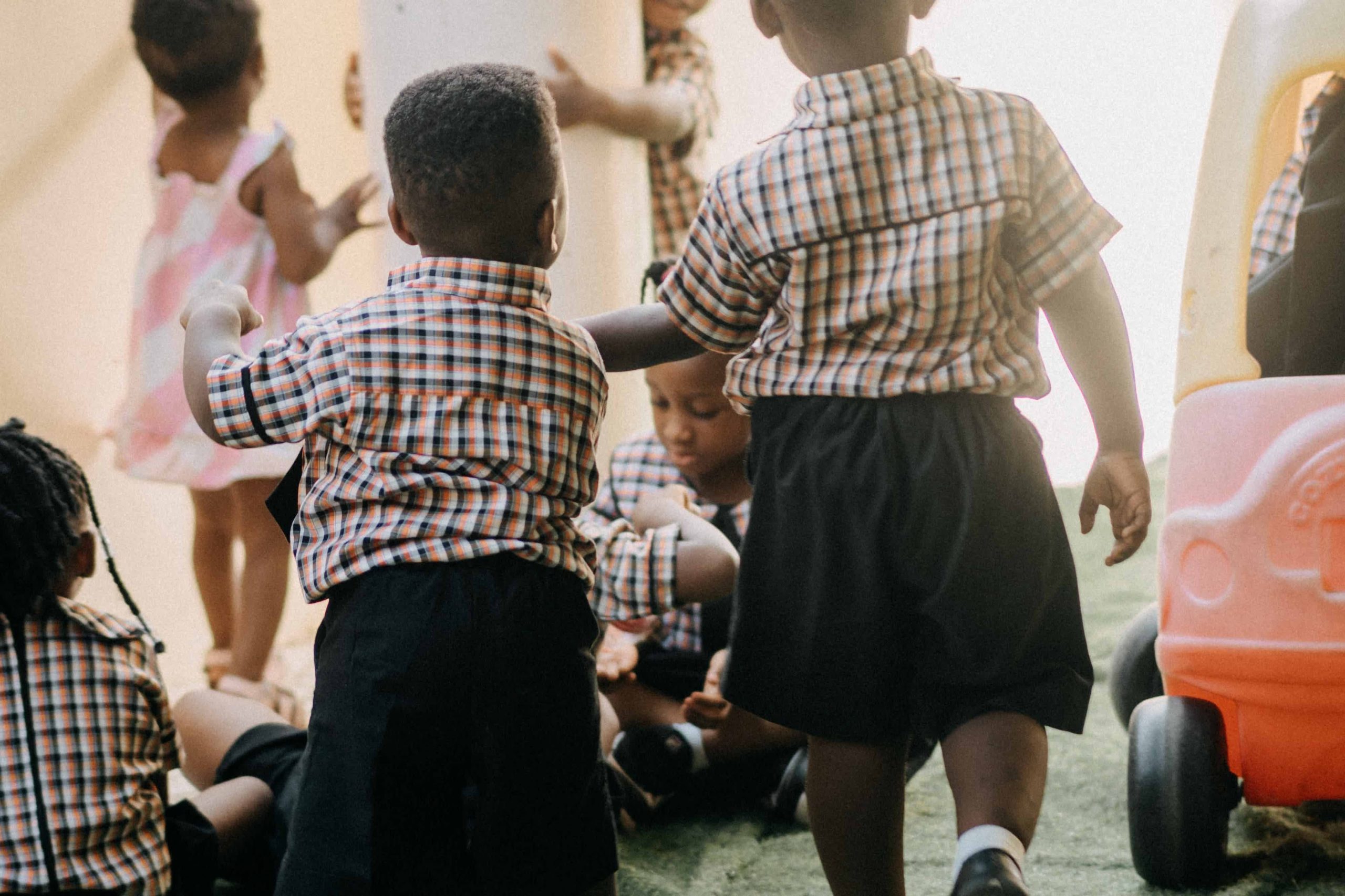
TPR storytelling (often shortened to TPRS) is an extension of classic TPR that keeps the physical action but adds narrative, letting students use the vocabulary they have learned inside a story they hear, watch, act out and eventually retell themselves. Where standard TPR usually stays at the level of isolated commands, such as “jump” or “sit down”, TPRS strings vocabulary into a mini plot with characters and events, so students see the same words used meaningfully in context rather than in a list.
Documented use of TPR storytelling to develop fluency and literacy shows it works particularly well for learners who need an active, textbook-free route into a new language, since it produces quick results without requiring literacy in the target language first. TPRS is generally considered a natural next step once a class has built a solid bank of TPR commands, since it gives that vocabulary a reason to exist beyond the original drill.
For a TEFL teacher building a scheme of work, the practical sequence is usually: teach core vocabulary through classic TPR commands, then recycle that same vocabulary into a short TPR story a lesson or two later. This keeps the physical, low-stress entry point of TPR while pushing students gradually toward genuine language production, rather than leaving them stuck at the comprehension stage indefinitely.
How do you adapt total physical response for mixed level classes?
You adapt total physical response for mixed level classes by keeping the core command simple for everyone and layering complexity through pairing, sequencing and language demands rather than through the action itself. A beginner and an intermediate student can both physically “walk to the window and open it”, but you extend the task for the stronger student by having them also describe what they did afterwards, or give the same instruction to a partner using their own words.
Three adaptations cover most mixed-level TEFL classrooms:
- Stack commands for higher levels: beginners get single commands (“stand up”), stronger students get two or three step sequences (“stand up, turn around twice, then sit down again”).
- Add a verbal layer for confident speakers: ask stronger students to narrate the action as they perform it, while beginners are only asked to perform it silently.
- Use peer teaching: pair a stronger student with a beginner and have the stronger student give commands in English, reinforcing the language for both without singling anyone out.
Teachers who complete broader classroom skills training, including a 120 Hour Advanced TEFL Course, typically cover this kind of differentiation directly, since managing a room where five ability levels sit side by side is one of the most common real-world challenges new teachers report in their first term abroad or online.
Free teacher tool
Want proof of your classroom-tech skills too?
Schools and employers now shortlist teachers for AI skills. Methods like TPR show schools you understand hands-on teaching. Our sister site tefl.ai runs a free 6-minute check, 12 quick questions and an instant certificate you can add straight to your CV.
Frequently asked questions
What does TPR stand for in teaching?
TPR stands for Total Physical Response. It is a language teaching method developed by James Asher in the 1960s in which learners respond to spoken commands with physical movement rather than speech, so they demonstrate understanding by acting rather than by talking.
Who invented Total Physical Response?
James J. Asher, a professor of psychology at San José State University, developed the method. His 1966 review of five pilot studies, teaching Japanese and Russian to adults and children, is the founding reference for the method and is held in the ERIC education research database as record ED028664.
What age group is TPR best for?
TPR works best with beginners of any age and with young learners in particular, because it teaches concrete, physically demonstrable vocabulary without needing translation. It can be adapted for teenagers through competitive games and for adults through workplace instruction sequences, but it loses its novelty quickly with advanced learners.
What is an example of a TPR activity?
Simon Says is the most widely used example. The teacher gives commands such as “touch your nose” or “stand up”, models the action, and the class performs it. Action songs, mime and guess games, TPR storytelling and multi-step command chains are the other standard activities.
What are the disadvantages of Total Physical Response?
TPR teaches abstract vocabulary poorly, because words like “opinion” or “although” cannot be physically demonstrated. It also builds listening and comprehension far more effectively than speaking or writing, so learners taught only through TPR can follow instructions well and still freeze when asked an open question. It can be difficult to run in very large classes or cramped rooms.
Is TPR the same as TPR storytelling?
No. TPR storytelling, or TPRS, is an extension of the method. Classic TPR works at the level of isolated commands; TPRS strings the same vocabulary into a short narrative that students hear, act out and eventually retell, which pushes them from comprehension towards production.
Key takeaways
| Point | Detail |
|---|---|
| What TPR is | A method that teaches language through commands paired with physical movement, developed by James Asher |
| Why it works | Links vocabulary to physical memory and removes speaking pressure in the early stages |
| Best fit | Beginners, young learners and concrete, action-based vocabulary |
| Main limitation | Weak for abstract vocabulary and does not build speaking fluency alone |
| Practical use | Works best as one tool inside a varied lesson, not a standalone method |
Total physical response: a practitioner’s view

Most new teachers try TPR for the first time out of necessity rather than theory. You are standing in front of twelve eight year olds with zero shared vocabulary, a whiteboard marker in hand, and precisely no way to explain the word “jump” except by jumping. That accidental first attempt usually works, and it is often the moment a new teacher realises how much classroom instruction depends on things other than talking.
What experienced teachers eventually learn is that TPR’s real value is not the vocabulary list it teaches. It is the classroom management tool it hands you. A class that is bored, restless or simply too shy to speak can usually be pulled back into a lesson with sixty seconds of Simon Says, regardless of what the syllabus says you are meant to be covering that hour. Used sparingly and deliberately, rather than as a full lesson plan, TPR earns its place as one of the most reliable tools a TEFL teacher carries into any classroom, at any age group, in any country.
The honest limitation worth repeating: TPR teaches understanding fast, but understanding is not the same as fluent, spontaneous speech. Teachers who rely on it exclusively often produce students who can follow instructions perfectly and still freeze when asked an open question. The method earns its keep as a component of a broader toolkit, not a replacement for genuine speaking practice.
Related reading
- TEFL qualifications and terminology explained, the reference page every method and acronym on this site links back to.
- What is the communicative approach in ESL teaching?
- What is the Grammar Translation Method?
Build your classroom toolkit with The TEFL Institute
Methods like Total Physical Response are exactly the kind of practical, classroom-ready skill covered across The TEFL Institute’s accredited courses, alongside classroom management, lesson planning and teaching young learners. Whether you are preparing for your first placement or adding structured methodology knowledge to years of informal teaching experience, a recognised TEFL qualification gives you the full toolkit, not just one technique.
Explore the 120 Hour Advanced TEFL Course to build a complete methodology foundation, including practical, hands-on approaches like TPR that you can use from your very first lesson.
We love taking your call.

TEFL Institute guides
Plan for 2027
Japan
JET, ALT and eikaiwa pay
Read the guide
Plan for 2027
Cambodia
Pay, requirements and visas
Read the guide
Plan for 2027
South Korea
EPIK, hagwons and pay
Read the guide
Plan for 2027
Thailand
Visas and teaching licences
Read the guide
Plan for 2027
Mexico
Jobs, pay and cities
Read the guide
TPR was developed by James Asher, a professor of psychology at San José State University, in the 1960s. His research found that pairing spoken commands with physical actions produced stronger recall than passive listening alone, particularly for adult learners of Japanese and Russian.
Yes, though it works best as a vocabulary warm-up or memory technique for adults rather than a full method. Framing TPR explicitly as a deliberate learning strategy, rather than a childish exercise, helps adult learners engage with it more readily in class.
TPR is most effective with beginners and young learners, particularly ages three to eleven, where songs, games and simple commands map naturally onto physical actions. It can be adapted for teenagers and adults but needs a competitive or practical framing to stay engaging.
TPR struggles to teach abstract vocabulary that cannot be physically demonstrated, such as opinions or emotions, and it does not directly build speaking fluency. It works best as one tool inside a broader lesson, not as a complete standalone method.
Simon Says is a classic TPR activity: the teacher gives commands such as “touch your head” or “jump twice”, and students only act when the command starts with “Simon says”. It reinforces vocabulary and listening skills without requiring any speech.