

 United Kingdom (UK)
 United States (US)
 Canada
 South Africa
 India
India Australia
 New Zealand
 China
China Russia
 Germany
 France
 Spain
Spain Netherlands
 Vietnam
 United Arab Emirates
 Italy
Italy Poland
 Thailand
 Türkiye










 Algeria



Hybrid TEFL Programs: Why They Matter for Aspiring Teachers
Hybrid TEFL Programs: Why They Matter for Aspiring Teachers

Over 50 percent of American educators now consider hybrid TEFL programs as a top choice for flexible teacher training. With diverse career demands and shifting global expectations, American professionals need paths that fit their busy schedules while offering quality instruction. This guide cuts through confusion to explain how these modern programs blend online theory with real-world practice, revealing why so many are making the switch and what benefits matter most for today’s educators.
Table of Contents
- Defining Hybrid TEFL Programs Clearly
- Hybrid TEFL Program Formats Compared
- How Hybrid TEFL Blends Theory And Practice
- Requirements And Accreditation Standards
- Benefits For Diverse Learner Profiles
- Potential Challenges And How To Avoid
- Alternatives To Hybrid TEFL Explained
Key Takeaways
| Point | Details |
|---|---|
| Hybrid TEFL Programs | These combine online coursework with practical in-person experiences, offering a flexible pathway for aspiring English educators. |
| Flexible Learning Models | Various blended learning formats cater to diverse educator needs, allowing tailored approaches to teacher training. |
| Integration of Theory and Practice | Programs effectively merge academic theories with practical teaching skills, preparing educators for real-world challenges. |
| Accreditation Importance | Ensuring that a TEFL program is accredited is crucial for global teaching opportunities and meeting international standards. |
Defining hybrid TEFL programs clearly
Hybrid TEFL programs represent an innovative approach to teacher training that combines the best aspects of traditional classroom learning with modern digital education techniques. These programs blend online coursework with in-person practical experiences, creating a comprehensive and flexible pathway for aspiring English language educators.
At its core, blended learning in TEFL integrates digital educational materials with face-to-face classroom methods. This approach allows participants to access theoretical content online while still receiving critical hands-on training in real-world teaching environments. The digital components typically include interactive modules, video lectures, and virtual assignments, while the in-person segments focus on practical teaching demonstrations, peer interactions, and direct instructor feedback.
The key features of hybrid TEFL programs often include:
- Flexible online learning modules that can be completed at the student’s own pace
- Scheduled in-person or virtual workshops for practical skills development
- Real classroom observation and teaching practice opportunities
- Comprehensive curriculum covering language teaching methodologies
- Professional certification recognized by international educational institutions
These programs have become increasingly popular because they address multiple learning styles and professional development needs. Understanding the fundamentals of TEFL is crucial, and hybrid programs provide an adaptable framework for gaining comprehensive teaching skills without the rigid constraints of traditional full-time, on-campus training. By combining digital convenience with structured practical experiences, hybrid TEFL programs offer an optimal solution for educators seeking flexible, high-quality professional certification.
Hybrid TEFL program formats compared
Blended learning models in TEFL certification offer diverse approaches to professional teacher training, allowing educators to choose formats that best match their learning preferences and lifestyle constraints. These program formats range from highly structured to remarkably flexible, providing multiple pathways for aspiring English language instructors.
Blended learning models include several distinct approaches, each designed to accommodate different educational needs. The most common formats can be categorized into six primary structures:
- Face-to-Face Driver Model
- Majority of instruction occurs in traditional classroom settings
- Online components supplement in-person learning
- Ideal for students who prefer direct instructor interaction
- Rotation Model
- Students alternate between online and in-person learning environments
- Structured schedule of digital and physical classroom time
- Provides balanced approach to theoretical and practical training
- Flex Model
- Predominantly online curriculum with optional in-person support
- Students have maximum scheduling flexibility
- Self-paced learning with on-demand instructor assistance
- Lab Model
- Specific courses conducted in computer labs or virtual environments
- Structured digital learning experiences
- Emphasizes technological skills and digital teaching competencies
- Self-Blend Model
- Students independently supplement traditional learning with online resources
- Complete autonomy in selecting additional digital training materials
- Allows for personalized learning enhancement
- Online Driver Model
- Primary instruction delivered through digital platforms
- Minimal in-person interaction
- Maximum flexibility for remote learners
Choosing the right hybrid TEFL program format depends on individual learning styles, professional goals, and personal commitments. Prospective teachers should carefully evaluate each model’s structure, considering factors like time availability, preferred learning method, and specific certification requirements.
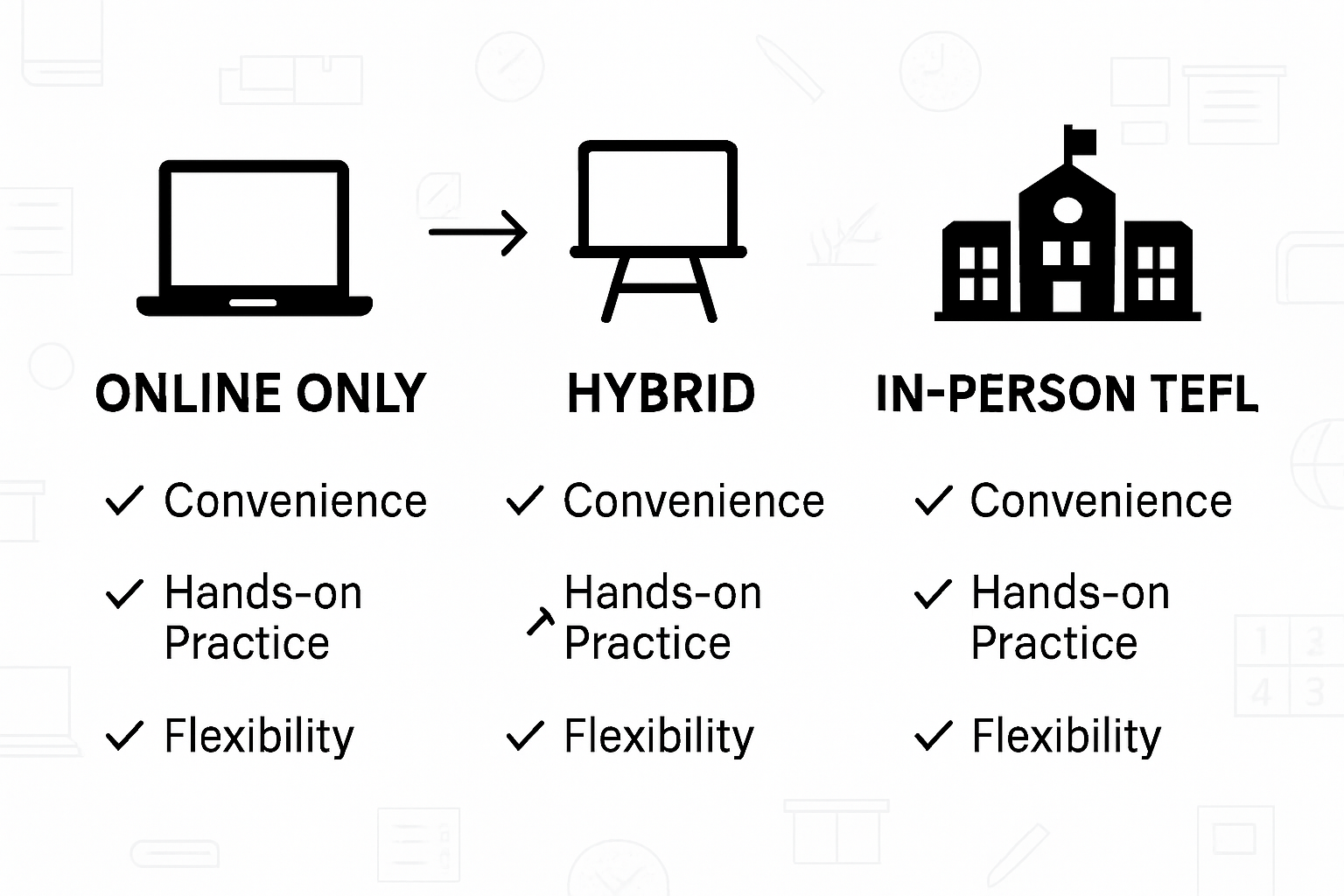
How hybrid TEFL blends theory and practice
Hybrid TEFL programs masterfully integrate academic theory and practical teaching skills, creating a comprehensive learning experience that prepares educators for real-world classroom challenges. Practical teaching methods form the cornerstone of these innovative certification programs, ensuring that teachers develop both intellectual understanding and hands-on instructional capabilities.
The theoretical components of hybrid TEFL programs typically encompass critical areas of language education, including:
- Linguistic theory and language acquisition principles
- Classroom management strategies
- Pedagogical approaches to second language instruction
- Cultural communication frameworks
- Assessment and evaluation techniques
Practical training elements complement these theoretical foundations through structured experiences that simulate authentic teaching environments. Students engage in:
- Microteaching sessions with peer and instructor feedback
- Virtual classroom simulations
- Supervised teaching practicums
- Observation of experienced language instructors
- Interactive workshop scenarios
By seamlessly blending digital learning modules with immersive teaching experiences, hybrid TEFL programs create a dynamic educational pathway. The 190 Hour Hybrid Level 5 TEFL Diploma exemplifies this approach, providing aspiring teachers with a comprehensive toolkit of theoretical knowledge and practical skills necessary for successful international language education. This integrated model ensures that graduates are not just academically prepared, but also confidently equipped to navigate the complex and rewarding world of English language instruction.

Requirements and accreditation standards
TEFL certification requires rigorous standards to ensure quality education for aspiring language instructors. Understanding course accreditation is crucial for prospective teachers seeking internationally recognized qualifications that will open doors to global teaching opportunities.
Key requirements for reputable TEFL programs typically include:
- Minimum 120 training hours
- Comprehensive theoretical and practical curriculum
- Supervised teaching practicum
- Assessment of language teaching skills
- Demonstrated proficiency in English language instruction
- International recognition of certification
Accreditation standards serve multiple critical purposes in professional TEFL education:
- Validate the educational quality of certification programs
- Ensure consistent teaching methodology standards
- Provide quality assurance for potential employers
- Establish professional competency benchmarks
- Create transparent evaluation mechanisms for teacher preparation
Prospective teachers should carefully evaluate TEFL course accreditation from recognized educational authorities. Programs accredited by respected international bodies like the Distance Education Accrediting Commission (DEAC) provide additional credibility and assurance of meeting rigorous professional standards. Ultimately, choosing an accredited hybrid TEFL program ensures that teachers receive comprehensive training that meets global educational expectations and prepares them for successful international teaching careers.
Benefits for diverse learner profiles
Hybrid TEFL programs offer remarkable flexibility that caters to the unique learning needs of diverse educational backgrounds and professional circumstances. Online teaching opportunities have expanded dramatically, making these adaptable certification programs increasingly valuable for educators with varied personal and professional constraints.
Different learner profiles benefit from hybrid TEFL programs in distinct ways:
-
Working Professionals
- Can complete coursework around existing job schedules
- Access training without career interruption
- Learn at personal pace and convenience
-
International Students
- Overcome geographic and time zone limitations
- Participate in globally recognized certification
- Gain cross-cultural teaching perspectives
-
Career Changers
- Transition smoothly into teaching profession
- Minimize financial investment compared to traditional programs
- Build credentials while maintaining current employment
-
Remote Learners
- Complete entire certification from home
- Access high-quality instruction without relocation
- Utilize digital learning platforms effectively
Additionally, culturally sensitive teaching approaches are increasingly important in hybrid TEFL programs. These programs recognize that modern language education requires more than technical skills—they demand nuanced understanding of diverse learning styles and cultural contexts. By integrating flexible learning models, hybrid TEFL certifications empower educators from all backgrounds to develop comprehensive teaching competencies tailored to global educational environments.
Potential challenges and how to avoid
Hybrid TEFL programs, while innovative, present unique challenges that require strategic navigation and proactive planning. Effective technology integration remains crucial in addressing potential learning obstacles and ensuring comprehensive educational experiences.
Common challenges in hybrid TEFL programs include:
-
Technical Complexity
- Navigating multiple digital learning platforms
- Ensuring reliable internet connectivity
- Managing technical skill variations among learners
-
Motivation and Self-Discipline
- Maintaining consistent engagement
- Balancing independent study with structured learning
- Overcoming potential isolation in online environments
-
Communication Barriers
- Limited direct instructor interaction
- Reduced peer collaboration opportunities
- Potential misunderstandings in virtual communication
-
Time Management
- Coordinating online and in-person learning components
- Balancing professional and educational commitments
- Creating effective personal study schedules
Successful navigation of these challenges requires a multifaceted approach. Teaching English for specific contexts demands adaptability and strategic preparation. Prospective students should develop robust digital literacy skills, establish clear communication channels with instructors, create structured personal learning plans, and leverage technological resources to maximize their hybrid TEFL learning experience. By anticipating potential obstacles and implementing proactive strategies, learners can transform these challenges into opportunities for professional growth and educational excellence.
Alternatives to hybrid TEFL explained
TEFL certification approaches vary significantly, offering aspiring teachers multiple pathways to professional qualification. Understanding TEFL certification options requires careful examination of the strengths and limitations inherent in different training models.
The primary alternatives to hybrid TEFL programs include:
- Fully Online TEFL Courses
- Maximum flexibility and convenience
- Lower cost compared to in-person training
- Self-paced learning environment
- Limited hands-on teaching practice
- Potential challenges with practical skill development
- Traditional Classroom-Based TEFL
- Structured, face-to-face learning experience
- Direct instructor interaction
- Immediate peer collaboration
- Higher cost and less flexible scheduling
- Geographic limitations for participation
- In-Person Intensive TEFL Programs
- Concentrated training over short period
- Immediate feedback and demonstration
- Deep immersion in teaching methodologies
- Significant time commitment
- Often location-specific requirements
TEFL diploma and certificate distinctions play a crucial role in understanding these alternatives. Each approach offers unique advantages, but hybrid programs consistently provide the most balanced and comprehensive professional preparation. By combining digital flexibility with practical training opportunities, hybrid TEFL certifications address the complex needs of modern language educators, making them an increasingly preferred choice for aspiring teachers seeking adaptable and thorough professional development.
Unlock Your Teaching Potential with Hybrid TEFL Programs
Aspiring teachers often face the challenge of balancing flexible learning with the need for hands-on practical experience. Hybrid TEFL programs are designed to solve this by blending online coursework with real-world teaching practice. If you are looking for a certification that adapts to your schedule while providing comprehensive training in language teaching methodologies, classroom management, and culturally sensitive approaches, hybrid TEFL is an ideal choice. These programs help you overcome common barriers such as time constraints, limited geographic access, and the need for credible accreditation.
Take the next step in your teaching career today by exploring TEFL Institute’s diverse range of hybrid options that combine flexibility, quality, and global recognition. Discover how you can build essential skills through both online modules and practical teaching experiences with the 190 Hour Hybrid Level 5 TEFL Diploma. Visit TEFL Institute now to review our full course catalog, and start your journey toward becoming a confident, certified English language teacher ready for international and online teaching opportunities.
Frequently Asked Questions
What are hybrid TEFL programs?
Hybrid TEFL programs combine online coursework with in-person practical experiences, allowing aspiring teachers to gain theoretical knowledge and hands-on training in teaching English as a foreign language.
How do hybrid TEFL programs differ from traditional TEFL courses?
Hybrid TEFL programs blend digital learning with face-to-face instruction, offering more flexibility than traditional TEFL courses, which are typically classroom-based and rigid in scheduling.
What are the key benefits of enrolling in a hybrid TEFL program?
Hybrid TEFL programs provide flexibility for busy professionals, opportunities for real classroom practice, and a comprehensive curriculum that prepares educators for diverse teaching environments.
Are hybrid TEFL programs recognized internationally?
Yes, many hybrid TEFL programs are accredited and recognized by international educational institutions, providing graduates with globally accepted certifications.
Recommended
- Hybrid TEFL: Complete Guide to Flexible Certification | TEFL Institute
- The Essential Guide to Hybrid Learning in TEFL | TEFL Institute
- What is TEFL? Understanding Teaching English as a Foreign Language | TEFL Institute
- 180 Hour Level 5 TEFL Diploma | Ofqual Regulated | USA
- 21st Century Teaching Skills: Everything You Need to Know – Projector Display
- The Essential Guide to the Future of Entrepreneurship Education – Nomad Excel – Your Entrepreneurial Adventure Starts Here
