

 United Kingdom (UK)
 United States (US)
 Canada
 South Africa
 India
India Australia
 New Zealand
 China
China Russia
 Germany
 France
 Spain
Spain Netherlands
 Vietnam
 United Arab Emirates
 Italy
Italy Poland
 Thailand
 Türkiye










 Algeria



ESL Teaching Materials Explained: Understanding Their Importance
ESL Teaching Materials Explained: Understanding Their Importance

ESL teaching materials shape the journey for millions of people learning English around the world. Some of these resources can triple student engagement and help learners progress much faster than outdated worksheets. The wild part is that the best materials do more than just teach language rules. They unlock cultural understanding and make learning feel real, not just academic.
Table of Contents
- Defining ESL Teaching Materials And Their Purpose
- The Significant Of Quality ESL Teaching Materials
- Types Of ESL Teaching Materials And Their Uses
- How ESL Teaching Materials Support Different Learning Styles
- Evaluating ESL Teaching Materials For Effectiveness
Quick Summary
| Takeaway | Explanation |
|---|---|
| Quality materials enhance language learning | High-quality ESL resources improve learner engagement and language acquisition proficiency. |
| Diverse resources support various learning styles | Materials should cater to visual, auditory, and kinetic learners, ensuring broad access to language learning. |
| Continuous evaluation is crucial | Regular assessment of teaching materials ensures they remain relevant and effective in meeting learner needs. |
| Cultural relevance boosts understanding | Incorporating authentic cultural content helps students grasp language nuances and real-world applications. |
| Interactive tools increase student engagement | Digital platforms and multimedia resources facilitate active participation, making learning more enjoyable and effective. |
Defining ESL Teaching Materials and Their Purpose
ESL (English as a Second Language) materials represent crucial resources designed to support language acquisition and communication skills development for non-native English speakers. These specialized instructional tools bridge linguistic gaps, enabling learners to understand, practice, and master English language competencies across various contexts.
Core Components of ESL Teaching Materials
ESL materials encompass a comprehensive range of educational resources specifically crafted to address language learning challenges. According to the U.S. Department of Education, these materials typically include:
- Textbooks and workbooks focusing on grammar, vocabulary, and communication skills
- Interactive digital platforms and multimedia learning resources
- Audio and video content designed for listening comprehension
- Authentic cultural materials that provide context and real-world language applications
Pedagogical Purpose and Strategic Design
The fundamental purpose of ESL materials extends beyond simple language instruction. These resources are strategically developed to create immersive, engaging learning experiences that facilitate comprehensive language development. Educators carefully design materials to address multiple language domains, including reading, writing, listening, and spoken communication.
Teaching materials must accommodate diverse learning styles and proficiency levels, providing scaffolded approaches that support learners from beginner to advanced stages. By integrating culturally relevant content and contextual learning strategies, these materials help students not only learn language mechanics but also understand cultural nuances and communication contexts.
Professional ESL materials recognize that language learning is not a linear process but a complex, multifaceted journey requiring adaptive, flexible resources that can meet individual learner needs and learning pace.
The Significant of Quality ESL Teaching Materials
Quality ESL materials are fundamental to effective language instruction, serving as critical tools that transform language learning from a challenging process into an engaging and accessible experience. These resources go far beyond simple text and exercises, representing sophisticated educational instruments designed to support comprehensive language acquisition.
This table summarizes the major characteristics of high-quality ESL materials as outlined in the article to help educators and learners identify what sets effective resources apart.
| Characteristic | Description |
|---|---|
| Adaptability | Can be adjusted to fit different learning styles and proficiency levels |
| Cultural Relevance | Reflects authentic cultural content and real-world context |
| Clear Objectives | Defines progressive language goals and skill development |
| Interactivity | Encourages engagement through active and varied experiences |
Characteristics of High-Quality ESL Materials
Exceptional ESL materials share several distinguishing characteristics that elevate them from standard instructional resources. According to research from the ResearchGate, these materials demonstrate:
- Adaptability to diverse learning styles and student proficiency levels
- Cultural relevance and contextual authenticity
- Clear learning objectives and progressive skill development
- Interactive and engaging content design
Impact on Language Learning Outcomes
High-quality ESL materials directly influence students’ linguistic progression by providing structured yet flexible learning pathways. They create immersive environments where learners can develop practical communication skills while simultaneously understanding grammatical nuances and cultural contexts. Well-designed materials incorporate multiple sensory learning approaches, enabling students to absorb language through visual, auditory, and interactive experiences.
Moreover, superior ESL materials recognize individual learning differences, offering scaffolded support that allows learners to progress at their own pace. Learn more about effective online English language strategies that complement these comprehensive instructional resources. By presenting language as a living, dynamic system rather than a rigid set of rules, quality materials inspire learners to embrace linguistic challenges with confidence and curiosity.
Types of ESL Teaching Materials and Their Uses
ESL materials are diverse and multifaceted, designed to address various language learning dimensions and support learners through different stages of linguistic development. Understanding these materials helps educators create comprehensive and engaging language instruction strategies.
The following table compares the key types of ESL teaching materials discussed in the article, highlighting their core features and main benefits to learners.
| Material Type | Description | Main Benefits |
|---|---|---|
| Print-Based & Traditional | Physical resources like textbooks, workbooks, graded readers, and worksheets | Structured learning; reinforces foundational skills |
| Digital & Multimedia | Online apps, video lessons, interactive platforms, conversation tools | Interactive, engaging, supports diverse learning styles |
| Authentic & Contextual | Newspapers, podcasts, movie clips, social media content | Cultural relevance; real-world language exposure |
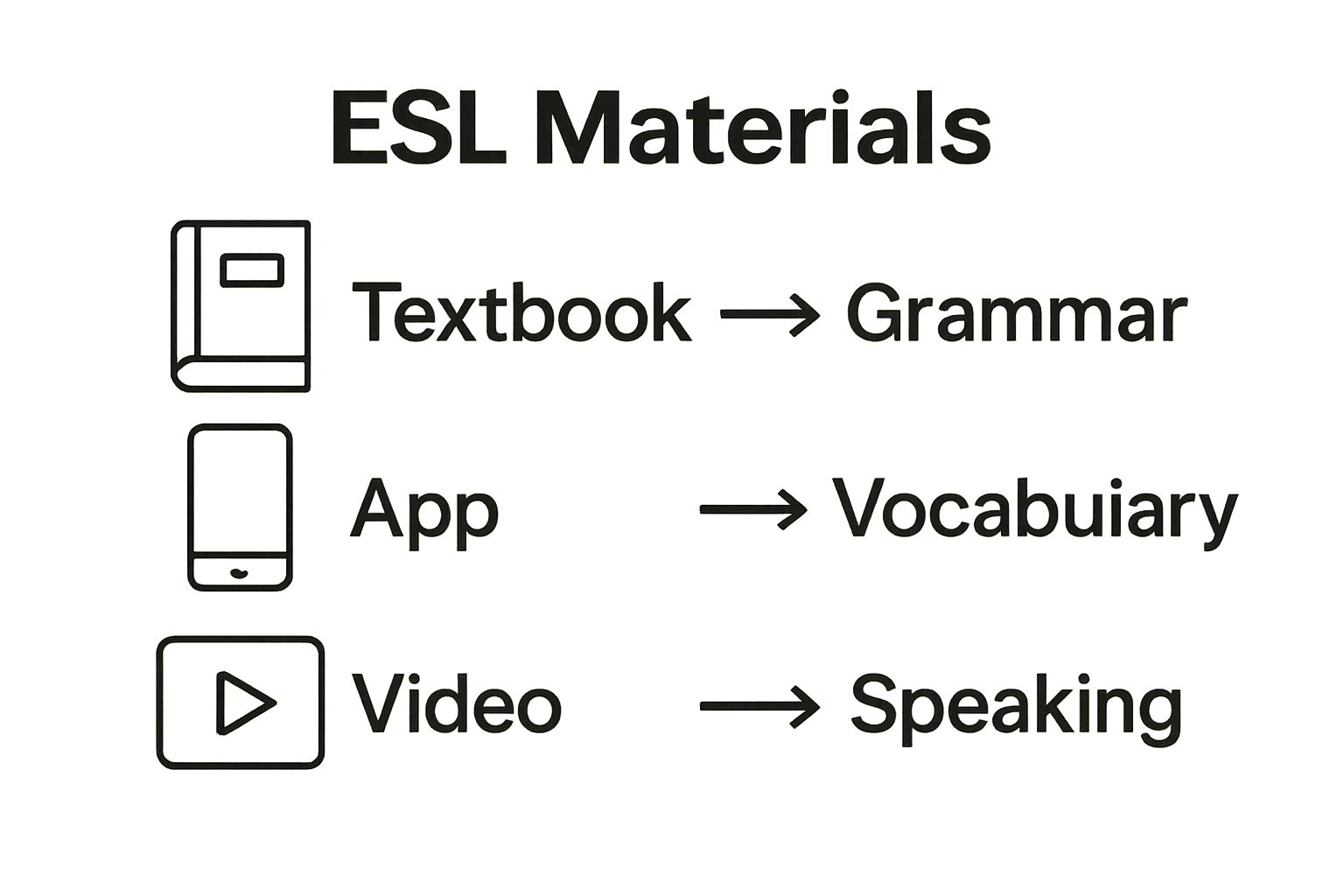
Print-Based and Traditional Learning Resources
Traditional ESL materials remain fundamental in language education. According to the U.S. Department of State’s American English website, these resources typically include:
- Textbooks with structured grammatical progressions
- Workbooks for independent practice and skill reinforcement
- Supplementary reading materials like graded readers
- Printed worksheets targeting specific language skills
Digital and Multimedia ESL Teaching Tools
Modern language learning increasingly relies on digital resources that provide interactive and immersive experiences. Technological platforms offer dynamic ways to engage learners, including:
- Online language learning applications
- Video-based instructional content
- Interactive grammar and vocabulary websites
- Virtual conversation practice platforms
Authentic and Contextual Learning Materials
Authentic materials bridge theoretical language learning and real-world communication. These resources expose learners to genuine language usage across different contexts. Check out our comprehensive guide to crafting effective lesson plans to understand how to integrate these materials effectively. By incorporating newspapers, podcasts, movie clips, and social media content, educators can create rich, contextually relevant learning experiences that simulate authentic language interactions and prepare students for practical communication scenarios.
How ESL Teaching Materials Support Different Learning Styles
Learning styles represent unique approaches individuals use to absorb, process, and retain information. In ESL education, recognizing and supporting these diverse learning preferences is crucial for creating inclusive and effective language instruction environments that enable students to maximize their linguistic potential.
Understanding Learning Style Diversity
According to research from the National Library of Medicine, ESL learners demonstrate significant variations in how they comprehend and internalize language concepts. These differences manifest across multiple dimensions:
- Visual learners who prefer graphical and spatial representations
- Auditory learners who excel with spoken instructions and verbal explanations
- Kinetic learners who learn best through physical movement and hands-on experiences
- Reading/writing learners who engage most effectively with text-based materials
Adaptive Materials for Multisensory Learning
Comprehensive ESL materials strategically design resources that simultaneously engage multiple sensory channels. This multisensory approach ensures that learners with different cognitive processing styles can access and understand language content effectively. By incorporating diverse instructional strategies such as interactive digital platforms, audio recordings, visual diagrams, and tactile learning activities, educators create flexible learning environments that accommodate individual preferences.
Personalized Language Learning Experiences
Modern ESL materials recognize that language acquisition is not a one-size-fits-all process. Learn more about designing effective language learning strategies to understand how personalized approaches can transform language education. By offering multiple entry points for understanding grammatical structures, vocabulary, and communication skills, these materials empower learners to explore language through their most comfortable and natural learning pathways. The goal is not just linguistic proficiency, but creating an engaging, supportive educational experience that builds learner confidence and motivation.

Evaluating ESL Teaching Materials for Effectiveness
Effective evaluation of ESL materials is a systematic process that goes beyond superficial assessment, requiring comprehensive analysis of instructional resources to ensure they meet the complex linguistic and educational needs of learners. This critical examination helps educators select and develop materials that genuinely support language acquisition and student engagement.
Key Criteria for Material Assessment
According to the Center for Applied Linguistics, evaluating ESL materials involves examining multiple dimensions of instructional resources. Comprehensive assessment requires educators to consider:
- Alignment with learner proficiency levels
- Cultural relevance and contextual authenticity
- Cognitive complexity and skill progression
- Potential for student engagement and motivation
- Adaptability to diverse learning environments
Quantitative and Qualitative Evaluation Methods
Effective material evaluation employs both quantitative and qualitative approaches to provide a holistic understanding of instructional resources. Quantitative methods might include measuring student performance metrics, comprehension rates, and skill development benchmarks. Qualitative assessments involve deeper analysis of material design, instructional strategies, and learner feedback.
Ongoing Assessment and Material Refinement
Explore strategies for effective language learning implementation to understand the importance of continuous evaluation. Effective ESL materials are not static documents but dynamic resources that require regular review and adaptation. Educators must consistently monitor material effectiveness, gather student and instructor insights, and be willing to modify or replace resources that no longer meet learning objectives. This iterative approach ensures that ESL materials remain responsive to changing linguistic needs, technological advancements, and emerging pedagogical strategies.
Unlock the Full Power of ESL Teaching Materials with TEFL Institute
Struggling to find or create ESL teaching materials that truly support every learner’s journey? As explained in our guide, not every resource can offer adaptable content or scaffolded support for various learning styles. Poorly chosen materials slow student progress, leave cultural gaps, and drain your classroom’s energy. Imagine finally having the confidence to select high-quality ESL resources that make your lessons clear, engaging, and relevant to the real world.
You do not need to face this challenge alone. The TEFL Institute empowers aspiring and experienced teachers through comprehensive online TEFL certification courses and practical guides. Dive deeper into effective lesson plan creation or learn about strategies for first-time teachers. Start transforming your ESL teaching toolkit today and bring your classroom to life with materials that work. Visit TEFL Institute now to level up your teaching future.
Frequently Asked Questions
What are ESL teaching materials?
ESL teaching materials are resources designed to support English language learning for non-native speakers. They include textbooks, workbooks, multimedia resources, and authentic materials that address language acquisition and communication skills.
Why are high-quality ESL materials important?
High-quality ESL materials are essential as they provide structured and engaging resources that enhance language learning. They support diverse learning styles and help learners develop their linguistic skills more effectively.
What types of ESL teaching materials exist?
ESL teaching materials vary widely and include print-based resources like textbooks and workbooks, digital tools such as language learning apps and video content, as well as authentic materials like newspapers and podcasts, which expose learners to real-world language use.
How do ESL materials support different learning styles?
ESL materials are designed to engage multiple sensory channels, accommodating various learning styles such as visual, auditory, kinetic, and reading/writing learners. This approach ensures that all students can effectively access language content according to their preferences.
Recommended
- Survival Tips for Your First Day in the EFL Classroom–No Experience? No Problem!
- Understanding the TEFL Job Market
- Tips to find Free ESL Lesson Plans
- ESL Lesson Planning
- 7 Herramientas digitales para docentes que debes conocer