United Kingdom (UK)
 United States (US)
 Canada
 South Africa
 India
India Australia
 New Zealand
 China
China Russia
 Germany
 France
 Spain
Spain Netherlands
 Vietnam
 United Arab Emirates
 Italy
Italy Poland
 Thailand
 Türkiye










 Algeria



ESL classroom management: 5 steps for confident teaching
ESL classroom management: 5 steps for confident teaching
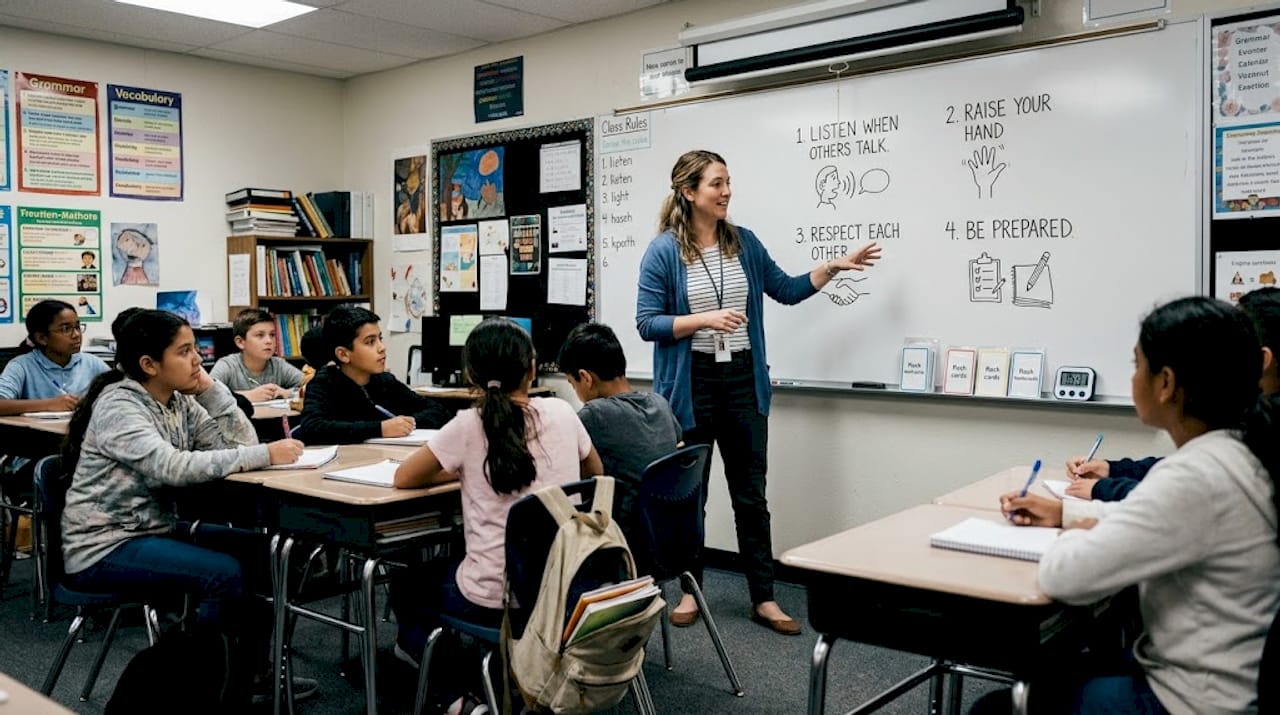
TL;DR:
- Effective ESL classroom management begins with understanding students’ backgrounds and clear visual expectations.
- Building routines, arranging the environment, and applying positive reinforcement foster student engagement.
- Long-term success relies on strong relationships, non-verbal signals, and ongoing strategy evaluation.
Managing an ESL classroom presents challenges that go well beyond knowing grammar rules or lesson content. When students speak different native languages, hold varied cultural expectations, and operate at uneven proficiency levels, even experienced teachers can feel unprepared. Core steps for ESL classroom management include setting clear expectations, organizing the physical space, building routines, applying positive reinforcement, and adjusting based on feedback. This guide walks through each step in practical terms, compares key approaches, and provides troubleshooting strategies so you can build genuine confidence in any ESL classroom.
Table of Contents
- Preparing for classroom management: Tools, materials, and prerequisites
- Step-by-step classroom management guide: Execution in real classrooms
- Troubleshooting and adapting: Handling challenges and common mistakes
- Verifying results: Evaluating and adjusting your classroom management strategy
- What most guides miss: The real keys to sustainable ESL classroom management
- Upgrade your classroom management skills with TEFL Institute
- Frequently asked questions
Key Takeaways
| Point | Details |
|---|---|
| Start with clear rules | Visuals and simple language help ESL students instantly understand classroom expectations. |
| Use routines for stability | Consistent procedures and positive reinforcement promote engagement and minimize disruptions. |
| Adapt and verify regularly | Continually evaluate effectiveness by monitoring student feedback and engagement data. |
| Focus on relationships | Building rapport and recognizing effort drives sustainable classroom management. |
| Troubleshoot creatively | Group work, station rotation, and cultural sensitivity solve common ESL classroom issues. |
Preparing for classroom management: Tools, materials, and prerequisites
Now that you understand why classroom management matters, let’s start by looking at what you’ll need to set yourself up for success. Effective classroom management does not begin when students walk through the door. It starts well before the first lesson, with deliberate preparation across tools, knowledge, and mindset.
Knowing your students is the first practical requirement. Understanding their language backgrounds, proficiency levels, and cultural contexts shapes every decision you make, from how you word instructions to how you arrange seating. Without this information, even well-designed rules can miss the mark.
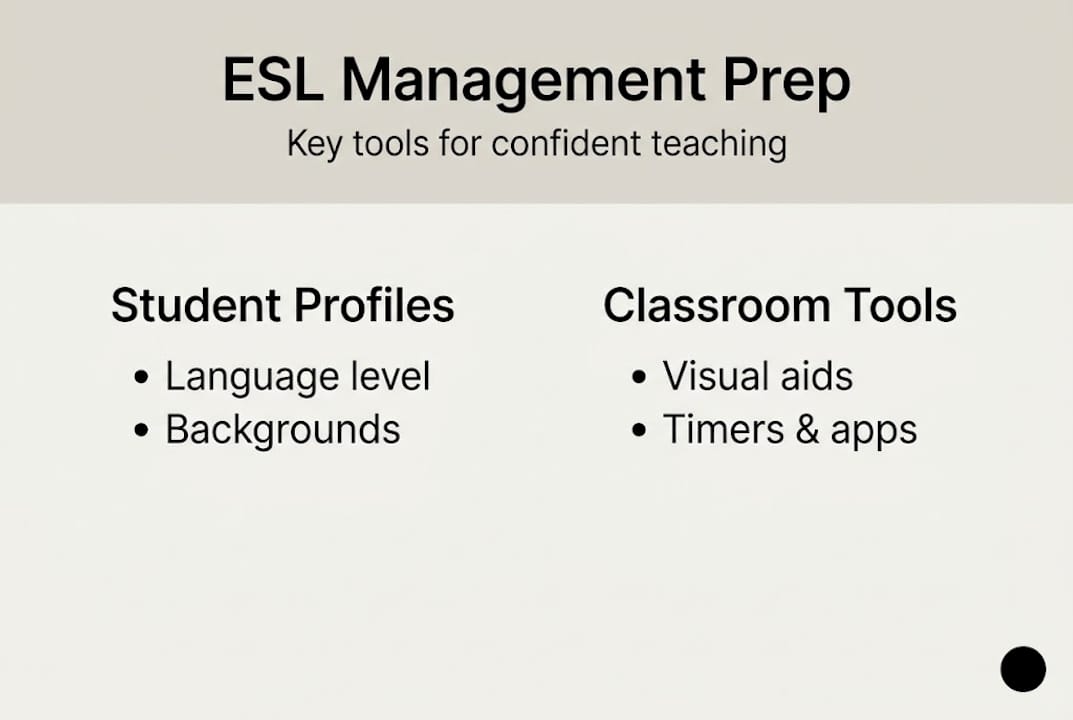
Visual materials are essential in ESL settings because language barriers make verbal instructions unreliable on their own. Establishing clear expectations using visuals and simple language is a foundational requirement. Printed or projected charts showing classroom rules, daily schedules, and behavior expectations give students a consistent point of reference, regardless of their current English level.
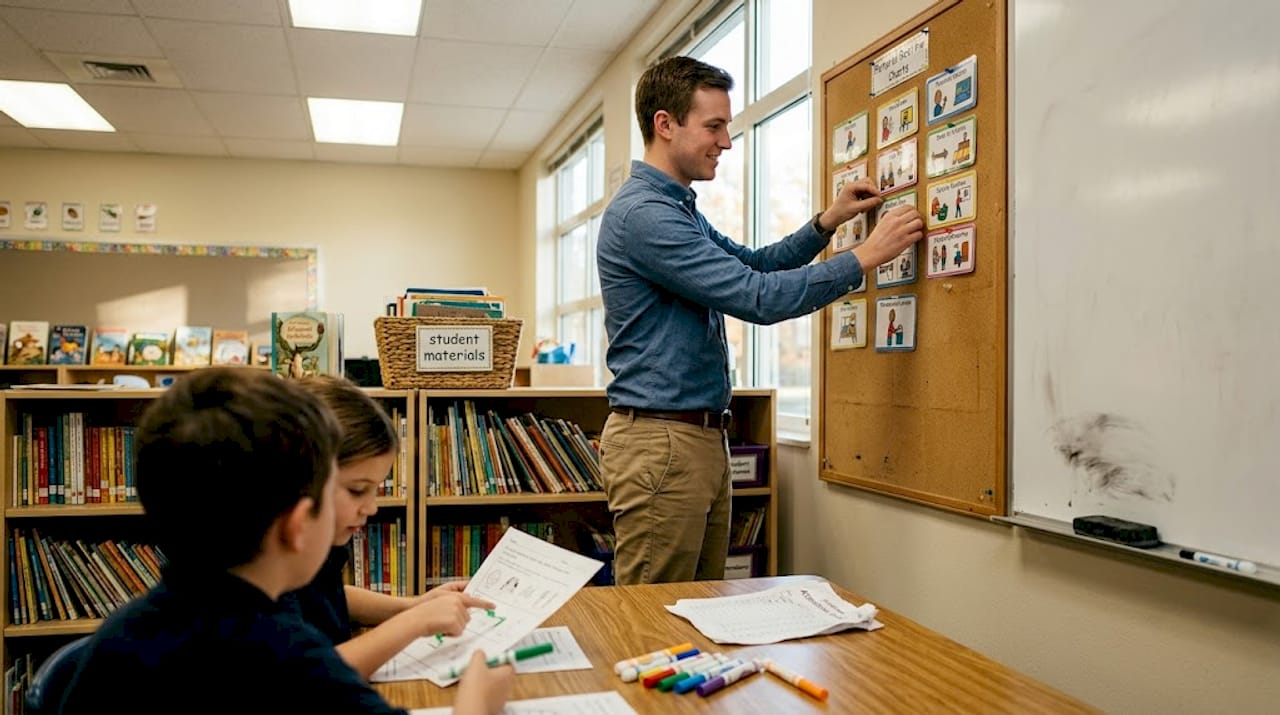
You will also benefit from digital tools for teachers that support engagement and organization, including timer apps, digital reward trackers, and interactive presentation platforms. These reduce the cognitive load on both teacher and student during transitions and activities.
Mental readiness matters just as much as physical materials. Adaptability and patience are not soft skills; they are operational requirements in multilingual classrooms where unexpected situations arise regularly. For additional practical guidance, ESL classroom management tips can help you plan for common scenarios before they occur.
Key preparation checklist:
- Printed visuals for classroom rules and daily routines
- Student background and proficiency level notes
- Positive reinforcement tools such as reward charts or sticker systems
- Simple, consistent language templates for instructions
- Digital tools for timers, interactive content, and engagement tracking
- A flexible mindset and contingency plan for disruptions
| Preparation area | Low readiness | High readiness |
|---|---|---|
| Visual materials | Verbal instructions only | Printed and displayed charts |
| Student knowledge | General assumptions | Assessed proficiency records |
| Reinforcement tools | Ad hoc praise | Structured reward systems |
| Digital support | None | Apps for timers and tracking |
| Mental flexibility | Fixed lesson scripts | Prepared contingency options |
Pro Tip: Create your visual rule and routine charts before the first class and laminate them for reuse. Students refer to these independently, which reduces repetitive verbal reminders and keeps your lesson momentum intact.
Step-by-step classroom management guide: Execution in real classrooms
With the necessary preparation in place, it’s time to put effective classroom management strategies into action. Knowing the steps is one thing; executing them under real classroom conditions requires deliberate sequencing.
Core management steps include setting clear expectations, arranging the environment, building routines, applying positive behavior systems, and adapting based on feedback. Each step builds on the previous one.
Step-by-step execution:
- Set rules with visuals and simple language. Post rules prominently and review them at the start of each class using short, direct sentences. Pair words with icons where possible.
- Organize the room for interaction. Arrange seating to support pair and group work. Clusters or U-shapes encourage student communication rather than passive listening.
- Establish daily routines. Open every class with a consistent greeting ritual. Use transition signals such as a clap pattern or countdown to move between activities without losing focus.
- Apply positive reinforcement. Use sticker charts, verbal praise, or point systems to acknowledge desired behavior immediately. Positive management strategies increase student engagement in measurable ways.
- Monitor and adapt. Observe participation patterns and behavioral trends weekly. Adjust groupings, rules, or reinforcement systems based on what the data shows.
For a more detailed breakdown of this process, the step-by-step classroom management approach used in TEFL contexts provides additional scenario-based examples.
Research shows that classroom management language makes up approximately 24% of total teacher talk time, which highlights how much of your verbal communication is devoted to organizing behavior rather than delivering content. Structuring that language intentionally makes a significant difference.
| Management step | Key action | Expected outcome |
|---|---|---|
| Rule-setting | Post visual charts | Consistent student reference |
| Room arrangement | Group or U-shape seating | Higher interaction rates |
| Routine development | Daily greeting and transitions | Reduced transition disruption |
| Positive reinforcement | Reward chart or praise system | Improved behavior compliance |
| Feedback adaptation | Weekly observation review | Responsive strategy refinement |
Pro Tip: Introduce one new routine per week rather than launching all systems simultaneously. Students adapt faster when changes are gradual, and you can assess what works before adding complexity. Explore additional behavior management ideas for young learners to expand your toolkit.
Troubleshooting and adapting: Handling challenges and common mistakes
Even with a solid plan, classrooms rarely follow scripts. Here’s how to troubleshoot and adjust when challenges arise.
The most common mistakes new ESL teachers make include setting unclear or overly complex rules, applying routines inconsistently, and responding to behavior with excessive reprimands. Research confirms that novice teachers use more reprimands, while sustained engagement responds better to positive reinforcement over time.
Large and mixed-level classes present particular challenges. Group and pair work with station rotation allows different proficiency groups to work at appropriate levels simultaneously, reducing frustration and increasing on-task time. Differentiated materials ensure that advanced students are challenged while beginners receive adequate support.
Cultural sensitivity is not optional in ESL settings. What reads as participation in one culture may appear disrespectful in another. Teachers who overlook this create confusion rather than order. Understanding student norms around eye contact, group work, and teacher authority prevents misinterpretation of behavior.
Online ESL teaching introduces additional variables. Effective online classroom dynamics depend on clear technical instructions, visual engagement tools, and structured interaction formats to replace the natural cues of a physical classroom.
“Positive reinforcement consistently outperforms punitive measures for long-term classroom engagement.”
Common challenges and responses:
- Unclear rules: Simplify language and add visual icons to all posted expectations
- Inconsistent routines: Use a daily checklist to apply the same opening and closing rituals each session
- Excessive reprimands: Redirect behavior with non-verbal cues before verbal intervention
- Large classes: Use station rotation and assign clear roles within groups
- Online disruptions: Set explicit tech protocols at the start of every session
| Approach | Traditional control | Student-centered |
|---|---|---|
| Rule-setting | Teacher-imposed | Co-constructed with students |
| Behavior response | Reprimands and consequences | Positive reinforcement systems |
| Classroom authority | Teacher-directed | Shared responsibility |
| Engagement style | Passive listening | Active learning strategies |
| Post-pandemic fit | Limited online adaptability | Strong online teaching alignment |
Pro Tip: Before using verbal correction, try proximity (moving closer to a distracted student), a visual signal, or a pause in your delivery. These non-verbal cues resolve many disruptions before they escalate. For a broader list, essential classroom management strategies outlines practical options by context. You can also find ESL classroom engagement ideas to replace reactive management with proactive design.
Verifying results: Evaluating and adjusting your classroom management strategy
Once you’ve implemented and adapted your strategies, it’s crucial to verify they’re having the desired impact. Evaluation is not a one-time review; it is an ongoing process that keeps your classroom management responsive and effective.
Monitoring and adjusting strategies based on feedback is essential for continuous classroom improvement. Without systematic tracking, it is easy to maintain routines that have stopped working or abandon strategies before they have had time to take effect.
Start with three observable indicators: attendance patterns, participation rates, and behavioral incidents per session. These are measurable and do not require complex tools. A simple notebook or spreadsheet works well for weekly records.
Student engagement and formative feedback are critical for verifying management effectiveness. Short exit slips, thumbs up or down signals, or a brief verbal check at the end of class give you real-time data without interrupting the lesson.
| Evaluation metric | What to track | Adjustment trigger |
|---|---|---|
| Attendance | Weekly patterns by student | Drop signals disengagement |
| Participation | Who responds and how often | Silence indicates exclusion |
| Behavioral incidents | Frequency and type | Increase requires rule review |
| Student feedback | Exit slips or verbal check | Negative trends prompt change |
| Strategy consistency | Routine adherence rate | Gaps require reinforcement |
Evaluation checklist for ongoing review:
- Review participation and behavior data every Friday
- Ask students one specific question about the week’s routines
- Adjust one element per week based on observed patterns
- Note which reinforcement strategies produced the best results
- Track changes and outcomes to build your personal management evidence base
For support with younger learner contexts, effective teaching strategies for young learners provides age-specific guidance. If you want a broader framework, the complete classroom management guide covers foundational principles in depth. Understanding emotional intelligence in education also strengthens your ability to interpret student feedback accurately.
Pro Tip: Keep a simple weekly log with three columns: what you tried, what happened, and what you will change. This habit builds a personal evidence base that improves your decision-making faster than any single guide can.
What most guides miss: The real keys to sustainable ESL classroom management
With your foundational steps in place, here’s a candid perspective that can transform your approach for the long haul.
Most classroom management guides focus on rules and systems, which are necessary but not sufficient. What separates consistently effective ESL teachers from technically prepared ones is the quality of relationships they build with students. Shifting attention to process and effort over outcomes, greeting students by name, and showing genuine curiosity about their progress creates a classroom culture where management becomes largely self-sustaining.
“Classroom management begins with connection, not correction.”
Non-verbal cues, such as eye contact, a nod, or a deliberate pause, resolve most minor disruptions before they require verbal intervention. These signals communicate authority and attentiveness without interrupting the flow of learning. Effective teaching methods consistently reflect this principle across diverse ESL contexts.
Process-focused feedback, telling a student their effort in constructing a sentence was strong rather than just marking it correct, builds intrinsic motivation. This approach, grounded in established teaching methodologies, reduces the need for external reinforcement over time.
Pro Tip: Greet every student at the door before class begins and use their name. This single habit signals respect, establishes your presence, and sets a positive tone before any instruction starts.
Upgrade your classroom management skills with TEFL Institute
Ready to put these strategies into action and advance your skills? Strong classroom management is a learnable skill, and formal training accelerates that process significantly. TEFL Institute offers structured preparation that goes beyond theory, equipping you with practical tools validated in real ESL classrooms.

Whether you are starting out or looking to formalize your experience, TEFL certification courses provide the credential and competency foundation that employers recognize. You can also explore course extensions to deepen specific areas of practice. Visit TEFL Institute to review the full course catalog and find the program that aligns with your teaching goals and schedule.
Frequently asked questions
What is the first step in ESL classroom management?
Establishing clear expectations using visuals and simple language tailored to your students’ backgrounds is the first and most critical step. Without a shared understanding of rules, all other management strategies become harder to enforce.
How do I deal with disruptive behavior in ESL classes?
Start with non-verbal cues such as proximity or a visual signal before escalating to verbal correction. Positive reinforcement applied consistently reduces the frequency of disruptions over time.
What strategies work for large or mixed-level ESL classrooms?
Group and pair work combined with station rotation allows different proficiency groups to engage simultaneously at appropriate levels. Differentiated materials ensure all students remain on-task and supported.
How can I monitor the effectiveness of my classroom management?
Track participation rates, behavioral incidents, and student feedback weekly, then adjust routines based on what the data reveals. Incremental changes produce more reliable results than large-scale overhauls.
Are there differences between traditional and student-centered management approaches?
Traditional approaches emphasize teacher-imposed rules and consequences, while student-centered methods focus on co-constructed expectations, shared responsibility, and ongoing feedback. Both have merits, but student-centered approaches show stronger alignment with sustained engagement outcomes.
Recommended
- ESL Classroom Management Tips for Confident Teaching Success | TEFL Institute
- Step by Step Classroom Management for ESL Success | TEFL Institute
- 7 Essential Classroom Management Strategies List | TEFL Institute
- Master the ESL teaching checklist for classroom success | TEFL Institute
- 7 Herramientas digitales para docentes que debes conocer – Rescrito