United Kingdom (UK)
 United States (US)
 Canada
 South Africa
 India
 Australia
 New Zealand
 China
 Russia
 Germany
 France
 Spain
 Netherlands
 Vietnam
 United Arab Emirates
 Italy
 Poland
 Thailand
 Türkiye





 Algeria


What Is the FTCE?
The FTCE is the Florida Teacher Certification Examinations: the set of tests Florida requires before it will certify a teacher. It has three parts — a General Knowledge Test, a Professional Education Test and a subject-area test for the field you want to teach. The Florida Department of Education oversees them and Pearson delivers them.
If you are reading this because an application form asked for an FTCE score, the short version above is the answer. The rest of this page sets out which test does what, what each one costs, where the exams sit in Florida’s certification law, and — the part most guides skip — what the English for Speakers of Other Languages subject-area test actually asks of you.
The FTCE at a glance
| Item | What the official source says | Source |
|---|---|---|
| Full name | Florida Teacher Certification Examinations | Florida Department of Education |
| Purpose | To check that teacher candidates have the content and teaching knowledge needed to instruct students in Florida | Florida Department of Education |
| Tests | General Knowledge Test; Professional Education Test; subject-area and grade-level tests | Florida Department of Education |
| General Knowledge subtests | Essay, English Language Skills, Reading, Mathematics | Florida Department of Education |
| Oversight | Florida Department of Education, under State Board of Education rules | Florida Department of Education |
| Delivery | Testing services provided by the Evaluation Systems group of Pearson | Florida Department of Education |
| Related exam | FELE, the Florida Educational Leadership Examination, for school administrator candidates | Florida Department of Education |
| General Knowledge fee | $130 for the full battery of four subtests | FLDOE fees page, FTCE fees effective February 2023 |
| Professional Education fee | $150 | FLDOE fees page, FTCE fees effective February 2023 |
| Subject-area fee | $150 for all subject-area examinations other than the named exceptions | FLDOE fees page, FTCE fees effective February 2023 |
| Statutory basis | Chapter 1012, Florida Statutes | Florida Department of Education |
| Rule basis | Chapter 6A-4, Florida Administrative Code | Florida Department of Education |
| ESOL K–12 subject coverage | Rule 6A-4.0245 | FLDOE certificate subjects page |
| ESOL endorsement | Rule 6A-4.0244 | FLDOE certificate subjects page |
| ESOL K–12 test format | 11 competencies, approximately 80 multiple-choice questions, two and one-half hours | FTCE test information guide |
| Data checked | 27 October 2026 | — |
How to cite this: “The FTCE at a glance”, The TEFL Institute, 27 October 2026, drawing on the Florida Department of Education’s FTCE, fees, certificate subjects and English language learners pages, section 1012.56, Florida Statutes (2025), and the FTCE test information guide. Fees and rules are set by the State Board of Education and can be amended, so check the official pages before you pay or apply. This page is general information about an examination system, not legal or certification advice.
The three FTCE tests, and the one that is not an FTCE test
Florida does not run one exam called “the FTCE”. It runs a family of tests, and which ones you sit depends on what you want to be certified to teach.
The General Knowledge Test
This is the basic-skills gate. The Department of Education lists four subtests: Essay, English Language Skills, Reading and Mathematics. You can sit them as a full battery or one at a time, and the fee changes accordingly.
The Professional Education Test
This one is about teaching itself rather than your subject — pedagogy, assessment, the professional obligations of a Florida teacher. There are no subtests and one fee.
The subject-area and grade-level tests
These are the ones tied to the coverage you want on your certificate. The Department names examples including English 6–12, Mathematics 6–12, Middle Grades English 5–9, Reading K–12, English for Speakers of Other Languages K–12, Exceptional Student Education K–12, Elementary Education K–6 and Prekindergarten/Primary PK–3. The ESOL one is covered in detail further down.
And the FELE, which is separate
The Florida Educational Leadership Examination is frequently lumped in with the FTCE because the two share a registration site and a contractor. It is not a teaching exam. It exists to confirm that school administrator candidates have the knowledge and skills to lead Florida’s schools. If you are applying for a classroom post, it is not yours to sit.
What the FTCE costs
These are the fees published by the Florida Department of Education. The FTCE fees are stated as effective February 2023 and the FELE fees as effective November 2023.
| Examination | Subtests taken | Fee |
|---|---|---|
| General Knowledge | Full battery (all four) | $130 |
| Three subtests | $97.50 | |
| Two subtests | $65.00 | |
| One subtest | $32.50 | |
| Professional Education | — | $150 |
| English 6–12 and Middle Grades English 5–9 | Both sections | $150 |
| One section | $75 | |
| Elementary Education K–6 and Prekindergarten/Primary PK–3 | Full battery (all four) | $150 |
| Three subtests | $112.50 | |
| Two subtests | $75 | |
| One subtest | $37.50 | |
| German K–12 | Two subtests | $150 |
| One subtest | $75 | |
| All other subject-area examinations (including ESOL K–12) | — | $150 |
| FELE Registration Examination | Full battery (all four) | $215 |
| Three subtests | $161.25 | |
| Two subtests | $107.50 | |
| One subtest | $53.75 |
If you sit a test and do not pass it, the Department’s fees page says you must pay a retake fee, but it does not publish the retake amounts on that page. See the note at the end of this article about what is deliberately missing here.
Where the FTCE sits in Florida certification law
The exams are not a publisher’s product that Florida happens to buy. They are how three statutory requirements are satisfied. Section 1012.56 of the Florida Statutes sets out what an applicant has to demonstrate, and in each case passing the relevant examination is one accepted route.

- Mastery of general knowledge (subsection 3). One accepted method is “Achievement of passing scores on the general knowledge examination required by state board rule.”
- Mastery of subject area knowledge (subsection 5). For a subject requiring a bachelor’s degree with a Florida exam, one method is “achievement of a passing score on the Florida-developed subject area examination specified in state board rule.”
- Mastery of professional preparation and education competence (subsection 6). One method is “Successful completion of an approved teacher preparation program”, combined with “achievement of a passing score on the professional education competency examination required by state board rule.”
Note the wording in each case: the examination is one accepted method, not the only one. That is why two people can hold the same Florida certificate having sat different numbers of tests.
Before any of that, subsection 2 sets the entry conditions. An applicant must be at least 18 and of good moral character, must be competent for the role, must submit to background screening and must file an affidavit supporting the information provided. For initial certification the applicant must hold a bachelor’s degree or higher and have at least a 2.5 grade point average on a 4.0 scale in the major field.
Temporary certificate or Professional Certificate

Florida does not make every candidate finish every exam before entering a classroom. A temporary certificate is issued to an applicant who completes the entry conditions in subsection 2 and meets the subject-area requirements. The statute is specific about its limits: a temporary certificate “is valid for 5 school fiscal years, is limited to a one-time issuance, and is nonrenewable.”
That five-year window is the clock you are working against. Florida also runs a professional learning certification program through which instructional staff can satisfy the professional preparation and education competence requirements, and participants in it “must hold a state-issued temporary certificate.”
The practical reading: the temporary certificate buys you time to clear the remaining requirements. It does not renew, so the exams do not go away.
The ESOL K–12 test: the FTCE exam for teachers of English learners
This is the part of the FTCE that most test-preparation pages treat as just another subject code, and it is the part that matters most if you teach English as an additional language.
ESOL certification and the ESOL endorsement are two different things
The Department’s own certificate subjects page lists them in separate sections, under separate rules, and people conflate them constantly:
- English for Speakers of Other Languages (ESOL; grades K–12) is a certificate subject, listed under elementary and secondary coverages, and governed by rule 6A-4.0245. This is the coverage the FTCE subject-area test leads to.
- English for Speakers of Other Languages (ESOL) is also an academic endorsement, governed by rule 6A-4.0244. An endorsement is added to a certificate you already hold in another subject.
If a job advertisement, a district form or a university programme says “ESOL”, it is worth establishing which of those two it means before you book anything. They are reached by different routes and they are not interchangeable.
What the ESOL K–12 test actually covers
The test information guide gives the shape of the exam: 11 competencies, approximately 80 multiple-choice questions, two and one-half hours. The competencies are where it gets interesting. In the order the guide lists them, the test covers knowledge of:
Every TEFL opening, salary and deadline that matters.
In your inbox every two weeks. Free, no spam, unsubscribe any time.
Teacher pay by country
New TEFL openings
Programme and visa dates
- culture as a factor in English language learners’ learning
- language as a system
- language acquisition and development
- second language literacy development
- ESL/ESOL research, history, public policy, and current practices
- standards-based ESOL and content instruction
- resources and technologies
- planning standards-based instruction of ELLs
- assessment issues for ELLs
- language proficiency assessment
- classroom-based assessment for ELLs
Read that list as a syllabus rather than a contents page and something becomes obvious: it is, almost line for line, the ground a serious English language teaching course covers. Culture, the language system, acquisition, literacy, methodology, planning, assessment. Florida’s route to certifying a teacher of English learners is built on the same body of knowledge that English language teaching qualifications are built on — which is not what you would guess from a results page full of practice-question packs.
Why Florida tests this at all
The scale explains the system. The Department describes Florida’s English language learners as “a population of nearly 360,000”, ranks the state third in the country for ELL population, and notes that those students speak more than 243 languages, with Spanish the most common first language. Its Title III grant funding is described as “currently totaling more than $59 million”. The Department publishes no date alongside those figures, so treat them as current-as-published rather than as a dated statistic.
There is also a legal history behind it. The Department refers to “the Florida Consent Decree” and “the 2003 Modification of the Consent Decree”, and says its bureau monitors schools and districts for compliance with them. It does not set out their terms on that page, so this article does not either. The point for a teacher is simply that Florida’s ESOL requirements sit inside a monitored compliance framework, not merely a professional preference.
What changed in September 2026
The content each FTCE test covers is published in the Department’s Competencies and Skills Required for Teacher Certification in Florida, now in its Twenty-Ninth Edition. Its revision history records that the State Board of Education amended Rule 6A-4.0021, Florida Administrative Code, on 16 September 2026, with revisions to Deaf or Hard of Hearing K–12, Elementary Education K–6, ESOL K–12, Prekindergarten/Primary PK–3 and School Counseling PK–12.
If you are preparing for the ESOL K–12 test and working from a study guide bought before autumn 2026, that is a reason to check the edition. Competency lists are amended by rule, and the rule moved weeks ago.
How the FTCE compares with Praxis, edTPA and the NYSTCE
Teacher certification in the United States is run state by state, so the acronym changes with the state line while the underlying idea does not.
| Assessment | What it is | Who uses it |
|---|---|---|
| FTCE | A state-developed battery: general knowledge, professional education, subject area | Florida |
| Praxis | A series of exams from ETS used for licensure across many states | Many states |
| edTPA | A performance assessment built on evidence from a candidate’s own classroom placement | Various preparation programmes |
| NYSTCE | New York’s own state certification examinations | New York |
The pattern worth carrying away is that a multiple-choice subject test and a portfolio-style performance assessment are asking different questions about you, and several states use both. For the wider map of teaching acronyms and what each one is actually worth, see our guide to TEFL qualifications and terminology, and for the terminology around the students themselves, what ELL stands for.
Does a TEFL certificate count towards the FTCE?
No, and it is worth being plain about that. A TEFL certificate is not a Florida teaching credential and does not substitute for an FTCE test, a degree or a state certificate. Florida’s requirements are set in Chapter 1012 of the Florida Statutes and Chapter 6A-4 of the Florida Administrative Code, and nothing a private course provider issues changes them.
What is true is narrower and more useful. The eleven competencies on the ESOL K–12 test describe the same territory a TEFL course covers, so a teacher who has studied language acquisition, second language literacy and classroom assessment is not starting that exam from nothing. And if your plan is to teach English outside the United States public school system — abroad, online, or in the private language sector — then a TEFL qualification, not the FTCE, is the thing employers ask for.
Two different jobs, two different documents. Confusing them is the expensive mistake here.
What this page does not tell you
Some things could not be established from an official source on 27 October 2026, so they are named here rather than guessed at.
- No passing scores. The Department’s competencies document does not carry scaled scores, and the FTCE contractor’s test-listing page would not load. No passing score for any FTCE test appears anywhere on this page.
- No retake fee amounts. The fees page confirms a retake fee is payable and refers the reader to the contractor site and to FTCE/FELE customer service, but does not publish the figures.
- No test number for the ESOL K–12 exam. The test information guide retrieved did not state one, so none is given.
- No date on the English learner figures. The ~360,000 ELL population, the 243 languages and the $59 million Title III figure are published by the Department without a stated reference year.
- Nothing about any individual district. Hiring, out-of-field rules and ESOL training timelines are handled at district level and vary.
- Nothing about current litigation or rulemaking beyond the dated rule amendment named above.
Fees and rules are set by the State Board of Education and amended from time to time. Check the Department’s own pages before you pay for a test or submit an application. This article is general information, not legal or certification advice.
Frequently asked questions
What does FTCE stand for?
FTCE stands for the Florida Teacher Certification Examinations. It is the set of tests the Florida Department of Education requires candidates to pass before it will certify them to teach in Florida.
How many tests are in the FTCE?
Three kinds. A General Knowledge Test with four subtests (Essay, English Language Skills, Reading and Mathematics), a Professional Education Test, and a subject-area or grade-level test for the field you want certified. Which subject-area test you sit depends on the coverage you are applying for.
How much does the FTCE cost?
On the Department’s published fees, effective February 2023: $130 for the full General Knowledge battery, $150 for the Professional Education Test, and $150 for subject-area examinations other than the named exceptions. Single subtests cost less. A retake fee applies if you do not pass, but the Department’s fees page does not publish those amounts.
Is the FELE part of the FTCE?
No. The FELE is the Florida Educational Leadership Examination and it is for school administrator candidates, not classroom teachers. It shares a registration site and contractor with the FTCE, which is why the two are often confused.
What is the difference between ESOL certification and the ESOL endorsement in Florida?
They are separate instruments under separate rules. English for Speakers of Other Languages (ESOL; grades K-12) is a certificate subject governed by rule 6A-4.0245, reached through the FTCE subject-area test. The ESOL endorsement is an academic endorsement governed by rule 6A-4.0244, added to a certificate you already hold in another subject.
Does a TEFL certificate let me skip an FTCE test?
No. A TEFL certificate is not a Florida teaching credential and does not substitute for any FTCE examination, a degree or a state certificate. It covers much of the same ground as the ESOL K-12 competency list, so it is useful preparation, and it is the qualification employers ask for when you teach English abroad or online rather than in a Florida public school.
Sources
Every source below was opened and checked on 27 October 2026.
- Florida Department of Education — Florida Teacher Certification Examinations (FTCE)
- Florida Department of Education — FTCE/FELE fees and payment information
- Florida Department of Education — Certificate subjects and endorsements
- Florida Department of Education — Educator certification
- Florida Department of Education — English language learners
- Florida Department of Education — Competencies and Skills Required for Teacher Certification in Florida, Twenty-Ninth Edition
- Section 1012.56, Florida Statutes (2025) — Educator certification requirements
- FTCE test information guide — English for Speakers of Other Languages K–12
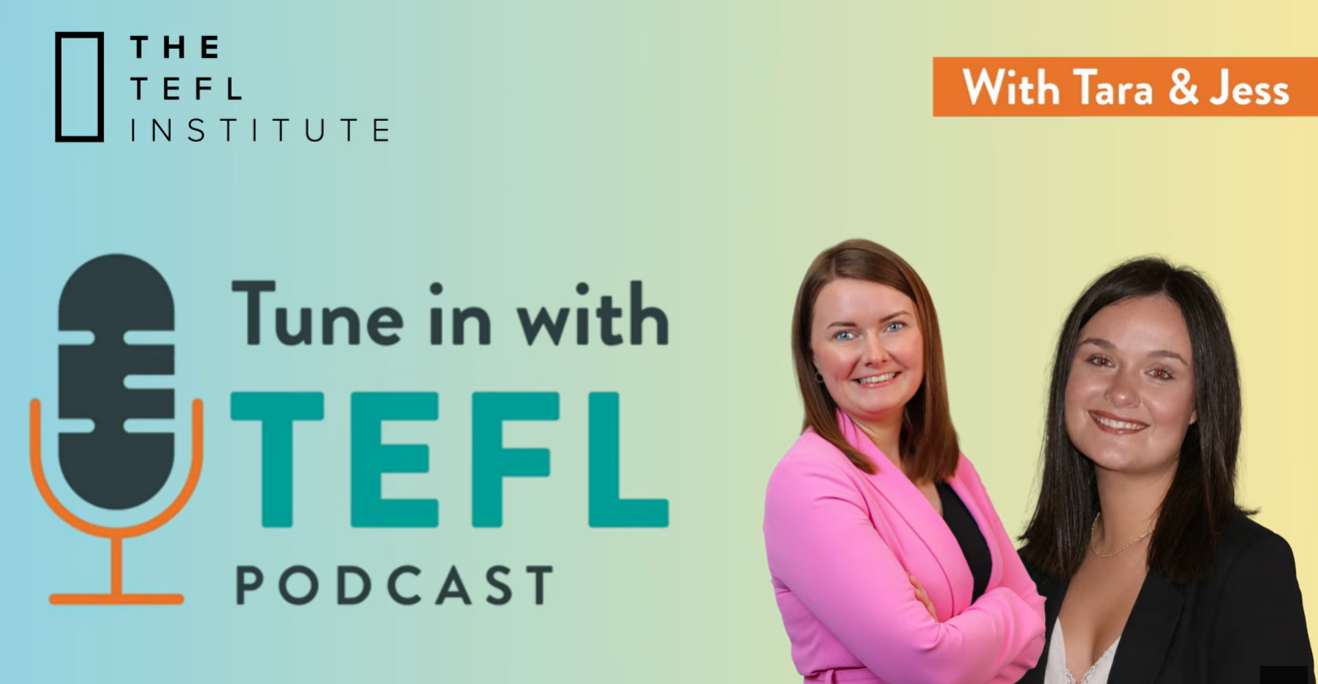
Tara and Jess talk through different TEFL and EFL topics, from finding work abroad to life in the classroom.
FAQs
Questions students ask us
FTCE stands for the Florida Teacher Certification Examinations. It is the set of tests the Florida Department of Education requires candidates to pass before it will certify them to teach in Florida.
Three kinds. A General Knowledge Test with four subtests (Essay, English Language Skills, Reading and Mathematics), a Professional Education Test, and a subject-area or grade-level test for the field you want certified. Which subject-area test you sit depends on the coverage you are applying for.
On the Department’s published fees, effective February 2023: $130 for the full General Knowledge battery, $150 for the Professional Education Test, and $150 for subject-area examinations other than the named exceptions. Single subtests cost less. A retake fee applies if you do not pass, but the Department’s fees page does not publish those amounts.
No. The FELE is the Florida Educational Leadership Examination and it is for school administrator candidates, not classroom teachers. It shares a registration site and contractor with the FTCE, which is why the two are often confused.
They are separate instruments under separate rules. English for Speakers of Other Languages (ESOL; grades K-12) is a certificate subject governed by rule 6A-4.0245, reached through the FTCE subject-area test. The ESOL endorsement is an academic endorsement governed by rule 6A-4.0244, added to a certificate you already hold in another subject.
No. A TEFL certificate is not a Florida teaching credential and does not substitute for any FTCE examination, a degree or a state certificate. It covers much of the same ground as the ESOL K-12 competency list, so it is useful preparation, and it is the qualification employers ask for when you teach English abroad or online rather than in a Florida public school.