

 United Kingdom (UK)
 United States (US)
 Canada
 South Africa
 India
India Australia
 New Zealand
 China
China Russia
 Germany
 France
 Spain
Spain Netherlands
 Vietnam
 United Arab Emirates
 Italy
Italy Poland
 Thailand
 Türkiye









 Algeria


How to Compare TEFL Providers for the Best Certification
How to Compare TEFL Providers for the Best Certification

Over 35,000 people earn TEFL certification each year, yet many struggle to choose a course that actually fits their goals. Whether you want to teach abroad, work online, or climb the career ladder, the right program can open doors or hold you back. Understanding what matters most in TEFL certification, from accreditation to real support, sets you up for confident decision-making and a rewarding start to your teaching journey.
If you’re exploring TEFL as a serious career change, it can help to see how independent education, travel and business publications compare different course providers in today’s market. For an objective overview of leading TEFL course providers in 2026 and what to look for when you’re planning a global career pivot, this guide to TEFL course providers in 2026 offers a clear, third‑party perspective.
How do I compare TEFL course providers in 2026?
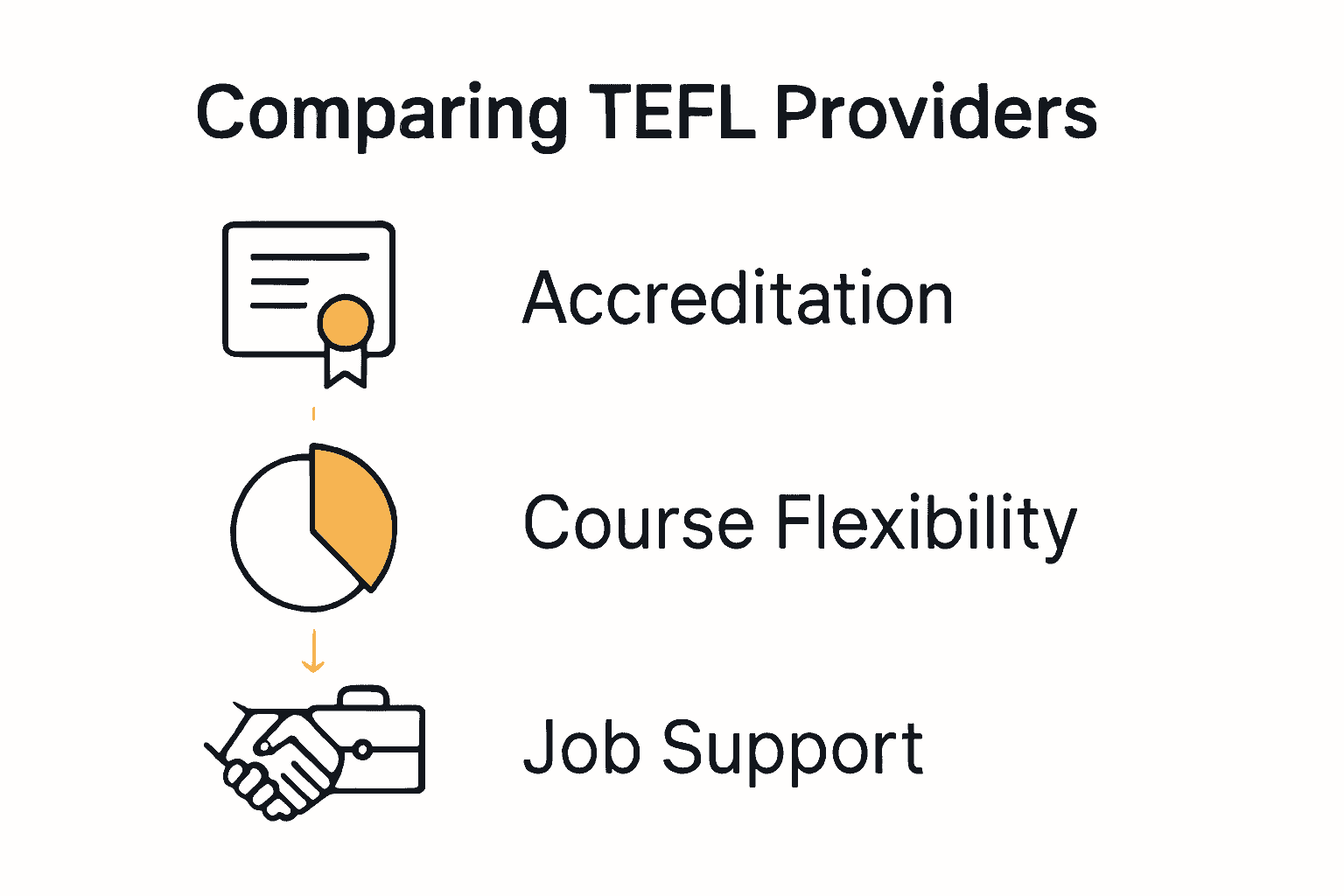
To compare TEFL course providers effectively in 2026, focus on five key areas: verify accreditation from recognized bodies like Ofqual or ACTDEC, evaluate course hours and practical teaching components (120-180 hours minimum), check post-course job placement support and alumni networks, read independent reviews across multiple platforms, and assess course flexibility to match your learning style. Start by defining your specific teaching goals—whether online, abroad, or specialized sectors—then shortlist providers that offer internationally recognized certifications with strong employer recognition and ongoing career support.
Table of Contents
- Step 1: Define Your TEFL Certification Goals
- Step 2: Research Accreditation and Course Offerings
- Step 3: Evaluate Course Features and Flexibility
- Step 4: Assess Support Services and Post-Course Benefits
- Step 5: Verify Provider Reputation and Reviews
Quick Summary
| Key Point | Explanation |
|---|---|
| 1. Define Your Certification Goals | Clearly outline your teaching aspirations to choose the right TEFL program that aligns with your career path. |
| 2. Check Accreditation of Programs | Ensure the TEFL certification you choose is accredited by recognised bodies for credibility in the job market. |
| 3. Consider Course Features and Flexibility | Assess the specific course elements and learning formats to match your personal schedule and teaching style. |
| 4. Evaluate Support and Post-Certification Services | Look for strong job placement support and additional resources to support your career after certification. |
| 5. Research Provider Reputation | Evaluate the TEFL provider’s reviews and credibility across multiple sources to make an informed decision. |
Step 1: Define Your TEFL Certification Goals
Before diving into the world of TEFL certification, you need a clear roadmap of your professional teaching aspirations. Defining your goals will help you select the most appropriate certification program that matches your career trajectory and personal objectives.
Start by asking yourself some critical questions about your teaching ambitions. Are you looking to teach English abroad in specific countries, such as South Korea or Japan? Do you want to focus on online teaching opportunities? Or are you planning to work with corporate language training programs? Understanding your target teaching environment will significantly narrow your certification options.
Your goals should encompass several key dimensions: preferred teaching location, desired student age group, teaching format (online or in person), potential salary expectations, and long-term career development. Discover what TEFL certification entails to align your goals with realistic expectations. Consider factors like program accreditation, course length, practical teaching components, and job placement support.
Pro Tip: Not all TEFL certifications are created equal. Thoroughly research certifications and align them with your specific teaching goals to maximise your professional opportunities.
Step 2: Research Accreditation and Course Offerings
After defining your teaching goals, the next critical step is investigating the credibility and quality of potential TEFL certification providers. Accreditation serves as your primary indicator of program legitimacy and professional recognition in the global teaching marketplace.
Start by verifying the accreditation status of each TEFL program. Not all accreditations carry the same weight. Professional language teaching organisations such as CELTA and ACTFL are widely recognised internationally. Understanding your guide to TEFL course accreditation will help you distinguish between meaningful certifications and those with limited professional value. Look for programs accredited by recognised international education bodies that demonstrate rigorous training standards and a comprehensive curriculum.

When comparing course offerings, evaluate key components beyond basic certification. Assess elements like total course hours (most reputable programs range from 120 to 180 hours), practical teaching components, specialised modules, job placement assistance, and potential additional credentials. Pay attention to curriculum depth, professional practical training opportunities, and whether the program provides resources for international job placement. Some programs offer specialised tracks, such as business English or young learner certification, which can significantly enhance your professional marketability.
Pro Tip: Always request detailed syllabi and speak with program alumni to get authentic insights into the real-world value of the certification you are considering.
Step 3: Evaluate Course Features and Flexibility
With accreditation research complete, your next crucial step is diving deep into the specific features and flexibility of potential TEFL certification programs. This evaluation will help you identify a course that not only meets professional standards but also aligns with your personal learning style and schedule.
Understanding the advantages of online TEFL courses can significantly broaden your perspective on course formats. Modern TEFL programs offer diverse learning options ranging from fully online self-paced courses to hybrid models with live instructor interaction. Consider your personal learning preferences, key factors such as course duration, study time requirements, and content delivery methods. Some programs offer modular learning, allowing you to complete certification in chunks, while others demand more intensive, concentrated study periods.
Look beyond basic course structure and examine additional features that can enhance your professional preparation. Seek out programs offering practical teaching components like microteaching sessions or practicum opportunities, virtual classroom observations, and job placement support. Specialised modules in areas such as business English, young learner instruction, or exam preparation can dramatically increase your marketability. Pay special attention to the technological infrastructure supporting the course, including learning management systems, interactive modules, and the quality of instructor feedback mechanisms.
Pro Tip: Request a detailed course syllabus and ask current students or recent graduates about their experience with the program’s flexibility and real-world teaching preparation.
Step 4: Assess Support Services and Post-Course Benefits
Beyond course curriculum, the quality of support services and post-certification resources can significantly impact your professional teaching journey. Understanding these additional benefits helps you select a TEFL program that provides comprehensive career development support.
Career support services are a critical differentiator among TEFL certification providers. How to Choose the Best TEFL Course emphasises the importance of robust job placement assistance. Look for programs that offer comprehensive support, such as resume workshops, international job boards, interview preparation resources, and direct connections to language schools and recruiting agencies. Some advanced programs provide personalised job matching services, alumni networks, and ongoing professional development opportunities that can extend well beyond your initial certification.
Evaluate the long-term value of each certification by examining its post-course benefits. This includes credential recognition, international transferability, potential for advanced certifications, and continuing education credits. Some providers offer lifetime access to course materials, updated job resources, and professional networking platforms. Additional perks such as language-teaching webinars, specialised teaching endorsements, and access to global teaching communities can provide substantial long-term professional advantages. Pay close attention to how each program supports your ongoing career growth, not just your initial certification.
Pro Tip: Always request detailed documentation about post-course support and speak with program alumni to understand the real-world impact of their career services and ongoing professional development resources.
Step 5: Verify Provider Reputation and Reviews
As you narrow down your TEFL certification options, investigating the provider’s reputation becomes a critical step in making an informed decision. Your goal is to gather comprehensive insights from multiple sources to validate the credibility and quality of potential certification programs.
Understanding why to choose an Accredited TEFL Course underscores the importance of thorough research. Begin by exploring independent review platforms, professional teaching forums, and educational discussion boards. Look beyond the testimonials featured on the provider’s website and seek out unbiased accounts from past students. Check multiple sources, including LinkedIn professional networks, Reddit, teaching communities, and specialised TEFL forums, to get a well-rounded perspective. Pay attention to specific details about course experiences, instructor quality, job placement success rates, and overall program effectiveness.
Dig deeper by conducting comprehensive background checks on your potential TEFL providers. Verify their professional affiliations, contact information, business registration, and any disciplinary records. Reach out directly to their alumni network and request references or contact information for graduates who can provide candid insights. Look for consistent patterns in feedback rather than isolated experiences. Consider factors like instructor expertise, course update frequency, technological infrastructure, and alignment with international teaching standards. Reputable providers will be transparent about their credentials and welcome detailed inquiries from prospective students.
Pro Tip: Cross-reference reviews across at least three platforms, and be cautious of overly positive or uniformly negative feedback, which may indicate manipulated reviews.
Find the Perfect TEFL Certification to Launch Your Teaching Career
Choosing the right TEFL provider can feel overwhelming when you are aiming for a certification that truly matches your teaching goals and offers solid career support. The journey from defining your TEFL certification goals through evaluating accreditation, course flexibility, and post-course benefits demands clarity and trustworthy resources. If you want to avoid uncertainty and a program that aligns with your ambitions, whether teaching abroad or online, guidance from a reputable platform is essential.
Explore a wide range of carefully accredited courses at TEFL Institute designed to fit your personal learning style and career path. Benefit from programs that include advanced diplomas, practical teaching components, and ongoing job placement assistance to take you confidently from certification to classroom success. Start your TEFL journey now and gain access to expert resources that help you assess your options and select the best course based on real-world reviews and professional standards from TEFL Institute’s main site. Don’t wait until opportunities pass you by; take action today and secure the certification that opens doors worldwide.
Frequently Asked Questions
How do I determine which TEFL providers are accredited?
To determine if a TEFL provider is accredited, check their website for accreditation details and look for recognition from professional bodies. Validate this information by researching each accrediting organisation to confirm its standing in the global teaching community.
What key features should I evaluate when comparing TEFL courses?
When comparing TEFL courses, evaluate key features such as total course hours, practical teaching components, and job placement assistance. Prioritise programs with 120-180 hours of coursework and opportunities for real-world teaching experience to enhance your employability.
How do I check if a TEFL provider is reputable in 2026?
Assess the reputation of a TEFL certification provider by reading independent reviews on online platforms and engaging with alumni through social media or forums. Collect feedback from at least three different sources to get a balanced view of course effectiveness and support services.
What specific support services should TEFL providers offer?
TEFL providers should offer robust support services, including job placement assistance, resume workshops, and interview preparation resources. Choose a program that connects you directly with language schools and includes alumni networks for ongoing support.
How can I learn about a TEFL program’s post-course benefits?
To find out about a TEFL program’s post-course benefits, directly request detailed documentation from the provider regarding their support services. Look for programs that offer lifetime access to course materials and ongoing professional development opportunities to enhance your career over the long term.
Which factors should I consider when evaluating course flexibility across TEFL programs?
Consider factors such as course format (online vs. in-person), study time requirements, and whether the program allows for modular learning. Flexibility is crucial, so choose a course that fits your schedule and learning style for the best experience.
Recommended
TEFL Institute guides

Taiwan
Buxibans, pay and visas
South Korea
EPIK, hagwons and pay
Thailand
Visas and teaching licences
Czech Republic
Pay, visas and cities
Spain
Jobs, pay and visa routes