

 United Kingdom (UK)
 United States (US)
 Canada
 South Africa
 India
India Australia
 New Zealand
 China
China Russia
 Germany
 France
 Spain
Spain Netherlands
 Vietnam
 United Arab Emirates
 Italy
Italy Poland
 Thailand
 Türkiye









 Algeria



ESL Classroom Management Tips for Confident Teaching Success
ESL Classroom Management Tips for Confident Teaching Success
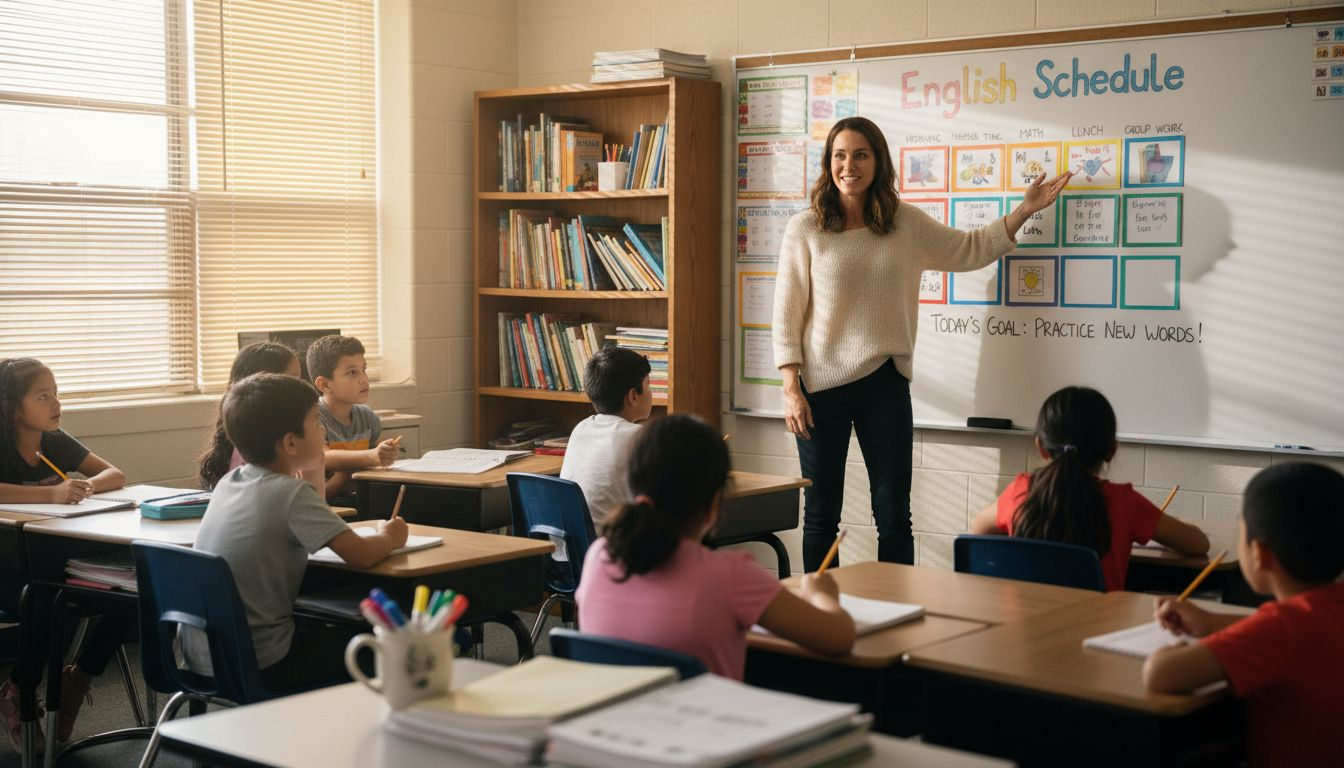
A new ESL classroom often feels unpredictable, with students from different backgrounds adapting to unfamiliar routines. For recent graduates stepping into teaching roles in places like China or Brazil, balancing clear structure and cultural sensitivity is challenging. By focusing on teaching routines deliberately and setting expectations from the start, you cultivate a safe, supportive environment where learners confidently participate. This guide brings you practical strategies proven to reduce disruptions, boost language acquisition, and help you thrive whether teaching online or in person.
Table of Contents
- Step 1: Set Clear Expectations and Routines
- Step 2: Build Positive Relationships with Students
- Step 3: Implement Engaging Classroom Activities
- Step 4: Address Disruptions with Consistent Strategies
- Step 5: Evaluate and Refine Your Management Approach
Quick Summary
| Key Insight | Explanation |
|---|---|
| 1. Establish Clear Routines | Teaching clear expectations creates structure, enabling students to focus on learning rather than behavior. |
| 2. Build Positive Relationships | Greet students and show genuine interest in their lives to foster a caring and respectful classroom environment. |
| 3. Engage with Varied Activities | Use a mix of interactive tasks to keep students interested and reduce opportunities for disruptions. |
| 4. Address Disruptions Consistently | Respond to misbehavior with calmness and established consequences to maintain classroom order. |
| 5. Continuously Evaluate Strategies | Regularly reflect on what works and adjust management techniques to improve classroom dynamics. |
Step 1: Set Clear Expectations and Routines
Clear expectations and routines form the foundation of a well-managed ESL classroom. When students understand what you expect and how the classroom operates, they feel secure and can focus energy on learning English rather than guessing behavioral norms.
Start by identifying the key behaviors and tasks your students need to know. These aren’t just rules on a poster; they’re sequences of actions explicitly taught, modeled, and practiced until they become automatic. Teaching clear routines provides structure and predictability, freeing up students’ working memory for language acquisition while reducing classroom disruptions.
Commit to teaching routines deliberately in your first lessons. Don’t assume students know how to enter the classroom, request help, submit work, or transition between activities. Show them step by step.
Here’s how to establish routines effectively:
- Model each routine while students observe silently
- Have students practice the routine immediately with feedback
- Practice again in subsequent lessons until it becomes automatic
- Reinforce routines with consistent praise when students execute them correctly
Cultural sensitivity matters here. Your students bring diverse backgrounds and may not share assumptions about classroom behavior. Use clear, simple language to overcome potential language barriers, and be explicit about expectations tailored to your multilingual classroom environment. This clarity signals safety and encourages the language risk-taking students need for acquisition.
Routines should cover practical classroom moments: how to ask for bathroom access, what to do when arriving late, how to work in pairs, when to raise hands, and how to end class. Each routine reduces decision-making friction and prevents the small disruptions that compound throughout your day.
Consistent reinforcement of routines through praise and practice is what transforms them from rules into automatic behaviors that free up instructional time.
Your investment in teaching routines upfront saves countless hours later. Students who know the routine for turning in assignments don’t need reminders. Students who practice partner work protocols collaborate more smoothly. The predictability allows you to focus on what you’re actually there to do: teach English.
Pro tip: Record a short video demonstrating your key routines (classroom entry, raising hands, pair work setup) and review it with students in the first week. This reinforces the routine visually and gives students a reference they can revisit if confused.
For reference, here’s a comparison of common classroom routines and their benefits for ESL teachers:
| Classroom Routine | Purpose | Benefit for ESL Learners |
|---|---|---|
| Entry Procedure | Smooth start to class | Reduces anxiety; clear start |
| Requesting Help | Structured assistance requests | Improves communication |
| Pair/Group Work Setup | Organized student collaboration | Promotes participation |
| Transition Between Tasks | Efficient movement between activities | Less confusion; saves time |
Step 2: Build Positive Relationships with Students
Positive teacher-student relationships are the engine of classroom management. When students feel respected and valued, they engage more readily, participate in discussions, and behave better. This isn’t about being their friend; it’s about creating genuine human connection within professional boundaries.

Start by greeting students warmly every single class. Learn their names quickly and use them. Ask about their weekends, their hobbies, their home countries. These small gestures signal that you see them as individuals, not just language learners completing lessons.
Showing empathy is central to relationship building. Your students may be anxious about speaking English, frustrated with grammar rules, or homesick. Acknowledge these feelings. When a student struggles, say something like “I know this is hard. You’re doing great.” This genuine care and respect creates a foundation where students feel safe taking language risks.
Balance structure with flexibility in your approach. You have clear routines and expectations, but you also listen when students need adjustments. If a student is struggling with a particular task, offer an alternative path forward. This demonstrates that you care about their success, not just compliance.
Build rapport through these specific actions:
- Learn something about each student’s interests and cultural background
- Use positive reinforcement when students make effort, not just when they get answers right
- Show up to class prepared and engaged; your enthusiasm matters
- Follow through on what you say; if you promise to help after class, do it
- Acknowledge mistakes as part of learning, not failures
This relational foundation prevents behavioral problems before they start. Students who feel connected to you are far less likely to become disruptive. They also work harder because they don’t want to disappoint someone who genuinely cares about them.
When students feel valued and respected, behavioral problems decrease and language development accelerates because they are motivated from within, not controlled by external rules alone.
Remember that relationship building is ongoing. It’s not something you do once in September and forget. Check in regularly with students, adapt to their needs, and show consistent care throughout the year.
Pro tip: Create a simple “get to know you” survey or conversation activity in your first week that reveals student interests, learning goals, and backgrounds. Review these notes before each class so you can reference personal details during lessons, making students feel truly seen and heard.
Step 3: Implement Engaging Classroom Activities
Engaging activities are your best defense against classroom disruptions. When students are actively involved in learning, they have no energy left for misbehavior. The goal is to keep lessons dynamic, varied, and relevant to their lives and language goals.
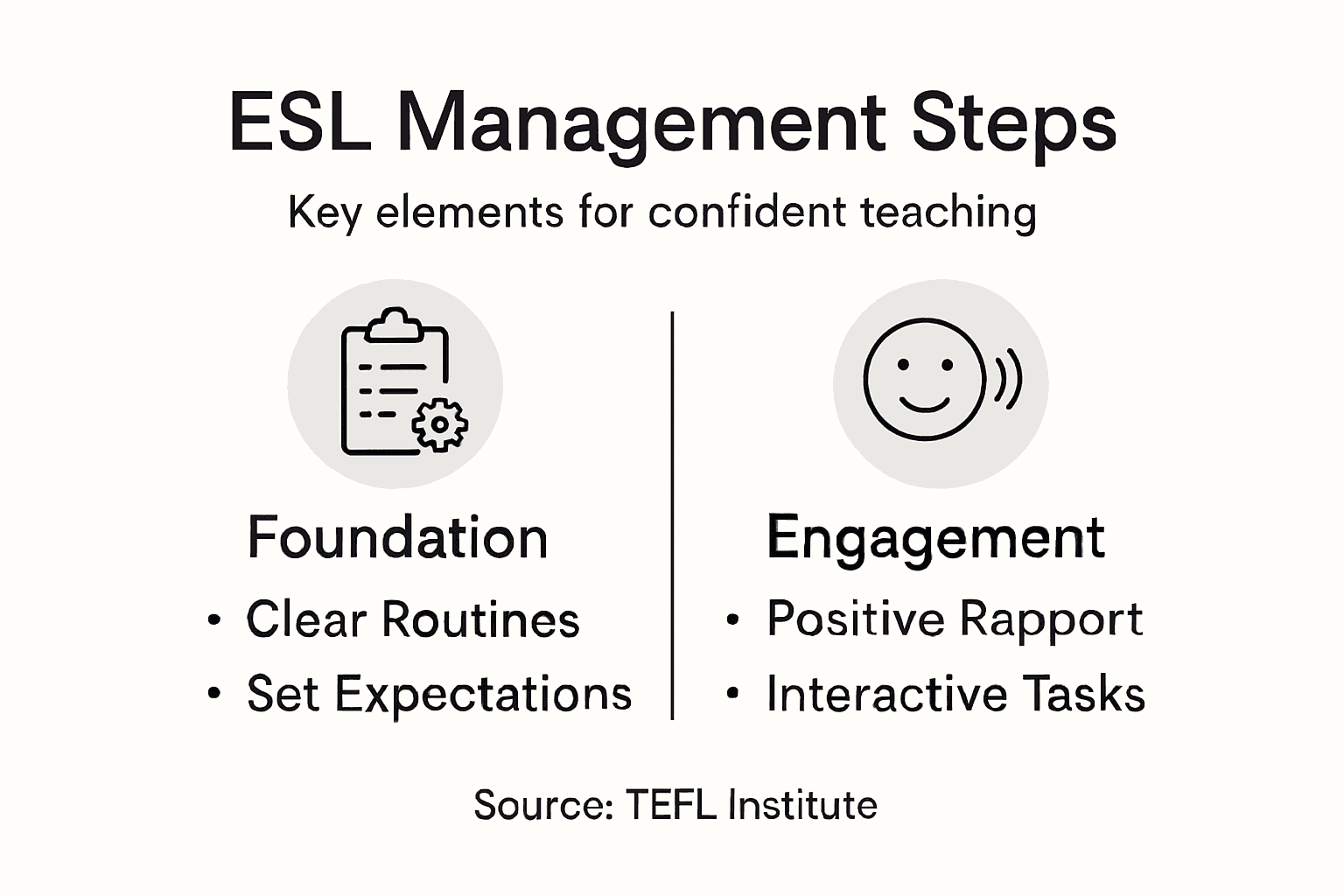
Start by mixing activity types throughout each lesson. Don’t lecture for 30 minutes straight. Instead, alternate between individual work, pair activities, small group tasks, and whole-class discussion. This variety maintains attention and accommodates different learning preferences.
Incorporate interactive speaking tasks like pair work, role plays, and debates. These activities get students talking, which is the core of language learning. When students speak, they practice in realistic contexts and build confidence. They’re also engaged in the task itself, not watching the clock.
Support varied learning styles by using multiple modalities. Some students learn better visually, others through hands-on activities. Mix written exercises with multimedia, visual aids, games, and real-world examples. A lesson on ordering food isn’t just grammar drills; it’s a role play at a restaurant using actual menus.
Here’s how to structure engaging activities:
- Plan activities that require active student involvement, not passive listening
- Use Think-Pair-Share to foster collaboration and communication
- Incorporate games and multimedia to maintain interest
- Connect activities to real-world scenarios students care about
- Vary difficulty levels so all students can participate
Keep activities relevant to student interests. Ask yourself: Why does this matter to them? If you’re teaching vocabulary, make it vocabulary they’ll actually use. If you’re practicing conversations, base them on situations they encounter.
When students are actively engaged in meaningful tasks, classroom management becomes easier because motivation comes from within the activity itself, not from external control.
Timing matters too. Activities should move at a pace that feels brisk but not rushed. Give clear instructions before starting, demonstrate what you expect, and monitor student progress so you can adjust as needed.
Pro tip: Prepare a “backup activity” list for every lesson, such as quick games, discussion prompts, or partner conversations that require no materials. When you finish a planned activity early or notice engagement dropping, you can seamlessly transition to something new without losing momentum.
Step 4: Address Disruptions with Consistent Strategies
Disruptions will happen. A student talks out of turn, someone arrives late, two classmates start chatting during independent work. How you respond determines whether the behavior stops or escalates. The key is consistency, calmness, and clarity.
When a disruption occurs, your first instinct should be proximity and eye contact, not a lecture. Walk toward the student who is off-task and stand nearby. Make brief eye contact. Often this nonverbal signal is enough to redirect behavior without drawing attention to the student or interrupting the lesson.
If proximity doesn’t work, use a gentle verbal reminder. Keep it brief and respectful: “Please focus on your work” or “Let’s save the conversation for break time.” Avoid calling the student out in front of peers, which can create resentment or embarrassment that escalates problems.
Consistent application of rules and consequences is what makes your classroom predictable and fair. If you established that talking without raising hands gets a verbal warning first, then a loss of participation points, follow that sequence every time. Students need to know what happens next, and consistency builds trust even when consequences are applied.
Here’s your approach to disruptions:
- Use nonverbal cues first (eye contact, proximity, gestures)
- Deliver gentle verbal reminders calmly and privately when possible
- Apply pre-established consequences consistently, without anger or frustration
- Give immediate, respectful feedback that focuses on behavior, not character
- Avoid harsh reactions that escalate tension
Respect matters even when enforcing consequences. Say “I see you’re not ready to work with a partner right now. Let’s try again tomorrow” rather than “You always mess up group work.” The first addresses behavior; the second attacks identity.
Consistency in applying consequences creates stability and fairness, helping students understand expectations while maintaining their dignity and your relationship.
Document patterns if disruptions continue with the same student. This information helps you identify whether the issue is behavioral, academic, or something else entirely. Sometimes students act out because they’re confused about the task, not because they’re defiant.
Pro tip: Create a simple behavior tracking chart for yourself with columns for student name, date, disruption type, and response taken. Review it weekly to spot patterns and ensure you’re responding consistently to similar behaviors across all students.
Step 5: Evaluate and Refine Your Management Approach
Classroom management isn’t something you set once and forget. Your strategies need regular evaluation and adjustment based on what actually works with your students. What works in September might need tweaking in March as you learn more about your learners.
Start by reflecting on what’s working and what isn’t. Ask yourself concrete questions: Are students following routines consistently? Do behavioral issues happen during certain times or activities? Are students engaged and participating? Which strategies are preventing problems before they start?
Gather feedback directly from your students. You can use simple surveys, anonymous comment cards, or brief conversations. Ask what helps them feel comfortable, what confuses them, and what they find frustrating. Students often have insights teachers miss, and involving them shows you value their perspective.
Monitor how well your rules and routines are being followed. Regular reflection and adjustment of your strategies helps optimize your classroom atmosphere. If students still struggle with a routine after weeks of practice, maybe the routine needs simplifying, or perhaps students need a visual reminder posted in the classroom.
Use these evaluation questions regularly:
- Are disruptions decreasing or staying the same?
- Do students understand and follow expectations consistently?
- Are all students engaged, or are certain individuals checked out?
- Which activities generate the most participation and positive behavior?
- What patterns emerge in problematic situations?
Be willing to adapt your approach. Balance structure with flexibility. If a consequence isn’t reducing the behavior, try something different. If a routine feels clunky, redesign it. Teaching is iterative, and your first approach won’t always be your best approach.
The most effective classroom managers continuously assess what’s working and adjust with confidence, knowing that refinement is a sign of professional growth, not failure.
Seek professional development opportunities too. Attend workshops, read current research, or talk with experienced colleagues about their strategies. Fresh perspectives help you expand your toolkit and stay energized about classroom management.
Pro tip: Keep a simple classroom management journal where you jot brief observations after each week: what went well, what struggled, and one thing to try next week. Reviewing this monthly reveals patterns and shows your progress, boosting your confidence as a manager.
Here’s a summary of core classroom management steps and their main impact:
| Management Step | Primary Focus | Direct Impact |
|---|---|---|
| Set Expectations | Clarity of routines | Enhanced student security |
| Build Relationships | Teacher-student rapport | Increased motivation |
| Engaging Activities | Diverse learning modalities | Higher student participation |
| Address Disruptions | Consistent responses | Fewer behavioral issues |
| Evaluate & Refine | Ongoing strategy assessment | Continuous improvement |
Master ESL Classroom Management with Confidence and Skill
Managing an ESL classroom effectively requires clear routines, positive relationships, and engaging activities. If you want to overcome common challenges like inconsistent student behavior and low participation, mastering these key strategies is crucial. This article shares valuable tips on setting expectations, building rapport, and handling disruptions consistently. To transform these insights into real teaching success, you need comprehensive training tailored for ESL educators.

Boost your confidence by enrolling in TEFL Institute’s flexible online courses designed for aspiring and experienced teachers alike. Our programs help you develop practical classroom management skills through interactive lessons and practicum options that fit your schedule. Start creating a positive learning environment where your students thrive and disruptions become a thing of the past. Discover our full range of certification and specialized courses on TEFL Institute’s website today. Take the next step toward becoming a confident ESL teacher and unlock new teaching opportunities worldwide by visiting Enroll Now. Learn more about how our courses support effective classroom management and student engagement here.
Frequently Asked Questions
How can I set clear expectations in my ESL classroom?
To set clear expectations, teach classroom routines explicitly during the first lessons. Demonstrate how to enter the classroom, ask for help, and transition between activities, modeling each step and providing feedback until they are automatic.
What are effective ways to build positive relationships with my ESL students?
Effective ways include greeting students warmly each day, learning their names, and showing genuine interest in their lives. Use positive reinforcement consistently and acknowledge their efforts to foster a sense of belonging and trust.
How do I keep my ESL classroom activities engaging for students?
To maintain engagement, mix different types of activities within each lesson, such as individual work, pair activities, and whole-class discussions. Aim for a variety of learning modalities and incorporate real-world scenarios that relate to students’ interests.
What should I do when a disruption occurs in my classroom?
When a disruption happens, use nonverbal cues like proximity and eye contact to redirect behavior before addressing it verbally. Provide a gentle reminder while maintaining a calm demeanor, and apply any pre-established consequences consistently to reinforce understanding of expectations.
How can I evaluate and refine my classroom management strategies?
Regularly reflect on what is working and what isn’t in your classroom management strategies. Gather feedback from students and observe patterns over time to identify adjustments that improve routines and reduce disruptions.
Recommended
- Step by Step Classroom Management for ESL Success | TEFL Institute
- 7 Essential Classroom Management Strategies List | TEFL Institute
- What Is Classroom Management? Complete TEFL Guide | TEFL Institute
- Complete Guide to Classroom Management for TEFL | TEFL Institute
- Conflict Management: Key to Safer Security Teams | Security Jobs Board