
 United Kingdom (UK)
 United States (US)
 Canada
 South Africa
 India
India Australia
 New Zealand
 China
China Russia
 Germany
 France
 Spain
Spain Netherlands
 Vietnam
 United Arab Emirates
 Italy
Italy Poland
 Thailand
 Türkiye









 Algeria


TEFL Interview Preparation Guide: Ace Your TEFL Job Interview
Only about half of American TEFL candidates walk into their interviews feeling genuinely prepared. With schools worldwide seeking skilled and adaptable teachers, the interview is more than just a formality; it is your first real chance to make a strong impression. This guide gives you a practical roadmap to organise your credentials, master those nerve-wracking questions, and show hiring teams you are ready for a classroom anywhere.

Table of Contents
- Step 1: Research Common TEFL Interview Questions
- Step 2: Gather and Organize Your TEFL Credentials
- Step 3: Practice Responding With Relevant Examples
- Step 4: Simulate a Mock TEFL Interview Session
- Step 5: Fine-Tune Presentation and Verify Readiness
Quick Summary
| Key Point | Explanation |
|---|---|
| 1. Research interview questions thoroughly | Anticipate potential inquiries related to teaching philosophy and classroom management to strengthen your responses. |
| 2. Organize your credentials effectively | Compile a professional portfolio with all relevant documents to demonstrate qualifications and readiness for the role. |
| 3. Practice storytelling for examples | Develop specific teaching scenarios using the STAR method to illustrate your skills during the interview. |
| 4. Conduct mock interviews for real experience | Simulate interview conditions with a partner to improve communication skills and receive constructive feedback. |
| 5. Fine-tune appearance and materials | Review and prepare all documentation and practice your presentation to ensure a polished professional impression. |
Step 1: Research Common TEFL Interview Questions
Successfully preparing for your TEFL job interview starts with understanding the typical questions you will encounter. Researching and anticipating potential interview queries allows you to craft thoughtful, confident responses that showcase your teaching potential.
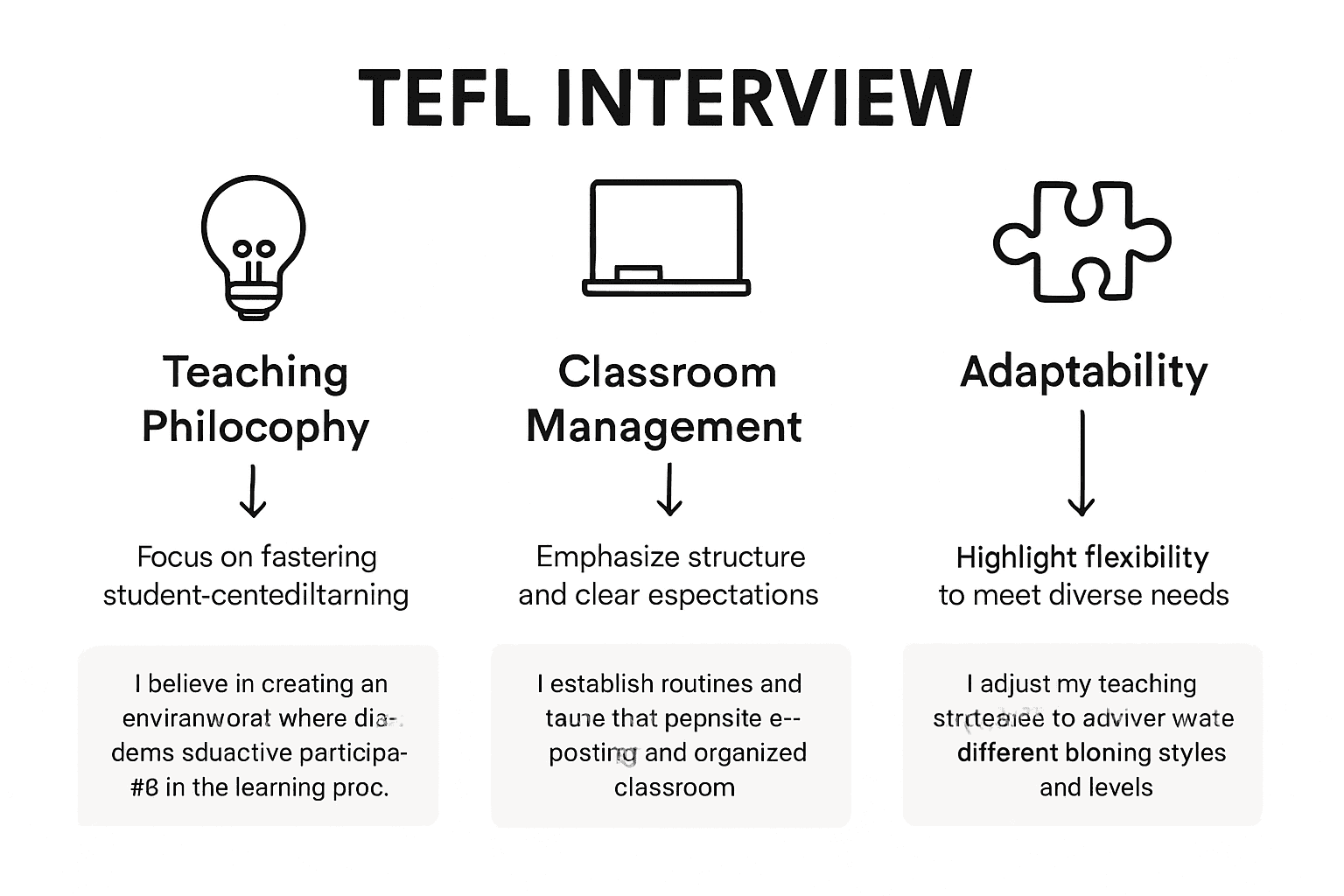
Begin by exploring resources like TEFL Job Interview Questions: What to Expect and How to Prepare, which provide comprehensive insights into the interview landscape. Focus on common categories of questions, such as your teaching philosophy, classroom management strategies, experience with diverse student groups, and understanding of language learning techniques. Make a list of potential questions and draft concise, engaging answers that highlight your unique qualifications.
Dig deeper by reviewing interview experiences from other TEFL teachers through online forums, professional networking groups, and teaching blogs. Pay attention to questions related to cultural adaptability, technology integration in teaching, and your motivation for pursuing international education. Practice articulating your responses out loud, focusing on clarity, enthusiasm, and professionalism.
Below is a reference table outlining typical TEFL interview question themes and effective response strategies:
| Question Theme | Effective Response Approach |
|---|---|
| Teaching Philosophy | Share methods, support with examples |
| Classroom Management | Discuss strategies, focus on results |
| Cultural Adaptability | Highlight international experience |
| Technology in Teaching | Explain tech use, show adaptability |
| Motivation for TEFL | Provide inspired, career-linked story |
Pro tip: Create a digital or physical portfolio with sample lesson plans, teaching certifications, and professional references to complement your verbal responses during the interview, demonstrating your preparedness and commitment to excellence.
Step 2: Gather and Organize Your TEFL Credentials
Preparing for your TEFL job interview requires careful compilation and organization of your professional documentation. Your goal is to create a comprehensive portfolio that showcases your qualifications, certifications, and teaching readiness.
Start by collecting all relevant documents, including your TEFL certification materials. Assemble a digital and physical folder containing your TEFL certificate, academic transcripts, teaching credentials, passport, identification documents, and any additional professional certifications. Ensure each document is clear, current, and properly organized. Scan high-quality copies of original documents and create both digital and physical backup sets to protect against potential loss.

Pay special attention to authentication and legalization requirements. Some international teaching positions may require documents to be officially verified or translated. Arrange your credentials in a logical order that highlights your most impressive qualifications first. Include a concise professional summary that ties your documents together, providing context for your teaching experience and educational background.
Pro tip: Create a master document checklist tracking each credential’s status, expiration date, and authentication requirements to streamline your application process and demonstrate your organizational skills.
Step 3: Practice Responding With Relevant Examples
Mastering your TEFL job interview requires more than memorizing answers you will need to demonstrate your teaching capabilities through strategic storytelling and concrete examples. Your goal is to transform standard interview questions into opportunities to showcase your unique teaching skills and experiences.
Start by developing a collection of specific teaching scenarios that highlight your classroom expertise. How to Write the Best TEFL CV to Land Your Dream Job suggests preparing narrative examples that illustrate your problem solving abilities classroom management techniques and cross cultural communication skills. For each potential interview question develop a brief story that demonstrates your teaching approach. Practice describing scenarios where you successfully managed challenging student interactions resolved learning obstacles or implemented innovative teaching strategies.
Rehearse your responses out loud using the STAR method situation task action result to structure your examples. Focus on creating concise compelling narratives that reveal your teaching philosophy professional growth and adaptability. Record yourself practicing to identify areas for improvement in your tone clarity and storytelling technique. Remember that interviewers want to understand not just what you know but how you apply your knowledge in real world teaching environments.
Pro tip: Create a one page reference sheet with 5 to 7 powerful teaching stories that can be flexibly adapted to different interview questions enabling you to respond confidently and dynamically during your TEFL job interview.
Step 4: Simulate a Mock TEFL Interview Session
Simulating a mock interview is a critical step in preparing for your actual TEFL job interview. This practice session will help you refine your communication skills, build confidence, and identify areas where you can improve your responses.
Recruit a friend, fellow TEFL teacher, or career coach to conduct a comprehensive interview practice session. Ask them to play the role of a potential employer and use a structured approach to simulate real world interview scenarios. Prepare a list of standard TEFL interview questions and practice responding to them in a professional setting. Focus on maintaining eye contact, speaking clearly, and demonstrating your enthusiasm for teaching. Record the mock interview if possible so you can review your body language tone and content of your responses.
During the simulation pay attention to your nonverbal communication as much as your verbal responses. Practice sitting professionally adjusting your posture and managing nervous energy. Request detailed feedback from your mock interviewer about your performance highlighting strengths and identifying areas that need improvement. Use this feedback to refine your interview technique and build your confidence.
Pro tip: Schedule multiple mock interview sessions with different people to expose yourself to varying interview styles and receive diverse perspectives on your performance.
Step 5: Fine-Tune Presentation and Verify Readiness
Preparing for a successful TEFL job interview requires meticulous final preparation and self assessment. Your goal is to transform your preparation into a confident polished presentation that demonstrates your teaching potential.
Review your TEFL Interview Process with a critical eye. Conduct a comprehensive personal audit of your interview materials including your resume teaching portfolio and prepared examples. Double check all documentation for accuracy completeness and professional formatting. Verify that your digital and physical copies are organized readily accessible and present a cohesive narrative of your teaching qualifications.
Perform a final dress rehearsal focusing on your overall presentation. Select professional attire that reflects the cultural expectations of your potential teaching environment. Practice your introduction body language and closing statements with particular attention to your tone vocal clarity and nonverbal communication. Confirm you have all necessary documents technical equipment and backup copies prepared for both virtual and in person interview scenarios.
Pro tip: Create a compact interview day survival kit containing extra copies of your resume professional references digital backups contact information and a small notebook for last minute notes or observations.
Here is a comparison of TEFL interview preparation steps and their primary objectives:
| Preparation Step | Main Objective | Key Outcome |
|---|---|---|
| Research Questions | Understand expected interview topics | Confident, relevant responses |
| Gather Credentials | Organize and verify documentation | Ready, professional portfolio |
| Practice Examples | Develop adaptable teaching stories | Strong, illustrative answers |
| Mock Interview | Simulate real interview experience | Improved communication, feedback |
| Fine-Tune Presentation | Refine appearance and materials | Polished, professional impression |
Prepare to Ace Your TEFL Interview With Confidence
Facing the challenge of a TEFL interview can feel overwhelming as you juggle teaching philosophy, classroom management, cultural adaptability, and technology integration. This guide highlights the critical need to organize your credentials, craft compelling teaching stories using the STAR method, and practice through mock interviews to present yourself as the standout candidate. If you want to transform these interview challenges into your greatest strengths you need tailored training and resources designed specifically for your journey.
Unlock your full potential by exploring our comprehensive range of online TEFL courses and certifications at TEFL Institute. Our programs will help you build the essential skills and portfolios that interviewers look for, with flexible options including advanced diplomas and niche courses that deepen your expertise. Start practicing with our interview preparation resources and ensure your documentation is impeccable before your big day. Don’t wait to boost your confidence and readiness—visit TEFL Institute now and take the crucial step toward landing your dream teaching job. Learn more about how to Get a TEFL Certification and explore tips on Preparing for TEFL Interview to stay one step ahead.
Frequently Asked Questions
What are common TEFL interview questions I should prepare for?
To prepare for your TEFL interview, focus on common categories such as your teaching philosophy, classroom management strategies, and experiences with diverse student groups. Make a list of potential questions in each category and draft concise answers that highlight your unique qualifications.
How can I effectively gather and organize my TEFL credentials?
Start by collecting all relevant documents, including your TEFL certificate, academic transcripts, and teaching credentials. Create both digital and physical folders, ensuring each document is clear and properly organized for easy access during your interview.
What strategies can I use to practice responding to interview questions?
Utilize the STAR method to structure your responses, focusing on specific teaching scenarios that illustrate your skills. Practice these narratives out loud to improve clarity and storytelling, adapting each example as needed to fit different questions.
How can a mock interview help my preparation for a TEFL job?
Simulating a mock interview allows you to refine your communication skills and gain confidence. Recruit a friend or mentor to conduct the mock interview, and solicit constructive feedback to identify strengths and areas for improvement.
What should I do to fine-tune my presentation before the interview?
Conduct a personal audit of your interview materials and verify that they are accurate and professionally formatted. Perform a final dress rehearsal to ensure your appearance is polished and practice your body language and tone to convey enthusiasm and professionalism.
What items should I include in my interview day survival kit?
Compile a compact kit containing extra copies of your resume, professional references, and digital backups of your documents. Additionally, include a small notebook for taking last-minute notes or observations during the interview.
Recommended
TEFL Institute guides

Portugal
Jobs, pay and visa routes
China
Z visa, pay and cities
Spain
Jobs, pay and visa routes
Thailand
Visas and teaching licences
Taiwan
Buxibans, pay and visas