

 United Kingdom (UK)
 United States (US)
 Canada
 South Africa
 India
India Australia
 New Zealand
 China
China Russia
 Germany
 France
 Spain
Spain Netherlands
 Vietnam
 United Arab Emirates
 Italy
Italy Poland
 Thailand
 Türkiye










 Algeria



Step by Step TEFL Certification: Your Complete Guide
Step by Step TEFL Certification: Your Complete Guide

Thousands of American, Canadian, and European graduates launch teaching careers overseas every year, driven by the promise of flexible work and personal growth. If you are hoping to teach English online or in a new country, choosing the right TEFL certification can open doors that many entry-level jobs require. This guide breaks down crucial steps to help you understand course requirements and select programs that match your ambitions, whether you are aiming for classroom teaching or remote positions.
Table of Contents
- Step 1: Identify TEFL Course Requirements
- Step 2: Select the Right TEFL Program
- Step 3: Enroll and Complete Course Modules
- Step 4: Fulfill Practicum or Teaching Practice
- Step 5: Verify Your Certification and Next Steps
Quick Summary
| Essential Insight | Explanation |
|---|---|
| 1. Ensure TEFL Course Accreditation | Prioritize accredited TEFL programs recognized globally to enhance your employability and meet professional standards. |
| 2. Evaluate Course Formats | Compare online, in-person, and hybrid formats based on your learning style and career goals for a better educational experience. |
| 3. Engage in Practical Teaching Experience | Participate in a practicum to build real-world teaching skills necessary for classroom management and lesson delivery. |
| 4. Verify Certification Details | Confirm your certification includes key information to validate your qualifications and facilitate job applications. |
| 5. Create a Professional Portfolio | Build a digital portfolio showcasing your TEFL certification and teaching materials to improve your job prospects. |
Step 1: Identify TEFL Course Requirements
Understanding the core requirements for TEFL certification is your first crucial step toward becoming an international English teacher. When exploring certification options, you need to evaluate several key criteria that most programs and employers will consider when assessing your qualifications.
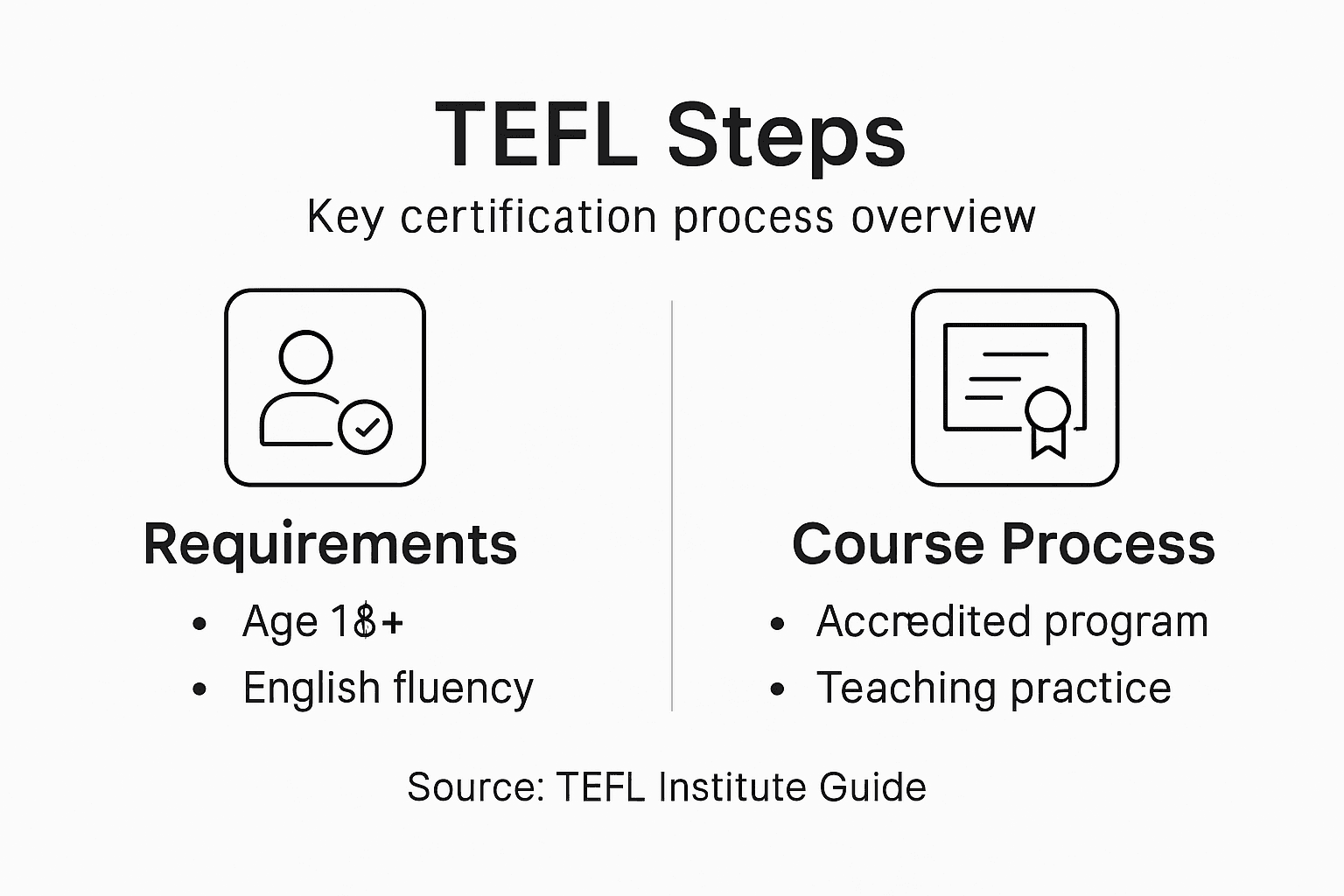
Basic requirements typically include being over 18 years old and demonstrating strong English language proficiency. Most reputable programs require completion of a minimum 120 hour accredited course, which ensures you have comprehensive training in teaching methodologies. While a college degree is not always mandatory, many employers prefer candidates with additional academic credentials. Some international teaching positions might specifically request a bachelor’s degree, so researching destination country requirements becomes essential.
When selecting a TEFL course, prioritize accredited programs that offer recognized certifications. Look for courses that provide practical teaching components, online or in person, and include instruction in lesson planning, classroom management, and language teaching strategies. Consider your personal career goals when choosing between online and in person programs, understanding that each format has unique advantages for different learning styles and professional objectives.
Pro tip: Research multiple TEFL course providers and compare their curriculum, accreditation status, and graduate support services before making your final selection.
Here’s how accredited TEFL course formats compare:
| Format | Flexibility | Class Interaction | Typical Duration |
|---|---|---|---|
| Online | Study anytime, anywhere | Virtual group discussions | 4–6 months |
| In Person | Fixed classroom schedule | Face-to-face collaboration | 2–5 weeks intense |
| Hybrid | Mix of self-paced and in-person | Blend of online and classroom | 1–4 months |
Step 2: Select the Right TEFL Program
Selecting the perfect TEFL program represents a critical investment in your international teaching career. Your goal is to find a certification that not only meets professional standards but also aligns with your specific career aspirations and learning preferences.
When evaluating programs, focus on certification quality and comprehensive training that covers essential teaching methodologies. Programs can vary widely in format—including online, in person, and hybrid options—so consider your personal schedule, learning style, and career objectives. Look for courses that offer thorough instruction in lesson planning, classroom management, and practical teaching strategies. Accreditation is crucial, so verify that the program is recognized internationally and provides credentials respected by potential employers worldwide.

Pay close attention to program features beyond basic coursework. Some advanced TEFL certifications include additional benefits like job placement assistance, specialized teaching modules, or practicum components that provide real classroom experience. Consider your long term teaching goals when comparing programs—whether you want to teach abroad, online, or in specific regions like Asia, Europe, or Latin America will influence your ideal certification path.
Pro tip: Request syllabi from multiple TEFL programs and compare their curriculum depth, instructor qualifications, and graduate success rates before making your final selection.
Step 3: Enroll and Complete Course Modules
Now that you have selected your ideal TEFL program, it is time to navigate the enrollment process and strategically approach your course modules. This step transforms your certification goal from a distant dream into an actionable learning journey.
Online TEFL course modules are typically structured to combine theoretical knowledge with practical teaching skills. Expect a comprehensive curriculum that includes assignments, lesson planning exercises, and assessment components designed to build your teaching competencies. Most programs offer flexible learning paths, allowing you to study at your own pace while ensuring you develop the critical skills needed for effective English language instruction. Pay close attention to each module’s specific requirements and deadlines, creating a personal study schedule that balances your existing commitments with your TEFL learning objectives.
As you progress through the course, actively engage with instructional materials, participate in any available live sessions, and seek feedback from course instructors. Some programs include interactive components like peer review assignments or simulated teaching scenarios that provide invaluable practical experience. Document your learning progress, save sample lesson plans, and compile a professional portfolio that demonstrates your growing teaching capabilities.
Pro tip: Create a dedicated study space free from distractions and set consistent weekly study times to maintain momentum and ensure successful course completion.
Step 4: Fulfill Practicum or Teaching Practice
The practicum represents the critical bridge between theoretical knowledge and real classroom experience in your TEFL certification journey. This hands on component transforms your learning from abstract concepts to practical teaching skills that employers value most.
Practicum experiences provide essential real-world teaching opportunities that significantly boost your professional confidence. Most TEFL programs require supervised lesson planning and actual teaching sessions with non native English speakers. During this phase, you will develop critical skills in classroom management, lesson delivery, student engagement, and adapting instructional strategies to different learning needs. Expect to create comprehensive lesson plans, deliver multiple teaching demonstrations, and receive constructive feedback from experienced instructors who will help refine your teaching approach.
Successful practicum completion involves more than just meeting technical requirements. Approach each teaching opportunity with professionalism, curiosity, and a genuine commitment to student learning. Document your experiences carefully, reflect on each teaching session, and use instructor feedback to continuously improve your instructional techniques. Save your best lesson plans, student interaction records, and performance evaluations as valuable additions to your professional teaching portfolio.
Pro tip: Record at least two of your practicum teaching sessions with permission to review your performance objectively and track your professional growth.
Summary of essential practicum skills and career benefits:
| Skill Developed | Practical Benefit | Career Impact |
|---|---|---|
| Classroom management | Handles diverse students | Builds employer trust |
| Lesson delivery | Adapts teaching to learners | Increases job prospects |
| Student engagement | Fosters active participation | Enhances teaching reviews |
| Feedback implementation | Improves instructional methods | Demonstrates professionalism |
Step 5: Verify Your Certification and Next Steps
Congratulations on completing your TEFL certification journey. This final step ensures your hard earned credentials are professionally recognized and positions you for international teaching opportunities.
Certification verification is crucial for international job applications and demonstrates your professional credibility to potential employers. Carefully review your digital or physical certificate to confirm it includes essential details such as total course hours, completion date, and accrediting organization. Most reputable TEFL programs provide official documentation that can be easily shared with potential employers or uploaded to professional networking platforms. Keep multiple copies of your certification in both digital and printed formats to ensure quick accessibility during job applications.
After verifying your certification, begin exploring teaching opportunities through your course provider’s job placement resources, international recruitment networks, and specialized TEFL job boards. Consider expanding your professional qualifications by pursuing additional specialized certifications like business English teaching, young learner endorsements, or online teaching credentials. Maintaining an updated professional profile and continuously seeking development opportunities will help you remain competitive in the global English language teaching market.
Pro tip: Create a professional digital portfolio that includes your TEFL certification, sample lesson plans, and teaching practice evidence to stand out in job applications.
Take the Next Step Toward Your TEFL Certification Success
Navigating the detailed steps of TEFL certification can feel overwhelming. You want to choose the right accredited program, complete your course modules effectively, and gain hands on teaching experience that employers truly value. The challenge is finding a comprehensive training solution that fits your lifestyle and meets international standards while keeping you motivated and confident throughout your learning journey.
At TEFL Institute, we understand these critical milestones and offer a diverse range of flexible online and hybrid courses designed to match your career goals. Whether you seek a foundational 120 hour program or wish to advance with niche certifications including practicum components, our platform equips you with the practical skills and recognized credentials required to succeed globally.
Don’t wait to turn your TEFL ambitions into reality. Explore our full course catalog, access detailed study prospectuses, and enroll today at TEFL Institute. Start building your professional teaching portfolio and open doors to international opportunities with confidence by visiting Online TEFL Courses.
Empower your career with expert training and personalized support tailored for aspiring English educators worldwide.
Frequently Asked Questions
What are the basic requirements for TEFL certification?
To obtain TEFL certification, you typically need to be at least 18 years old and demonstrate strong English language proficiency. Many reputable programs require completion of a minimum of 120 hours in an accredited course, ensuring you receive comprehensive training in teaching methodologies.
How do I select the right TEFL program for my needs?
Evaluate TEFL programs based on accreditation, course content, and practical teaching components. Consider your personal learning style and career goals, such as whether you prefer online, in-person, or hybrid formats, and review the syllabi from multiple programs before deciding.
What is involved in the practicum or teaching practice for TEFL certification?
The practicum involves real-world teaching experience where you will plan lessons and teach non-native English speakers under supervision. Prepare to create lesson plans, deliver teaching demonstrations, and receive constructive feedback, which will help refine your teaching skills and contribute to your professional portfolio.
How can I verify my TEFL certification after completion?
To verify your TEFL certification, review your certificate to ensure it includes key details such as total course hours and the accrediting organization. Keep both digital and printed copies accessible for job applications and employment verification.
What should I include in my professional teaching portfolio?
Create a professional teaching portfolio that includes your TEFL certification, sample lesson plans, and records of your teaching practice. Highlight your unique teaching experiences and skills to enhance your profile when applying for teaching positions.