United Kingdom (UK)
 United States (US)
 Canada
 South Africa
 India
 Australia
 New Zealand
 China
 Russia
 Germany
 France
 Spain
 Netherlands
 Vietnam
 United Arab Emirates
 Italy
 Poland
 Thailand
 Türkiye






 Algeria


What Is a Reading Specialist?
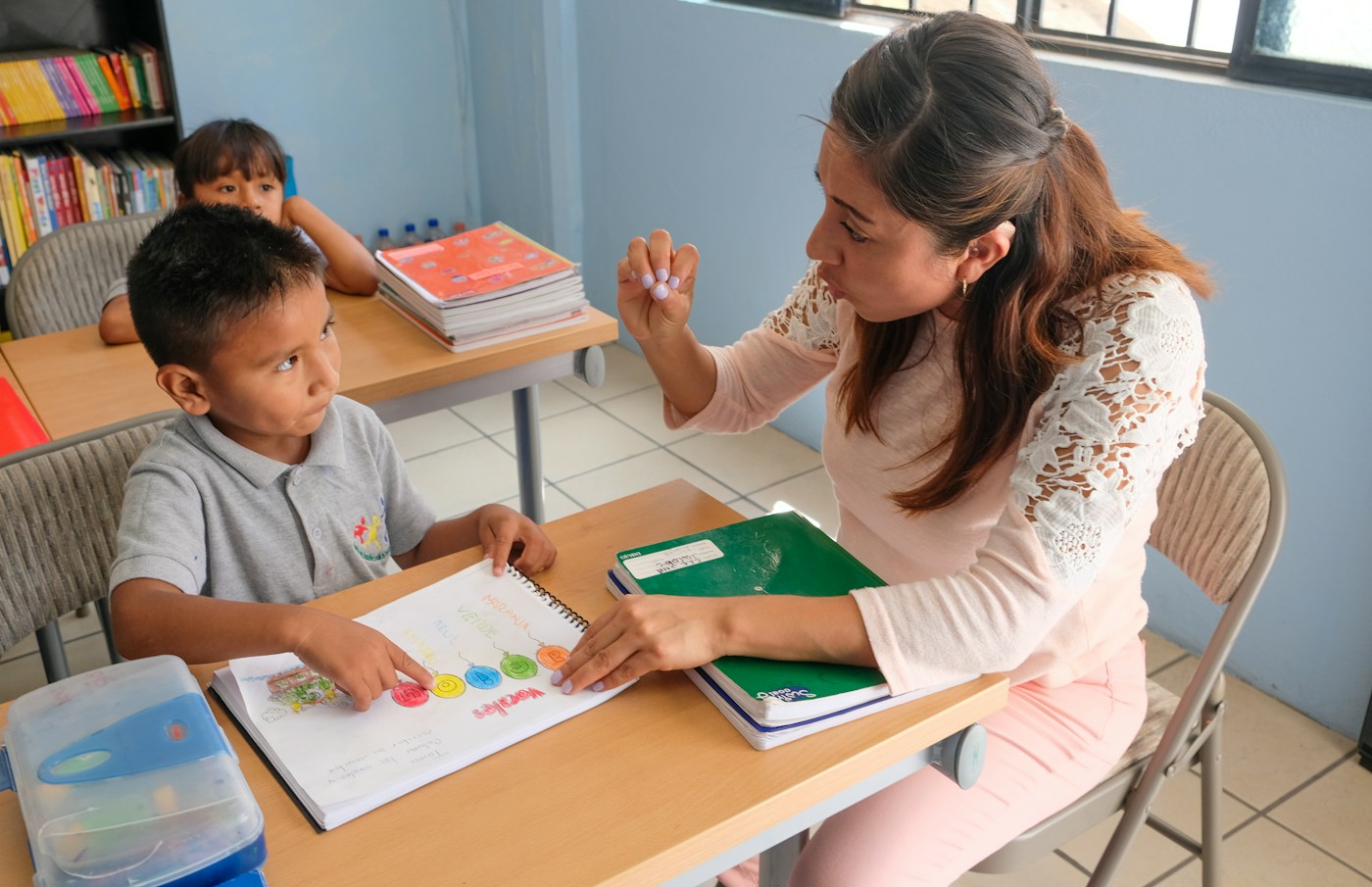
A reading specialist is a qualified teacher with advanced literacy training who assesses struggling readers, teaches intervention lessons to individuals and small groups, and advises colleagues on reading instruction. In the United States it is a state-issued credential rather than a job title, so the exact requirements are set state by state, not nationally.
That is the short answer. The longer one matters, because the job sits in an unusual place: it is half teaching and half advising, the federal government publishes no occupation under that name, and the route in almost always runs through several years in your own classroom first.
What a Reading Specialist Actually Does

The clearest published description of the work comes from California, where the Commission on Teacher Credentialing sets out exactly what its Reading and Literacy Leadership Specialist Credential authorises the holder to do. The list is worth reading in full, because it is the job description most states are circling in their own words:
- provide direct reading intervention and specialised reading instruction to students with severe reading difficulties;
- coordinate the adoption and implementation of literacy curricula, including training teachers;
- select and administer literacy assessments, and interpret the results;
- “design, implement, and evaluate a comprehensive literacy plan”;
- support students’ literacy development using information and communication technologies;
- evaluate literacy practices, report findings and plan staff development.
Those duties apply at school, district and county level, across preschool to grade twelve and adult classes. Notice how the list moves outward. The first item is sitting beside one child who cannot decode; the last is running professional development for a whole district. A reading specialist is expected to do both, and in a small school it is often the same person doing both in the same week.
Reading Specialist, Literacy Coach or Interventionist?
These three titles overlap heavily and are used loosely, which is why job advertisements are so confusing. The honest distinction is one of emphasis rather than of qualification.
| Title | Main emphasis | Who they mostly work with |
|---|---|---|
| Reading specialist | Assessment and direct intervention, plus advising colleagues | Struggling readers, and the teachers who teach them |
| Literacy coach | Improving how other teachers teach reading | Teachers, mostly |
| Literacy coordinator | Programme, curriculum and data across a school or district | Leadership and systems |
The International Literacy Association groups all three under the heading specialized literacy professionals in its Standards for the Preparation of Literacy Professionals, 2017 Edition, and treats them as distinct from classroom teachers for preparation purposes. The practical consequence is real: the association’s Overarching Standard 7, on practicum and clinical experiences, applies only to specialized literacy professionals, not to classroom teachers. Candidates are expected to apply theory and best practice in multiple supervised practicum or clinical experiences before they qualify.
In other words, the thing that separates a reading specialist from a well-read classroom teacher is supervised practice, not reading about it.
Reading Specialist Pay and Job Numbers in the United States
Here is the awkward fact anyone researching this role runs into. The US Bureau of Labor Statistics publishes no occupation called “reading specialist” or “literacy specialist”. Its Education, Training, and Library group contains fourteen occupational profiles, and neither title is among them. Depending on how a district writes the post, a reading specialist is counted either as a classroom teacher or as an instructional coordinator. Both federal figures are given below, because the honest answer is that the truth sits between them.
| Measure | Instructional coordinators | Kindergarten and elementary school teachers |
|---|---|---|
| Median pay | $77,440 per year ($37.23 per hour) | $63,820 per year |
| Typical entry-level education | Master’s degree | Bachelor’s degree |
| Work experience required | 5 years or more in a related occupation | None stated |
| Employment | 248,700 jobs | 1,530,500 jobs |
| Projected change, 2025–35 | 2% (slower than average) | 0% (little or no change) |
Data checked: 19 October 2026. Primary sources: US Bureau of Labor Statistics, Occupational Outlook Handbook — Instructional Coordinators and — Kindergarten and Elementary School Teachers. Both profiles use May 2025 wage data and were last modified 27 August 2026.
How to cite this: “The US Bureau of Labor Statistics publishes no separate occupation for reading specialists. The two nearest federal profiles report median pay of $77,440 a year for instructional coordinators and $63,820 for kindergarten and elementary school teachers, both on May 2025 wage data (US Bureau of Labor Statistics, Occupational Outlook Handbook, checked 19 October 2026).”
Read those two columns together and the shape of the career becomes clear. Moving from a classroom post into a literacy specialist post is, on federal averages, worth something in the order of $13,600 a year — but it typically costs a master’s degree and five years of prior experience to get there, and neither occupation is growing. This is a promotion within a flat profession, not an expanding field.
How to Become a Reading Specialist
Because the credential is issued by the state, there is no single national answer. California is a useful worked example, because its requirements are published in detail and are typical in structure if not in every detail. For the Reading and Literacy Leadership Specialist Credential, a candidate must hold all of the following:
- a valid basic California teaching credential — either one requiring a bachelor’s degree and a professional preparation programme including student teaching, or a clear full-time designated subjects credential plus a bachelor’s degree and the basic skills requirement;
- an English Learner Authorization;
- “verification of three years of successful full-time teaching experience in any grades preschool through adult”;
- completion of a Commission-approved post-baccalaureate programme in the specialism, with a formal recommendation from the California college or university where it was completed.
One detail catches people out every year: student teaching, intern teaching and teaching on an emergency or temporary permit do not count towards the three years. Only substantive full-time teaching does.
Note the second bullet too. California will not issue this credential to someone who is not authorised to teach English learners. That is not an administrative quirk — it is a statement about who turns up in intervention groups.
Hiring windows close while you scroll.
Every TEFL opening, salary and deadline that matters.
In your inbox every two weeks. Free, no spam, unsubscribe any time.
Teacher pay by country
New TEFL openings
Programme and visa dates
Deadlines, salaries and visa notes for teaching jobs worldwide, checked against official sources and sent free every two weeks.
Get on the WireBefore you commit to any programme, check the requirement with the state board that will actually issue your credential. A university programme can prepare you; only the state can license you, and the two do not always say the same thing.
Reading Specialists and English Learners
This is where the role connects directly to English language teaching, and it is the part most career guides skip.
According to the National Center for Education Statistics, the share of US public school students who were English learners was higher in fall 2021, at 10.6 percent or about 5.3 million students, than in fall 2011, when it was 9.4 percent or about 4.6 million. One pupil in ten is learning the language of instruction at the same time as learning to read in it.
That changes the diagnostic problem completely. A child who reads slowly and haltingly in English may have a reading difficulty, or may simply be at an early stage of English acquisition — and the intervention for those two children is not the same. Getting that call wrong in either direction is costly: a reading difficulty missed because it was written off as “just language”, or a child placed in intensive decoding support who needed vocabulary and oral language instead.
A reading specialist who understands how a second language is actually acquired makes that distinction better than one who does not. The background worth having is in the terminology itself: what WIDA and the ACCESS test actually measure, and what the older federal label Limited English Proficient still means in practice. It is also worth understanding the paraprofessional role, because in most schools the bilingual paraprofessional is the person a reading specialist works alongside most closely.
A TEFL qualification is not a legal requirement for any US reading specialist credential, and no training provider can tell you otherwise. What it does give you is structured grounding in how English is acquired, which is the exact knowledge the diagnostic question above depends on, and which most literacy programmes cover only in passing.
Is There an Equivalent Outside the United States?
Not a matching one, and this trips up teachers moving between systems.
The United States has built a licensed, credentialed specialism with its own standards and preparation programmes. England and Ireland generally handle the same work through designated roles within a school — a literacy lead, a special educational needs coordinator, or a teacher trained in a specific intervention programme — rather than through a separate state credential. The work is comparable; the credential is not portable.
So if you hold a US reading specialist credential and move abroad, expect it to be read as strong relevant experience rather than as a recognised qualification. And if you are moving the other way, expect to complete a state programme from the beginning regardless of what you did at home. For how the various teaching and TEFL qualifications actually relate to each other, our TEFL qualifications and terminology hub sets out the full picture.
Is It the Right Move for an English Teacher?
Three honest points, in the order they usually matter.
The pay rise is real but modest, and it is front-loaded with cost: a master’s-level programme and, in most states, several years of classroom service before you can even apply. Second, the role is not growing — a 2% federal projection over ten years means openings come from turnover, so geography matters more than timing. Third, and this is the part people underweight, the job changes what you do all day. If what you like about teaching is a full class, a specialist post will feel thin; if what you like is the child who is stuck and the puzzle of why, it will feel like the job you were always trying to do.
For teachers of English as a foreign language specifically, the most useful read is that this is a credential about diagnosis. The teaching is the easy half.
Sources Used in This Guide
- California Commission on Teacher Credentialing — Reading and Literacy Leadership Specialist Credential (CL-537)
- International Literacy Association — Standards for the Preparation of Literacy Professionals 2017
- US Bureau of Labor Statistics — Occupational Outlook Handbook, Instructional Coordinators
- US Bureau of Labor Statistics — Occupational Outlook Handbook, Kindergarten and Elementary School Teachers
- US Bureau of Labor Statistics — Education, Training, and Library Occupations index
- National Center for Education Statistics — English Learners in Public Schools
All six sources were opened and checked on 19 October 2026.
Tara and Jess talk through different TEFL and EFL topics, from finding work abroad to life in the classroom.
FAQs
Questions students ask us
A reading specialist is a qualified teacher with advanced literacy training who assesses struggling readers, teaches intervention lessons to individuals and small groups, and advises colleagues on reading instruction. In the United States it is a state-issued credential rather than a job title, so the exact requirements are set state by state, not nationally.
The California Commission on Teacher Credentialing sets out the duties its Reading and Literacy Leadership Specialist Credential authorises: direct reading intervention and specialised instruction for students with severe reading difficulties, coordinating the adoption of literacy curricula including training teachers, selecting and administering literacy assessments and interpreting results, designing and evaluating a comprehensive literacy plan, supporting literacy using information and communication technologies, and evaluating literacy practices and planning staff development. The duties apply at school, district and county level.
The US Bureau of Labor Statistics publishes no separate occupation for reading specialists, so there is no single official figure. The two nearest federal profiles report median pay of $77,440 a year for instructional coordinators and $63,820 a year for kindergarten and elementary school teachers, both using May 2025 wage data. Actual pay is set by district salary scales and varies widely by state.
Through the state that issues the credential, so the route varies. California, as a worked example, requires a valid basic teaching credential, an English Learner Authorization, verification of three years of successful full-time teaching experience in any grades preschool through adult, and completion of a Commission-approved post-baccalaureate programme with a formal recommendation from the college or university. Student teaching, intern teaching and teaching on an emergency permit do not count towards the three years.
The difference is emphasis rather than qualification. A reading specialist focuses on assessing and directly teaching struggling readers, as well as advising colleagues. A literacy coach focuses on improving how other teachers teach reading, and works mostly with staff. A literacy coordinator focuses on programme, curriculum and data across a school or district. The International Literacy Association groups all three as specialized literacy professionals in its Standards for the Preparation of Literacy Professionals, 2017 Edition.
No. A TEFL qualification is not a legal requirement for any US reading specialist credential. It is useful background rather than a requirement, because around one in ten US public school students is an English learner and distinguishing a reading difficulty from an early stage of English acquisition is a core part of the diagnostic work. California does require an English Learner Authorization for its reading and literacy credential, but that is a state authorisation, not a TEFL certificate.