
 United Kingdom (UK)
 United States (US)
 Canada
 South Africa
 India
India Australia
 New Zealand
 China
China Russia
 Germany
 France
 Spain
Spain Netherlands
 Vietnam
 United Arab Emirates
 Italy
Italy Poland
 Thailand
 Türkiye









 Algeria


What Is Reflective Teaching? A Guide for Educators
What Is Reflective Teaching? A Guide for Educators

TL;DR:
- Reflective teaching is a structured, iterative process where educators evaluate their instructional choices and student feedback for ongoing growth. It benefits both teachers’ professional identity and student learning outcomes through evidence-based adjustments. Techniques like micro-reflections, journals, video recordings, and peer observations support sustainable, context-specific reflective practices.
Reflective teaching is defined as an active, structured process where educators systematically evaluate their instructional choices, curriculum decisions, and student feedback to drive continuous professional growth. In practice, this means a teacher does not simply deliver a lesson and move on. They examine what worked, what did not, and why, then use those findings to adjust their approach. Tools like reflection journals, student feedback surveys, and peer observations are central to this process. Recent 2026 research confirms that purposeful reflection strengthens teacher empowerment and produces measurable improvements in student learning outcomes.
What is reflective teaching and its core principles?
Reflective teaching, known in academic literature as reflective practice, rests on a set of foundational principles that distinguish it from casual self-evaluation. John Dewey described reflection as reconstruction of experience, the core process by which lived classroom moments are transformed into genuine pedagogical knowledge and skill. That framing matters because it positions reflection not as a review exercise but as the mechanism through which experience becomes expertise.
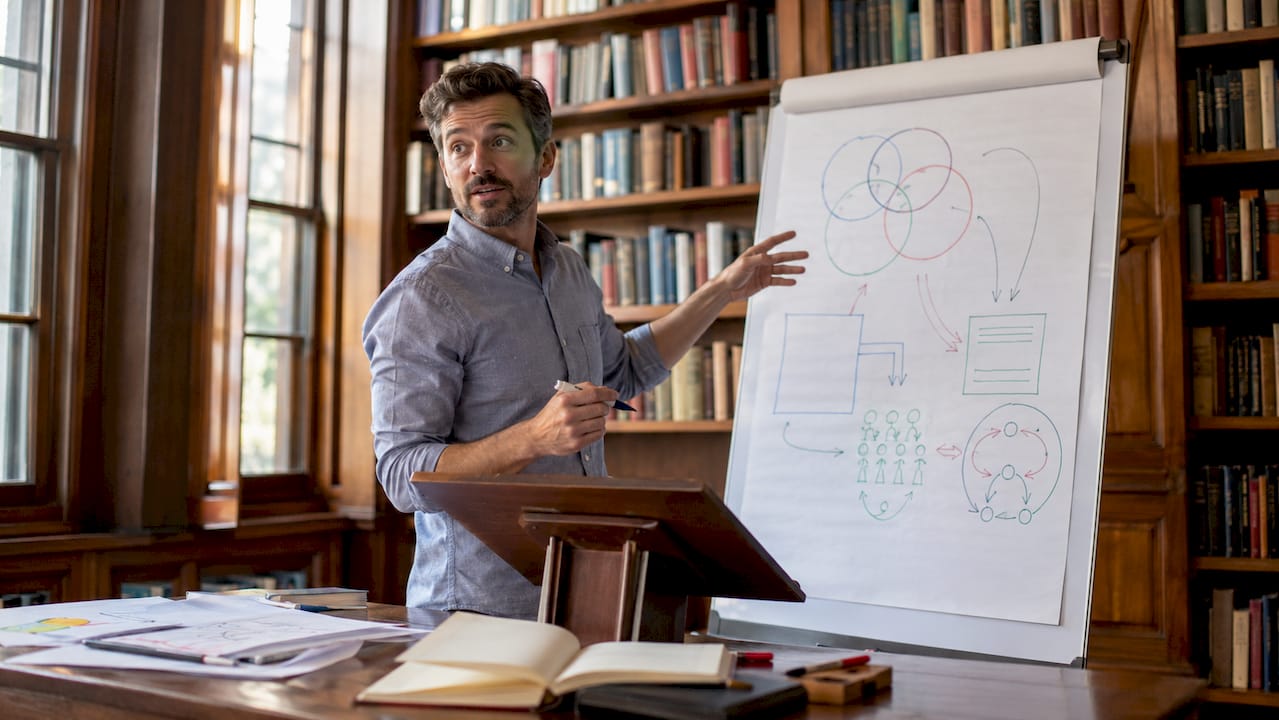
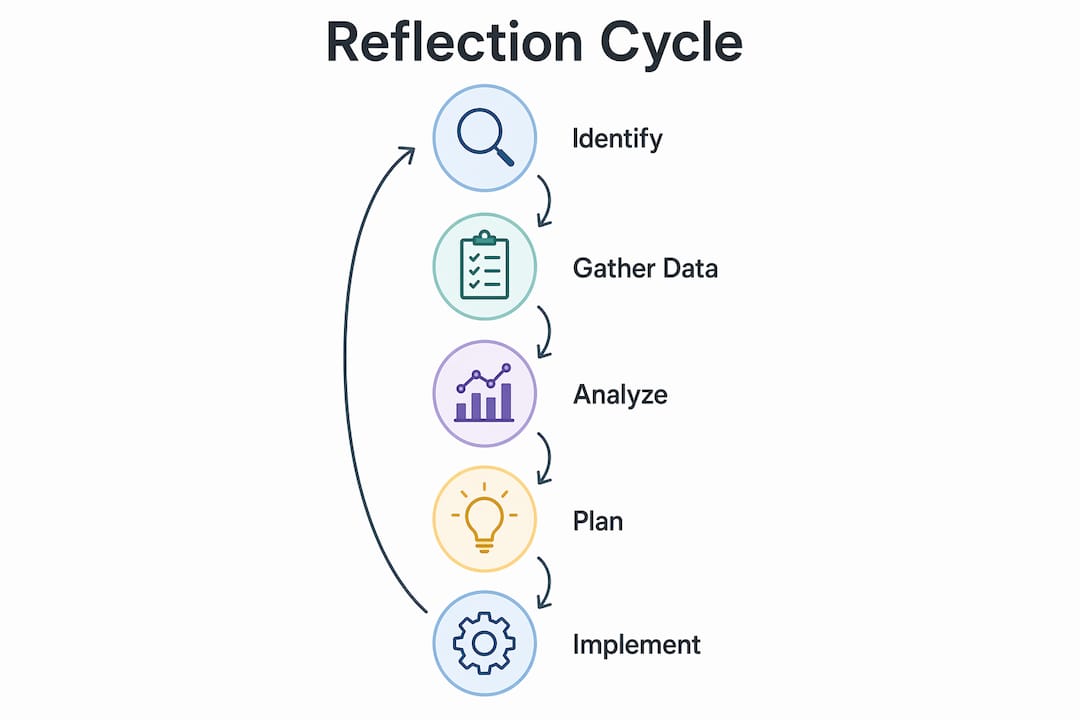
The process is inherently iterative. A teacher observes a lesson, gathers evidence, forms a hypothesis about what could improve, tests a new approach, and observes again. This cycle repeats continuously rather than concluding at a fixed point. Dewey identified three attitudes that make this cycle productive: open-mindedness (willingness to consider alternative explanations), responsibility (accepting the consequences of one’s instructional choices), and wholeheartedness (genuine commitment to growth rather than compliance).
Effective reflective teachers also share specific characteristics that separate them from educators who reflect only superficially:
- Critical thinking: They question assumptions behind their methods, not just the methods themselves.
- Intentionality: Every reflection targets a specific aspect of practice, such as questioning techniques, pacing, or differentiation.
- Evidence orientation: They draw on multiple data sources rather than relying on personal impression alone.
- Adaptability: They revise plans based on what the evidence shows, even when that requires significant change.
A critical principle is that reflection requires multiple data sources, including student perspectives, colleague feedback, personal observation, and academic theory. Relying on a single source introduces bias and limits insight. A teacher who only reads their own journal, for example, may reinforce existing blind spots rather than challenge them.
Pro Tip: Start each reflection cycle with a specific question rather than a general review. “Why did three students disengage during the reading task?” produces sharper insight than “How did the lesson go?”
How does reflective teaching benefit educators and students?
The benefits of reflective teaching extend to both the professional development of the educator and the learning experience of the student. Structured reflection shifts teachers from teacher-centered to student-centered approaches, a transition that directly improves classroom dynamics and learning outcomes. This shift is not automatic. It results from consistent, deliberate analysis of who is doing the cognitive work in a lesson and whether instructional choices serve learner needs or teacher habit.
For educators, the professional gains are substantial. Teachers who engage in purposeful reflection report stronger professional identity, greater confidence in adapting to unexpected classroom situations, and a clearer sense of alignment between their values and their practice. This alignment is not a minor benefit. It is the difference between teaching as a mechanical routine and teaching as a meaningful professional pursuit.
“Reflection is more than an obligation; it is a meaningful source of professional fulfillment and learner success.” — Teachers Institute
Student outcomes improve as a direct result of the instructional adjustments that reflection generates. When a teacher identifies through post-lesson analysis that a particular explanation confused students, and then redesigns that explanation for the next class, students receive clearer instruction. Multiply that adjustment across dozens of lessons per term and the cumulative effect on learning is significant. Research links regular reflective practice to increased student engagement, stronger academic performance, and more responsive teaching that meets diverse learner needs. For ESL educators in particular, this responsiveness is critical because student populations vary widely in language background, learning style, and prior knowledge.
The importance of reflective teaching also surfaces in teacher retention. Educators who reflect regularly are better equipped to manage the emotional demands of the profession because they process difficulties analytically rather than absorbing them as personal failures.
What practical reflective teaching techniques can educators apply?
Knowing the theory of reflective practice is not enough. Educators need concrete techniques they can apply within the real constraints of a teaching schedule. The following methods range from brief daily habits to structured collaborative processes.
- Micro-reflections. These are brief, focused notes written immediately after a lesson. Starting reflective practice requires as little as five minutes of post-class notes. The key is specificity. Note one moment that surprised you, one student response you did not anticipate, and one adjustment you would make next time. Micro-reflections are more sustainable than formal long-format reviews and often more insightful because they capture immediate, unfiltered observations.
- Reflective journals. A structured journal maintained over weeks or months reveals patterns that single-lesson notes cannot. Educators can use digital tools like Google Docs or Notion to organize entries by theme, date, or student group. Reviewing journal entries monthly allows teachers to track whether a recurring problem is improving or persisting.
- Video recording. Recording a lesson and watching it back is one of the most revealing techniques available. Teachers frequently discover habits they were unaware of, such as consistently calling on the same students, speaking too quickly during explanations, or providing insufficient wait time after questions. Daily journaling and video logging both support ongoing professional development in manageable ways.
- Student feedback. Exit tickets, anonymous surveys, and brief verbal check-ins provide direct evidence of student experience. A simple three-question survey asking what students learned, what confused them, and what they would change gives teachers data that self-observation alone cannot supply.
- Peer observation. Collaborative reflection via peer observation helps teachers overcome isolation and unconscious bias. A colleague watching your lesson will notice things you cannot see from inside the experience. Structured observation protocols, such as those outlined in resources like the classroom observation guide from Teflinstitute, make this process systematic rather than anecdotal.
- Professional learning communities (PLCs). Joining a PLC connects teachers with colleagues who share a commitment to reflective growth. Regular group discussions about shared challenges, lesson analyses, and student data create a culture of collective reflection that sustains individual practice.
Pro Tip: When analyzing a lesson, prioritize the moments that surprised you. Unexpected lesson moments are the richest triggers for meaningful pedagogical improvement. Analyzing anomalies, not just successes, produces the sharpest insights.
How does reflective teaching adapt to diverse educational environments?
Reflective practice is not a fixed protocol. It is, as Montclair State University describes, a continuous way of being embedded into teaching rather than a checklist completed at the end of a term. This distinction matters most when educators work in environments that are constantly changing, whether that means shifting student demographics, new curriculum mandates, or the integration of new technologies.
Hiring windows close while you scroll.
Deadlines, salaries and visa notes for teaching jobs worldwide, checked against official sources and sent free every two weeks.
Get on the WireIn ESL and EFL classrooms, for example, reflective teaching strategies must account for the specific linguistic and cultural variables that shape student engagement. A technique that works well with intermediate adult learners in South Korea may require significant adjustment for beginner-level students in Brazil. Reflection helps teachers identify these gaps quickly rather than persisting with an ineffective approach across an entire course. Teflinstitute’s resources on inclusive teaching methods provide a practical framework for applying this kind of adaptive reflection in diverse classrooms.
The table below illustrates how reflective strategies shift across different teaching contexts:
| Teaching context | Recommended reflection focus | Suggested technique |
|---|---|---|
| ESL/EFL classroom | Language comprehension gaps and cultural responsiveness | Student feedback surveys and micro-reflections |
| Inclusive classroom | Differentiation effectiveness and accessibility | Peer observation with structured protocol |
| Technology-integrated classroom | Tool adoption and student digital engagement | Video recording and post-lesson notes |
| Evolving curriculum | Alignment between new content and teaching values | Reflective journal with monthly review |
Iterative goal-setting is the practical mechanism that keeps reflection productive in changing environments. After each reflection cycle, a teacher sets one specific, measurable goal for the next lesson or unit. That goal is reviewed at the end of the cycle, revised if necessary, and replaced with a new one. This approach prevents reflection from becoming a vague habit and keeps it connected to concrete instructional improvement. Professional development platforms like EmpowerED offer structured frameworks for this kind of goal-driven reflective practice.
Sustaining reflection through periods of institutional change, such as curriculum overhauls or shifts to online teaching, requires treating it as a non-negotiable professional habit rather than an optional add-on. Teachers who have embedded reflection deeply into their daily routine are better positioned to adapt because they already have a systematic process for evaluating what is working and what is not.
Key takeaways
Reflective teaching is the most direct path from classroom experience to genuine instructional expertise, requiring consistent evidence gathering, iterative goal-setting, and collaborative input to produce lasting improvement.
| Point | Details |
|---|---|
| Core definition | Reflective teaching is a structured, iterative process of evaluating and adapting instructional choices based on evidence. |
| Multiple data sources | Effective reflection draws on student feedback, peer observation, and academic theory, not personal impression alone. |
| Micro-reflections work | Five-minute post-lesson notes are more sustainable and often more insightful than formal long-format reviews. |
| Peer observation is critical | Collaborative reflection breaks isolation and uncovers blind spots that solo reflection cannot identify. |
| Reflection as a way of being | Sustained reflective practice requires treating it as a continuous professional identity, not a periodic task. |
Reflection as a professional discipline, not a performance
I have worked with educators at various stages of their careers, and the most consistent pattern I observe is this: teachers who treat reflection as a genuine inquiry process improve faster and burn out less often than those who treat it as an administrative obligation. The difference is not talent. It is methodology.
The most common mistake I see is reflection performed in isolation. A teacher writes in their journal every week but never shares observations with a colleague, never collects student feedback, and never tests a hypothesis against academic research. That kind of reflection tends to confirm existing beliefs rather than challenge them. It feels productive but produces limited change.
What actually works is treating surprising or uncomfortable moments in a lesson as data points rather than failures. The lesson where half the class looked confused during your clearest explanation is more valuable than the lesson that ran perfectly. That confusion is a signal. Chasing that signal with a specific question, gathering evidence from students and peers, and testing a revised approach is what separates reflective practice from simple self-awareness.
My recommendation for any educator starting out is to build one micro-habit first. Write three sentences after every lesson for two weeks before adding any other technique. Once that habit is stable, add peer observation. Build the system incrementally rather than attempting a comprehensive overhaul on day one. Sustainable reflection produces compounding returns over a career. Sporadic reflection produces occasional insight.
— Muller
Build your reflective teaching skills with Teflinstitute
Teflinstitute integrates reflective teaching as a core component across its professional development courses, giving educators structured frameworks to evaluate and improve their practice from day one.

The 120 Hour Elective TEFL Course introduces reflective techniques alongside practical classroom methodology, making it a strong starting point for educators building their professional toolkit. For those seeking a more thorough grounding, the 240 Hour Master TEFL Course embeds reflective practice throughout its curriculum, connecting theory to real classroom application at every stage. Both courses are designed for educators who want to move beyond instinct and develop a systematic, evidence-based approach to teaching. Explore the full course catalog at Teflinstitute to find the program that fits your career goals.
FAQ
What is the definition of reflective teaching?
Reflective teaching is a structured, iterative process where educators critically evaluate their instructional methods, student feedback, and classroom outcomes to drive continuous professional improvement. It transforms lived teaching experience into pedagogical knowledge and skill.
Why is reflective teaching important for educators?
Reflective teaching shifts educators from teacher-centered to student-centered approaches, strengthens professional identity, and produces measurable improvements in student engagement and learning outcomes. It also equips teachers to adapt effectively to changing classroom environments.
What are the most effective reflective teaching techniques?
The most effective techniques include micro-reflections written immediately after lessons, structured reflective journals, video recording for self-observation, student feedback surveys, and peer observation using structured protocols. Combining multiple methods produces deeper insight than any single technique alone.
How long does it take to start a reflective teaching practice?
Starting reflective practice requires as little as five minutes of focused post-lesson notes. The key is consistency rather than duration. Brief, specific daily reflections build a sustainable habit faster than occasional lengthy reviews.
How do reflective practices differ across teaching contexts?
Reflective strategies adapt to the specific variables of each context. ESL classrooms prioritize language comprehension gaps and cultural responsiveness, while inclusive classrooms focus on differentiation effectiveness. The core cycle of observe, analyze, adjust, and repeat remains consistent across all settings.
Recommended
TEFL Institute guides

Spain
Jobs, pay and visa routes
China
Z visa, pay and cities
Portugal
Jobs, pay and visa routes
Thailand
Visas and teaching licences
Germany
Freelance work and pay