
 United Kingdom (UK)
 United States (US)
 Canada
 South Africa
 India
India Australia
 New Zealand
 China
China Russia
 Germany
 France
 Spain
Spain Netherlands
 Vietnam
 United Arab Emirates
 Italy
Italy Poland
 Thailand
 Türkiye









 Algeria


Master evaluation in TEFL courses for better results 2026
Master evaluation in TEFL courses for better results 2026

You probably think evaluation in TEFL courses means quizzes and final exams. But this misconception keeps thousands of educators from unlocking the real power of assessment to transform student outcomes. Research shows that formative assessment strategies significantly improve EFL learners’ writing accuracy, yet many teachers still rely solely on traditional testing. This guide reveals how sophisticated evaluation methods can revolutionize your teaching practice and deliver measurable improvements in student learning.
Table of Contents
- Understanding Evaluation Fundamentals In TEFL Courses
- Implementing Formative And Diagnostic Assessments For Student Writing
- Leveraging Course Evaluations And Participatory Methods To Improve TEFL Programs
- Applying Evaluation Insights To Enhance Your TEFL Teaching Practice
- Advance Your TEFL Career With Professional Training
- Frequently Asked Questions
Key takeaways
| Point | Details |
|---|---|
| Formative assessments reveal hidden patterns | These methods uncover specific grammar and writing weaknesses that standard tests miss entirely. |
| Diagnostic models provide surgical precision | DCMs generate detailed learner profiles showing exactly where each student excels or struggles. |
| Course evaluations inform program quality | Student feedback combined with observation data creates a complete picture of teaching effectiveness. |
| Participatory methods boost evaluation accuracy | Active learner engagement produces richer assessment data than passive testing alone. |
Understanding evaluation fundamentals in TEFL courses
Effective evaluation starts with grasping the theoretical frameworks that underpin successful TEFL program assessment. The course covers fundamental concepts, principles, and practices of evaluating ELT programs, enabling educators to analyze program strengths systematically.
These foundational concepts help you move beyond surface-level grading. You’ll develop the ability to identify subtle patterns in student performance that traditional methods overlook. The role of a TEFL teacher extends far beyond content delivery into sophisticated diagnostic work.
Core evaluation principles in TEFL include:
- Alignment between learning objectives, instruction, and assessment measures
- Multiple data sources to triangulate teaching effectiveness accurately
- Continuous feedback loops that inform immediate instructional adjustments
- Stakeholder involvement including students, teachers, and program administrators
- Cultural sensitivity in assessment design and interpretation
Mastering these fundamentals transforms evaluation from a checkbox exercise into a powerful tool for program improvement. You gain the skills to critically analyze course components and recommend evidence-based enhancements. This analytical capacity separates competent teachers from exceptional ones who consistently drive measurable student progress.
The theoretical foundation also helps you recognize evaluation’s broader purpose. It’s not about judging teachers or students harshly. Instead, it creates systematic opportunities to identify what works, amplify successes, and address gaps with precision.
Implementing formative and diagnostic assessments for student writing
Formative assessment represents a paradigm shift from evaluating what students learned to actively shaping the learning process itself. Research confirms that formative assessment strategies significantly improve EFL learners’ writing accuracy across grammar, punctuation, spelling, and sentence structure dimensions.
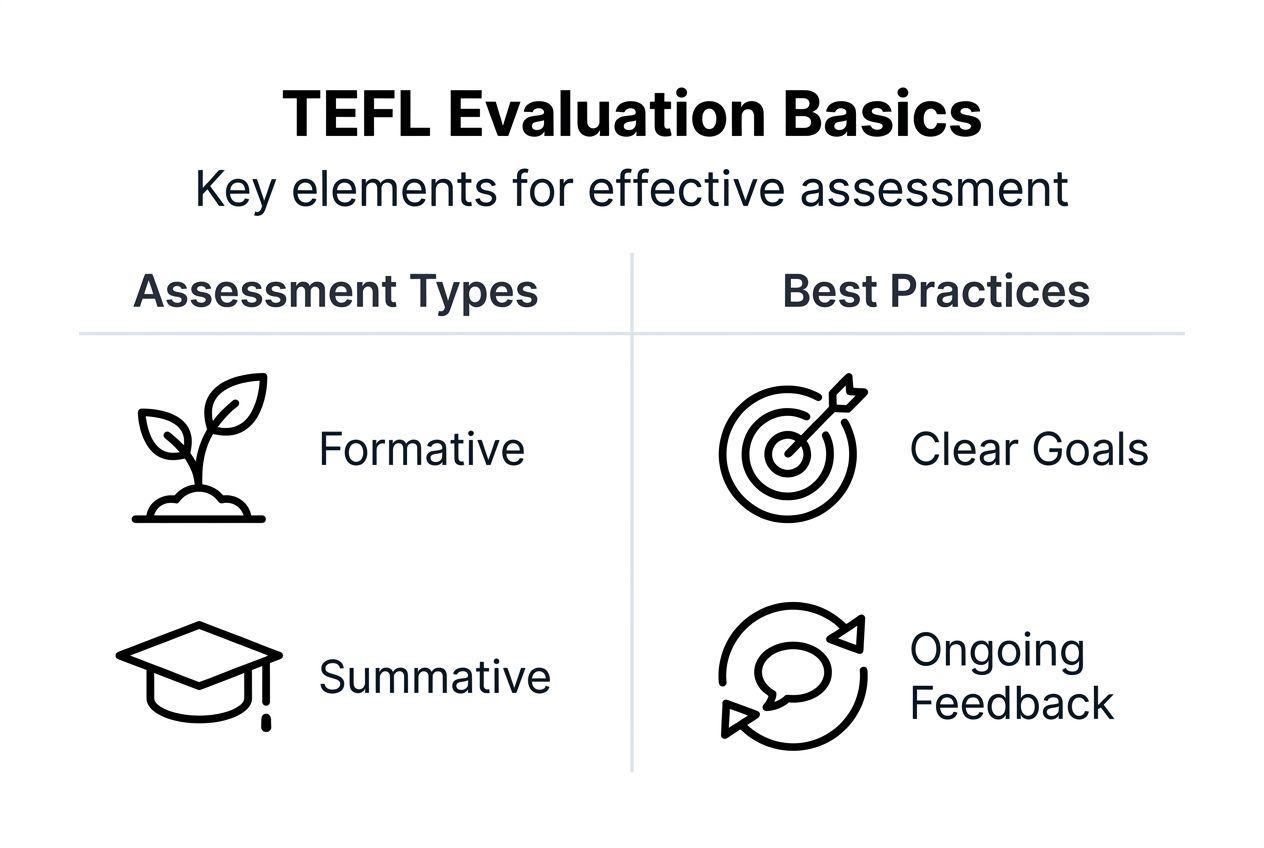
Unlike summative tests that deliver a final score, formative methods provide ongoing feedback students can immediately apply. You catch errors early when they’re easiest to correct. This approach prevents fossilized mistakes that become ingrained over time.
Diagnostic classification models take precision even further. Diagnostic classification models provide fine-grained diagnostic info on learner writing strengths and weaknesses by generating detailed profiles for each student. The GDINA model, for instance, breaks writing skills into specific attributes and maps exactly which ones each learner has mastered.
Here’s how traditional and advanced methods compare:
| Assessment Type | Granularity | Timing | Actionability | Individual Profiles |
|---|---|---|---|---|
| Traditional tests | Overall score only | End of unit | Limited | No |
| Formative assessment | Skill-level feedback | Continuous | High | Partial |
| Diagnostic classification | Attribute-level analysis | Strategic points | Surgical | Complete |
The power of DCMs becomes clear when examining real classroom data. One student might excel at vocabulary selection but struggle with verb tense consistency. Another shows strong organizational skills yet makes frequent punctuation errors. Traditional scoring lumps both students into similar grade ranges, missing these critical distinctions.

Effective implementation requires integrating multiple perspectives. Teacher feedback forms the foundation, but peer and self-assessment add valuable dimensions. Students learn to recognize quality writing by evaluating classmates’ work. They develop metacognitive skills through honest self-reflection.
Pro Tip: Create simple rubrics that students can apply during peer review sessions, then compare their assessments with your own to identify calibration gaps and teaching opportunities.
These methods also reveal group-level patterns that inform curriculum decisions. If 70% of students struggle with conditional sentences, you know exactly where to add instructional emphasis. Leverage TEFL resources for effective teaching to address identified skill gaps systematically.
Leveraging course evaluations and participatory methods to improve TEFL programs
Course evaluations provide direct insight into student experiences and perceived teaching quality. Course evaluations offer valuable insights into students’ experiences and teaching effectiveness, capturing dimensions that test scores cannot measure.
These instruments typically assess clarity of instruction, materials quality, teacher responsiveness, and overall satisfaction. Students report whether explanations made sense, activities engaged them, and they feel confident applying new skills. This feedback highlights disconnects between your intentions and student perceptions.
However, course evaluations have limitations you must acknowledge. Rating scales lack nuance and can reflect factors beyond teaching quality. A difficult but necessary course might receive lower scores than an easy elective. Students may conflate entertainment value with educational effectiveness.
Participatory teaching methods strengthen evaluation by actively engaging learners in the assessment process. Research shows participatory teaching methods improve learning outcomes in low- and middle-income countries, and the benefits extend to all educational contexts.
When students collaborate on evaluation criteria, they develop deeper understanding of learning objectives. They become invested in the assessment process rather than passive subjects of measurement. This ownership typically produces more thoughtful, constructive feedback.
Best practices for interpreting student feedback include:
- Read all comments before forming conclusions to avoid fixating on outliers
- Identify themes across multiple responses rather than isolated complaints
- Compare current evaluations to previous terms to spot trends
- Consider class-specific factors like size, level, and composition
- Distinguish between controllable elements and institutional constraints
Pro Tip: Supplement course evaluations with mid-semester check-ins, classroom observation by peers, and teaching portfolio reviews to build a complete effectiveness picture.
This multi-method approach guards against over-relying on any single data source. Student feedback might highlight unclear assignment instructions, while peer observation reveals strong rapport-building skills. TEFL academy reviews insights show how combining evaluation methods produces more reliable program assessments.
The goal is creating feedback loops that continuously refine your teaching. Small adjustments based on solid evaluation data compound into significant quality improvements over time.
Applying evaluation insights to enhance your TEFL teaching practice
Collecting evaluation data means nothing without systematic application to improve instruction. Students review research articles and apply evaluation results to practice, demonstrating how insights translate into better teaching decisions.
The key is moving from general awareness to specific action. If evaluation reveals students struggle with article usage, don’t just “cover it more.” Design targeted activities focusing on definite versus indefinite articles in context. Use authentic materials where article choice changes meaning.
Follow this process for continuous improvement:
- Analyze evaluation data to identify the three most critical skill gaps or teaching weaknesses.
- Prioritize issues that affect the most students or have the biggest learning impact.
- Research evidence-based strategies specifically addressing identified gaps.
- Implement changes to instruction, materials, or assessment methods.
- Gather focused feedback on whether modifications improved outcomes.
- Refine approaches based on results and repeat the cycle.
This systematic approach prevents random changes that waste effort. You make informed adjustments targeting real needs revealed through data.
Consider how evaluation-informed teaching differs from traditional approaches:
| Aspect | Traditional Teaching | Evaluation-Informed Teaching |
|---|---|---|
| Planning basis | Textbook sequence | Diagnosed student needs |
| Feedback timing | End of unit | Continuous throughout |
| Instruction adjustments | Minimal during course | Responsive and frequent |
| Success measures | Test averages | Individual skill mastery |
| Student involvement | Passive recipients | Active co-evaluators |
Evaluation data also helps personalize instruction at scale. You might offer advanced reading materials to students who’ve mastered comprehension skills while providing scaffolded support for those still developing fluency. Differentiation becomes data-driven rather than guesswork.
Tailored feedback addresses weaknesses efficiently. Instead of generic “work on grammar” comments, you pinpoint exactly which grammatical structures need attention and provide specific resources. Students appreciate this precision and make faster progress.
The TEFL practicum experiences guide demonstrates how applying evaluation insights during practice teaching builds essential skills. You learn to recognize patterns, adjust in real time, and document improvement systematically.
Remember that evaluation serves learning, not bureaucracy. Every assessment should generate actionable insights that improve either your teaching or student outcomes. If an evaluation method doesn’t produce usable data, eliminate it and redirect that energy toward more productive approaches.
Advance your TEFL career with professional training
Mastering evaluation methods requires dedicated training beyond basic certification. TEFL Institute’s TEFL courses in Newcastle equip educators with sophisticated assessment techniques that drive measurable student progress.

Our curriculum emphasizes practical application of diagnostic tools and formative assessment strategies in real classroom contexts. You’ll learn to design evaluation systems that reveal exactly what students know and where they need support.
Course extensions offer specialized modules in program evaluation, curriculum design, and advanced assessment methods. These credentials demonstrate your commitment to teaching excellence and open doors to leadership positions.
Whether you’re starting your TEFL journey or enhancing existing skills, TEFL Institute provides the training you need to become an evaluation expert. Join thousands of educators who’ve transformed their teaching through evidence-based assessment practices.
Frequently asked questions
What are the main types of evaluation used in TEFL courses?
Formative assessment provides ongoing feedback during instruction to guide learning. Summative evaluation measures overall achievement at course end. Diagnostic assessment identifies specific skill strengths and weaknesses for targeted instruction. Course evaluations capture student perceptions of teaching effectiveness. Combining these methods creates comprehensive insight into both student learning and program quality that single approaches miss.
How can diagnostic classification models improve assessment accuracy in TEFL writing?
Diagnostic classification models provide fine-grained diagnostic info on learner writing strengths and weaknesses by breaking writing into specific skill attributes. Instead of overall scores that obscure details, DCMs map exactly which writing components each student has mastered and which need work. This precision enables targeted instruction addressing actual gaps rather than assumed weaknesses.
What role do course evaluations play in measuring teaching effectiveness?
Course evaluations offer insights but don’t fully capture teaching quality because they reflect student perceptions rather than objective learning measures. They reveal how clearly you communicate, whether materials engage learners, and overall satisfaction levels. Combine them with classroom observation, peer review, and student performance data for complete effectiveness assessment.
How can TEFL educators apply evaluation results to improve their teaching?
Use evaluation feedback to identify specific skill gaps across your student population. Adjust lesson plans by adding targeted activities addressing diagnosed weaknesses rather than covering everything superficially. Incorporate student-centered approaches like peer assessment and self-reflection based on evaluation insights. Continuously assess whether modifications improve outcomes and refine methods accordingly. The applying evaluation in TEFL practicum guide shows this process in action during practice teaching.
Recommended
TEFL Institute guides

China
Z visa, pay and cities
Portugal
Jobs, pay and visa routes
Czech Republic
Pay, visas and cities
Spain
Jobs, pay and visa routes
Dubai
Pay, requirements and visas