

 United Kingdom (UK)
 United States (US)
 Canada
 South Africa
 India
India Australia
 New Zealand
 China
China Russia
 Germany
 France
 Spain
Spain Netherlands
 Vietnam
 United Arab Emirates
 Italy
Italy Poland
 Thailand
 Türkiye










 Algeria



What Level Is a 120 Hour TEFL Course?
Stepping into a new teaching career is both exciting and challenging for recent graduates ready to explore international job markets. The worldwide demand for English instructors makes choosing the right certification a crucial first step.
The 120-hour certification stands out as a globally recognized standard, preparing teachers with essential skills to work in diverse classroom settings across Asia, Europe, and beyond. Discover how this foundational qualification can open doors to rewarding opportunities overseas and online.

Table of Contents
- Defining the 120 Hour Course Standard
- Qualification Level and Global Recognition
- What the 120 Hour Curriculum Covers
- Comparing 120 Hour and Level 5 TEFL Courses
- Employer Expectations and Career Prospects
Key Takeaways
| Point | Details |
|---|---|
| Standard Credential | A 120-hour TEFL certification is considered the minimum requirement for many international teaching positions, providing foundational training in teaching methodologies and classroom management. |
| Global Recognition | This certification is recognized worldwide by language schools, universities, and online platforms, making it essential for aspiring English teachers. |
| Curriculum Components | The 120-hour course typically includes modules on language teaching foundations, classroom management, lesson planning, and practical teaching skills. |
| Career Pathways | Understanding the distinction between a 120-hour TEFL and a Level 5 TEFL course is crucial for long-term career planning, with the latter offering more advanced qualifications and recognition. |
Defining the 120 Hour Course Standard
A 120-hour course represents the global benchmark for entry-level English language teaching certification. This standard duration provides aspiring teachers with comprehensive training in pedagogical techniques, language methodology, and classroom management skills needed for international teaching environments. The 120-hour certification has become the most widely recognized credential for educators seeking positions in language schools, universities, and online teaching platforms worldwide.
The components of a standard 120-hour TEFL course typically include several critical learning modules:
- Theoretical Language Teaching Foundations
- Classroom Management Strategies
- Lesson Planning Techniques
- Grammar and Linguistics Study
- Teaching Methodology Frameworks
- Practical Teaching Approaches
Understanding the nuanced differences between TEFL course levels can help prospective teachers make informed decisions about their professional development. Exploring TEFL certification levels reveals how the 120-hour standard fits into the broader landscape of language teaching credentials.
Most international employers consider the 120-hour certification a minimum requirement for professional teaching positions. This standardized duration ensures that teachers receive enough comprehensive training to effectively manage classrooms, design curriculum, and deliver engaging language instruction. The course typically balances theoretical knowledge with practical teaching skills, preparing educators for real-world classroom challenges.
Pro tip: Research specific country requirements before selecting your TEFL certification, as some regions may have additional credential specifications beyond the standard 120-hour program.
Qualification Level and Global Recognition
The 120-hour TEFL certification represents a critical entry point for educators seeking international teaching opportunities. This standardized qualification serves as a foundational credential recognized by language schools, universities, and online teaching platforms across multiple countries. Global TEFL partnerships demonstrate the widespread acceptance of this professional training standard.
Key recognition aspects of the 120-hour TEFL certification include:
- Minimum requirement for most international teaching positions
- Standardized curriculum meeting global educational benchmarks
- Comprehensive training in language teaching methodologies
- Recognized by language schools worldwide
- Provides basic professional teaching credentials
- Enables entry into international education markets
Most employers view the 120-hour certification as the minimum professional standard for English language instructors. This qualification indicates that teachers have received comprehensive training in essential teaching techniques, classroom management strategies, and language instruction methodologies. The certification signals to potential employers that an individual has undergone structured professional preparation for language education.
International education markets consistently prioritize candidates with standardized credentials, making the 120-hour TEFL certification a critical component of professional development for aspiring language teachers. While some advanced positions may require additional qualifications, this baseline certification remains the most widely accepted entry-level credential for teaching English abroad or online.
Pro tip: Verify specific country and institution requirements, as some may have additional certification specifications beyond the standard 120-hour program.
What the 120 Hour Curriculum Covers
The 120-hour TEFL curriculum provides a comprehensive framework designed to equip aspiring language teachers with essential skills and knowledge for effective English instruction. Completing a TEFL course involves a structured approach to understanding language teaching methodologies, classroom management, and practical instructional techniques.
A typical 120-hour TEFL curriculum encompasses several critical learning domains:
- Linguistic Theory and Grammar
- English language structure
- Advanced grammatical concepts
- Language analysis techniques
- Teaching Methodology
- Lesson planning strategies
- Classroom management techniques
- Student engagement approaches
- Practical Teaching Skills
- Instructional design
- Assessment methods
- Curriculum development basics
The curriculum typically breaks down into theoretical and practical components, ensuring teachers develop both conceptual understanding and hands-on teaching capabilities. Theoretical modules focus on linguistic principles, language acquisition theories, and pedagogical frameworks, while practical modules concentrate on actual classroom implementation, lesson planning, and interactive teaching strategies.

Most 120-hour programs include comprehensive modules covering pronunciation techniques, language skills integration, teaching adults and young learners, and understanding cultural contexts in language education. These modules prepare teachers to handle diverse classroom environments and adapt their teaching approaches to different student needs and learning styles.
Pro tip: Select a TEFL course that offers a balanced mix of theoretical knowledge and practical teaching experience to maximize your professional preparation.
Comparing 120 Hour and Level 5 TEFL Courses
The 120-hour and Level 5 TEFL courses represent two distinct paths for aspiring English language teachers, each offering unique advantages and targeting different professional objectives. Comparing TEFL certification options reveals critical differences in depth, recognition, and career potential.
Key distinctions between 120-hour and Level 5 TEFL courses include:
- 120-Hour TEFL Certification
- Entry-level qualification
- Basic teaching methodology
- Suitable for initial international teaching positions
- Typically online or self-paced
- Level 5 TEFL Certification
- Advanced professional qualification
- Government-regulated credential
- More comprehensive curriculum
- Higher academic and professional recognition
- Equivalent to foundation degree level
The primary differences emerge in academic rigor and professional recognition. A 120-hour course provides foundational skills and serves as an entry point for new teachers, while a Level 5 TEFL represents a more advanced, academically validated qualification. The Level 5 certification typically involves more in-depth study, includes practical teaching components, and carries greater weight with international employers.
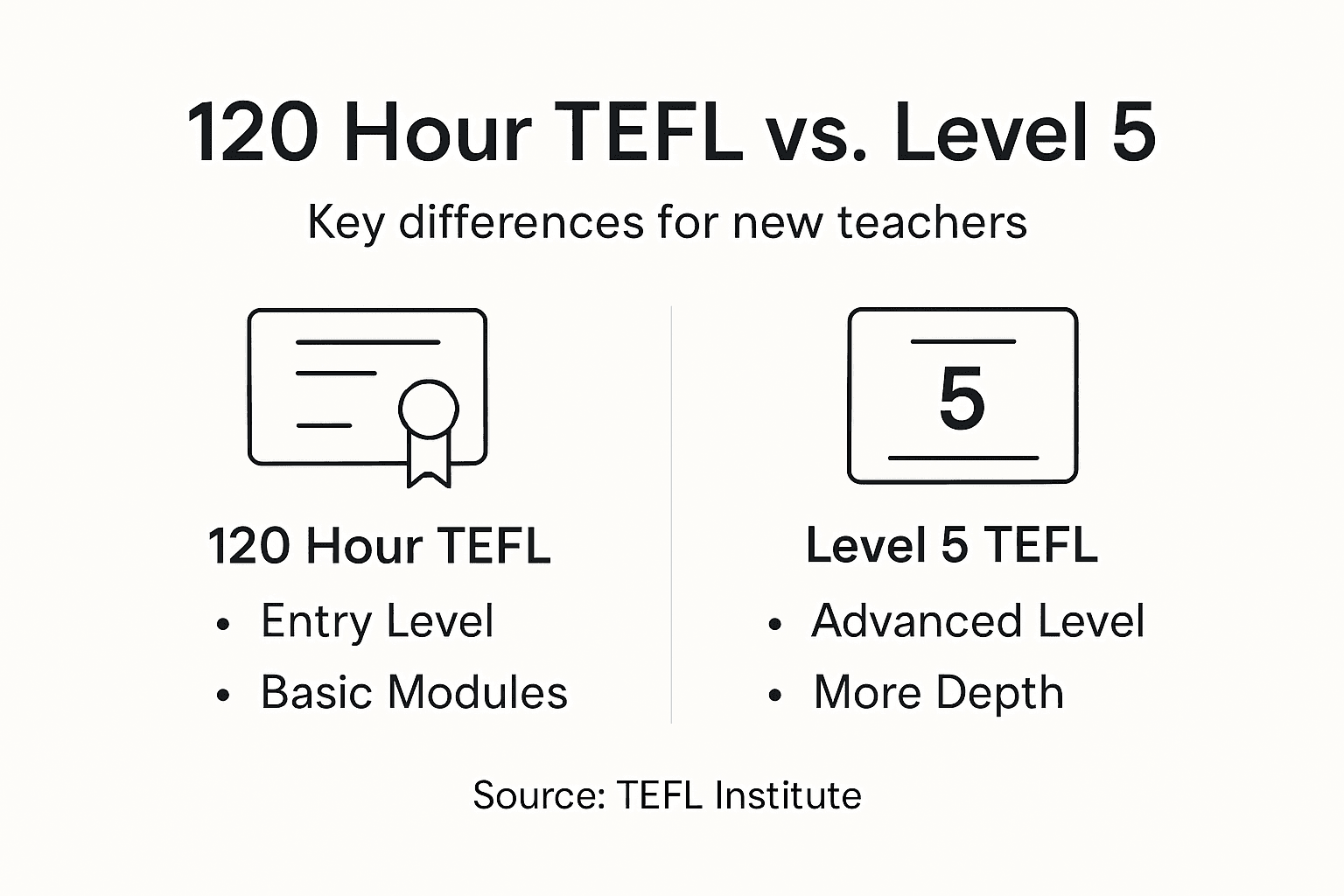
Prospective teachers should consider their specific career goals when selecting between these options. While the 120-hour course offers a quick entry into teaching, the Level 5 certification provides a more comprehensive preparation for long-term international education careers, potentially opening doors to more advanced teaching positions and higher salary ranges.
Here is a quick overview of how a 120-hour TEFL course compares to Level 5 TEFL certification:
| Aspect | 120 Hour Course | Level 5 TEFL Certification |
|---|---|---|
| Typical Duration | 4-6 weeks, self-paced | 8-12 weeks, structured |
| Employer Recognition | Accepted by most schools | Valued by advanced institutions |
| Depth of Study | Foundational teaching basics | Extensive teaching theory |
| Career Advancement | Entry-level roles abroad | Senior teaching positions |
Pro tip: Evaluate your long-term teaching career goals carefully when choosing between 120-hour and Level 5 TEFL certifications, considering potential international teaching opportunities.
Employer Expectations and Career Prospects
Employers in the international English language teaching market have specific expectations for TEFL-certified candidates, with the 120-hour certification serving as a fundamental qualification. Teaching overseas job strategies highlight the critical importance of understanding employer requirements and positioning yourself effectively in the global job market.
Key employer expectations for TEFL-certified teachers include:
- Professional Qualifications
- Minimum 120-hour TEFL certification
- Native or near-native English proficiency
- Clear communication skills
- Demonstrated teaching methodologies
- Geographic Job Market Requirements
- Asia: Often prefer a bachelor’s degree
- Middle East: Stricter credential verification
- Europe: Emphasize practical teaching experience
- Online platforms: Flexible certification standards
The global English language teaching market offers diverse opportunities for TEFL-certified professionals. Different regions have unique hiring preferences, with some prioritizing academic credentials while others focus more on practical teaching skills and cultural adaptability. Online teaching platforms have increasingly become an alternative pathway, offering more flexible employment options for certified teachers.
Successful candidates typically differentiate themselves by combining their TEFL certification with additional qualifications, such as specialized teaching endorsements, language proficiency certificates, or subject-specific expertise. Understanding the nuanced requirements of different job markets can significantly enhance a teacher’s employability and career progression.
Below is an at-a-glance summary of top international hiring preferences for TEFL teachers:
| Region | Preferred Qualifications | Extra Requirements |
|---|---|---|
| Asia | Bachelor’s plus TEFL | Cultural awareness |
| Middle East | Degree and verified TEFL | Teaching experience |
| Europe | TEFL and classroom experience | Local work permits |
| Online | TEFL and strong communication | Digital literacy |
Pro tip: Research specific regional teaching requirements and consider gaining supplementary certifications to improve your competitive edge in the international job market.
Take the Next Step Beyond Your 120 Hour Course
If you have completed a 120-hour course and wonder how to elevate your teaching credentials for better job prospects and deeper professional preparation, then you are not alone. Many aspiring teachers face challenges understanding how this foundational certification compares to advanced diplomas like the Level 5 TEFL and what career doors each can open. The article “What Level Is a 120 Hour Course” highlights the importance of matching your TEFL certification to your long-term teaching goals and the specific employer expectations worldwide.

Discover how TEFL Institute’s range of online courses can guide you from entry-level preparation through to advanced qualifications with flexible options tailored to your needs. Whether you seek a quick yet comprehensive introduction or a government-regulated Level 5 Diploma with practicum experience, you can explore all your options at TEFL Institute. Start by comparing certifications and find the best course fit for your career at What to Choose A CELTA Qualification vs a Level 5 TEFL Certification and learn How Long Does It Take to Complete a TEFL Course.
Take control of your teaching future today by choosing the certified path that matches your ambition and the global market demand. Visit https://teflinstitute.com now to enroll and transform your passion for teaching into a rewarding international career.
Frequently Asked Questions
What is a 120-hour TEFL course?
A 120-hour TEFL course is a standard certification for English language teachers that provides foundational training in language teaching methodologies, classroom management, and lesson planning.
How does a 120-hour TEFL course compare to a Level 5 TEFL course?
A 120-hour TEFL course is an entry-level qualification suitable for new teachers, while a Level 5 TEFL certification is a more advanced credential that offers deeper knowledge and professional recognition, typically equivalent to a foundation degree level.
What subjects are covered in a 120-hour TEFL curriculum?
The 120-hour TEFL curriculum includes linguistic theory, grammar, teaching methodology, lesson planning, classroom management, and practical teaching skills to prepare teachers for effective instruction.
Is a 120-hour TEFL certification sufficient for teaching English abroad?
Yes, the 120-hour TEFL certification is generally accepted as the minimum requirement for most international teaching positions, providing teachers with essential skills needed for effective language instruction.
