

 United Kingdom (UK)
 United States (US)
 Canada
 South Africa
 India
India Australia
 New Zealand
 China
China Russia
 Germany
 France
 Spain
Spain Netherlands
 Vietnam
 United Arab Emirates
 Italy
Italy Poland
 Thailand
 Türkiye









 Algeria


Your Checklist for Teaching Abroad: 2026 Guide
Your Checklist for Teaching Abroad: 2026 Guide

TL;DR:
- Preparing to teach abroad requires early organization of documents, health checks, and logistical planning to avoid costly mistakes. Essential credentials include a bachelor’s degree, TEFL certification, background check, and valid passport, all maintained in a physical and digital Golden Folder. Final checks involve verifying visas, accommodations, finances, and insurance, ensuring a confident and smooth start overseas.
Preparing to teach abroad involves far more than booking a flight and packing your bags. A clear, structured checklist for teaching abroad prevents the kind of costly mistakes that derail placements before they even begin. TEFL is one of the easiest jobs to get while living abroad. Aspiring TEFL teachers frequently underestimate how much paperwork, health preparation, and logistical planning goes into a successful international posting. This guide breaks the entire process into concrete, sequential steps covering documentation, health, packing, soft skills, and final departure checks so you can approach your move with confidence.
Table of Contents
- Key takeaways
- Your checklist for teaching abroad: documentation and eligibility
- Health preparation before you relocate
- What to pack for abroad teaching
- Soft skills that strengthen your application
- Final readiness checks before departure
- What I’ve learned about preparing to teach abroad
- Take your TEFL preparation further with Teflinstitute
- FAQ
Key takeaways
| Point | Details |
|---|---|
| Start preparation early | Begin organizing documents, visas, and credentials 6 to 12 months before your target start date. |
| Build a Golden Folder | Maintain apostilled originals in both physical and digital formats since many countries require hard copies during visa processing. |
| Prioritize health checks | Schedule your travel health appointment at least 6 to 8 weeks before departure to allow time for vaccinations and insurance verification. |
| Pack analog teaching tools | Carry physical markers, flashcards, and printed lesson materials because unreliable internet can make digital plans unusable. |
| Leverage transferable skills | Recruiters value leadership, adaptability, and communication even when candidates lack formal classroom experience. |
Your checklist for teaching abroad: documentation and eligibility
Getting your paperwork in order is the foundation of any overseas teaching guide. Without the correct credentials and verified documents, your application can stall or collapse entirely, regardless of your enthusiasm or qualifications.
Core credentials you need
Most international schools and language programs require at minimum a bachelor’s degree and a recognized TEFL certification. Some countries, including South Korea and China, specify that the degree must be in a related field or mandate a minimum number of contact hours for your TEFL certificate. Review the requirements for your specific destination well before applying. The step-by-step certification process at Teflinstitute covers these destination-specific requirements clearly.
The documents most programs require include:
- Certified copy of your bachelor’s degree or higher qualification
- TEFL certificate with the issuing institution’s seal or signature
- National criminal background check with apostille
- Valid passport with at least 12 months remaining before expiry
- Passport-sized photographs meeting local specifications
- Reference letters from employers, professors, or community leaders
- Certified translations of all non-English documents if required by the host country
The Golden Folder system
Hard copies of your degree, background check, and TEFL certificates remain required by many countries during visa processing, even when you have submitted digital versions online. This is where the Golden Folder proves its value. Create one physical folder containing apostilled originals and notarized copies, and mirror it completely in a secure cloud storage account. Losing documents mid-relocation is one of the most preventable problems in international teaching.
Pro Tip: If your documents require translation, use a certified translator registered with a professional body in your home country. Some embassies reject translations that do not meet their specific formatting requirements, and redoing this process delays your visa application by weeks.
| Document | Apostille Required | Digital Copy Needed |
|---|---|---|
| University degree | Yes | Yes |
| Background check | Yes | Yes |
| TEFL certificate | Sometimes | Yes |
| Birth certificate | Occasionally | Yes |
| Medical clearance | No | Yes |
Health preparation before you relocate
Health preparation is one of the most overlooked categories on any checklist for expats making an international move. Teachers who skip this step can find themselves without coverage or immunization protection in countries with limited public healthcare access for foreigners.
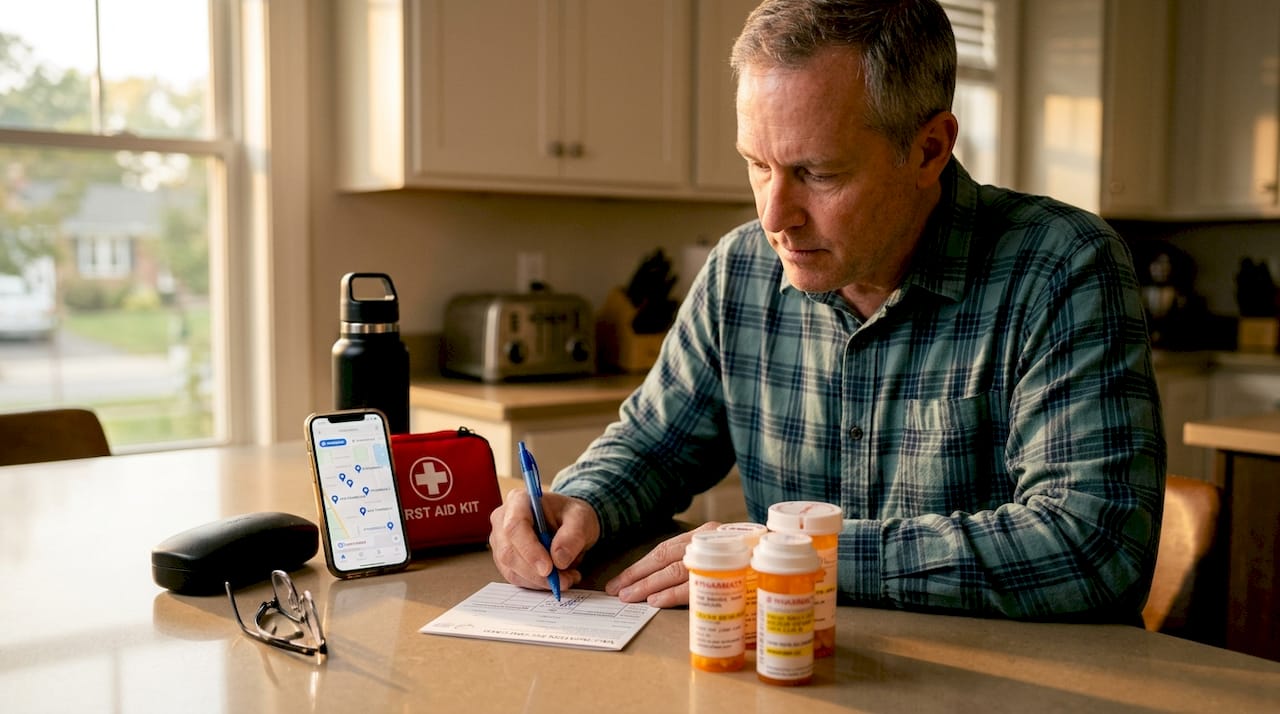
A travel health appointment 6 to 8 weeks before departure gives your doctor sufficient time to administer vaccines that require multiple doses, such as hepatitis A and B or typhoid, and to review destination-specific risks. Required vaccinations vary significantly by region. Southeast Asia, sub-Saharan Africa, and parts of Latin America each carry different exposure profiles.
Your health preparation checklist should include:
- Consultation with a travel medicine specialist or your primary care physician
- Verification of all routine vaccinations plus destination-specific ones
- A 90-day supply of any prescription medications with documentation from your doctor
- A basic health kit covering antiseptics, pain relief, antihistamines, and anti-diarrheals
- Confirmation that your international health insurance plan covers emergency evacuation
- Enrollment in your government’s travel registry, such as the U.S. State Department’s STEP program, which sends security and health alerts to registered citizens abroad
- Physical and digital copies of vaccination records, prescriptions, and your insurance policy
Pro Tip: Before you leave, research the location of the nearest international clinic or hospital in your destination city. Knowing this in advance removes significant stress during a medical situation in an unfamiliar country.
What to pack for abroad teaching
A well-organized packing list separates teachers who settle in quickly from those who spend their first two weeks sourcing basics they forgot. The goal when you prepare for teaching overseas is to pack professionally, practically, and without excess weight that creates logistical problems on arrival.
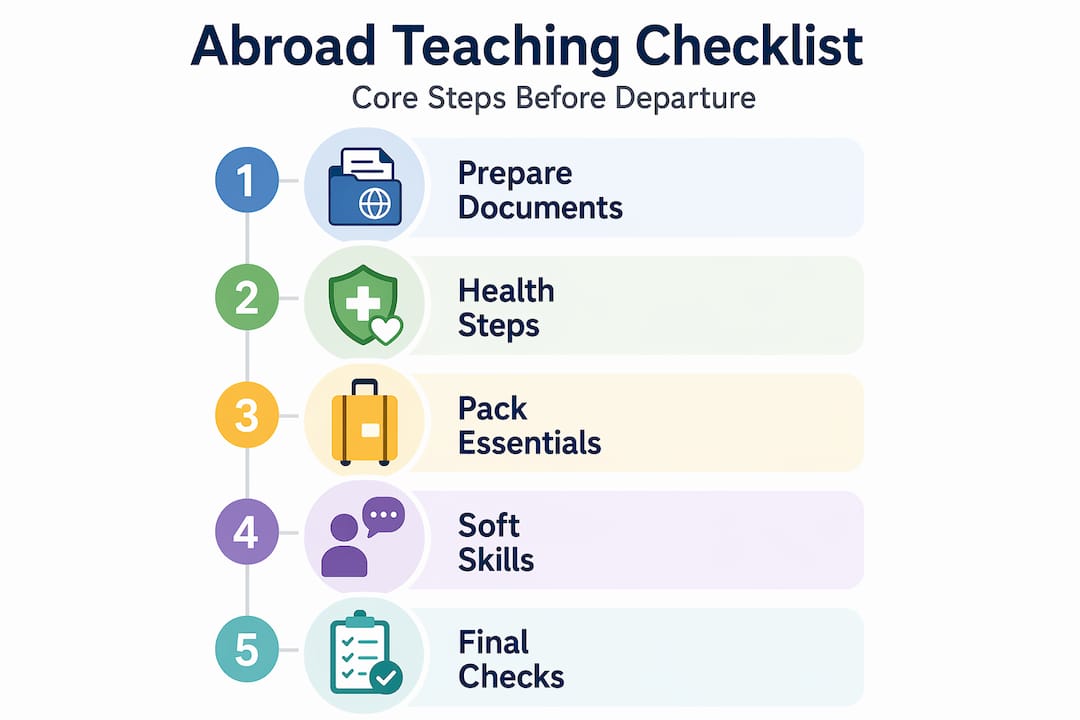
Documents and electronics
Carry a complete duplicate of your Golden Folder in your hand luggage. Never check your original credentials as luggage. Electronics to pack include a region-appropriate power adapter, a portable battery charger, and a laptop loaded with offline versions of your lesson plans and grammar reference materials.
Clothing and professional appearance
Research the cultural norms around dress in your destination country before you finalize your clothing list. In many East Asian schools, formal attire is expected daily. In some community programs in Central America or Africa, the dress code is more relaxed. Pack clothing appropriate for the local climate while maintaining the professional appearance your employer expects.
Teaching materials that travel well
Analog teaching supplies such as whiteboard markers, printed flashcard sets, sticky notes, and a portable whiteboard or laminated activity sheets are worth their weight. Power outages and poor internet make digital-only lesson plans unreliable in many teaching environments abroad. Having physical materials means your lesson proceeds regardless of infrastructure.
Pro Tip: Avoid overpacking textbooks. Identify two or three versatile grammar references and download PDF versions to your device. Physical books add kilograms to your luggage and many are available locally or through your school.
Soft skills that strengthen your application
A checklist for teaching English abroad is not complete without attention to the non-technical competencies that recruiters consistently prioritize. Leadership, communication, and adaptability are rated highly by international school recruiters, even for candidates without formal classroom experience.
This matters because most first-time TEFL teachers are transitioning from unrelated careers. A former project manager brings organizational discipline and the ability to manage a classroom timeline. A retail supervisor brings conflict resolution and fast-paced communication skills. These backgrounds are directly applicable.
The soft skills most valued in international teaching include:
- Cross-cultural communication and cultural sensitivity
- Classroom management and group leadership
- Adaptability when resources, technology, or lesson plans change unexpectedly
- Empathy in building relationships with students from diverse linguistic backgrounds
- Problem-solving under conditions of uncertainty or limited institutional support
- Organization and time management across multiple class groups or age levels
When you present these skills on your resume or in an interview, use specific examples with measurable outcomes. “Managed a team of eight in a time-sensitive environment” is more persuasive than “good at working under pressure.” Teflinstitute’s guide to overseas teaching jobs outlines exactly how to position these skills for international hiring panels.
Developing mindfulness and emotional regulation also supports your adjustment process. Research on professional development in education consistently identifies self-awareness as a factor in long-term teaching effectiveness abroad.
Pro Tip: If you have no formal teaching experience, consider volunteering with a literacy program, tutoring service, or community education group in your home country before you depart. Even four to six weeks of documented experience demonstrates genuine commitment to teaching.
Final readiness checks before departure
A phased approach to your final preparation reduces the risk of arriving abroad with unresolved issues. Settling in first and then focusing on teaching is a proven strategy for managing cultural adjustment and professional performance simultaneously.
Work through these final confirmations in the weeks before your departure date:
- Verify your visa is valid, correctly categorized for work, and that you understand its renewal process
- Confirm your flight itinerary and that your airline knows about any oversized or excess luggage
- Check that your accommodation is confirmed, with a backup contact in case of issues on arrival
- Review your financial plan, including how you will access funds locally in your first week
- Verify that your bank allows international transactions without excessive fees
- Recheck that your Golden Folder is complete, current, and accessible both physically and digitally
- Confirm your school has received and verified all submitted credentials before you board
Understanding salary expectations by region is part of responsible financial planning. Teachers who arrive without a realistic picture of their take-home pay after tax and housing often face serious cash flow problems in their first month.
Pro Tip: A clear administrative roadmap that sequences immigration, document preparation, and finances prevents the mid-relocation pitfalls that force some teachers to delay their start date or return home early. Write your own version before you leave.
| Timeline | Key Checkpoint |
|---|---|
| 12 months out | Begin credential gathering, TEFL enrollment |
| 6 months out | Submit visa application, apostille documents |
| 3 months out | Confirm job placement, arrange accommodation |
| 6 to 8 weeks out | Travel health appointment, insurance confirmed |
| 2 weeks out | Final document check, bank setup, flight confirmed |
What I’ve learned about preparing to teach abroad
In my experience working with TEFL candidates across multiple regions, the single biggest differentiator between teachers who thrive and those who struggle within their first semester is not language proficiency or classroom technique. It is the preparation quality.
I’ve seen teachers arrive in Southeast Asia with no physical document copies, only to spend their first two weeks managing an administrative crisis at the local education authority. I’ve watched others rely entirely on projected slides for their first lessons and discover their school has a scheduled power outage policy with no advance warning system.
What I’ve found actually works is the Golden Folder approach combined with a printed lesson plan backup. These are not sophisticated solutions. They are practical ones. The teachers who build these habits before departure adapt to their environments faster because they spend less time solving preventable problems.
My take on soft skills is this: formal teaching qualifications open the door, but adaptability keeps you employed. Schools in competitive markets receive applications from certified candidates regularly. What distinguishes a hire is demonstrated evidence that you can adjust, communicate across a cultural gap, and manage a room of thirty students with limited institutional support. Document those capacities clearly before you apply.
The international teaching experience rewards preparation. The TEFL planning checklist at Teflinstitute is a solid starting point for structuring your own timeline.
Take your TEFL preparation further with Teflinstitute
Completing your checklist for teaching abroad is the foundation. The next step is ensuring your certification matches what employers in your target market actually require.
Teflinstitute offers a range of accredited courses designed specifically to meet international hiring standards. The 120-hour elective TEFL course provides advanced pedagogical training that strengthens your application in competitive markets. For teachers who want the most recognized qualification available, the 240-hour master TEFL course combines comprehensive theory with practical teaching components and is externally accredited for global recognition. Both programs are available online with flexible scheduling to fit your preparation timeline.
FAQ
How early should you start your checklist for teaching abroad?
Most preparation timelines recommend starting 6 to 12 months before your intended start date to allow sufficient time for credential gathering, visa applications, and health appointments.
What documents are required for teaching abroad?
You typically need an apostilled bachelor’s degree, a recognized TEFL certificate, a criminal background check, a valid passport, and reference letters. Some countries also require certified translations of all documents.
Do you need teaching experience to get a job abroad?
Not necessarily. Recruiters place significant weight on transferable skills such as leadership, communication, and cultural adaptability, which can compensate for limited formal teaching experience. I recommend using this article to find remote jobs while abroad.
What should you pack for a teaching position abroad?
Pack complete document duplicates, climate-appropriate professional clothing, a power adapter, offline digital resources, and physical teaching supplies including markers and printed flashcards, since unreliable infrastructure can disrupt digital lesson delivery.
Is international health insurance required for teaching abroad?
Most employer contracts and visa requirements include health coverage provisions, but you should independently verify that your policy covers emergency evacuation and confirm your vaccination status at least 6 to 8 weeks before departure.
Recommended
TEFL Institute guides

South Korea
EPIK, hagwons and pay
China
Z visa, pay and cities
Japan
JET, ALT and eikaiwa pay
Thailand
Visas and teaching licences
Mexico
Jobs, pay and cities