

 United Kingdom (UK)
 United States (US)
 Canada
 South Africa
 India
 Australia
 New Zealand
 China
 Russia
 Germany
 France
 Spain
 Netherlands
 Vietnam
 United Arab Emirates
 Italy
 Poland
 Thailand
 Türkiye






 Algeria


AI for English teachers works best when it takes the slow, repetitive jobs off your desk and leaves the judgement with you. At The TEFL Institute Group that idea runs through everything we build: free AI tools on tefl.ai, the Hire Wire’s live salary and visa desks, and training that shows you where the tools stop.
I have worked with our academic team since 2018, and the question I hear most from teachers now is not whether to use AI. It is which tools are worth the time, and which ones will quietly make a mess of a lesson. This piece sets out what the group has built, what each tool actually does, and the limits we would want any teacher to know before relying on it.
Key takeaways
- tefl.ai, the group’s AI platform, hosts free tools for lesson planning, materials adaptation, CEFR and IELTS writing feedback, speaking practice estimates and a free English level test.
- The Hire Wire turns job research into tools: a sortable Salary Index, a Visa Desk, a Paperwork Desk, an earnings planner, a Country Matcher, an Eligibility Checker and Deadline Alerts.
- Every figure on the Hire Wire desks comes from an official source, carries the date it was checked and is corrected in place when it changes.
- The free AI-Skilled Teacher Certificate tests six practical AI skills in 12 questions and issues a code an employer can verify.
- The British Council found only 20% of English teachers feel sufficiently trained to use AI, which is the gap these tools and courses are built to close.
- No tool replaces a recognised qualification. Schools still filter on a TEFL certificate first.
What does The TEFL Institute Group build for English teachers?
We build three kinds of technology for English teachers: AI tools that save preparation time, research tools that answer career questions with checked data, and training that teaches you to use both well. They sit across two sites, tefl.ai and the Hire Wire on teflinstitute.com. Every tool described here is free to use, and the one paid course is flagged where it appears.
The group itself started in 2017 and has since certified more than 161,000 teachers working in 80 countries, which makes it Europe’s largest TEFL trainer by teachers certified. That scale is the reason the technology exists. When thousands of graduates ask the same questions every month about pay, visas, deadlines and lesson planning, it makes more sense to build a tool that answers them properly than to answer each email by hand.
Students on our courses also study through the TEFL Institute Learning App on iOS and Android, which carries course videos and podcasts so you can work through material on a commute. The app is for enrolled students only. Everything else described here is open to any teacher, whether or not you trained with us.
Why build edtech tools for teachers at all?
Because most English teachers already use AI, but very few have been shown how to use it well. The British Council’s research on artificial intelligence and English language teaching surveyed teachers in 118 countries and territories, and its 2025 follow up found only 20% of English teachers felt sufficiently trained to use AI. Our own Future of AI in English Language Teaching report pulls that figure together with 51 other sources, and the training gap is its clearest finding.
The time argument is just as plain. Gallup’s 2025 research, cited in the same report, found teachers who use AI every week save about 5.9 hours a week, roughly six working weeks across a school year. For a teacher on 25 contact hours abroad, that is the difference between planning on a Sunday and having a Sunday.
So the brief for everything we build is narrow. Take a task that eats a teacher’s evening, such as levelling a reading text, writing a lesson plan from scratch or working out what a job in Seoul really pays, and make it a few minutes’ work without taking the teacher’s judgement out of it.
Which free AI tools for English teachers are on tefl.ai?
tefl.ai hosts a set of free AI tools for planning, adapting, assessing and job hunting. Each one does a single job, and each was designed around a task our tutors watched new teachers struggle with.

The AI Lesson Plan Generator builds a complete plan from a level and a topic. The AI Materials Adaptor takes an authentic text, such as a news article, and simplifies it to any CEFR level with exercises attached. That second one is the tool I would point a new teacher to first, because adapting materials for a mixed class is the job that swallows the most time in a first year.
For assessment there are three. The AI CEFR Writing Grader places a piece of student writing on the A1 to C2 scale with feedback. The IELTS Writing Band Estimator and the newer IELTS Speaking Band Estimator give an estimated band with suggestions for improvement. There is also a free English Level Test covering grammar, vocabulary and reading, which is useful for placing a new private student before the first lesson.
The career tools round it out: a CV and cover letter generator written for teaching applications, and a career roadmap generator that maps which qualifications and experience lead to the next role.
| Tool | What it does | Best used for |
|---|---|---|
| AI Lesson Plan Generator | Builds a full lesson plan from a level and topic | A first draft you then edit to fit your class |
| AI Materials Adaptor | Simplifies an authentic text to a chosen CEFR level and adds exercises | Mixed ability classes and graded reading |
| AI CEFR Writing Grader | Places student writing on the A1 to C2 scale with feedback | A quick first read before your own marking |
| IELTS Writing and Speaking Band Estimators | Give an estimated band score and improvement suggestions | Exam practice between lessons |
| English Level Test | A free A1 to C2 test across grammar, vocabulary and reading | Placing a new student |
| CV and cover letter generator | Drafts teaching CVs and tailored cover letters | Job applications abroad or online |
All tools listed are free to use on tefl.ai as of 7 November 2026. Some ask for an email address. Band and level results are estimates, not official exam scores.
How should English teachers use AI tools safely?
Use them for a first draft and keep the final decision yourself, and never put a student’s personal details into a public tool. That is the rule we teach, and it matches official guidance. The Department for Education’s guidance on generative AI in education, updated in August 2025, states that personal data must be protected and recommends it is not used in generative AI tools at all.
In practice that means three habits. Read every exercise an AI tool produces before it goes near a student, because these tools can produce confident answers that are simply wrong. Strip names and anything identifying out of student writing before you paste it into a grader. And treat any estimated band or level as a conversation starter, not a verdict, especially with exam candidates whose futures depend on the real score.
A teacher who works this way gets the time back without handing over the parts of the job that matter: knowing the student in front of you, and deciding what they need next.
What are the Hire Wire desks, and why are they tools rather than articles?
The Hire Wire desks are live reference tools that answer the career questions teachers ask us most: what a country pays, which visa you need, which documents to prepare and when applications close. We built them as tools rather than articles because the answers change every few weeks, and an article goes stale the day after it is published.

The Salary Index is a sortable table of teacher pay by country, in local currency with euro conversions at European Central Bank reference rates. As of 7 November 2026 it runs from about €665 a month in Thailand to about €7,770 a month on Hong Kong’s government NET scheme in primary schools, and every row is taken from the programme’s own pay scale rather than from job adverts. The Visa Desk gives the official visa route for each destination with one government link per route, and the Paperwork Desk covers apostilles, police checks and document deadlines, which is where most late applications come unstuck.
Three interactive tools sit alongside them. The Country Matcher suggests destinations that fit your budget, qualifications and the life you want. The Eligibility Checker tells you which routes your degree and passport actually open. The Online Desk plans what teaching online could earn per week, month and year. Neither the Matcher nor the Checker stores your answers, and nothing you enter leaves the page.
How does the Hire Wire keep its data accurate?
Every figure on the desks comes from an official source, such as a ministry, an embassy or the programme’s own pay page, and carries the date it was last checked. When a figure moves, we correct it in place and add a dated note saying what changed and why. The desks keep that log visible, so you can see exactly how fresh a number is before you plan a year around it.
That standard is set out in our Editorial Charter, and it is the part of the Hire Wire I would defend hardest. A salary table is only useful if you can trust it, and you can only trust it if you can see where each line came from.
The same thinking drives Deadline Alerts. Government programmes such as JET in Japan and TAPIF in France open once a year and close without reminding anyone. You choose the regions you care about, and we email you before each window shuts. Rolling schemes get a nudge to apply early rather than a countdown, because there is no honest deadline to give.
| Desk or tool | The question it answers | How it stays current |
|---|---|---|
| Salary Index | What does teaching in this country really pay? | Official pay scales, ECB conversions, dated update notes |
| Visa Desk | Which visa do I need, and where do I apply? | One official link per route, dated checks |
| Paperwork Desk | Which documents do I need, and how long do they take? | Official fee and process pages, dated checks |
| Country Matcher and Eligibility Checker | Where could I realistically teach? | Run on Salary Index and Visa Desk data |
| Deadline Alerts | When does the application window close? | Dates read at the programme source |
Desks and tools are free on teflinstitute.com. Figures are checked against official sources but can change without notice, so confirm with the embassy or programme before you pay for anything.
How do you learn to use AI properly as an English teacher?
Start with a short course that shows you real classroom uses, then prove what you can do with a credential an employer can check. We offer both.
Every TEFL opening, salary and deadline that matters.
In your inbox every two weeks. Free, no spam, unsubscribe any time.
Teacher pay by country
New TEFL openings
Programme and visa dates
The Generative AI TEFL Mastery course on tefl.ai covers AI for lesson planning, adapting materials and saving time, across 7 lessons and 61 topics, with prompt libraries, templates and a certificate of completion. It costs €69 with six months of access. Our tutors built it around the jobs they see new teachers find hardest, rather than around any one piece of software.
The free AI-Skilled Teacher Certificate is the proof. It is a 12 question assessment of six practical skills: AI lesson planning, materials and differentiation, assessment and feedback, prompt writing, student AI literacy and ethics, and responsible use and data privacy. It takes about 10 minutes. Score 9 out of 12 or more and you receive a certificate with a unique verification code for your CV or LinkedIn profile. We have written a full explainer on the certificate if you want the detail.
Watch: how to use AI as a TEFL teacher
What does the evidence say about AI in English teaching?
The evidence says AI is changing the teacher’s job rather than removing it, and that the teachers who learn it early are better placed. In July 2026 the group published The Future of AI in English Language Teaching and TEFL, a free 10 page report drawing on 52 linked sources, so that teachers could see the research in one place rather than the headlines.
A few of its findings stand out. PwC found workers with AI skills earned a 56% wage premium in 2024, up from 25% the year before. PwC also found jobs grew 38% between 2019 and 2024 even in the roles most exposed to automation. And the British Council found 60% of English teachers disagree that AI translation makes learning a language unnecessary. The picture is one of a profession being reshaped, not replaced.
If you want the hiring side of that story, our piece on how AI is changing TEFL hiring covers what employers now ask for in interviews, and will AI replace English teachers works through the evidence on that particular worry.
What students say about studying with us online
 ★★★★★
“I’ve recently started my TEFL course and so far I’m very impressed with the experience. The course is well-organized, easy to navigate, and the content is engaging and informative …”
Jake Fitzgerald · 2026 · Google review
Rated 4.9 out of 5 from 1,875 Google reviews
Where does the technology stop and the teacher take over?
The technology stops at judgement, and that line is deliberate. Our AI tools draft, level and estimate. They do not decide what a particular student needs next, and they do not mark the qualification you earn with us. Assignments on our TEFL courses are marked by qualified tutors who send written feedback, and that is not something we plan to hand to software.
There are honest limits to say out loud. An IELTS band estimate is not an IELTS score, and only the exam itself can give one. A lesson plan generator does not know your class has a student who will not speak in front of the others. A salary table is only as current as its last check, which is why every row carries a date. And none of this replaces a recognised qualification. In our State of TEFL 2026 survey of 412 hiring managers, no school listed AI skill as a substitute for a TEFL certificate.
What the tools do is give a new teacher the head start that used to take a year of evenings to build. That is the whole point of building them.
Real salaries, visa rules and hiring intel, before you apply
Compare take-home pay in the TEFL Salary Index and check the entry requirements for any country on the Visa Desk, so you know exactly what a destination offers before you commit.
AI for English teachers: where should you start?
Start with the qualification employers filter on, then add the AI skills and the career tools on top. Most schools and online platforms still ask for a TEFL certificate of at least 120 hours as the minimum, and the better paid posts increasingly ask for the Ofqual-regulated Level 5 TEFL Diploma, which sits on the public Ofqual register and is awarded through Highfield, where we are approved centre 21335.
Then spend an evening with the free tools. Take the AI-Skilled Teacher Certificate, adapt one reading text to two CEFR levels with the Materials Adaptor, and draft a lesson plan you then edit properly. Check the Salary Index and the Visa Desk for the country you have in mind, and set a Deadline Alert so the window does not close on you. If you are thinking of teaching online first, our guide to the best TEFL certification to teach English online covers what the platforms ask for.
AI for English teachers is not about the software. It is about the time it gives back and the decisions it leaves with you. We build the tools to do the first part, and we train teachers to do the second.
Get TEFL qualified with the Level 5 Diploma
Last reviewed: 7 November 2026

Katie Troy
Managing Director of The TEFL Institute Group. Katie has been with the team since 2018. She is a qualified teacher with a degree in education and years of experience teaching abroad, and works closely with our academic team.
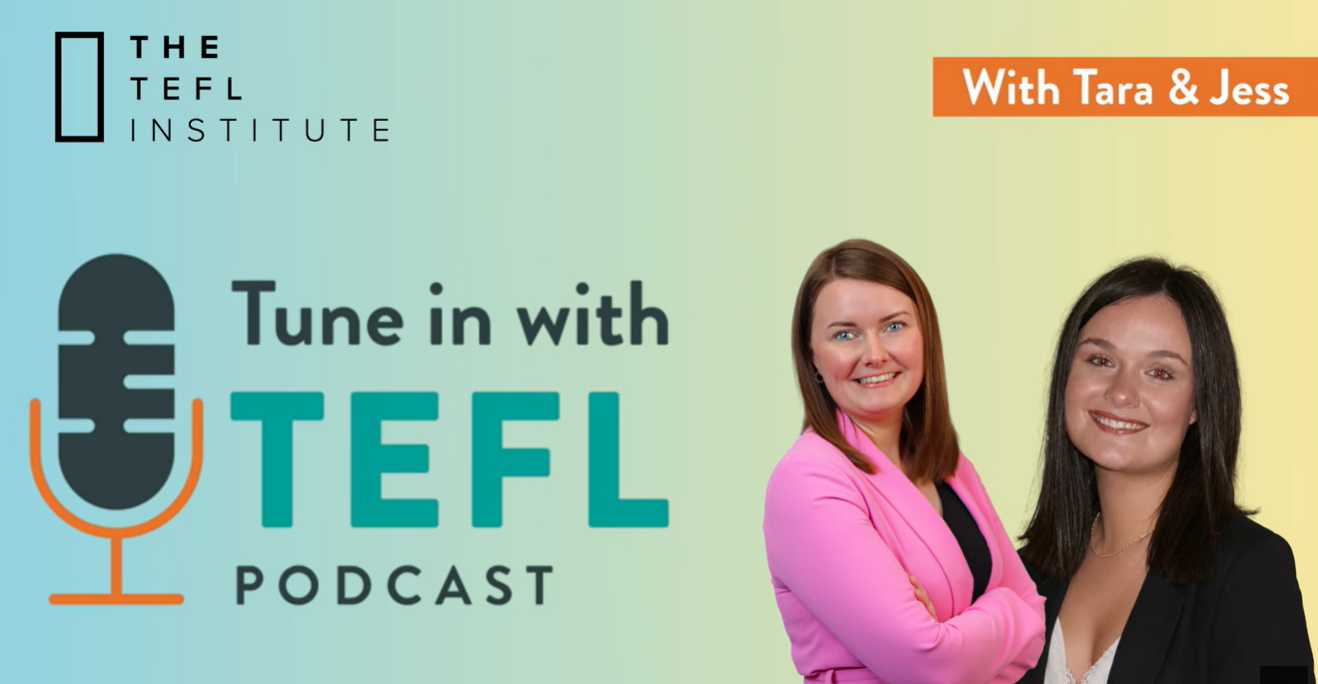
Tara and Jess talk through different TEFL and EFL topics, from finding work abroad to life in the classroom.
FAQs
Questions students ask us
There is no single best tool, because each one suits a different job. For planning, a lesson plan generator gives a first draft. For mixed classes, a materials adaptor levels a text to any CEFR stage. For marking, a CEFR writing grader gives a quick first read. Use each for a draft and keep the final judgement yourself.
Yes. The lesson plan generator, materials adaptor, CEFR writing grader, IELTS writing and speaking band estimators, English level test and CV generator on tefl.ai are free, though some ask for an email address. The only paid item in this guide is the Generative AI TEFL Mastery course, which costs 69 euro.
AI can give a useful first read of student writing, placing it on the CEFR scale or estimating an IELTS band with feedback. It is an estimate, not an official score, and it can be confidently wrong. Treat it as a starting point for your own marking, and never as the final grade for a student.
Only once you have removed anything that identifies the student. The Department for Education’s guidance on generative AI in education recommends that personal data is not used in generative AI tools at all. Strip out names and personal details first, and check your school’s own policy before you start.
It is a free assessment on tefl.ai of six practical AI skills, from lesson planning and differentiation to student AI literacy and data privacy. It has 12 questions and takes about 10 minutes. Score 9 or more and you receive a certificate with a unique code that an employer can verify.
From official sources only, such as a ministry pay scale, an embassy notice or the programme’s own recruitment page, never from job adverts. Pay is shown in local currency with euro conversions at European Central Bank reference rates, and every line carries the date it was last checked and a note when it changes.
