United Kingdom (UK)
 United States (US)
 Canada
 South Africa
 India
 Australia
 New Zealand
 China
 Russia
 Germany
 France
 Spain
 Netherlands
 Vietnam
 United Arab Emirates
 Italy
 Poland
 Thailand
 Türkiye





 Algeria


TEFL Institute research · Asia edition · 2027
Teaching English in Asia: The State of TEFL 2027
Teaching English in Asia in 2027: how well the region speaks English, who pays for lessons, which governments publish what they pay teachers, the legal wage floor in eleven economies, who can get the visa and when to apply. Twelve country profiles. Every figure dated and sourced.
Download the full report (PDF, 30 pages)
Free. No email required.
- Official Published by a government, regulator, statistical office or the programme itself, and dated.
- Estimate Compiled from job listings in March 2026. Not re-verified.
- Survey or derived A survey or test-taker index, or arithmetic on a published figure.
What is the State of TEFL 2027 Asia report?
The State of TEFL 2027: Asia is a free 30-page report from The TEFL Institute on teaching English in Asia. It sets out how well the region speaks English, what four government programmes officially pay, the legal minimum wage in eleven economies, the visa rules, application dates and twelve country profiles. Every figure is dated and sourced.
It is the Asia edition of The State of TEFL 2027, the Institute’s annual report on the global English-teaching market, and the companion to Teaching English in Europe. It carries the Asian figures from the global edition forward and adds seven datasets read on 19 November 2026. Where a figure could not be sourced it is left out, and the gap is stated.
Other regional editions: Teaching English in Africa · Teaching English in Latin America · Teaching English in the Middle East · Teaching English Online Salary · Teaching English in Europe · all editions of The State of TEFL 2027
Research and commercial interests. The State of TEFL is published by The TEFL Institute, an organisation that provides TEFL training and qualifications. The research is produced using publicly available third-party data and official sources. Where the report references qualifications offered by the Institute, this commercial relationship is disclosed. The report does not rank or endorse the Institute’s products. The TEFL Institute is the trading name of The TEFL Institute Limited, registered in Ireland, company number 613324. Registered and principal business address: 4 Shandon Street, Dungarvan, Co. Waterford, X34 A365. Offices: 13 Adelaide Road, Dublin, D02 P950, and 6 Mornington Place, London NW1 7RP.
Ten findings from the report, in citable form
Each sentence stands alone with its source and date, so it can be quoted without the surrounding text.
- Asia-Pacific held 42% of the global English language training market in 2024, US$37.4 billion of US$89.5 billion, and China alone was US$35.6 billion (Market.us, 26 August 2025).
- Four public programmes in Asia publish what they pay foreign English teachers: JET in Japan, EPIK in South Korea, the Taiwan Foreign English Teacher Program and Hong Kong’s NET Scheme (programme and ministry pages, read October and November 2026).
- JET pays ¥4.02 million in the first year, about US$2,120 a month, and EPIK pays 2.2 to 2.8 million won a month with a furnished apartment (verified 17 October 2026).
- Taiwan pays foreign English teachers with a bachelor’s degree NT$69,880 to NT$91,470 a month and expected to recruit 980 teachers and assistants in 2026 (Taiwan Ministry of Education).
- Malaysia has the highest English proficiency of the Asian economies ranked, with an EF score of 581 and rank 24 of 123; Japan ranks 96th with 446 and Cambodia last with 390 (EF English Proficiency Index 2025).
- South Korean families spent 27.5 trillion won on private tuition in 2025, and English was the most expensive subject at 281,000 won a month per participating student (Ministry of Education and Ministry of Data and Statistics, 12 March 2026).
- EPIK’s lowest hiring rate of 2.2 million won a month is 2% above South Korea’s 2026 minimum wage for a 209-hour month (2,156,880 won) and below the 2027 figure of 2,236,300 won (derived from Minimum Wage Commission rates).
- Vietnam needs more than 22,000 new English teachers for preschool and primary schools to make English compulsory from grade 1 by 2030 (Viet Nam Government Portal, 31 October 2025).
- The JET Programme took in 5,933 participants from 54 countries in FY2025, and 80,679 people have taken part since 1987 (Japan Ministry of Internal Affairs and Communications).
- Capital cities score far above their countries in the EF index: Phnom Penh is 82 points above Cambodia and Bangkok 65 points above Thailand (EF EPI 2025, secondary tabulation).
How big is the English teaching market in Asia?
Asia-Pacific is the largest regional market and the only one with a published share. Market.us values it at US$37.4 billion in 2024, which is 42% of a global English language training market of US$89.5 billion. China alone is put at US$35.6 billion, forecast to reach US$62.56 billion by 2034 at 5.8% a year.
English language training market, as published by Market.us, checked 1 November 2026:
Source: Market.us, English Language Training (ELT) Market, 26 August 2025.
The two Asian figures do not add up. Taken together they would leave US$1.8 billion for Japan, South Korea, Vietnam and every other economy in the region, which South Korea’s tuition spending alone contradicts. They come from separate report pages and may use different definitions, so this report prints both as published and does not subtract one from the other.
China grows more slowly than the market as a whole: 5.8% a year against 7.3%. Since the 2021 “double reduction” policy, for-profit tutoring of school-age children has been restricted and teachers based abroad can no longer be hired to tutor those children online. The Institute’s guide to teaching Chinese students online sets out what remains.
Which Asian countries have the best English?
Malaysia and the Philippines. In the EF English Proficiency Index 2025, built from 2.2 million test takers in 123 countries and regions, Malaysia scores 581 and ranks 24th, and the Philippines scores 569. Hong Kong, South Korea and Vietnam are in the moderate band. Japan ranks 96th, Thailand 116th and Cambodia last.
EF English Proficiency Index 2025, ten Asian economies, verified 19 November 2026:
| Economy | EF score | World rank of 123 | Band |
|---|---|---|---|
| Malaysia | 581 | 24 | High |
| Philippines | 569 | 28 | High |
| Hong Kong | 538 | 39 | Moderate |
| South Korea | 522 | 48 | Moderate |
| Vietnam | 500 | 64 | Moderate |
| Indonesia | 471 | 80 | Low |
| China | 464 | 86 | Low |
| Japan | 446 | 96 | Very low |
| Thailand | 402 | 116 | Very low |
| Cambodia | 390 | 123 | Very low |
Source: EF English Proficiency Index 2025, 19 November 2025; scores and ranks as reported by Jakarta Globe, Human Resources Online and Nippon.com (secondary sources). Bars start at 350. Singapore is no longer ranked: EF reclassified it as English-speaking in 2025. Taiwan was not found in the tabulations read.
No Asian economy in this report reaches EF’s very high band, which begins at 600. The index ranks people who chose to take EF’s online test, not populations, and a score is not a pay forecast. Lower scores are consistent with more demand for teaching, but that is this report’s inference and not a finding of the index.
Is English better in Asian capital cities than in the rest of the country?
Yes, and by a wide margin in Southeast Asia. Every capital ranked in the EF English Proficiency Index 2025 scores above its country. Phnom Penh is 82 points above Cambodia, Bangkok 65 above Thailand and Jakarta 52 above Indonesia. Manila, at 603, is the only city in this report in the very high band.
Capital city against country, EF EPI 2025, verified 19 November 2026:
| City | City score | Country | National score | Gap Derived |
|---|---|---|---|---|
| Manila | 603 | Philippines | 569 | +34 points |
| Kuala Lumpur | 588 | Malaysia | 581 | +7 points |
| Hanoi | 532 | Vietnam | 500 | +32 points |
| Jakarta | 523 | Indonesia | 471 | +52 points |
| Phnom Penh | 472 | Cambodia | 390 | +82 points |
| Bangkok | 467 | Thailand | 402 | +65 points |
Source: EF EPI 2025 city and national scores as tabulated by Grab (secondary source). Gaps are this report’s arithmetic.
Expect a higher level in a capital-city language centre than the national score suggests, and a lower level outside it. City scores for Japan, South Korea, China and Taiwan were not in the sources read. Hong Kong’s districts range from 523 to 551.
How much do families in Asia spend on English lessons?
Only South Korea publishes it every year. In 2025 Korean families spent 27.5 trillion won, about US$20.5 billion, on private tuition for school pupils. Three in four pupils took part, at a record 604,000 won a month each. English was the most expensive subject, at 281,000 won a month per participating student.
South Korea, monthly private tuition spending per participating pupil, 2025, verified 19 November 2026:
| Measure Official | 2025 | 2024 |
|---|---|---|
| Total spending on private tuition, school pupils | 27.5 trillion won | 29.2 trillion won, the record |
| Participation rate | 75.7% | 80.0% |
| Monthly spending per participating pupil | 604,000 won | 592,000 won |
| Monthly English spending per participating pupil | 281,000 won | 264,000 won |
Source: Ministry of Education and Ministry of Data and Statistics, 2025 private education expenditures survey, released 12 March 2026, as reported by The Asia Business Daily and Korea JoongAng Daily (secondary sources). Dollar figure converted by this report.
This is the money behind the private academies, the hagwons, which hire foreign teachers outside EPIK. It counts what families pay, not what teachers earn. No comparable annual survey was found for Japan, China, Taiwan or Vietnam, so no regional total is given.
Which Asian governments are recruiting English teachers?
Three have published a number. Vietnam needs more than 22,000 new preschool and primary English teachers to make English compulsory from grade 1 by 2030. Taiwan expected to recruit 980 foreign English teachers and teaching assistants for public schools in 2026. Japan’s JET Programme took in 5,933 participants from 54 countries in FY2025.
Government headcounts, as published:
| Country | What is published Official | Figure | Source and date |
|---|---|---|---|
| Vietnam | Scheme to make English the second language in schools, 2025 to 2035 | English compulsory from grade 1 by 2030; 22,000+ new preschool and primary teachers; 200,000 teachers trained to teach in English | Viet Nam Government Portal, 31 October 2025 |
| Taiwan | Taiwan Foreign English Teacher Program, 2026 recruitment | 980 foreign English teachers and full-time teaching assistants; rolling review | Ministry of Education, 23 February 2026 |
| Japan | JET Programme intake, FY2025 | 5,933 participants from 54 countries; 80,679 since FY1987 | Ministry of Internal Affairs and Communications |
| Japan | JET Programme, participants in post, July 2026 | 5,734, of whom 5,238 are assistant language teachers | JET Programme official site |
Vietnam’s plan does not say how many of its new teachers will be foreign, and no foreign recruitment programme was found. Taiwan’s 980 posts are the only target in the region set for foreign teachers. EPIK’s headcount was not found on its own pages. The Institute’s Atlas briefing on Asia’s government programmes covers these schemes for partner organisations.
Which teaching programmes in Asia publish their pay?
Four. Japan’s JET pays ¥4.02 million in year one, about US$2,120 a month. South Korea’s EPIK pays 2.2 to 2.8 million won a month with a furnished apartment. Taiwan’s Foreign English Teacher Program pays NT$69,880 to NT$91,470 a month to a teacher with a bachelor’s degree. Hong Kong’s NET Scheme pays qualified teachers on the civil service scale.
Official monthly pay in US dollars, top of each range, verified October and November 2026:
| Programme | Official pay Official | About, US$ a month Derived | Who it hires | Housing and extras | Applications |
|---|---|---|---|---|---|
| Japan · JET | ¥4.02m a year in year one; ¥4.32m by years four and five | 2,120 | Graduates | Own housing cost | 2027 cycle closed 5 Nov (UK) and 13 Nov 2026 (US, Canada) |
| South Korea · EPIK | 2.2 to 2.8m won a month on the main scale | 1,640 to 2,080 | Graduates, on a level-based scale | Furnished apartment; 300,000 won settlement; 1.3m won completion bonus; airfare | Spring 2027 intake open since 1 Aug 2026, in order received |
| Taiwan · TFETP teacher | NT$69,880 to 91,470 with a bachelor’s; NT$77,960 to 101,750 with a master’s | 2,160 to 2,820; 2,410 to 3,140 | Graduates with a valid government teaching licence | Rent subsidy; airfare; insurance | 980 posts expected in 2026; rolling review |
| Taiwan · TFETP assistant | NT$51,500 a month | 1,590 | Teaching assistants | As above; course fee reimbursement | As above |
| Hong Kong · NET Scheme | HK$34,060 to 79,135 a month, as advertised March 2024 | 4,340 to 10,080 | Qualified teachers meeting the scheme’s requirements | Special allowance HK$20,989 a month; passage; gratuity | Primary posts for 2026/27 closed 24 Apr 2026 |
Sources: CLAIR via JET Program USA and the EPIK salary page dated 4 May 2026 (verified 17 October 2026); Taiwan Ministry of Education and the TFETP portal; Hong Kong Education Bureau, NET Scheme remuneration package and primary NET recruitment (read 19 November 2026). Conversions at euro reference rates of 9 October 2026.
Two cautions. Taiwan’s programme portal still showed NT$67,840 to NT$88,800 for a bachelor’s degree, effective 1 August 2024, when it was read; the higher scale is in Ministry documents and a Taipei school notice of October 2025. Hong Kong’s salary range is the Education Bureau’s own figure from March 2024, and the 2026/27 pay points were not read.
The global edition of this report counted four programmes worldwide that publish a pay scale. Taiwan’s and Hong Kong’s also do, so the count for Asia is four and the worldwide count is at least six. For the detail on each, see the Institute’s guide to the JET Programme and its guide to the best TEFL certification for South Korea, which covers EPIK’s levels.
What is the minimum wage in each Asian country in 2026?
For a full-time month, the legal minimum in 2026 runs from about US$1,610 in South Korea to about US$200 in Vietnam’s highest wage region. Japan’s is about US$1,290, Hong Kong’s US$950 and Taiwan’s US$910. Singapore has no statutory minimum wage. China, Indonesia, Vietnam and the Philippines set rates by city, province or region.
Legal wage floor for a full-time month, in US dollars, verified 19 November 2026:
| Economy | Rate as set Official | Full-time month, local | About, US$ Derived | Basis |
|---|---|---|---|---|
| South Korea | ₩10,320 an hour | 2,156,880 | 1,610 | 209-hour month, official |
| Japan | ¥1,177 an hour, weighted average | 203,974 | 1,290 | 173.3 hours, derived |
| Hong Kong | HK$43.10 an hour | 7,469 | 950 | 173.3 hours, derived |
| Taiwan | NT$29,500 a month | 29,500 | 910 | monthly rate |
| Malaysia | RM1,700 a month | 1,700 | 420 | monthly rate |
| China · Shanghai | 2,740 yuan a month | 2,740 | 410 | city rate |
| Indonesia · Jakarta | 5.73 million rupiah a month | 5,730,000 | 320 | province rate |
| Thailand | 400 baht a day | 10,400 | 310 | 26 days, derived |
| Philippines · Manila | 695 pesos a day | 18,070 | 290 | 26 days, derived |
| Vietnam · Region I | 5.31 million dong a month | 5,310,000 | 200 | highest region |
| Cambodia | US$210 a month | 210 | 210 | garment, footwear and travel goods sector only |
| Singapore | No statutory minimum wage | Not applicable | Not applicable | none set |
Sources: Hong Kong Labour Department; South Korea’s Minimum Wage Commission, as reported by Korea JoongAng Daily; other rates from Trading Economics’ tabulation of national sources (secondary source). Hourly rates are converted to a month at 173.3 hours (209 in South Korea, the official convention) and daily rates at 26 days; those conversions and all dollar figures are this report’s arithmetic.
The minimum wage is not a teaching salary. It is the test of whether a full-time offer is lawful, and in most of Asia teaching offers start at several times the floor. South Korea is the exception: EPIK’s lowest hiring rate of 2.2 million won is 2% above the 2026 monthly minimum of 2,156,880 won. From 1 January 2027 the minimum rises to 10,700 won an hour, or 2,236,300 won for a 209-hour month, which is above that rate. Whether EPIK will revise its scale has not been published.
Is JET or EPIK better paid?
JET pays more cash and EPIK pays the rent. JET’s first-year pay is ¥4.02 million, about US$25,400, and participants find and pay for their own housing. EPIK pays about US$20,800 to US$26,200 in the first year including its settlement allowance and completion bonus, and provides a furnished apartment on top.
Cash value of one year, in US dollars, derived by this report from the published pay:
Derived: twelve months of published pay plus published cash bonuses and allowances, at rates of 9 October 2026, before tax. EPIK’s apartment has no published cash value, so it is named and not added.
Taiwan and Hong Kong pay more than either, and ask for more: Taiwan’s teacher posts need a government teaching licence, and Hong Kong’s scheme is for qualified teachers. For a new graduate with a TEFL certificate, JET and EPIK are the comparison. The Institute’s guide to Japan against South Korea sets out the day-to-day differences.
How much do English teachers earn in Asia?
Outside the four government programmes, no one publishes it. Market estimates compiled from job listings in March 2026 put monthly pay at US$2,000 to US$3,000 in Taiwan, US$1,200 to US$2,600 in China, US$1,500 to US$2,000 in Vietnam, and US$1,000 to US$1,500 in Thailand and Cambodia. JET pays US$2,120 and EPIK US$1,640 to US$2,080.
Market pay estimates, compiled March 2026 and not re-verified, with official pay beside them:
| Economy | Pay a month, US$ | Basis | Cost of living estimate, US$ Estimate | Legal floor, US$ Official | Tax and housing in the estimate |
|---|---|---|---|---|---|
| Taiwan | 2,000 to 3,000 | Estimate | 700 to 1,000 | 910 | Taxed; housing not included |
| China | 1,200 to 2,600 | Estimate | 500 to 1,000 | 410 (Shanghai) | Taxed; housing often provided |
| Japan · JET | 2,120 | Official | 1,000 to 1,500 | 1,290 | Taxed; own housing |
| South Korea · EPIK | 1,640 to 2,080 | Official | 800 to 1,200 | 1,610 | Taxed; apartment provided |
| Vietnam | 1,500 to 2,000 | Estimate | 500 to 800 | 200 (Region I) | Low tax; housing not included |
| Thailand | 1,000 to 1,500 | Estimate | 600 to 900 | 310 | Low tax; housing not included |
| Cambodia | 1,000 to 1,500 | Estimate | 400 to 700 | No general floor | Low tax; housing not included |
Source: GoOverseas, International TEFL Academy and ESLstarter listings compiled March 2026 for the global edition; EPIK and CLAIR (official, verified 17 October 2026); minimum wages as above.
The estimates are asking pay from job listings, not what teachers are paid, and the cost of living is a single figure that leaves out flights, visa costs and savings. No savings rate is claimed: the global edition withdrew the statement that teachers in Asia save 30% to 50% of their salary, which came from a provider’s marketing page.
Ask three things about any offer: how many hours it is for, whether housing is provided or only promised, and who sponsors the visa. No estimate was compiled for Hong Kong, Indonesia, Malaysia, Singapore or the Philippines, and none is invented here.
Where is the best place to teach English in Asia?
It depends on your qualifications. For a graduate, Japan’s JET has the highest published pay and South Korea’s EPIK includes the apartment. For a licensed teacher, Taiwan and Hong Kong pay more. Vietnam has the best ratio of estimated pay to living costs. Cambodia is the one economy in the compilation that does not require a degree.
Twelve economies on one table, verified 19 November 2026:
| Economy | EF EPI 2025 Survey | Minimum wage, 2026 Official | Official programme pay, month Official | Pay estimate, month Estimate | Degree for the work visa Estimate |
|---|---|---|---|---|---|
| Japan | 446 · rank 96 | ¥1,177 an hour · US$1,290 | JET: ¥4.02m a year | JET only | Degree |
| South Korea | 522 · rank 48 | ₩10,320 an hour · US$1,610 | EPIK: 2.2 to 2.8m won | None compiled | Degree |
| China | 464 · rank 86 | 2,740 yuan · US$410 (Shanghai) | None found | US$1,200 to 2,600 | Degree |
| Taiwan | Not found | NT$29,500 · US$910 | TFETP: NT$69,880 to 91,470 | US$2,000 to 3,000 | Degree; licence for TFETP |
| Hong Kong | 538 · rank 39 | HK$43.10 an hour · US$950 | NET: HK$34,060 to 79,135 | No estimate | Degree and teaching qualification for NET |
| Singapore | Not ranked | None | None found | No estimate | Not read |
| Vietnam | 500 · rank 64 | 5.31m dong · US$200 | None found | US$1,500 to 2,000 | Preferred; enforcement varies |
| Thailand | 402 · rank 116 | 400 baht a day · US$310 | None found | US$1,000 to 1,500 | Listed as required; enforcement varies |
| Cambodia | 390 · rank 123 | US$210, one sector | None found | US$1,000 to 1,500 | Not required |
| Indonesia | 471 · rank 80 | 5.73m rupiah · US$320 (Jakarta) | None found | No estimate | Not read |
| Malaysia | 581 · rank 24 | RM1,700 · US$420 | None found | No estimate | Not read |
| Philippines | 569 · rank 28 | 695 pesos a day · US$290 | None found | No estimate | Not read |
Teaching English in Japan
The lowest EF band beside the region’s largest public programme: 5,933 people joined JET in FY2025. JET’s first-year pay is about 1.6 times the legal minimum for a full-time month, and rent is the teacher’s own cost. Nothing official is published on private-school pay. See the JET Programme guide and the best TEFL certification for Japan.
Teaching English in South Korea
The one country with official figures on both sides of the market: what the state pays teachers, and what families pay for tuition. EPIK’s apartment, bonus and airfare make the package worth more than the headline, which is now 2% above the legal minimum. The E-2 visa is limited to seven nationalities. See the best TEFL certification for South Korea.
Teaching English in China
The largest market by value, reshaped by the 2021 tutoring rules. Work is now in kindergartens, private and international schools, universities and adult centres, and the visa step is the longest in the compilation at six to ten weeks. See teaching English in China.
Teaching English in Taiwan
The highest market pay estimate in the region and a public programme that starts at 2.4 times the legal minimum. Teacher posts in the programme ask for a government teaching licence valid for the whole contract; assistants are paid a flat NT$51,500 a month.
Teaching English in Hong Kong
The best-paid programme in this report and the hardest to enter. The NET Scheme has placed teachers in public secondary schools since 1998/99 and primary schools since 2002/03, with a special allowance of HK$20,989 a month for teachers recruited from outside the city.
Teaching English in Singapore
No longer ranked by EF, which reclassified it as English-speaking in 2025. The market for English as a foreign language is small and hiring is governed by work pass salary rules, which were not re-read for this edition. See teaching English in Singapore.
Teaching English in Vietnam
The highest ratio of estimated pay to estimated living costs in this report, about three to one, and a national plan that needs more than 22,000 new English teachers by 2030. The plan does not say how many will be foreign. See teaching English in Vietnam.
Teaching English in Thailand
One of the lowest scores in the index, with Bangkok 65 points above the national figure. The pay estimate is the lowest of the seven in this report, and so are the costs. The licensed route needs a degree; see how to teach in Thailand without a degree.
Teaching English in Cambodia
Last of 123 in the EF index, and the one economy in the compilation with no degree requirement. Phnom Penh scores 82 points above the country. There is no general minimum wage to test an offer against, and the visa rules were not read for this edition.
Teaching English in Indonesia
A low national score with a capital in the moderate band: Jakarta is 52 points above the country. No pay estimate, visa rule or programme for foreign teachers was found, so the provincial minimum wage is the only figure to start from.
Teaching English in Malaysia
The highest English proficiency in Asia, up two places in 2025. Kuala Lumpur scores only 7 points above the country, the narrowest city gap in this report. Nothing was read on jobs, pay or work passes for visiting teachers.
Teaching English in the Philippines
The second-highest score in Asia, and Manila, at 603, is in EF’s very high band. No pay figure, programme or visa rule for visiting teachers was read, and this edition did not measure the country’s role in online teaching.
“No estimate” means none was compiled, not that pay is low. “None found” means no government programme recruiting foreign English teachers on a published scale appeared in the sources read; one may exist. “Not read” means the visa rule was not in the global edition’s compilation and was not read for this edition.
Do you need a degree to teach English in Asia?
In the main markets, yes. A bachelor’s degree is required for the work visa in Japan, South Korea and China, and for the public programmes in Taiwan and Hong Kong. Vietnam lists a degree as preferred, Thailand lists one and enforcement varies, and Cambodia is the one economy in the compilation with no degree requirement.
| Economy | Route | Degree | Other requirements | Typical processing |
|---|---|---|---|---|
| South Korea Estimate | E-2 visa | Required | TEFL; apostilled documents; one of seven nationalities | 4 to 6 weeks |
| Japan Estimate | Instructor or Specialist in Humanities | Required | Employer sponsor | 4 to 8 weeks |
| China Estimate | Z visa and work permit | Required | TEFL; two years’ experience or a master’s | 6 to 10 weeks |
| Taiwan Official | TFETP teacher post | Required | Valid government teaching licence; no criminal record | Not read |
| Hong Kong Official | NET Scheme | Required | The scheme’s qualification requirements | Not read |
| Vietnam Estimate | Work permit and temporary residence card | Preferred; enforcement varies | TEFL | 4 to 8 weeks |
| Thailand Estimate | Non-B visa and work permit | Listed as required; enforcement varies | TEFL | 4 to 8 weeks |
| Cambodia Estimate | Not read | Not required | Not read | Not read |
Estimate rows compiled March 2026 from embassy and provider guidance for the global edition; not official rules and not re-verified. Taiwan and Hong Kong rows from ministry and bureau pages read 19 November 2026. Not legal advice; confirm with the embassy and the employer.
There is no Asian equivalent of free movement in the EU: every teacher needs a visa, and the employer sponsors it. Apostilled degree certificates and criminal record checks are issued at home before the visa clock starts, and are the usual cause of delay.
Without a degree, the realistic options are Cambodia, the non-licensed route in Thailand, and online work. The Institute’s guides cover Japan without a degree and Korea without a degree. Passport matters too: see the guides for Canadian and South African teachers.
When do you apply to teach English in Asia?
In the autumn of the year before for Japan, as early as possible for South Korea and Taiwan, and in spring for Hong Kong. JET’s window closes once a year in early to mid November. EPIK’s Spring 2027 intake opened on 1 August 2026 and is processed in the order received. Taiwan reviews applications until its posts are filled.
| Month | What happened in the last cycle Official |
|---|---|
| August | EPIK opened its Spring 2027 intake on 1 August 2026 |
| September to November | JET 2027 applications; closed 5 November (UK, Australia) and 13 November 2026 (US, Canada) |
| January | New minimum wages take effect in South Korea and Taiwan |
| February | Taiwan’s Ministry of Education announced its 2026 recruitment, 980 posts, on 23 February 2026 |
| April | Hong Kong primary NET applications for 2026/27 closed on 24 April 2026 |
| July | South Korea set its 2027 minimum wage at 10,700 won an hour |
Sources: EPIK; Embassy of Japan in the UK; JET Programme Canada; Taiwan Ministry of Education; Hong Kong Education Bureau; Minimum Wage Commission. Dates are the last cycle’s and are a guide to when to check each programme’s own page.
Private-school hiring seasons are not on this page. The global edition compiled teaching seasons for Europe only, and none for academies in Japan, South Korea, China, Vietnam or Thailand was compiled or read. JET’s departure month and EPIK’s intake dates were not read at source for this edition either.
Which TEFL qualification can an Asian employer verify?
A regulated one. A qualification on the Ofqual Register of Regulated Qualifications carries a number that any employer or visa office can search, with its hours and awarding organisation. The Level 5 Diploma in TEFL (610/1571/4) and the Level 5 Advanced Diploma in TEFL (610/1573/8) are both awarded by Highfield Qualifications.
Regulated qualification references, confirmed by hand against the Ofqual register on 1 September 2026:
| Qualification | Number | Level | Guided learning | Total qualification time | Awarding organisation |
|---|---|---|---|---|---|
| Level 5 Diploma in TEFL | 610/1571/4 | RQF Level 5 | 180 hours | 382 hours | Highfield Qualifications, RN5219 |
| Level 5 Advanced Diploma in TEFL | 610/1573/8 | RQF Level 5 | 300 hours | 542 hours | Highfield Qualifications, RN5219 |
In Asia the visa does the checking. An immigration office sees the degree, the criminal record check and the certificates before a work permit is issued, and the usual minimum asked is 120 hours of TEFL training (provider guidance, March 2026). A TEFL certificate is not a teaching licence: Taiwan’s and Hong Kong’s public programmes ask for qualified-teacher status, and no TEFL qualification substitutes for it. The Institute’s guide to the best TEFL certification for Asia sets out what each country accepts.
A framework level describes the demand of a qualification in the UK system. It is not a statement that any employer, ministry or immigration office in Asia recognises it, and this report makes no claim about recognition.
What will change for English teachers in Asia in 2027?
Five things have dates attached. South Korea’s minimum wage rises to 10,700 won an hour on 1 January 2027, and Taiwan’s to NT$30,900 a month the same day. Taiwan’s recruitment figure for 2027 is due around February, South Korea’s tuition survey in March, and the JET 2028 application window opens in the autumn.
| When | What | Status |
|---|---|---|
| 1 January 2027 | South Korea’s minimum wage rises 3.7% to 10,700 won an hour; 2,236,300 won for a 209-hour month (derived) | Set, 14 July 2026 |
| 1 January 2027 | Taiwan’s minimum wage rises to NT$30,900 a month | Confirmed |
| About February 2027 | Taiwan Ministry of Education recruitment notice for 2027 | Not yet published; the 2026 figure was 980 |
| March 2027 | South Korea’s private tuition survey for 2026 | Annual |
| April 2027 | Hong Kong primary NET application date for 2027/28 | Not yet published; 24 April in 2026 |
| Autumn 2027 | JET 2028 application window | Annual |
| By 2029 | Japan’s target of a ¥1,500 average minimum wage | Government target |
| By 2030 | Vietnam: English compulsory from grade 1 nationwide | National scheme |
Three questions are open: whether EPIK revises its scale now that the legal minimum has caught its lowest rate, which of Taiwan’s two published scales is current, and what the next EF index shows. The 2025 index was published on 19 November 2025; a 2026 edition was not read for this report.
Country guides for teaching English in Asia
Detailed guides from The TEFL Institute on the countries and programmes covered in this report.
- Japan: the JET Programme guide, the best TEFL certification for Japan and teaching in Japan without a degree
- South Korea: the best TEFL certification for South Korea, teaching in Korea without a degree and Japan against South Korea
- China: teaching English in China and teaching Chinese students online
- Southeast Asia: teaching English in Vietnam, Thailand without a degree and teaching English in Singapore
- Online: teaching Japanese students online and teaching Korean students online
- Qualifications and programmes: the best TEFL certification for Asia and The Atlas: Asia’s government English teaching programmes
- Beyond Asia: Teaching English in Europe: The State of TEFL 2027, teach English abroad and The State of TEFL 2027 global report
Questions about teaching English in Asia
Can I teach English in Asia without a degree?
Not in Japan, South Korea or China, where the work visa requires a bachelor’s degree, and not on Taiwan’s or Hong Kong’s public programmes. Cambodia is the one economy in the March 2026 compilation with no degree requirement, and Thailand has a non-licensed route that depends on the school. This is provider guidance, not an official rule.
Which Asian country pays English teachers the most?
For published pay, Hong Kong: its NET Scheme advertised HK$34,060 to HK$79,135 a month in March 2024, plus a HK$20,989 special allowance, but it is for qualified teachers. For a new graduate, Japan’s JET pays ¥4.02 million in year one, about US$2,120 a month. Among March 2026 estimates, Taiwan is highest at US$2,000 to US$3,000.
Does EPIK pay more than the minimum wage in South Korea?
Only just. EPIK’s lowest hiring rate is 2.2 million won a month, 2% above the 2026 legal minimum of 2,156,880 won for a 209-hour month. From 1 January 2027 that minimum becomes 2,236,300 won. EPIK also provides a furnished apartment, a 1.3 million won completion bonus and airfare, which a minimum-wage job does not.
Does the JET Programme provide housing?
No. JET participants pay for their own housing from a first-year salary of ¥4.02 million, about US$2,120 a month, and Japanese income and resident taxes are also paid from that figure. South Korea’s EPIK is the programme that provides a furnished apartment. No rent figure for Japan was read for this report.
Can I still teach English online to students in China?
Not to school-age children. Since China’s 2021 double reduction policy, teachers based overseas can no longer be hired to tutor school-age children in mainland China online. Online work for China is now with adults. Japan and South Korea have their own online platforms, which the Institute’s guides to those markets describe.
Methodology and sources
Compiled by Ian O’Sullivan, founder of The TEFL Institute, with the Institute’s Research Team. Every figure is marked official, estimate, or survey or derived. Seven datasets were read for this edition on 19 November 2026; Asian figures from the global edition are carried forward. The EF scores, the South Korean survey and seven of the eleven minimum wages were read through named secondary reports. Derived figures, including every US dollar conversion, are arithmetic on published numbers and are labelled. No figure comes from a survey by the Institute or from the Institute’s own customer data. Twelve economies are profiled; South and Central Asia are not.
All sources for this report and the other editions, with publication and check dates, are in the State of TEFL 2027 source register.
- Taiwan Ministry of Education, Taiwan Foreign English Teacher Program; TFETP portal, remuneration, effective 1 August 2024 (read 19 November 2026)
- Taiwan Ministry of Education, MOE to continue recruiting foreign English teaching talent in 2026, 23 February 2026
- Hong Kong Education Bureau, NET Scheme remuneration package and recruitment of primary NETs for 2026/27 (read 19 November 2026); Bureau advertisement of 8 March 2024 for the salary range
- Hong Kong Labour Department, Statutory Minimum Wage concise guide, effective 1 May 2026
- Korea JoongAng Daily, Hourly minimum wage set at 10,700 won for 2027, reporting the Minimum Wage Commission
- Trading Economics, Minimum Wages, country list (secondary tabulation of national sources; read 19 November 2026)
- EF Education First, EF English Proficiency Index 2025, 19 November 2025; scores as reported by Jakarta Globe, Human Resources Online, Nippon.com and Grab (secondary sources)
- The Asia Business Daily and Korea JoongAng Daily, reporting South Korea’s 2025 private education expenditures survey, released 12 March 2026
- Viet Nam Government Portal, English to become compulsory language from grade 1 nationwide by 2030, 31 October 2025
- JET Program USA, CLAIR remuneration, Embassy of Japan in the UK and JET Programme Canada, verified 17 October 2026 for the global edition; JET Programme official site, participants as of July 2026
- Japan Ministry of Internal Affairs and Communications, FY2025 overview of the JET Programme
- EPIK, salary and benefits, page dated 4 May 2026, verified 17 October 2026 for the global edition
- Market.us, English Language Training Market, 26 August 2025
- Bank of Lithuania, euro foreign exchange reference rates, 9 October 2026 (European Central Bank rates)
- Ofqual, Register of Regulated Qualifications, confirmed by hand 1 September 2026
- GoOverseas, International TEFL Academy, ESLstarter and Teach Away, compiled March 2026 (market estimates, not re-verified)
- The TEFL Institute, The Atlas, Edition 2, 20 September 2026
- The TEFL Institute, The State of TEFL 2027, global edition, 12 November 2026
How to cite this report. The TEFL Institute, The State of TEFL 2027: Asia, published November 2026. New datasets read 19 November 2026; JET and EPIK figures verified 17 October 2026; qualification references confirmed 1 September 2026; market estimates compiled March 2026 and labelled as estimates.

About the author. Ian O’Sullivan is the founder of The TEFL Institute Group. He has worked in TEFL since 2002, when he became Ireland country director for an international TEFL company, and founded the group in 2017.
Reviewed by

Katie Troy, Managing Director of The TEFL Institute Group. A qualified teacher with a degree in education and years of experience teaching abroad, with the team since 2018.
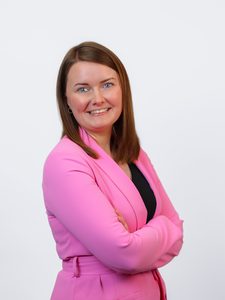
Jessica Jeffery, Recruitment and Partnerships Specialist at The TEFL Institute Group. Holds a business degree plus TEFL and CELTA, and has taught in Thailand and Italy.
About The TEFL Institute. The TEFL Institute is a TEFL course provider. Its Level 5 Diploma in TEFL and Level 5 Advanced Diploma in TEFL are regulated qualifications awarded by Highfield Qualifications and listed on the Ofqual Register of Regulated Qualifications. Commercial-interest disclosure: the Institute sells TEFL courses, including the qualifications referenced above; no course is recommended in this report.